New Report: Discover key insights from over 5 million interactions

Download Now
AI
8 min read

The 10 Best Real Estate Lead Generation Strategies for Teams and Brokerages

Last Updated
Oct 30, 2025
Nathan Smith
Marketing Director
My Bio
Explore this topic with AI
TLDR: Build owned lead sources across both inbound and outbound: neighborhood content, AI chatbot, video, email, social, direct mail, FSBO outreach, and a referral partner network. Then build the follow-up system that makes sure none of those leads go to waste.

Most real estate teams are running on one or two lead sources and calling it a pipeline. That's not a pipeline.

It's a single point of failure.

According to our 2025 State of Real Estate Conversations Report, nearly two-thirds of website visitors (66.4%) are already past pure exploration when they initiate a conversation, with 40.5% actively searching and 22.9% ready to act.

Your website is sitting on high-intent traffic that it isn't capturing.

After auditing 350+ real estate team and brokerage websites, the same pattern keeps showing up: great listings, passive lead capture, and almost no system for turning traffic into booked appointments.

These 10 real estate lead generation strategies cover both inbound and outbound, specifically for teams and brokerages operating at scale.

1. Hyperlocal Market Data Content Hubs

What It Is

A hyperlocal content hub is a dedicated website page built around a single neighborhood or submarket. Not a city, not a metro area, but the specific community a buyer types into Google when they are already serious.
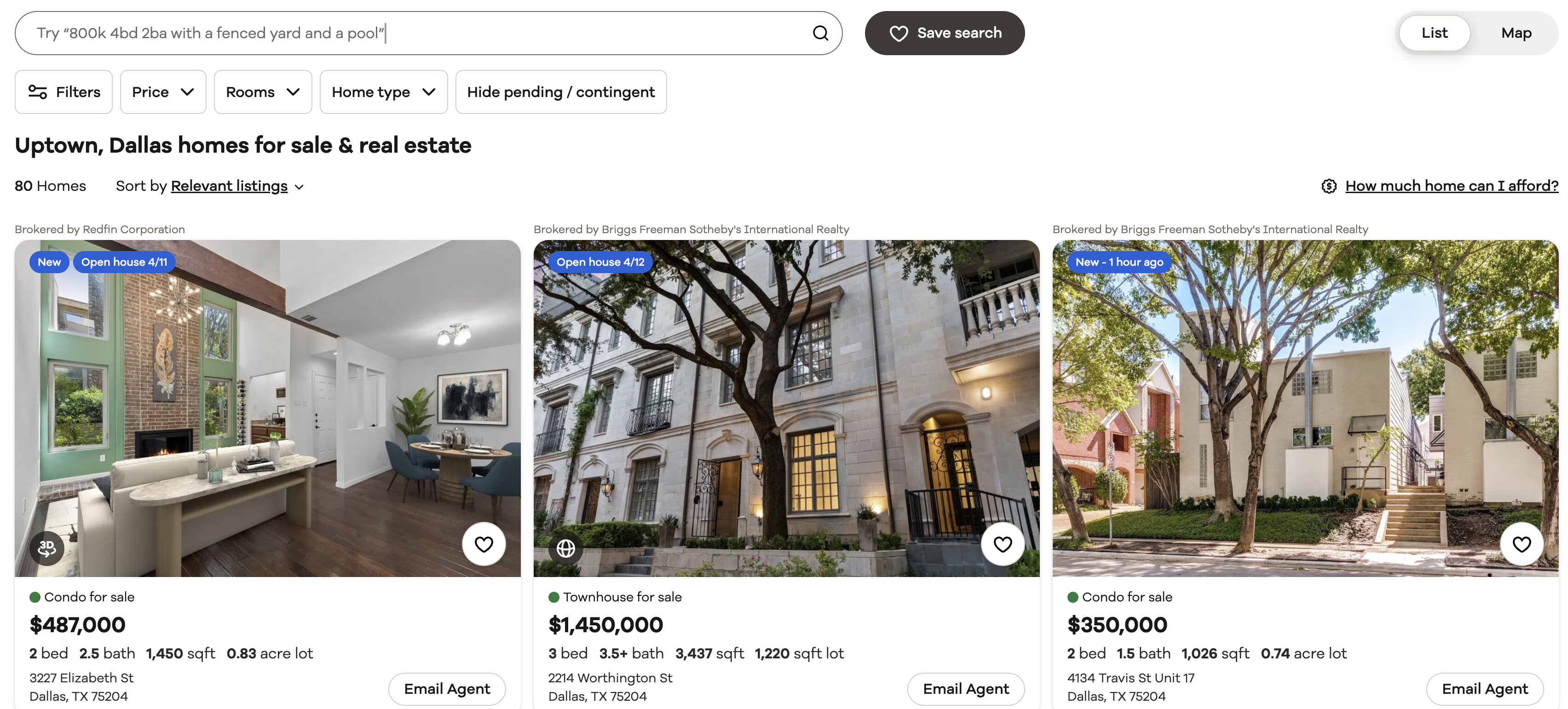
Example of neighborhood MLS page

Each page combines live MLS data with plain-language analysis that answers the questions buyers and sellers actually have: Is now a good time to buy here? Are prices rising or falling? How long are homes sitting before they sell?

Why It Matters

Unlike generic city-level market reports, hyperlocal pages rank in search because they match the specificity of high-intent queries. They also compound in value over time. A page that stays live and updated for two years builds authority that a new competitor cannot replicate overnight.

For teams operating across multiple submarkets, these pages become the foundation of your organic lead generation, quietly delivering traffic and capturing leads while your agents are busy closing.

How to Get Started

  1. List every submarket your team has closed a deal in over the past 12 months. This is your starting neighborhood inventory.
  2. Prioritize the top 5 by transaction volume. These become your first five pages. Do not launch all 22 at once unless you have a website that can scale your IDX feed.
  3. Pull your baseline data for each neighborhood from the MLS: median sold price, active inventory count, average days on market, and list-to-sale ratio. This should happen automatically if you have a well configured IDX feed.
  4. Create a single page template in your CMS with a consistent structure: headline, data snapshot, plain-language interpretation, and a lead capture form.
  5. Write the interpretation section yourself or have your most market-fluent agent do it. Three to four sentences explaining what the numbers mean for a buyer or seller right now is enough.
  6. Add the contextual details no aggregator covers: school catchment boundaries, commute estimates to the nearest employment hub, and any recent development or zoning changes worth knowing.
  7. Assign one team member as the owner of each page. Their name goes on the update log.
  8. Set a recurring calendar event for every 30 days per page with the specific data fields that need refreshing. The update should take under 20 minutes once the template is built.
Its worth noting that you don't need to introduce this level of personalization and you can leverage data aggregators such as local logic for school, walk scores, and things to do. However, then it becomes a competition for authority which involves building strong backlinks and internal links to the page.
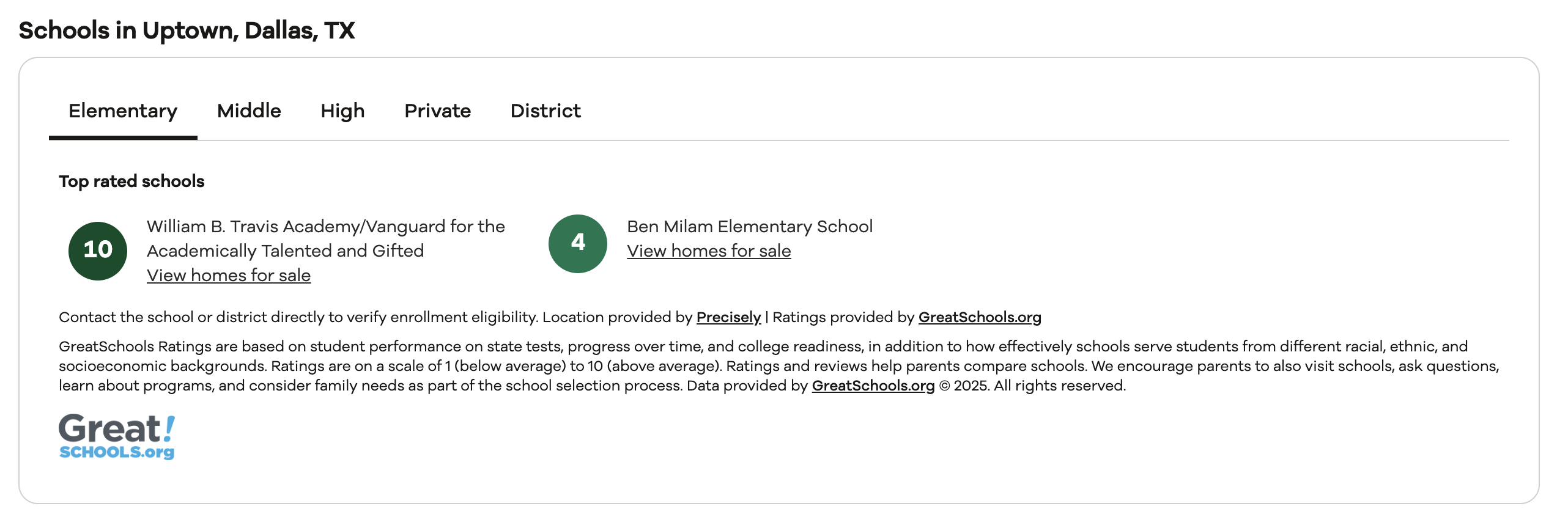
Example of school data pulled in programmatically
To further standout you can include some content on the page and some helpful tools such as moving calculators, cashflow calculators or mortage calculators.
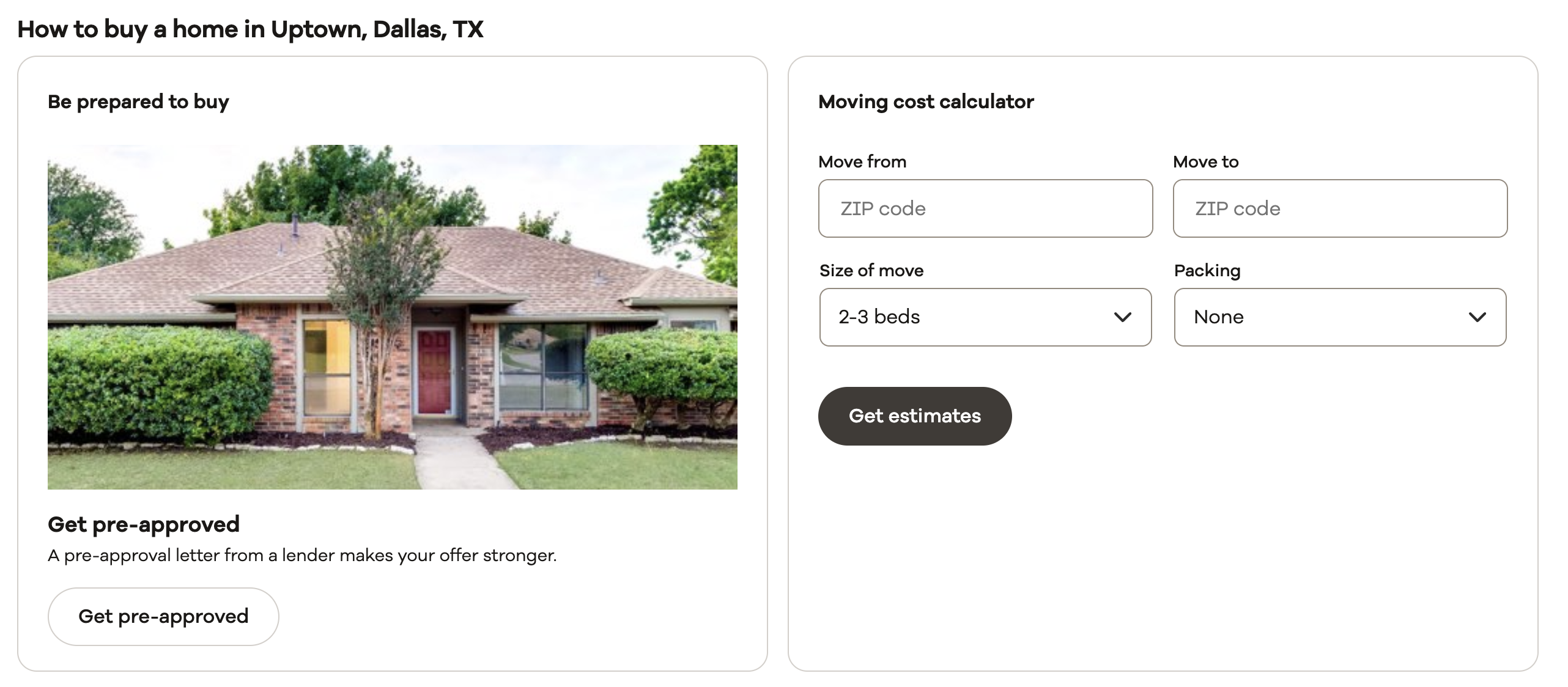
Example of calculators & tools built into the page
Challenge to Avoid: Most teams try to launch all neighborhoods at once and cannot sustain the monthly update cadence. A neighborhood page with stale data ranks and then loses credibility fast. Build the first five, hold the update rhythm for 60 days, then expand.

2. A Real Estate AI Chatbot for 24/7 Lead Capture

What It Is

A real estate AI chatbot is a conversational tool embedded on your website that engages visitors, asks qualifying questions, and routes warm prospects to the right agent automatically, around the clock.
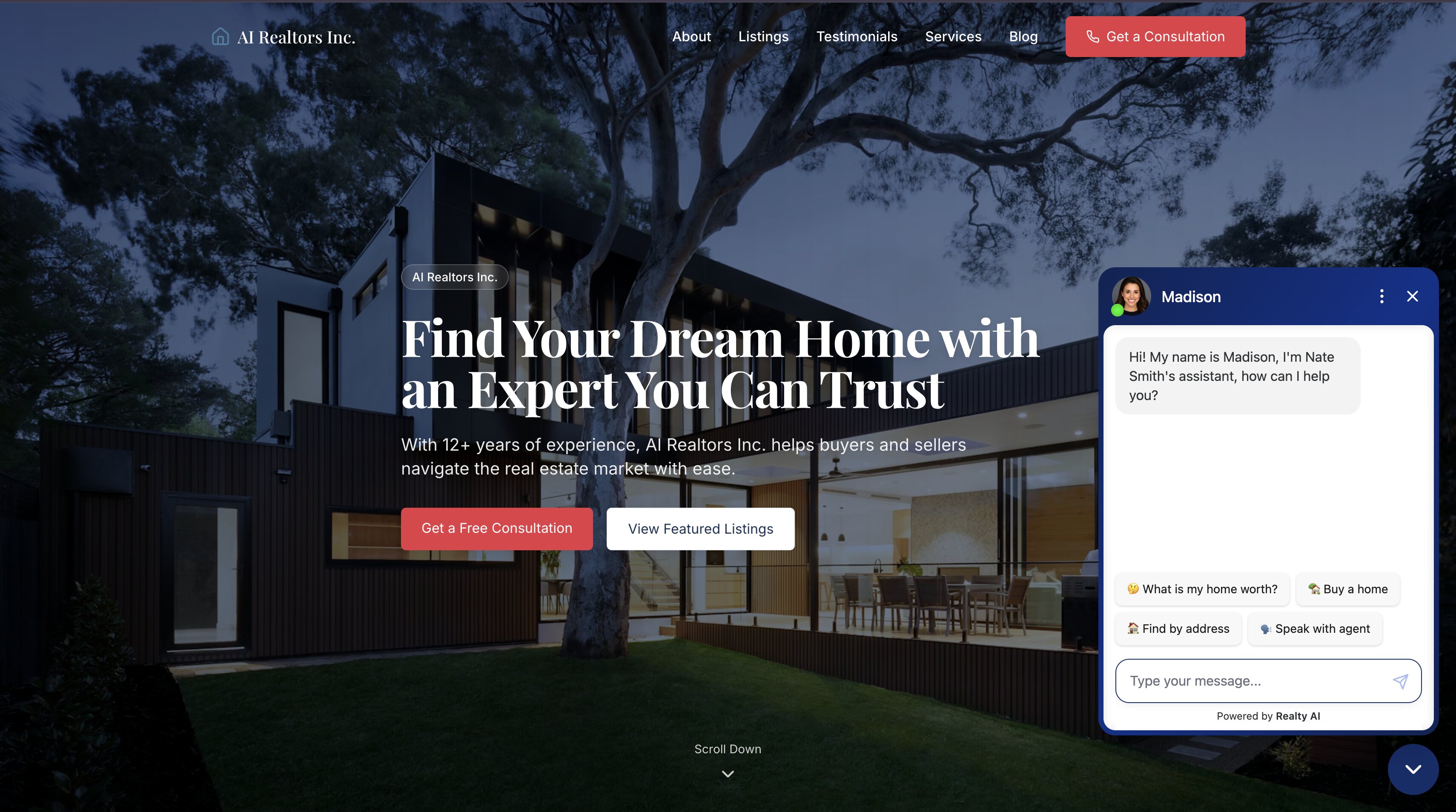
Example of AI chatbot on website

Unlike a static contact form that waits for a visitor to decide they are ready to reach out, a chatbot initiates the conversation, moves the buyer or seller through a qualification sequence, and can deliver a fully context-rich lead to an agent's phone in the middle of the night.

Why It Matters

For teams, this matters because the volume of leads that arrive outside business hours is significant. Realty AI's data shows 40% of captured leads come in after hours, and the speed of first response directly determines whether you get the conversation or your competitor does.

A well-configured chatbot closes that gap automatically, every time, for every agent on your roster.

How to Get Started

  1. Before choosing any tool, ask your agents to write down the 15 questions they field most often from new buyer and seller inquiries. This list becomes your chatbot's training foundation.
  2. Choose a real estate-specific chatbot platform. General-purpose tools do not have the listing integrations or lead routing logic you need.
  3. Map your conversation flow before building anything: greeting, two or three qualifying questions (timeline, budget, preferred neighborhoods), then specific routing based on answers.
  4. Load your team's actual neighborhoods, active listings, and current market stats into the bot so it can give specific answers, not generic ones.
  5. Set up lead routing rules by agent specialty or geographic area so a warm prospect goes to the right person automatically.
  6. Connect the chatbot to your CRM so every conversation logs a contact record without manual entry.
  7. Set up a hot lead notification. If a visitor mentions a specific address or a 30-day timeline, the bot should flag that conversation for immediate human follow-up, not a nurture drip.
  8. Review chatbot transcripts weekly for the first month. You will find the gaps in what it cannot answer and can tighten the training quickly.
Pro Tip: Configuring a chatbot takes a lot of time and doesn't account for the ongoing maintenance and overhead expenses. This is why we created Madison. To set up Madison, all you need to do is embed your website code and connect your CRM. You can also add additional branding information and website context if you want but it isn't necessary.

{{CTA}}

3. "Day in the Life" Neighborhood Video Series

What It Is

A "Day in the Life" neighborhood video series is an agent walking through a specific neighborhood on camera, showing viewers what it is actually like to live there. Coffee options, commute patterns, weekend vibe, the grocery situation: the details buyers cannot get from a listing page.

Why It Matters

Video marketing works for two compounding reasons. First, the videos rank on YouTube, giving your team a second search engine to own alongside Google. Second, they build trust and familiarity with prospects who do not yet have an agent, because seeing a real person walk through a real neighborhood is more persuasive than any written description.

For teams with geographic dominance as a goal, this is how you become the visible authority in every submarket you serve. The videos do not stop working after you publish them.

Realistically, you could write a script one evening, film 2-5 videos in an afternoon then spend a couple hours editing.

How to Get Started

  1. List the 8 to 12 neighborhoods where your team wants to dominate search. These are your video targets for the year.
  2. Match one agent to one neighborhood per quarter based on where they work most or know best. Authenticity matters more than assignment.
  3. Build a simple shot checklist: local coffee shop, favourite restaurant, popular things to do, main commercial street, a park or green space, a commute route or transit stop, and whatever gives that neighborhood its distinct weekend character.
  4. Record on a smartphone. Walk and talk. Budget 20 to 30 minutes of footage and edit it down from there.
  5. Aim for a final cut of 6 to 10 minutes. Unscripted and natural beats polished and stilted on every metric that matters: watch time, comments, and shares.
  6. Upload to YouTube with a keyword-focused title: "Living in [Neighborhood Name] | [City] Real Estate 2026." Include the year for recency signals.
  7. Embed the video directly on the matching neighborhood data page on your website. The page visit and video watch together increase time-on-site significantly.
  8. Post the video link in the neighborhood's local Facebook group or Nextdoor as a community resource. This seeds organic reach without paid spend.
Challenge to Avoid: Agents who try to script these videos end up with something that feels like a commercial. Buyers watching neighborhood videos are not looking for a sales pitch. They are looking for an honest answer to "what is it actually like to live here?" Just walk and talk like they are showing a friend around.

4. Weekly Email Campaigns That Actually Add Your Perspective

What It Is

A weekly email campaign is a recurring, short-form message sent to your contact list on the same day every week. Not a monthly newsletter, not a blast when you have something to promote, but a consistent and predictable presence in your contacts' inboxes.
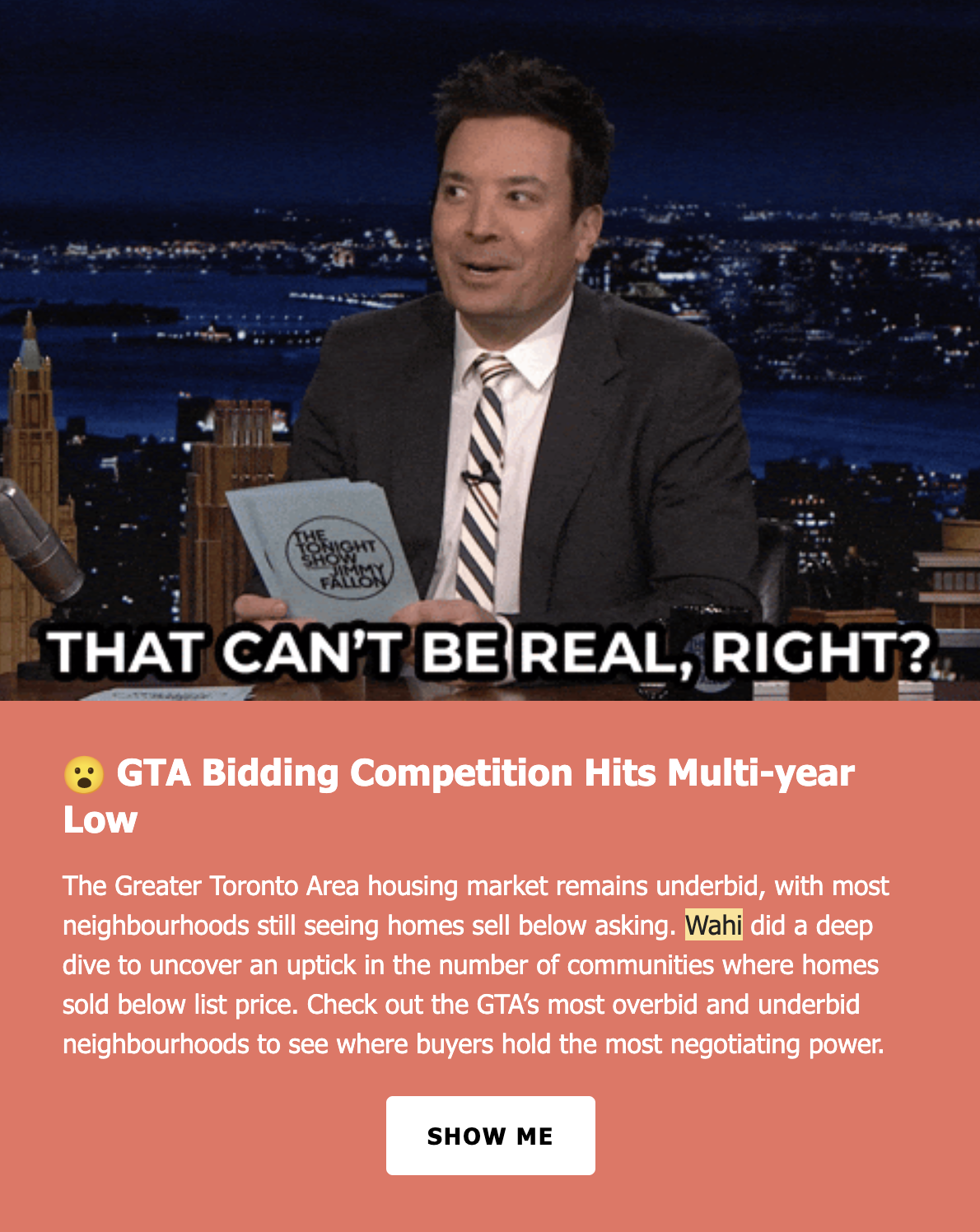
Example of email format

The format that works reads like a note from a knowledgeable local: one business worth knowing about, one market observation grounded in a specific number, one useful insight.

Why It Matters

Email is the only owned channel that does not require an algorithm to show your content to the people who signed up for it. Your social posts reach 3 to 10% of your followers.

Your email reaches everyone who opens it.

A list you have built and nurtured for two years is a lead generation asset that does not disappear when a platform changes its pricing or its algorithm. For teams, it is also the most scalable way to stay in front of a large database without requiring personal outreach from every agent.

How to Get Started

  1. Choose your send day and lock it in. Pick a day between Tuesday-Thursday, lock it in and set a sending time sometime between 9 am -12 pm as these historically have the highest deliverability and open rates.
  2. Build a three-section template in your email platform: one local business spotlight, one market stat with a one-sentence interpretation, and one CTA linking to a neighborhood / MLS location page or recent blog post.
  3. Before sending your first email, write four of them in a single sitting. This gives you a one-month runway before the cadence ever feels pressured.
  4. Segment your list at minimum into buyers, sellers, and past clients. The market stat you lead with can stay the same. The interpretation and CTA can shift by audience.
  5. Subject lines that include a specific neighborhood name or a specific number consistently outperform generic ones. "Inventory in Riverside dropped 18% this month" beats "March market update" as specificy gets attention.
  6. Set up your email platform to track click-through rate by link, not just open rate. Clicks tell you which content actually moved people back to your site.
  7. After 30 days, pull your click data and double down on the content type getting the most clicks in your next four emails.
  8. Schedule sends at least two weeks in advance. The moment you are writing Tuesday morning's email on Monday night, the quality drops and the cadence is at risk.
Challenge to Avoid: Teams launch with strong open rates, get busy around week six, skip a send, and then struggle to restart. The hardest part of email marketing is maintaining the rhythm when a busy season hits. The cadence itself is what builds trust. A reader who gets your email every Tuesday for six months trusts you before they ever reply.

{{CASESTUDY}}

5. Authentic Social Media Videos & Posts

What It Is

Authentic social media content means posts that come from real deal situations, real market observations, and real agent expertise. Not stock photos, polished graphics, or templated listing announcements.

Example of authentic content that takes 5-10 minutes to create

A post where an agent breaks down a real negotiation or explains why a specific neighborhood's market shifted this month gets shared because it is actually useful. A just-listed graphic gets scrolled past.

Why It Matters

Social platforms algorithmically reward content that earns genuine engagement, and generic brokerage content rarely does. For teams and brokerages, the leverage is in your agents.

Each one has their own audience, their own deal stories, and their own voice. The brokerage page becomes an amplifier of what your agents are already doing, rather than a centralized content operation that tries to speak for everyone and ends up sounding like nobody.

Give your agents some rope to work with as the more business they bring in the better. Sometimes too strict branding can impede their abilities to build an audience.

How to Get Started

  1. Have every agent on your team list three deal situations from the past 90 days worth sharing: a negotiation outcome, an inspection surprise, a pricing decision that paid off. These are your content seeds.
  2. Build a simple weekly rhythm per agent: one educational post, one neighborhood-specific observation, one behind-the-scenes or personal post.
  3. Create a shared Google Drive folder where agents drop content ideas, raw video clips, or deal stories as they happen. Capture moments in real time rather than reconstructing them later.
  4. Post from agent accounts first. Let the content live on their personal profiles for 24 hours, then repost the best material to the brokerage page. People like to interact with people not brands.
  5. Prioritize video over static images on every platform. Reels, Shorts, and TikTok videos receive algorithmic distribution that static posts do not. Its easier to go from longer form to short form so start with YouTube videos then cut them up using Capcut or Opus Clip.
  6. Every video should always have the following: a hook, a story and a concrete lesson. "Here is what we learned" gives the audience something actionable and signals expertise more than any credential.
  7. Track profile visits and DM volume as your primary success metrics. These indicate intent.
  8. Commit to 90 days before adjusting strategy. Social algorithms reward consistency, and most teams abandon a content approach right before it starts compounding.
Pro Tip: Train your agents to capture content moments in real time. A 30-second voice memo recorded immediately after a tough negotiation, or a quick phone video at a property with an interesting feature, is more authentic than anything re-created later. Build the habit of capturing first and editing later.

6. "Best of" Neighborhood Guide Blog Content

What It Is

A "Best of" neighborhood guide is a content piece that covers the lifestyle of a specific area: best restaurants, coffee shops, parks, schools, and weekend activities. It is written to attract buyers who are still figuring out where they want to live, not buyers who are already searching active listings.
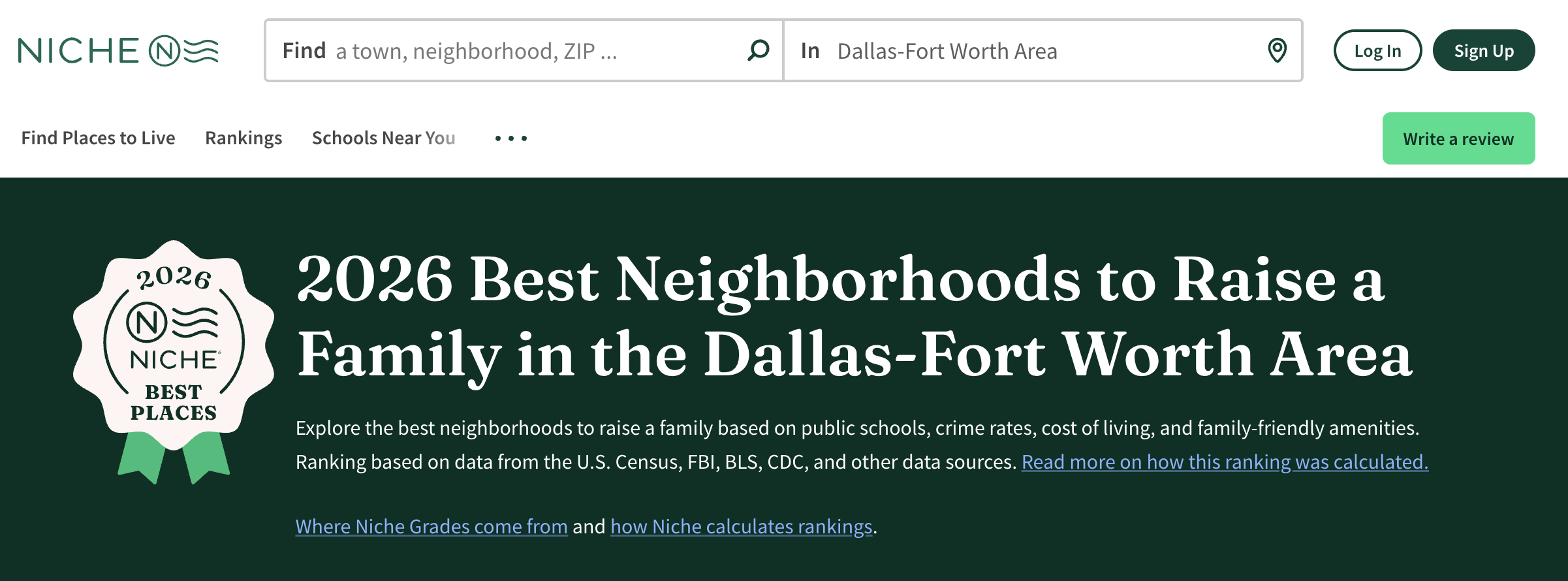
Example of title for listicle content comparing several neighborhoods in a city

Why It Matters

These guides intercept a buyer at a critical and often overlooked stage: before they have chosen a neighborhood and before they have chosen an agent. Someone searching "best neighborhoods in [city] for young families" or "best coffee shops in [neighborhood]" is actively researching where to plant roots.
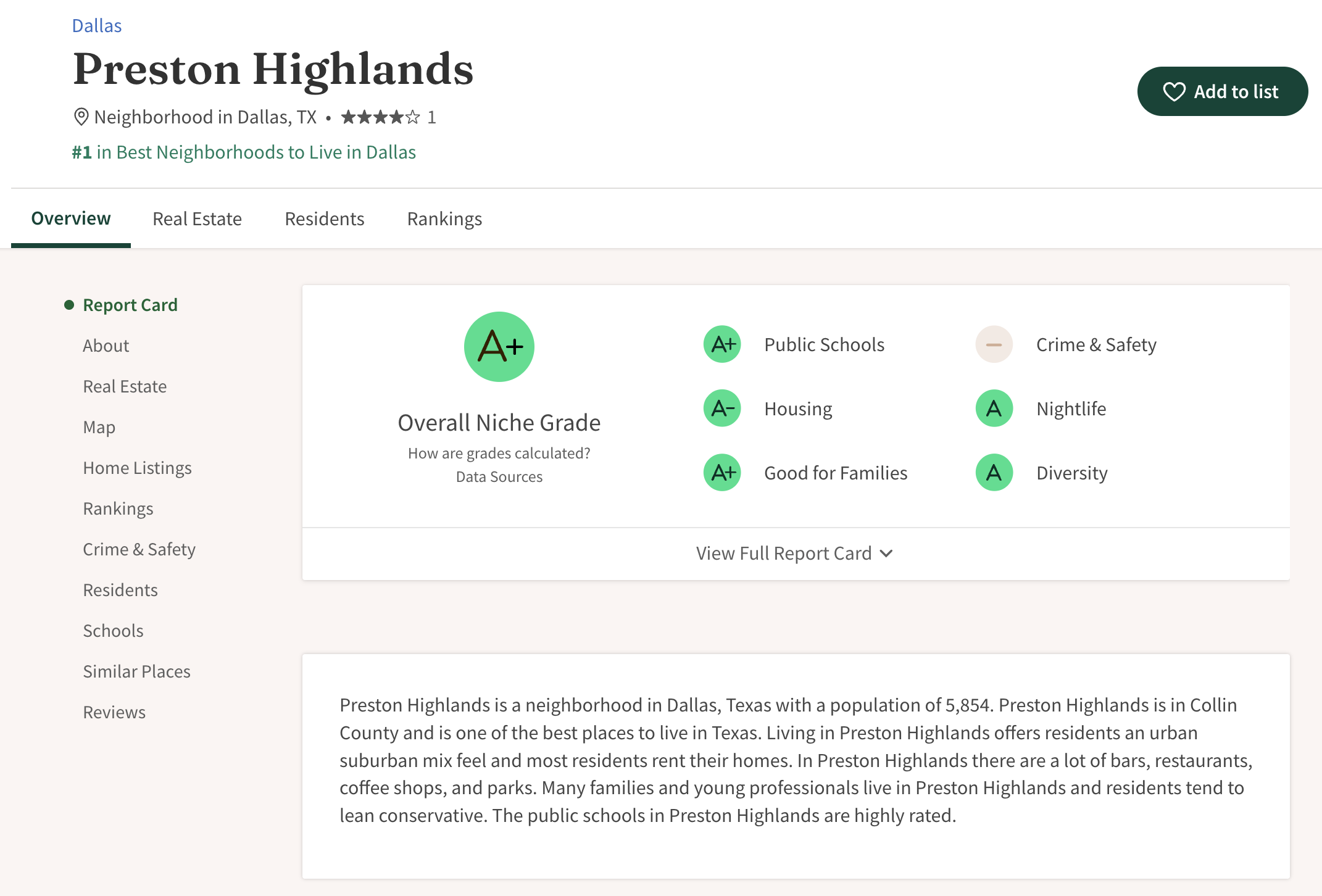
Example of well created neighborhood content in a listicle round up
They are not filling out lead forms yet, but they are exactly the right person at exactly the right moment.

A well-built guide earns their trust through useful local knowledge and then quietly introduces your team through a home search widget, a related listings section, and a soft email opt-in. The real estate angle is present, but it does not lead. Helpful content from a local expert leads.

How to Get Started

  1. Open Google Search Console and identify which neighborhoods are already driving search impressions to your site. Start guides for those areas first, since you have a baseline of existing relevance.
  2. For each guide, pick a specific buyer persona before writing a word: families searching for schools, young professionals prioritizing walkability, or retirees looking for community amenities. One guide, one audience.
  3. Research 8 to 10 local businesses, restaurants, parks, or amenities specific to that neighborhood. Call or visit the ones you are not personally familiar with. Accuracy matters, and the locals will notice inconsistencies.
  4. Write in first person and with opinions. "The best Saturday morning spot is X because Y" outperforms a neutral AIgenerated list every time. The personality is generates backlinks and user engagement which improve keyword rankings.
  5. Add an active listings from this listing as a widget to the content. This is KEY as it connects your informational content back to commercial intent as users can go from learning about a neighborhood to browsing for homes without any additional clicks.
  6. Place a segmented email opt-in at the bottom of each guide: "Get monthly market updates for [Neighborhood]." This allows you to still collect user information if they aren't YET looking for real estate.
  7. Internally link from each neighborhood data page to its matching "Best of" guide and vice versa. Google sees these as thematically related, which strengthens the ranking of both.
  8. Share each guide in the neighborhood's Facebook group or community Nextdoor page as a local resource. This drives early traffic and backlinks from residents who share it onward.
Pro Tip: This content is becoming more and more visibile in AI overviews and ChatGPT/LLM searches. The AI systems do a query fan out where they ask similar questions, scrape all the content, analyze the content then spit out a result.
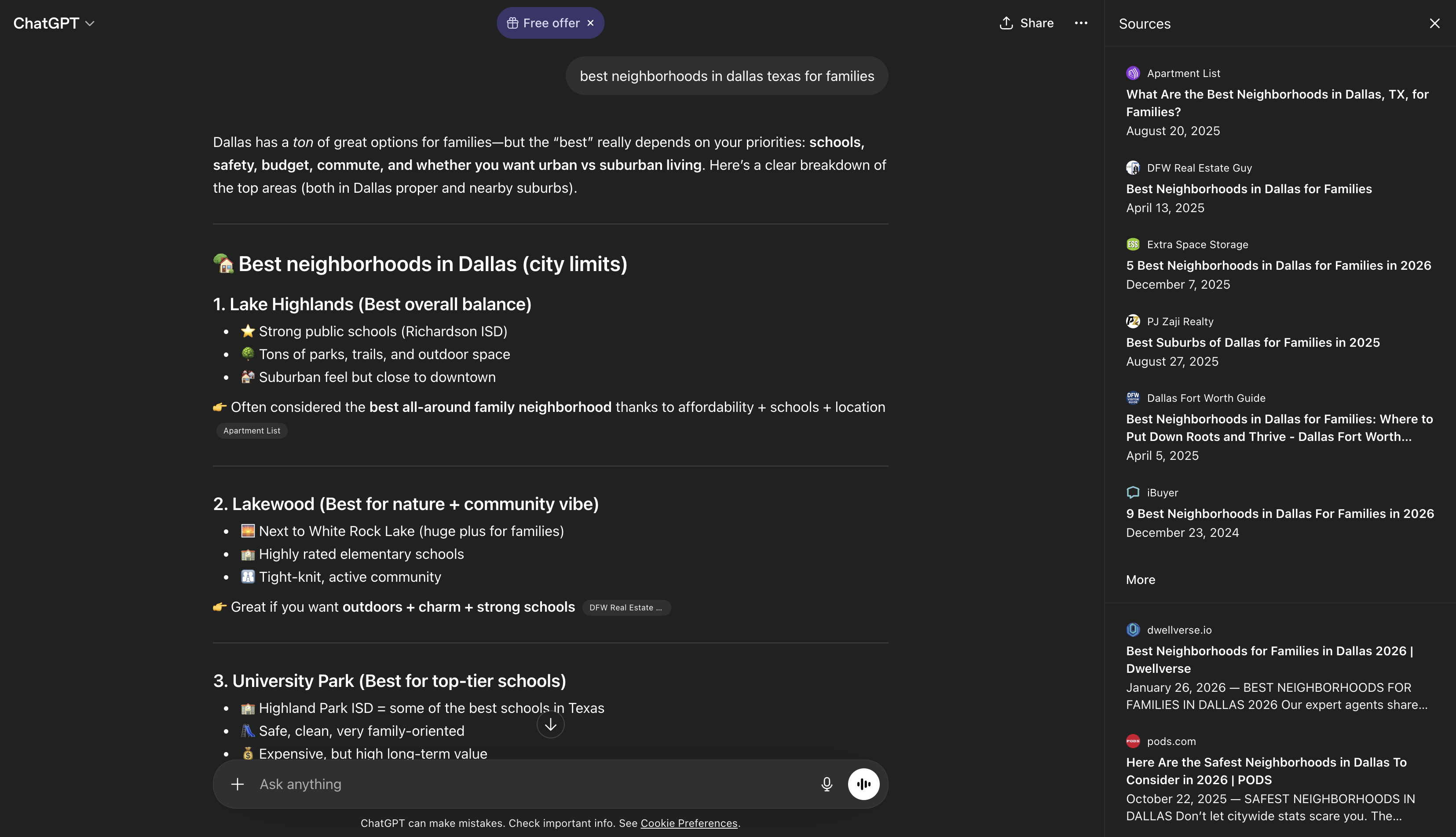
Example of ChatGPT sources that are reviewed to determine the answer

7. Micro Educational Videos on the Transaction Process

What It Is

Micro educational videos are short, 60 to 90 second recordings in which an agent explains one specific aspect of the buying or selling process in plain language.
Example of content on "how to make an offer on a house"

How earnest money works, what happens at a home inspection, why an offer gets rejected in a multiple-offer market. One question per video, one clear answer, one practical takeaway.

You would be very surprised about how little people know about real estate until they are selling or buying property. Assume your audience knows nothing.

Why It Matters

These videos exist to answer the questions buyers and sellers are already searching for before they have ever called an agent. When your team member is the person on screen answering that question clearly and confidently, you become the trusted expert before first contact.

For teams, these videos serve double duty: they build individual agent authority while also functioning as evergreen website and email content. A 90-second video that explains something confusing does more for conversion than any testimonial or credential badge, because it demonstrates competence rather than claiming it.

How to Get Started

  1. Gather your agents and ask each to write down their five most-asked questions from buyers and sellers in the past 90 days. Combine the lists and you now have 20 to 40 video topics ranked by real client confusion.
  2. Cross-check your top 10 topics against Google autocomplete and the "People also ask" section for each question. Prioritize the ones with clear search demand.
  3. Write a 90-second script for each video using a three-part structure: the problem or confusion, the plain-language explanation, and one practical takeaway the viewer can use.
  4. Record with what you have. A smartphone, a ring light or a window with natural light, and a quiet room is a sufficient setup. Total setup time should be under 10 minutes.
  5. Upload to YouTube with the question as the video title. "How To Make an Offer on a home?" gets searched. "Understanding the Offer Process" does not.
  6. Write a 150-word description for each video that includes the question, your city or region, and three to four related keyword phrases a buyer or seller would search.
  7. Embed the videos on your neighborhood pages and listing pages where they are contextually relevant. A buyer reading about a neighborhood who then watches "What to Expect at a Home Inspection" is warming up significantly.
  8. Add the most relevant videos to your email nurture sequences at the right moment. A video on "How Offers Work" belongs in the sequence after someone requests a home search, not in the first email.
Pro Tip: Film four videos in a single day. Volume is the key. Don't expect all of your videos to go viral but more posts give you more opportunity for virality.

8. FSBO and Expired Listing Prospecting

What It Is

FSBO and expired listing prospecting is a structured outbound strategy targeting two groups of sellers who have already decided they want to move but have not yet found the right representation.

FSBO sellers are attempting to sell without an agent. Expired listings are properties that sat on the market and did not sell, typically leaving a frustrated owner who now has to make a new decision.

Why It Matters

Both groups are high-intent by definition. The motivation to sell already exists. For teams, this channel matters because it generates opportunities that are not dependent on marketing spend, SEO rankings, or platform algorithms.

It requires consistent effort and a disciplined follow-up system, and that is exactly why it still works. Most competitors give up too quickly. A team with a standardized script, a CRM-driven follow-up sequence, and genuine patience for the 14 to 30-day window where seller frustration peaks will consistently convert leads that everyone else has already abandoned.

How to Get Started

  1. Set up a daily MLS alert for expired listings filtered by your target zip codes. This should run automatically so you are never manually searching for who expired last night.
  2. Build a four-touch follow-up sequence before you make your first call: Day 3, Day 7, Day 14, and Day 30. Write all four messages before you start. This forces quality upfront and prevents the lazy follow-up that kills most prospecting systems.
  3. For expired listings, your first contact should reference the specific property: the address, how long it sat, and a concrete observation about why it may not have sold. Generic outreach gets ignored.
  4. For FSBOs, lead the first call with value, not a pitch. "I have buyers actively looking in your price range in your area right now. Can I share your property details with them?" gets a conversation started more reliably than any listing presentation opener.
  5. Assign a fixed number of outreach attempts per agent per week based on their actual capacity. Five to ten is a sustainable starting point. Assign more than that and quality drops.
  6. Log every contact attempt in your CRM with a note on the conversation or lack of response. The Day 14 and Day 30 messages need context from what happened at Day 3 and Day 7.
  7. Standardize your opening, your three most common objection responses, and your close for next step across the entire team. One agent improvising their script does not scale, and it makes your data on what works meaningless.
  8. After 60 days, pull your contact log and identify which touch point is generating the most responses. Adjust your sequence emphasis based on real data, not assumption.
Challenge to Avoid: Agents put effort into the first touch and go generic on the follow-up. Day 14 and Day 30 messages become a copy-paste "just checking in" that gets ignored. The seller's frustration often peaks between Day 10 and Day 20 as the reality of their expired listing sets in. That is exactly when a specific, empathetic message lands best. Write all four messages in a single sitting before you begin and do not let the follow-up become an afterthought.

{{CALENDAR}}

9. Geographic Farming with Direct Mail

What It Is

Geographic farming is a long-term direct mail strategy in which your team sends branded, data-rich mailers to the same group of homeowners in a defined neighborhood, consistently, for at least 12 months, with the goal of becoming the agent those homeowners think of first when they are ready to sell.

Think of this as a direct way to get in front of your buyers, the earlier content we mentioned is a way to capture demand while this is more demand generation.

Why It Matters

Unlike digital advertising, which disappears the moment you stop paying, a well-executed farm builds a physical and tangible presence in a neighborhood that compounds over time.

You will get a lot of no's but again its a volume game that just takes time. If you are consistent, willing to put in the work and have the best system, then you will come out on top.

How to Get Started

  1. Before committing to a farm, run the math. Pull the total number of homes that sold in your target neighborhood over the past 12 months. Multiply by your average GCI per transaction. That is the annual opportunity. Divide your estimated 12-month mailer cost into it. If the math supports a 24-month commitment, proceed.
  2. Choose a neighborhood where your team has at least one recent sale or active listing. An existing footprint in the area makes your mailers credible from day one.
  3. Pull your mailing list from the USPS Every Door Direct Mail (EDDM) tool or your title company's farm data. Target 300 to 500 homes minimum. Smaller than that and your cost-per-response climbs too high to be viable.
  4. Build a 12-month content calendar before sending mailer one. Rotate formats: market update postcards, transaction stories, neighborhood spotlights, and "most active street" reports. Variety prevents the fatigue that comes from sending the same content.
  5. Design every mailer to lead with data or a story, not your headshot or a tagline. A card that shows "3 homes sold in [neighborhood] in March, here is what they closed for" tells homeowners something useful. A card that says "Thinking of selling? Call us!" tells them nothing nor does it get their attention.
  6. Include a QR code or a trackable URL specific to each mailer. This lets you measure which formats drive website visits so you can double down on what works.
  7. Cross-reference your farm list against your existing CRM. Anyone you already know in that neighborhood gets a personal note or a call in addition to the mailer. Do not treat existing contacts like cold prospects.
  8. At month six, door-knock 10% of your farm. Pairing direct mail with a face-to-face moment dramatically accelerates name recognition in the neighborhood and surfaces sellers who are close to deciding.
Challenge to Avoid: Teams pick a farm where the math works. Before spending a dollar, verify the neighborhood's annual transaction volume. Let the transaction data, not the aesthetics of the neighborhood, drive the selection.

10. Referral Partner Network Development

What It Is

A referral partner network is a group of professionals in adjacent fields whose clients regularly experience life events that trigger a real estate decision.

Divorce attorneys whose clients are selling a shared home, estate attorneys whose clients are liquidating inherited property, corporate HR coordinators moving employees into your market: these are professionals who see motivated buyers and sellers every single day.

Why It Matters

Unlike past-client referrals that arrive unpredictably, a well-maintained referral partner network delivers a steady and predictable flow of qualified leads every month.

The key distinction is that these partners are not referring people who might buy or sell someday. They are referring people who have already been pushed toward a real estate transaction by a life event.

That is a fundamentally different quality of prospect than someone who saw an ad or filled out a form. For teams, this channel scales without additional marketing spend, and a single strong partner relationship can be worth more annually than an entire paid ad budget.

How to Get Started

  1. Start by identifying six partner categories whose clients regularly face life events that trigger real estate decisions: divorce attorneys, estate attorneys, mortgage brokers, financial planners, corporate HR and relocation coordinators, and senior care coordinators.
  2. Before reaching out to anyone, audit your own client pipeline. Identify which current or recent clients need professional services outside of real estate right now.
  3. Identify two to three specific professionals in each category in your market. LinkedIn is the fastest place to find them by searching title and city. Your title rep or lender can also make warm introductions.
  4. Lead every outreach with a referral, not a pitch. "I have a client settling an estate who needs legal guidance before we list. I would love to find someone I trust to send them to" gets a meeting that "let's connect" never will. Sending business first establishes you as a peer, not a vendor looking for leads.
  5. In the first meeting, focus on understanding their world. Learn who their clients are, what those clients are going through when real estate becomes relevant, and what a good referral from your side actually looks like for them. Share the same about your practice. The goal is to leave with a clear picture of when each of you should be picking up the phone for the other.
  6. Close the loop on every referral you make. When you send a client to a partner, follow up to make sure the introduction landed well and the client was taken care of. This single habit builds more trust than any amount of networking, because it shows you are invested in the outcome, not just making an introduction and moving on.
  7. As the relationship develops and referrals flow in both directions, your partners stop thinking of you as a contact and start thinking of you as a resource they genuinely vouch for.
  8. That word of mouth in a professional setting carries more weight than any marketing you can buy, because it comes from someone whose judgment their client already trusts.
Pro Tip: The fastest way to earn referrals is to follow through on your promises made. Nothing sours a relationship faster than overpromising and under delivering, especially if someone else is willing to put their reputation on the line for you.

Where to Go From Here

Building a lead generation system that actually scales is not about doing more. It is about doing the right things consistently enough that they start working without you.

What separates the teams and brokerages that grow consistently from the ones that plateau is not budget, market conditions, or the number of agents on the roster. It is systems. A neighborhood page that gets updated every 30 days. An email that goes out every Tuesday without fail. A referral partner who hears from you every month because someone on your team owns that relationship. A chatbot that qualifies leads at 11 PM so your agents wake up to warm conversations instead of cold inboxes.

None of these strategies require perfection. They require commitment to a timeline long enough for the work to compound.

Pick two strategies that fit where your team is right now and execute them well for 90 days before adding a third. The teams winning in this market are not running 12 strategies at once. They are running fewer things, more systematically, for longer than everyone else is willing to. That is the actual competitive advantage, and it is more available to you than any tactic on this list.

Ready to start securing an addition 10-20 leads from your existing website traffic using an AI chatbot? Book a demo today.

Don't let another potential client walk away because your website wasn't able to engage them and capture their information.

Within just a few months, Realty AI helped Team Logue capture 15 high-quality leads, resulting in 3 new transactions worth over $3.3 million. This success generated an estimated $82,500–$95,000 in gross commission income (GCI).

Take Your Business To The Next Level With AI