New Report: Discover key insights from over 5 million interactions
Download NowNew Report: Discover key insights from over 5 million interactions
Download Now

TLDR: SEO builds long-term, trust-driven leads that compound for free after 3-6 months; paid ads deliver immediate traffic that stops when your budget does. The winning strategy combines both - retarget organic visitors with paid ads, dominate multiple SERP placements, and route all traffic to conversion-optimized pages with one clear CTA.
Most real estate teams are splitting their marketing budget between SEO and paid ads without a clear framework for either. They're spending $3,000 a month on Google Ads and waiting six months for blog posts to rank, and nobody can tell you which one is actually working.
According to Realty AI's 2025 State of Real Estate Conversations Report, nearly two-thirds (66.4%) of website visitors are already past pure exploration when they land on your site. They're actively searching or ready to act.
That means the traffic question isn't just "how do I get more visitors?" It's "how do I get the right visitors, and what happens when they show up?"
This guide breaks down exactly how SEO and paid ads work for real estate teams and brokerages, where each one belongs in your marketing mix, and how to make them work together without wasting budget on either.
SEO stands for Search Engine Optimization. It's the practice of making your website rank higher in Google's organic (unpaid) search results when buyers or sellers search for relevant terms.
For real estate teams, that means showing up when someone searches "homes for sale in [your city]," "best real estate team in [neighborhood]," or "how to sell my house in [market]." The goal is to own those results without paying every time someone clicks.
The best way to improve SEO is by differentiating yourself by providing better content, showing up more on third party websites and establishing your unique value proposition.
The core levers are your website's content (blog posts, neighborhood pages, market reports), its technical health (site speed, mobile optimization, structured data), and the authority Google assigns based on who links to you. SEO isn't a one-time setup. It's an ongoing investment that compounds over time.
Here's the thing about SEO: the work you do today keeps paying off for years. A neighborhood guide you publish in January can still drive leads in December, and the December after that.
Paid ads stop delivering traffic the moment you cut the budget. Organic traffic doesn't. For a brokerage with multiple agents covering multiple neighborhoods, that's the difference between building real equity and renting an audience indefinitely.
Buyers and sellers who find you through organic search have usually done several searches before clicking. They've compared agents, read about the market, and now they're on your site because they chose it.
That self-selection process means organic visitors convert at higher rates than cold paid traffic. They're not stumbling onto you from a banner ad. They went looking for you.
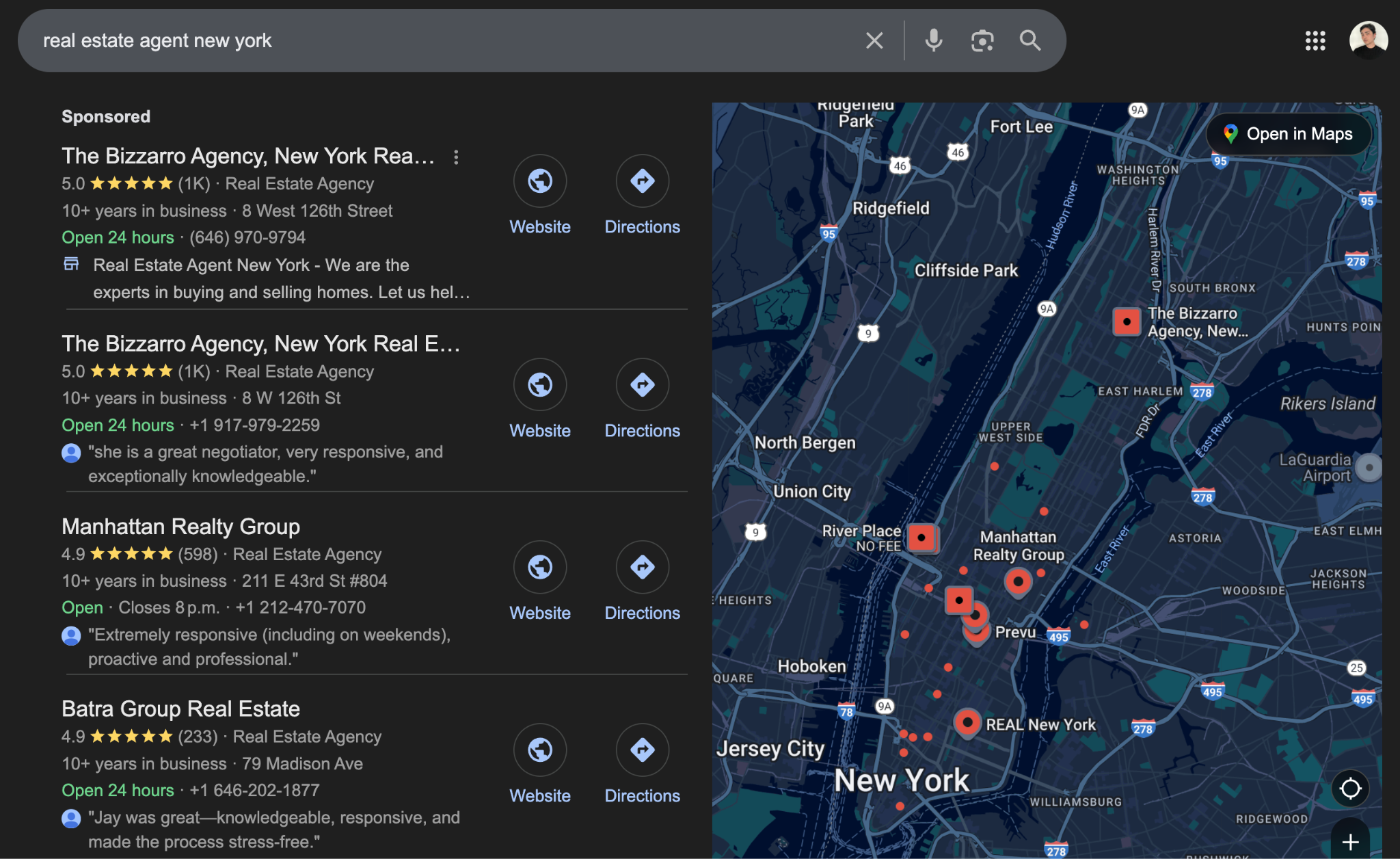
This is the channel most teams underinvest in. Achieving strong local search visibility means ranking in Google's local map pack, building neighborhood-specific pages, and maintaining a sharp Google Business Profile. Done right, it puts your team in front of buyers at the exact moment they're searching in your market.
Local SEO also benefits the whole team. When a buyer in a specific neighborhood searches for a real estate team, your agents covering that area show up. A generic Google Ad can't replicate that precision.
Agents who show up consistently in search results don't have to work as hard to prove they know the market. By the time a prospect calls, they've already read your content, seen your neighborhood expertise, and formed a positive impression.
That shortens the trust-building cycle. Instead of spending the first call establishing credibility, you're already past it.
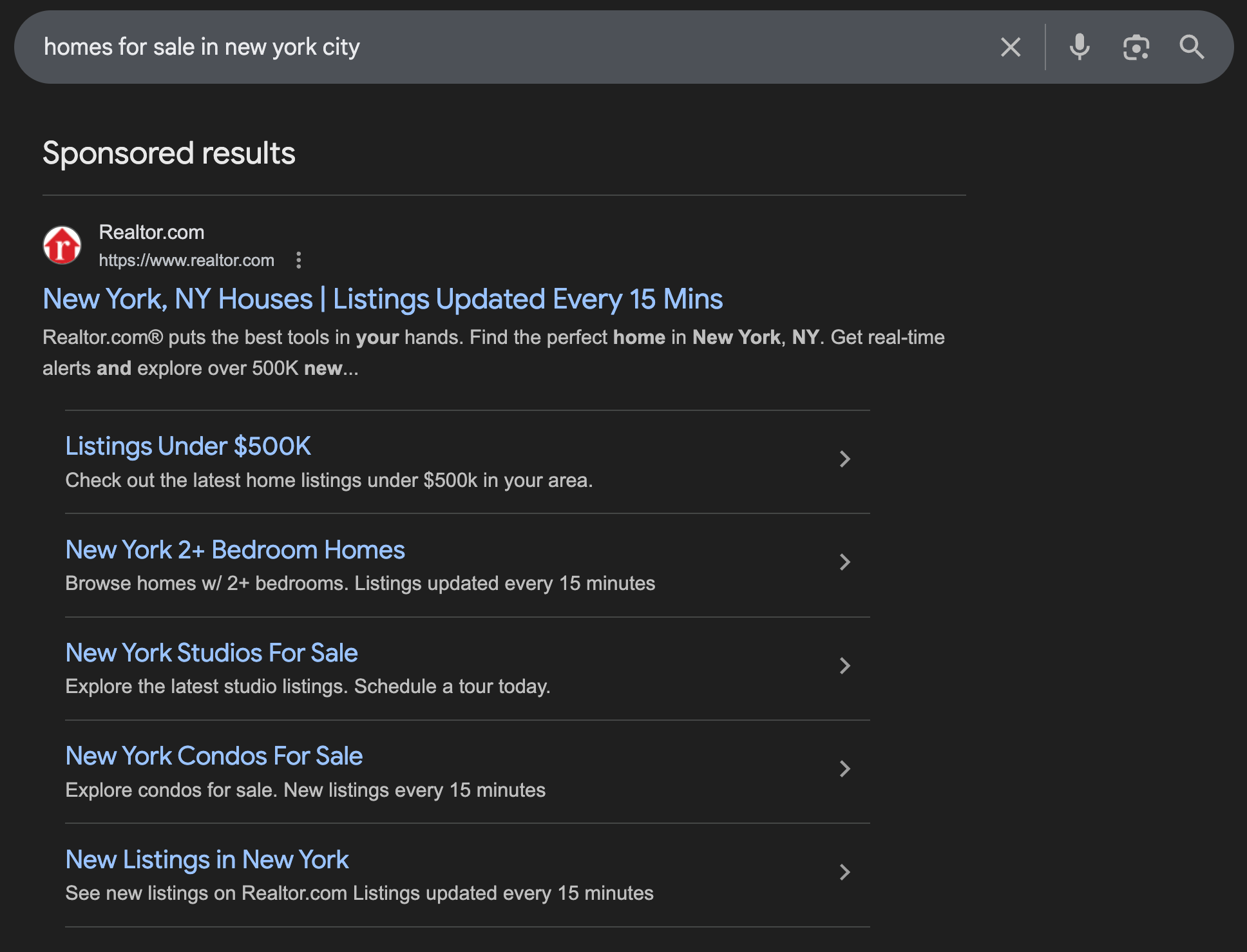
Paid ads are exactly what they sound like: you pay to have your listing or content appear in front of a specific audience. In real estate, the primary channels are Google Ads (pay-per-click, where you bid on search terms), Meta Ads (Facebook and Instagram), and display and retargeting ads across the web.
With Google Ads, you bid on keywords like "real estate agent [city]" or "sell my home fast." When someone searches that term, your ad appears above the organic results and you pay when they click. Costs vary, but in competitive real estate markets, expect $15-$60 per click for buyer-intent keywords and significantly more for seller leads.
Meta Ads work differently. You target by demographics, behaviors, and life events (recently engaged, new job, growing family) and your ads appear in feeds whether people were searching for real estate or not. Lower intent, but a much larger potential audience.

You turn them on today, you can have clicks tomorrow. For a new brokerage without SEO authority yet, or for a team that just entered a new market, that speed is genuinely valuable. You don't have to wait six months while your content builds rankings.
Paid ads let you target by zip code, income range, homeowner status, life events, and dozens of other variables. You can run a campaign exclusively targeting homeowners aged 35-55 in a specific school district who've shown interest in moving.
SEO doesn't let you be that specific. For listing campaigns or niche market pushes, that precision is a real advantage that organic search can't replicate.
When you run a paid campaign, you know exactly how many clicks you got, what each click cost, and (if your tracking is set up correctly) how many of those clicks became leads or clients. That feedback loop is immediate.
It's measurable in ways SEO simply isn't, especially in the first year. If a campaign isn't working, you can see why within days and adjust.
If your team needs to generate more volume fast: a new listing, a slow quarter, agent recruiting targets, paid ads can be dialed up quickly. You can't publish five blog posts this week and expect rankings to jump. You can increase your ad spend and see results within days.
The honest answer is that neither wins outright. They serve different time horizons and different goals. The mistake most teams make is treating them as alternatives when they're most powerful as complements.
This is the question teams ask most, and it's the most context-dependent.
For SEO: You're primarily investing in content creation, technical optimization, and link building. A realistic budget for a real estate team doing this properly runs $1,500-$4,000 per month when outsourcing to a content partner.
The payoff is that your cost-per-lead drops dramatically over time. A blog post that costs $400 to produce and ranks for three years has an effective cost-per-lead in the single digits. You don't get that with paid ads.
For Paid Ads: Budget directly determines volume. In competitive markets (Toronto, Vancouver, New York, Miami), cost-per-click on buyer keywords runs $25-$60+. A brokerage spending $3,000 per month on Google Ads in a competitive market might get 60-120 clicks. Not leads. Clicks.
Conversion rates on real estate landing pages typically run 2-5%, so you're looking at 2-6 leads per $3,000 spent before any optimization. That math gets better with sharper creative and tighter targeting, but it's rarely cheap.
The practical budget framework for teams: If you're a newer team with limited SEO authority, run paid ads to generate near-term revenue while you build SEO assets in parallel. As organic traffic grows, reduce ad spend on keywords where you already rank. The goal is to shift the ratio over time: more organic, less paid, without sacrificing lead volume during the transition.
The teams that win in digital marketing aren't choosing between SEO and paid ads. They're building a system where both channels reinforce each other.
Someone who landed on your neighborhood guide through organic search is already interested. They're a better retargeting target than any cold audience. This is why its very important that you choose the best keywords for organic content.
Run Facebook or Google display ads to everyone who visited your blog in the last 30 days.
They already know who you are. Your retargeting ad just needs to bring them back at the right moment.
If you're not sure which neighborhoods or buyer personas to build content around, run a small paid campaign first. The click-through rates and lead conversion data from a $500 ad test will tell you which audiences are actually responsive.
That's real market research before you commit six months of content effort to a topic. Let paid ads inform your SEO strategy, not the other way around.
Google Ads rewards relevance. If your landing page content closely matches the keyword someone searched, your Quality Score goes up and your cost-per-click goes down. Well-written SEO content isn't just organic traffic: it's a landing page that makes your paid campaigns cheaper to run.
SEO and paid ads are just the top of the funnel. The teams that convert at the highest rates have built a comprehensive lead generation strategy that covers every touchpoint: not just how the lead arrived, but what happens when they get to your site, how quickly your team responds, and how leads get routed to the right agent.
The most expensive mistake: spending $4,000 a month on Google Ads driving traffic to a homepage with no clear call to action, no qualification flow, and a contact form that goes to a shared inbox nobody checks promptly.
Understanding why teams lose leads almost always comes down to this: the traffic wasn't the problem. The conversion infrastructure was.
Before spending another dollar on ads, check your site's lead capture process.
If not, you're pouring water into a leaking bucket.
Most brokerages are posting generic articles like "Top 10 Reasons to Buy a Home in [City]" and wondering why nobody reads them. That won't work.
SEO content needs topical depth (cover the subject exhaustively), consistency (Google rewards sites that publish regularly), and a link-building component (other sites need to link to yours for your authority to grow). One blog post a quarter isn't a strategy. It's a placeholder.
The teams running them in silos: different agencies, different goals, no shared data. They miss all the compounding benefits of coordination. Your SEO team should know which paid keywords are converting. Your paid ads team should know which organic pages are getting traffic.
That shared intelligence is where the real optimization happens.
Google's algorithm changes. Competitors outbid you on keywords. Consumer search behavior shifts. Both SEO and paid ads require ongoing attention.
The brokerage that reviews and optimizes its campaigns quarterly consistently beats the one that set up campaigns 18 months ago and hasn't touched them since.
Yes, and it works especially well at the team and brokerage level. You have more resources to produce content and more market areas to cover. Individual agents struggle with SEO because they can't publish content consistently enough to build authority. A team with five agents in five neighborhoods can build five distinct local content hubs, each targeting a specific micro-market.
It depends on your market, your conversion infrastructure, and your timeline. Paid ads work when your landing pages and follow-up systems are set up to convert traffic into leads efficiently. If you're paying $40 per click and converting 3% of clicks to leads, you're spending $1,333 per lead. If your average commission is $8,000, that's still a solid return, but only if those leads actually close.
The 80/20 rule in SEO means roughly 20% of your content will drive 80% of your organic traffic. In real estate, that typically means your neighborhood pages, home search pages, and a handful of high-intent articles will dominate your organic results. The practical takeaway, identify the 5-10 highest-value pages your site could rank for and invest deeply in making those the most thorough, authoritative pages on that topic in your market.
Yes, but the landscape is shifting. AI Overviews in Google now answer many general questions directly, reducing clicks to informational articles. However, high-intent local and transactional searches ("real estate agent in [city]," "homes for sale in [neighborhood]") still drive significant organic traffic to real estate sites because AI can't replace local expertise, listings access, or the trust a real team provides.
Plan for 4-6 months before you see meaningful organic lead flow, and 12-18 months before SEO becomes a primary lead source. Use paid ads to bridge the gap during that initial period, and track your ranking improvements monthly so you can see the momentum building even before the leads start flowing.
Getting buyers and sellers to your website is one problem. Getting them to actually connect with your team is another one entirely, and most brokerages still solve it with a static contact form that converts at 2-4%.
Your SEO and paid ad spend is building real traffic.
The question is what happens to that traffic when it arrives. If you're driving hundreds of visitors a month and capturing only a handful of leads, the answer usually isn't more traffic. It's a smarter way to capture website leads before those visitors leave.
Madison, Realty AI's conversational AI assistant, engages website visitors the moment they land. It qualifies intent, answers property questions, and routes high-quality leads to the right agent on your team automatically.
Teams using Madison report a 286% increase in website conversions, with leads captured from both organic and paid traffic that contact forms would have missed entirely.
If you're investing in SEO, paid ads, or both, you need a system that converts that investment into conversations.
Book a demo with Realty AI to see how Madison turns your existing website traffic into a consistent lead source for your team.
Don't let another potential client walk away because your website wasn't able to engage them and capture their information.
Before you spend another dollar on marketing that doesn't convert, take 2 minutes to see how Madison turns your existing website traffic into a steady stream of qualified appointments.

Within just a few months, Realty AI helped Team Logue capture 15 high-quality leads, resulting in 3 new transactions worth over $3.3 million. This success generated an estimated $82,500–$95,000 in gross commission income (GCI).

Explore what Realty AI can do for your business
By contacting us you agree to both our privacy policy and our terms and conditions