Local SEO is essential for real estate because homebuyers and sellers search for agents and properties within specific neighborhoods, not nationwide. Focusing on optimizing your website, Google My Business profile, and local citations helps you appear when high-intent prospects search for services in your area. Unlike paid ads, local SEO compounds over time, driving long-term, cost-effective leads. By targeting location-based keywords, creating hyperlocal content, building strong location pages, earning local backlinks, and maintaining consistent business information across platforms, real estate professionals can establish authority, improve visibility, and generate a steady stream of qualified clients.
The real estate business is fundamentally local. When someone searches for a home, they're not looking nationwide, they're searching in specific neighborhoods, cities, and communities.
This is where local SEO becomes your most powerful digital marketing tool.
Local SEO helps real estate professionals appear in search results when potential clients are actively looking for agents, homes, or property information in their specific market. When optimized correctly, your website becomes a lead-generation engine that connects you with buyers and sellers precisely when they're ready to make decisions.
Unlike paid advertising that stops the moment you stop paying, local SEO builds lasting visibility that compounds over time.
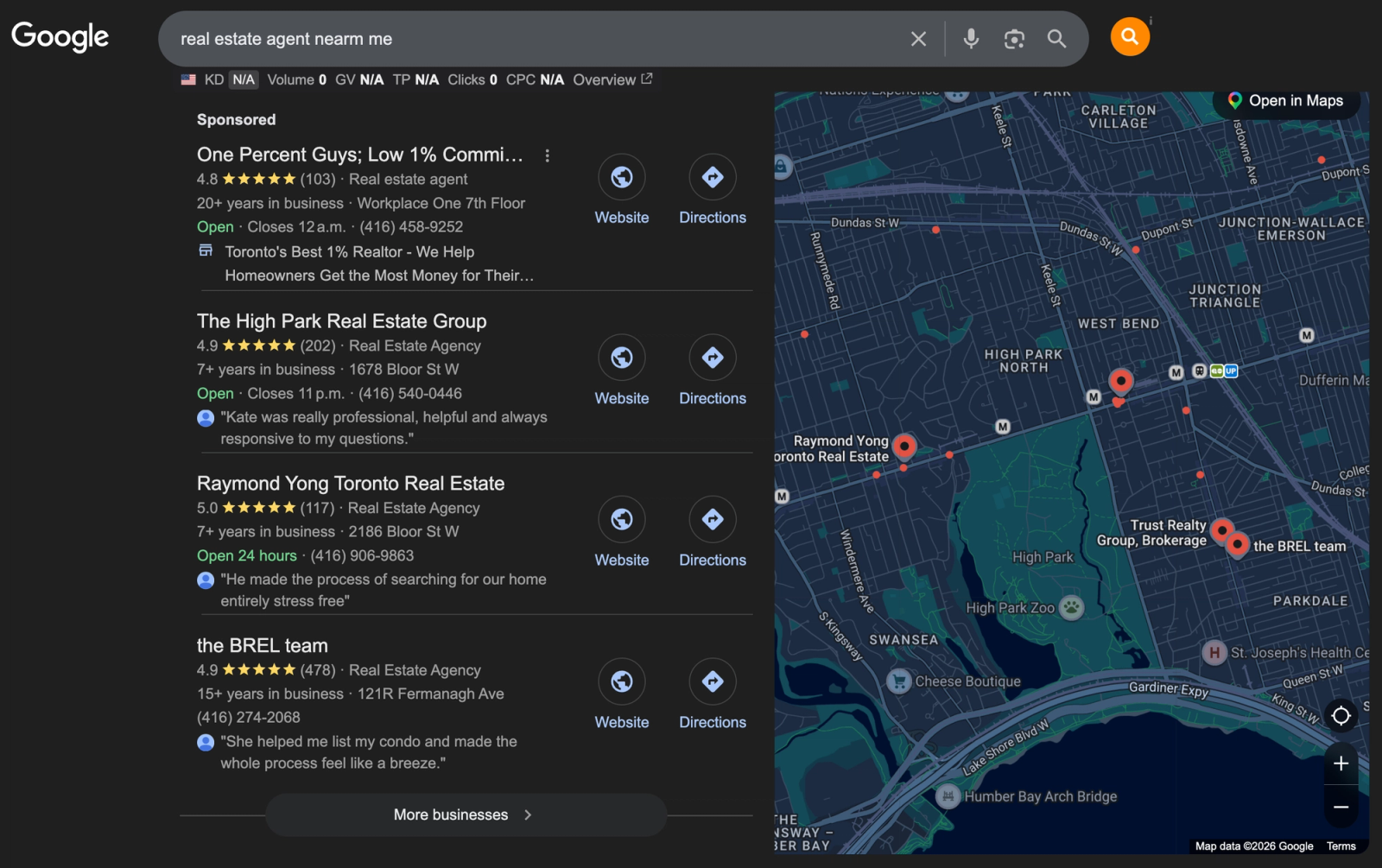
Local SEO is the practice of optimizing your online presence to attract clients searching for real estate services in specific geographic areas. When someone searches "real estate agent near me" or "homes for sale in [your city]," local SEO determines whether your business appears in those results.
For real estate professionals, local SEO focuses on three key areas:
1. Optimizing your website for location-specific keywords
2. Managing your Google My Business profile
3. Building local citations across relevant directories and third party websites.
Unlike general SEO that might target national audiences, local SEO concentrates on dominating search results in the specific markets where you operate. The goal is simple: when someone in your area needs real estate services, your name should appear first.
The ROI on local SEO for real estate agents is substantial. Studies show that 97% of people learn more about a local company online than anywhere else, and 46% of all Google searches have local intent. For real estate specifically, 90% of home buyers use the internet during their home search process.
Consider the value of a single client. The average real estate commission on a median-priced home can range from $10,000 to $20,000 or more. If your local SEO efforts generate just a few qualified leads per month, the investment pays for itself many times over.
Beyond immediate ROI, local SEO builds long-term equity. Your rankings improve over time, creating a sustainable lead source that doesn't disappear when you stop paying for ads.
Many successful agents report that organic search becomes their primary lead source within 12-18 months of consistent local SEO work.
Traditional SEO focuses on ranking for broad, often national keywords regardless of the searcher's location. Local SEO specifically targets geographic searches and aims to appear in location-based results like the Google Map Pack.
The key differences:
For real estate agents, local SEO should be your primary focus. Your business depends on serving specific communities, making local visibility far more valuable than national traffic.
Still, it’s important to dedicate some of your marketing efforts to real estate content marketing (traditional SEO) to build authority, just make sure your main focus remains on local optimization for your core service pages.
Local keyword research starts with understanding how your prospects actually search. They're not using industry jargon, they're typing conversational queries that reflect their immediate needs and geographic location.
The most valuable local keywords typically include geographic modifiers (city names, neighborhoods, "near me") combined with real estate terms (agent, homes for sale, realtor, open houses). Your goal is to identify the specific phrases your target clients use when they're ready to engage with an agent.
Some examples could include:
Start by putting yourself in your client's shoes.
What would you search if you needed a real estate agent in your area? What neighborhoods do you serve? What unique features do buyers search for in your market?
Several free tools can accelerate your local keyword research.
Google Keyword Planner provides search volume data and keyword suggestions directly from Google's database. Simply enter your service plus your location, and the tool generates related terms people are searching.
Google Trends helps you understand seasonal patterns and compare the popularity of different search terms in your specific region. This is particularly useful for understanding when different types of searches peak—for example, "homes for sale" often spikes in spring and summer.
Your own website analytics (Google Analytics and Search Console) reveal what people are already searching to find you. This data is gold because it shows terms where you have existing visibility and opportunities to improve.

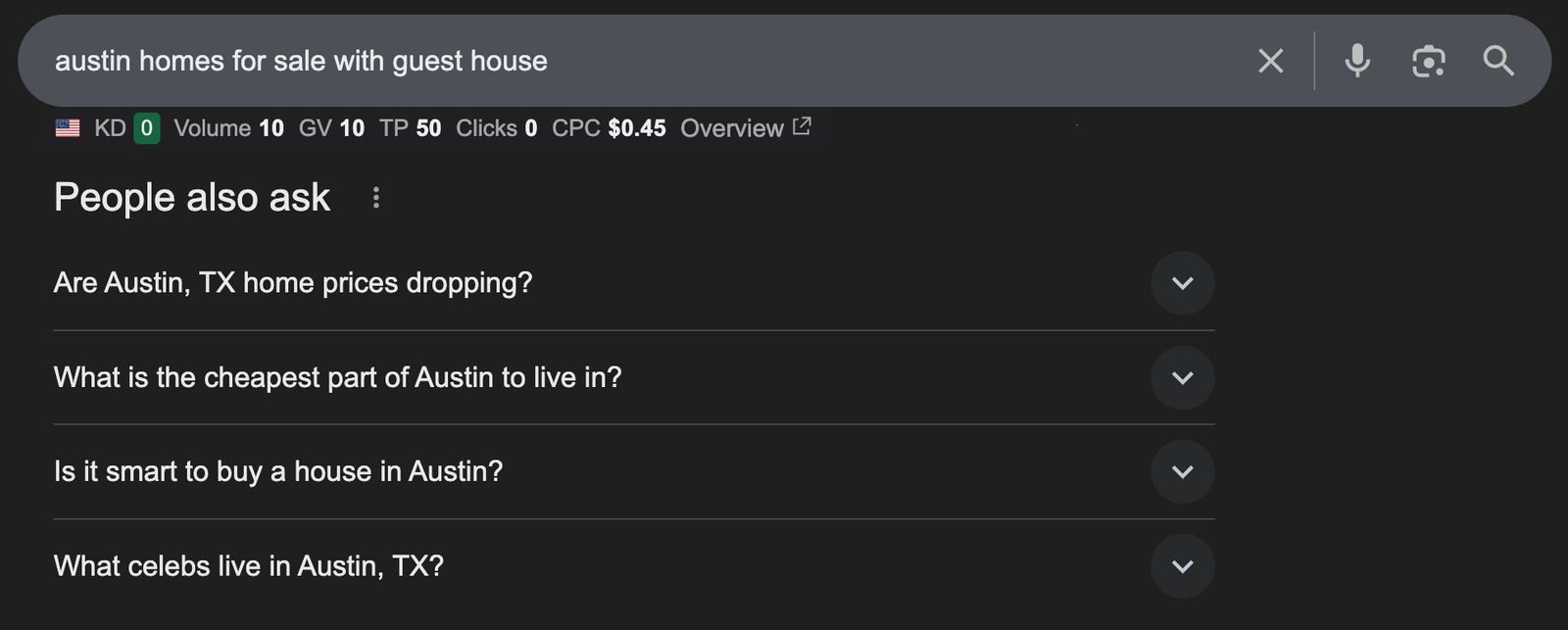
The "People Also Ask" section appears in most Google search results, showing common questions related to your search query. This feature is a goldmine for understanding what information your prospects seek.
Search for terms like "real estate agent [your city]" and examine the questions that appear. You'll find queries like "How do I choose a real estate agent?" or "What should I look for in a realtor?" Each question represents content opportunities that can attract local traffic.
Click on any question and Google expands the section with additional related questions. This creates a cascade of content ideas directly sourced from what real people are asking in your market.


Scroll to the bottom of any Google search results page and you'll find "Related Searches"—a list of alternative queries people commonly search. These variations reveal how searchers refine their queries and what additional information they're seeking.
For a search like "homes for sale in [your city]," related searches might include "[your city] real estate market," "best neighborhoods in [your city]," or "new construction homes [your city]." Each phrase is a potential keyword to target with dedicated content.
This feature is particularly valuable for discovering long-tail keywords—longer, more specific phrases that may have lower search volume but higher intent and less competition.

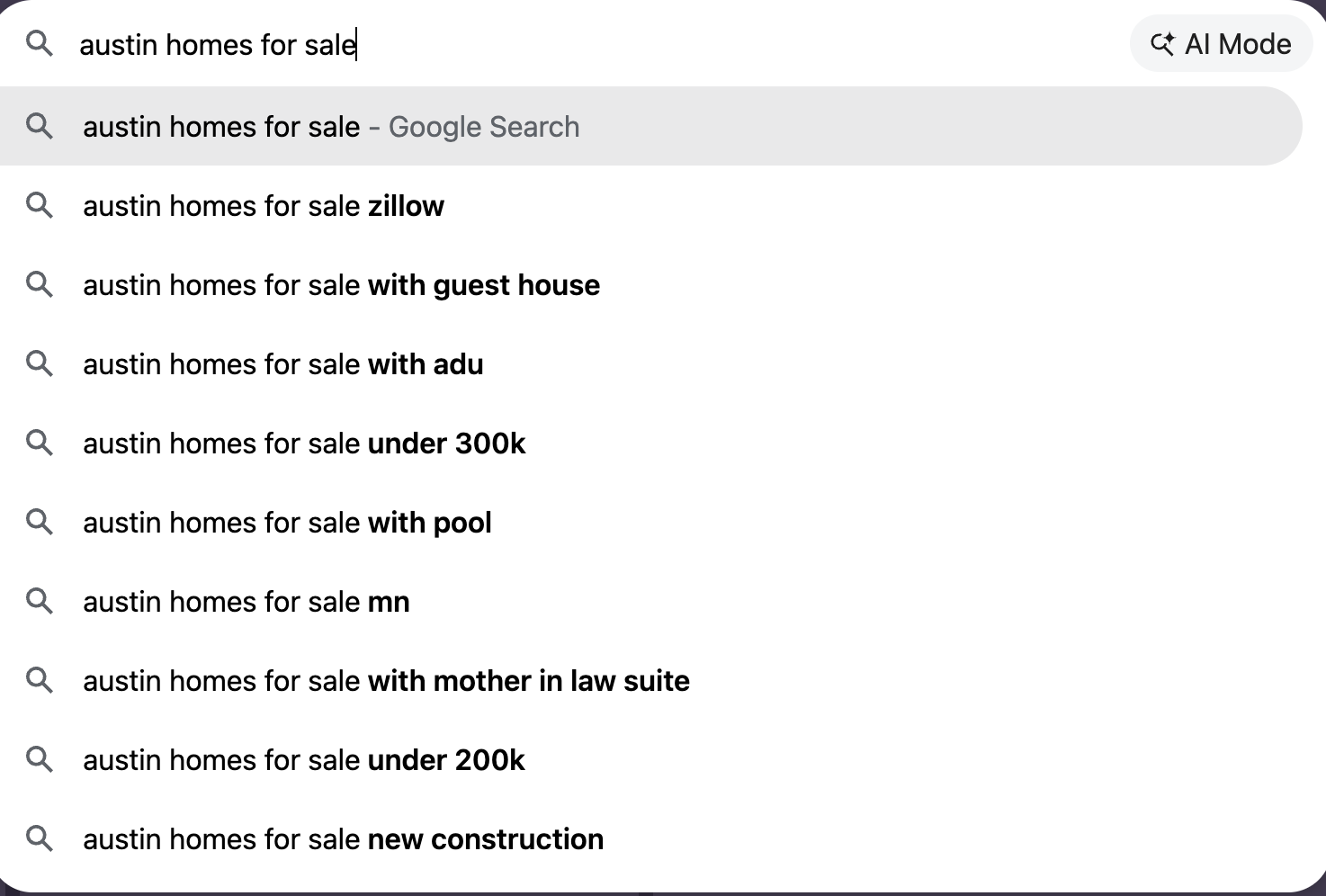
Google's autocomplete feature predicts search queries as you type, based on popular searches. This provides real-time insight into what people are actually searching in your area.
Start typing "real estate" or your city name followed by "homes" and watch what suggestions appear. Try different combinations: "[city] + homes for sale," "[neighborhood] + real estate agent," "best realtor in [area]." Each suggestion represents a keyword worth considering.
This method is particularly effective for discovering "near me" variations and long-tail keywords that other tools might miss. The suggestions update based on location, giving you hyperlocal keyword insights.
While manual research is valuable, specialized tools can dramatically accelerate your local SEO efforts. Here's a curated selection of tools particularly useful for real estate professionals.

Ahrefs is a comprehensive SEO platform offering keyword research, competitor analysis, and backlink monitoring. For real estate agents, its most valuable feature is the ability to analyze what keywords your competitors rank for and identify gaps in your own strategy.
The Site Explorer tool lets you enter any competitor's website and see their top-ranking pages, keywords, and backlink sources. This competitive intelligence helps you understand what's working in your market and where opportunities exist. Ahrefs also provides accurate search volume data with location-specific filtering, essential for local keyword research.
Pricing starts around $99 USD per month, making it an investment best suited for agents serious about dominating local search.

Google Keyword Planner is a free tool within Google Ads that provides keyword suggestions and search volume data directly from Google. While designed for advertisers, it's equally valuable for organic keyword research.
Enter your core real estate terms combined with your location, and the tool generates related keywords with average monthly search volumes. You can filter results by location to focus specifically on your market. The tool also shows competition levels and suggested bids, giving insight into keyword value.
One limitation: Google shows search volume ranges rather than exact numbers unless you're running active ad campaigns. Despite this, it remains one of the most reliable free keyword research tools available.

Whitespark specializes in local SEO tools, with particular strength in citation building and local rank tracking. For real estate agents managing multiple location pages or serving different neighborhoods, Whitespark's local rank tracker shows how you perform in different geographic areas.
The citation finder identifies directories and websites where you should list your business, while the citation builder service can handle the submission process. This is particularly valuable for establishing consistent NAP (Name, Address, Phone) information across the web.
Whitespark also offers reputation management features to monitor and respond to reviews across multiple platforms.

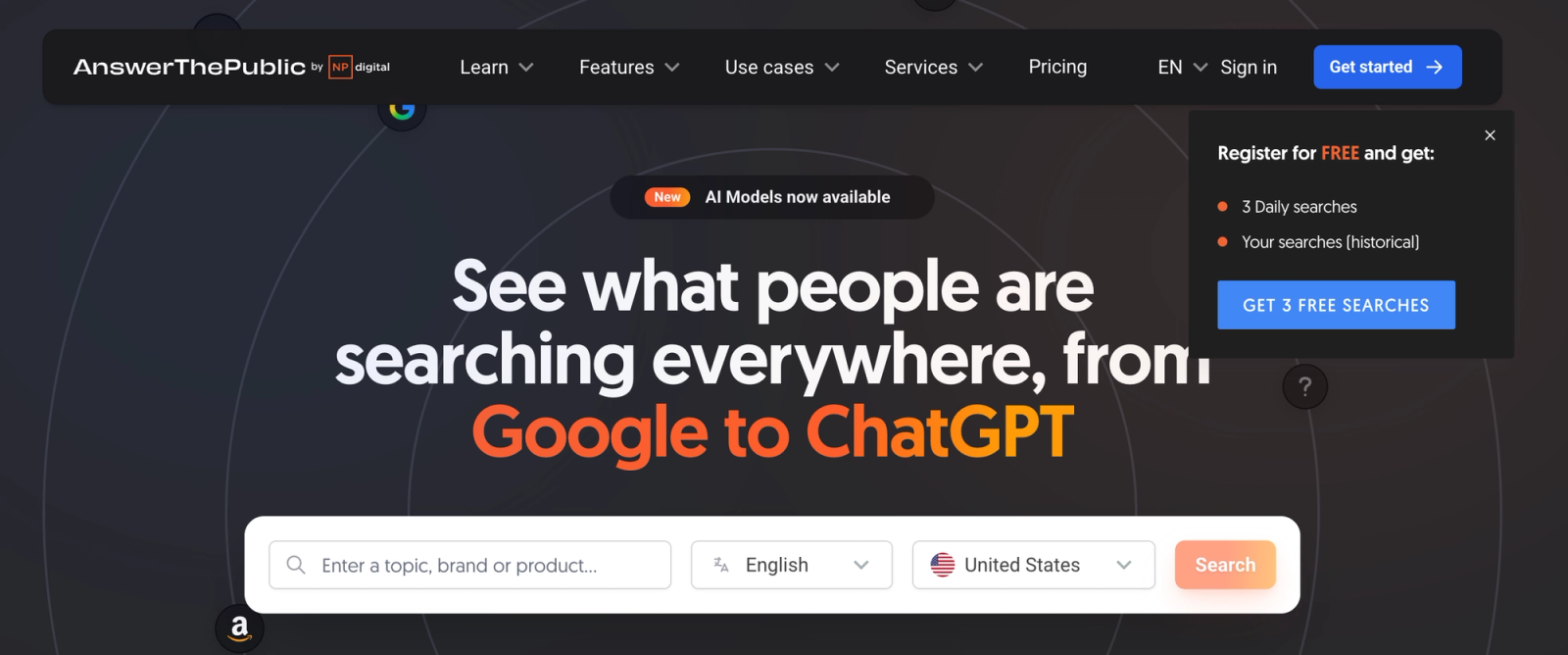
Answer The Public visualizes search questions and queries related to any keyword, organizing them into categories: questions (who, what, when, where, why, how), prepositions (for, with, near, to), and comparisons.
Enter "real estate [your city]" and the tool generates hundreds of actual search queries organized visually. This helps you understand the questions prospects ask at different stages of their buyer or seller journey.
The free version provides 3 daily searches with results display. The paid version offers unlimited searches, search volume data, and CSV exports for deeper analysis.

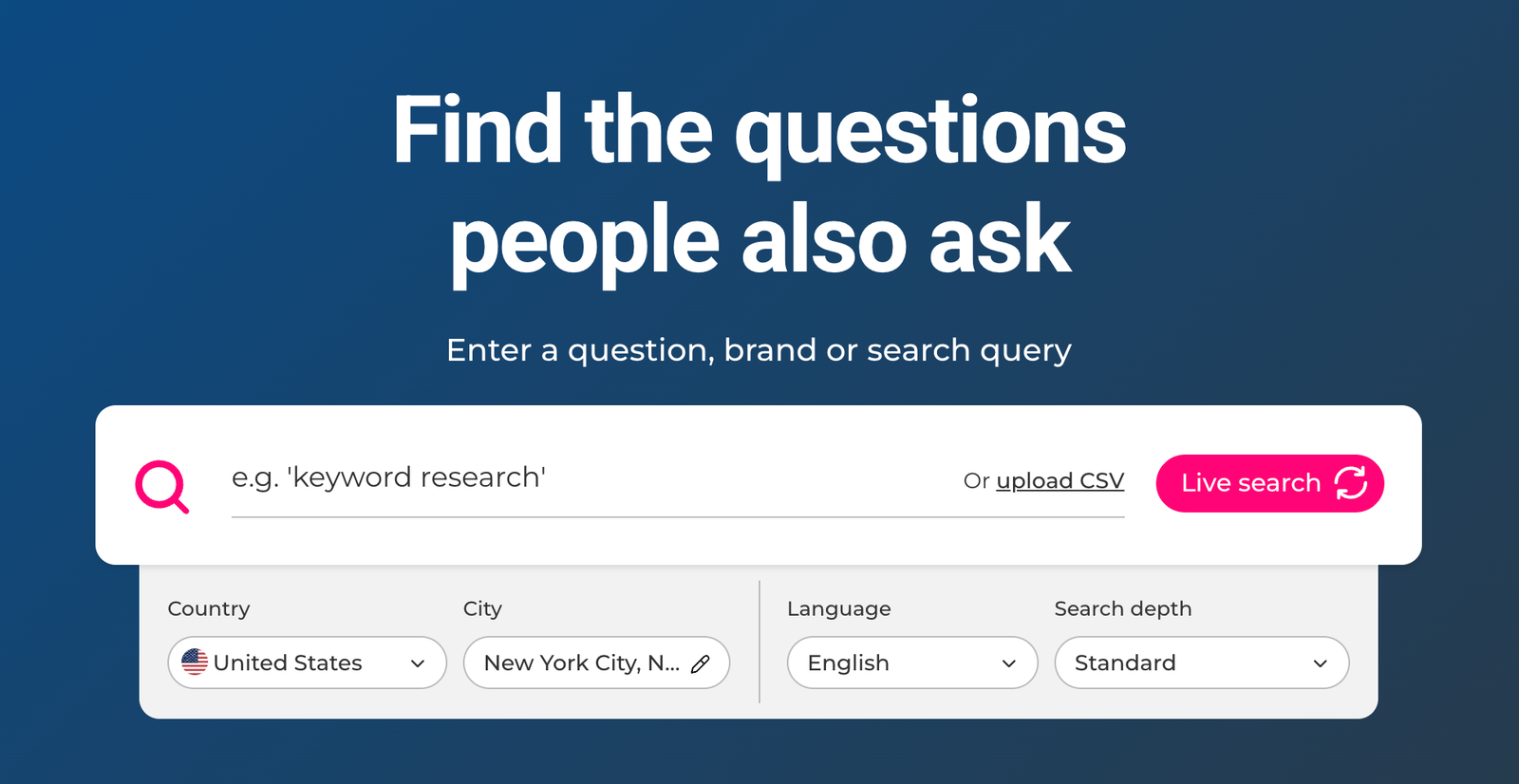
AlsoAsked takes the "People Also Ask" concept deeper by mapping out the full question hierarchy. When you search a term, it shows not just the initial questions but the follow-up questions people ask after clicking those initial queries.
For real estate agents, this reveals the complete information journey your prospects take. You might discover that someone searching "how to sell a house" next asks "do I need a realtor to sell my house," then "how much does a realtor charge." Each branch represents content opportunities that address your audience's evolving questions.
The free tier offers 3 free searches per day, while paid plans provide unlimited searches and deeper question trees.

Google Search Console is essential for monitoring how your website performs in Google search. It shows which queries drive traffic to your site, your average position for different keywords, and which pages receive the most impressions and clicks.
The "Performance" report reveals keyword opportunities where you rank on page two or three—prime candidates for optimization that could move to page one with targeted improvements. The "Coverage" report identifies technical issues that might prevent pages from ranking.
For local SEO, use the geographic filter to see how your performance varies by location. This helps identify markets where you have visibility and areas needing more attention.

Screaming Frog is a website crawler that audits your site for technical SEO issues. It identifies broken links, missing meta descriptions, duplicate content, and other problems that harm search performance.
For real estate websites with hundreds of property listing pages, Screaming Frog quickly identifies systematic issues affecting multiple pages. The tool also analyzes your site structure, helping you understand how pages link together and where internal linking could improve.
The free version crawls up to 500 URLs, sufficient for smaller real estate websites. Larger sites require the paid license, which removes the URL limit.
Strategic keyword placement signals to search engines what your pages are about and which queries they should rank for. However, modern SEO requires natural integration—keywords should enhance readability, not disrupt it.
The most important locations for keywords are those that search engines and users see first: titles, headings, and the opening paragraphs of your content. Secondary locations like image alt text and meta descriptions provide additional context without impacting the user experience.
Always prioritize creating valuable content for your audience. Keywords should fit naturally into content that genuinely helps prospects understand your services and market.
Page titles are the single most important on-page SEO element. They appear as the clickable headline in search results and tell both search engines and users what the page is about.
For local real estate pages, structure titles as: [Service] in [Location] | [Your Business Name]. For example: "Real Estate Agent in Austin, TX | Smith Realty" or "Homes for Sale in Brooklyn Heights | Brooklyn Realty Group."
Keep titles under 60 characters to prevent truncation in search results. Place your most important keyword near the beginning, as search engines give more weight to words appearing earlier in the title.
Keywords should appear naturally throughout your page content, particularly in the first 100 words where search engines look for topical signals. Use your primary keyword in the opening paragraph, then sprinkle variations and related terms throughout the remaining content.
Avoid focusing on keyword density—there's no magic percentage. Instead, write naturally about your topic, and keywords will appear organically. If you're genuinely discussing real estate services in Austin, terms like "Austin real estate," "Austin homes," and "Austin neighborhoods" will naturally occur in your writing.
Include keywords in subheadings (H2 and H3 tags) where relevant, as search engines use heading structure to understand content hierarchy and main topics.
Internal links connect related pages on your website, helping both users and search engines navigate your content. Using descriptive, keyword-rich anchor text in these links signals what the linked page is about.
Instead of generic "click here" links, use specific phrases: "Learn more about buying homes in downtown Austin" or "See our guide to selling in the spring market." These descriptive links strengthen topical relevance and help search engines understand your site structure.
Link from general pages to specific ones (city page to neighborhood pages) and connect related content (market reports to neighborhood guides). This creates topical clusters that establish your expertise in specific areas.
Local SEO services for real estate agents typically range from $500 to $5,000 per month, depending on market competitiveness, scope of services, and provider expertise.
At the lower end ($500-$1,500/month), expect basic services like Google My Business optimization, citation building, and monthly reporting.
Mid-tier services ($1,500-$3,000/month) add content creation, technical SEO, review management, and more comprehensive keyword targeting.
Premium services ($3,000-$5,000+/month) include aggressive content marketing, advanced link building, multiple location optimization, and dedicated account management.
Several factors influence pricing: market competition (metropolitan areas cost more than smaller markets), your existing website's condition (sites with technical issues require more upfront work), the number of locations you want to rank for, and the comprehensiveness of services.
Many agencies offer one-time setup fees ($1,000-$3,000) covering initial audits, Google My Business setup, and foundational optimization before transitioning to monthly retainers.
When evaluating services, focus on what's included rather than just price. The cheapest option may deliver minimal results, while the right investment in quality services can generate life-changing ROI.
Implementing these proven strategies will strengthen your local search visibility and establish your website as the go-to resource for real estate in your market. The ultimate goal of these strategies are to help you stand out as a real estate agent.
Hyperlocal content focuses on specific neighborhoods, streets, and micro-communities within your market. Instead of generic city-level content, drill down to what makes each area unique: school districts, walkability scores, local businesses, parks, and community events.
Examples include neighborhood guides ("Living in [Neighborhood Name]: A Complete Guide"), school district comparisons, local market reports by neighborhood, and spotlight articles on local businesses and amenities. This content resonates with buyers researching specific areas and positions you as the true local expert.
Hyperlocal content also naturally attracts local links and mentions, as community organizations and local businesses may share content that features them.
Location pages are dedicated pages optimizing for specific cities, towns, or neighborhoods you serve. Each page should include unique content about that location, current market data, featured listings, neighborhood highlights, and testimonials from clients in that area.
Structure your location pages consistently
1. An overview of the area
2. An MLS connection to show all the properties in that area
3. Current market statistics
4. The top neighborhoods within that location
5. Schools, amenities and things to do in the area
6. Recent sales data
7. A call-to-action to contact you about that specific area.
Avoid thin, templated content that simply swaps out city names. Each location page should provide genuine value and unique information that differentiates it from your other pages.
Connect your location pages to related neighborhood pages, link market reports to relevant location pages, and create pathways between blog posts and your service pages. This internal linking structure creates topical clusters that tell search engines you have comprehensive content on specific subjects.
Use a hub-and-spoke model: create a main location page for your city that links out to individual neighborhood pages, which then link to relevant blog posts and listings. This architecture makes it easy for both users and search engines to navigate your content hierarchy.
Regularly audit your internal links to identify orphaned pages (pages with no internal links pointing to them) and opportunities to strengthen topical relevance through better connection between related content.
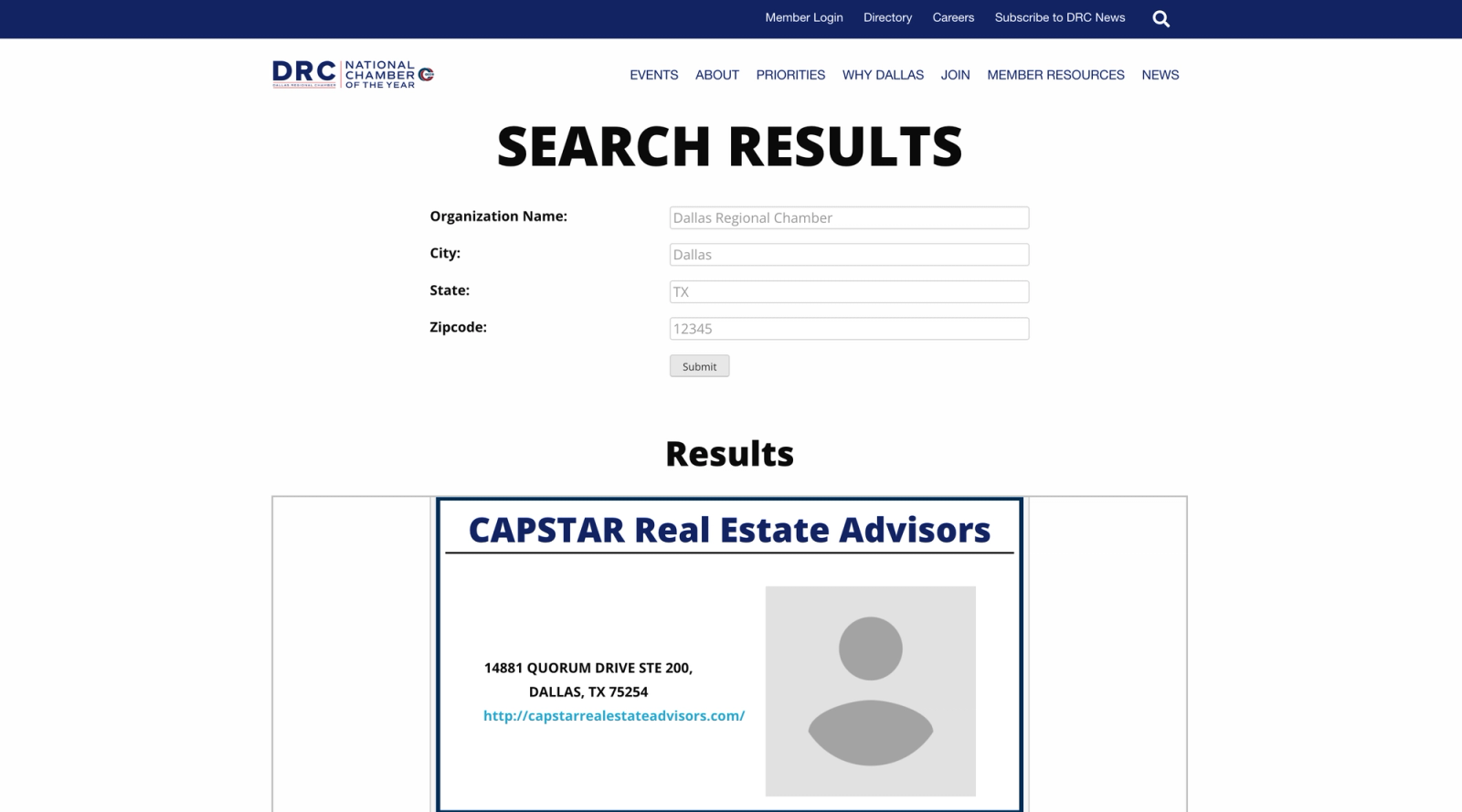
Backlinks from other websites signal authority and relevance to search engines. For local SEO, links from local sources carry particular weight: chambers of commerce, local business associations, community organizations, local news sites, and neighborhood blogs.
Citations are online mentions of your business name, address, and phone number, even without a link. Consistent citations across directories like Yelp, Yellow Pages, and real estate-specific directories (Zillow, Realtor.com) strengthen your local presence.
Start with the major citation sources: Google My Business, Yelp, Facebook, and Google Maps. Then pursue niche real estate directories and local business listings specific to your area.
Adjacent businesses serve the same customers but don't directly compete with you: mortgage brokers, home inspectors, contractors, interior designers, moving companies, and title companies. Guest posting on their blogs builds valuable local backlinks while establishing mutually beneficial relationships.
Offer to write helpful content for their audience: "What Home Buyers Should Know About the Inspection Process" for a home inspector's blog, or "How to Choose the Right Mortgage for Your First Home" for a mortgage broker's site. Include a natural link back to relevant pages on your website.
These partnerships often extend beyond guest posts to referral relationships that benefit both businesses long-term.
While your website is your primary digital asset, maintaining profiles on key third-party platforms extends your reach and builds authority. Essential platforms for real estate agents include:
Zillow and Realtor.com (the two largest real estate search platforms), Facebook and Instagram (for community engagement and advertising), LinkedIn (for professional networking and B2B referrals), Yelp (a major citation source and review platform), Nextdoor (hyperlocal community networks), and YouTube (the second-largest search engine, ideal for property tours and market updates).
Complete each profile fully with consistent NAP information, professional photos, and links back to your website. Regular activity on these platforms—posting listings, sharing market updates, engaging with comments—strengthens your overall online presence.
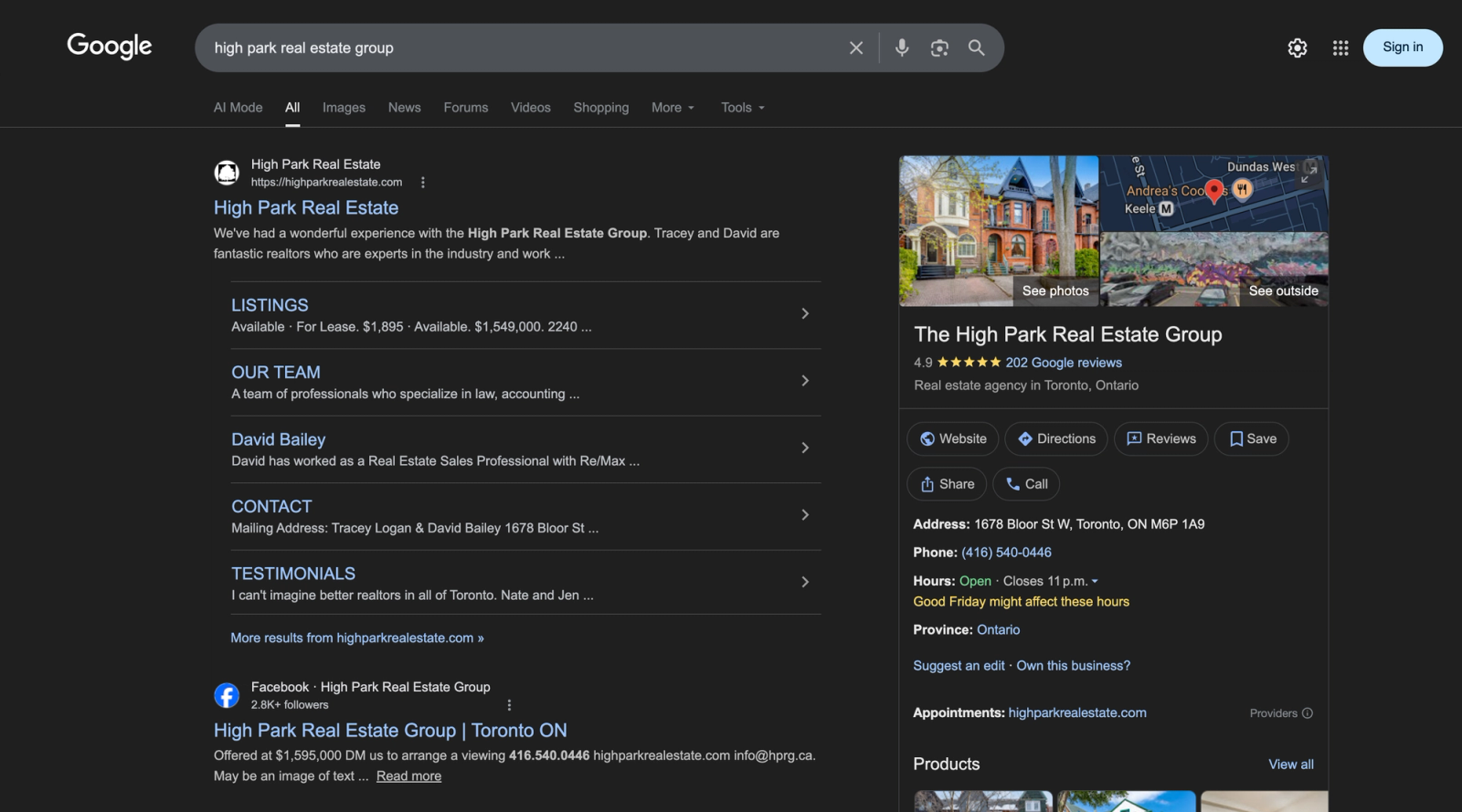
Your Google My Business (GMB) profile is often the first impression potential clients have of your business. It appears in Google Maps, the local map pack in search results, and in Google's knowledge panel. Optimizing this profile is non-negotiable for local real estate SEO.
A fully optimized GMB profile includes accurate business information, compelling visual content, regular posts, and genuine client reviews.
If you need step-by-step instructions on claiming and verifying your profile, refer to our Google My Business Setup Guide For Real Estate Agents before diving into these optimization strategies. Google rewards complete, active profiles with better visibility in local search results.
Setting accurate business hours in Google My Business helps clients know when to reach you and can influence your visibility in local search results. Go to your GMB dashboard, click on "Info," and add or update your hours for each day of the week.
Some real estate agents list themselves as "open 24 hours" because Google may prioritize businesses that appear open when people search.
However, this creates the expectation that clients can reach you at any time—including 3 a.m. calls. If you choose this approach, make sure you have systems in place to handle inquiries around the clock, or clearly communicate your actual availability in your business description.
A better approach for most agents is listing realistic hours when you're actively available (such as 9 AM - 7 PM) while noting in your description that you're available by appointment outside these hours.
NAP consistency across all online platforms is crucial for local SEO. Search engines verify your business information by cross-referencing it across multiple sources. Inconsistencies—different phone numbers, address variations, abbreviated versus spelled-out street names—confuse search engines and dilute your local authority.
Audit every place your business is listed: your website, Google My Business, social media profiles, directory listings, and citation sources. Ensure your business name, address, and phone number are formatted identically everywhere.
If you've moved offices or changed phone numbers, systematically update every listing. Even old, forgotten profiles with outdated information can harm your local rankings.
Google My Business allows you to select a primary category and additional categories that describe your business. Your primary category should be "Real Estate Agent" or "Real Estate Agency," as this directly matches what prospects search for.
Additional categories let you specify your niche: "Property Management Company," "Commercial Real Estate Agency," "Real Estate Consultant," or "Real Estate Appraiser." Choose categories that accurately reflect your services and match how clients might search for you.
Avoid selecting unrelated categories to game the system—this can confuse potential clients and may harm your rankings. Focus on accuracy and relevance.
Visual content significantly impacts engagement with your GMB profile. Businesses with photos receive 42% more requests for directions and 35% more click-throughs to their websites compared to those without.
Upload a mix of content types: exterior photos of your office, interior shots showing your workspace, team photos, photos of you with clients (with permission), property images, neighborhood photos, and video tours. Aim for at least 10-15 high-quality images initially, then add new content monthly.
Ensure photos are professional quality—well-lit, in focus, and properly composed. Avoid stock photos or generic images that could apply to any real estate business. Authentic photos of your actual business build trust and set realistic expectations.
Linking your Google My Business profile to your website and social media accounts creates a cohesive online presence and provides additional pathways for clients to engage with you. In your GMB dashboard, add your website URL in the primary field and include links to your Facebook, Instagram, LinkedIn, and other active social profiles.
These connections serve multiple purposes: they verify your business legitimacy, give potential clients multiple ways to learn about you, and create additional signals to search engines about your online presence. They also improve user experience by making it easy for people to explore your business across different platforms.
Ensure the URLs you add are correct and lead to active, professional profiles. Broken links or abandoned social accounts create a poor impression.
Adding appointment scheduling directly to your Google My Business profile removes friction from the client acquisition process. Tools like Calendly integrate with GMB and allow prospects to book meetings directly from your profile without email back-and-forth.
This feature is particularly valuable because it enables prospects to schedule appointments even outside your business hours. Someone browsing listings at 11 PM can immediately book a showing or consultation for the next day rather than waiting to call during business hours—when they might forget or choose a competitor who made it easier.
After all,
Google My Business includes a "Products" section that many real estate agents overlook. Use this feature to showcase your active listings, buyer's guides, seller's guides, neighborhood reports, and other valuable resources.
For listings, create a product entry with high-quality photos, a compelling description, the address, and price (if not confidential). This makes your active inventory visible directly in your GMB profile, potentially capturing interest before someone even visits your website.
For downloadables like buyer's guides, create product entries with eye-catching covers, brief descriptions of what the guide includes, and instructions for accessing them (directing to a landing page where they can download in exchange for contact information).
This feature differentiates your profile from competitors and provides additional opportunities for engagement.
Google My Business allows you to create posts similar to social media updates—announcements, offers, events, and general updates. These posts appear in your GMB profile and can increase engagement and visibility.
Post at least weekly with content like: new listings, open house announcements, recently sold properties, market updates, community events, client testimonials, and helpful tips for buyers and sellers. Each post should include a clear call-to-action and relevant photo or video.
Posts remain visible for seven days (or until an event date passes), after which they move to an archive. Consistent posting signals to Google that your business is active and engaged, which can positively impact your local search visibility.
Reviews are a critical ranking factor for local SEO and significantly influence potential clients' decisions. Businesses with more positive reviews rank higher in local search results and convert more prospects into clients.
Actively request reviews from satisfied clients immediately after closing. Send a personalized message thanking them and including a direct link to your Google review page. Make it as easy as possible by providing the exact link rather than instructions to find you.
While you should never tell clients what to write, you can guide them toward helpful reviews by mentioning what would be useful: "If you'd be willing to share your experience, future clients would love to hear about your home search in [neighborhood] and how we helped you find the perfect place." This gentle prompt often results in reviews that naturally include relevant keywords.
Aim for a steady stream of reviews over time rather than bursts followed by silence. Five reviews spread across several months looks more natural than five reviews in one week.
Negative reviews are inevitable, but how you respond demonstrates your professionalism and can actually strengthen your reputation. Never ignore negative reviews or respond defensively.
Respond promptly and professionally: acknowledge the person's concerns, apologize for their negative experience (without admitting fault if inappropriate), briefly explain your perspective if warranted, and offer to resolve the issue offline. For example: "I'm sorry you had this experience. This doesn't reflect the level of service we strive to provide. I'd like to discuss this further and see how we can make things right. Please contact me directly at [phone/email]."
This approach shows potential clients that you take concerns seriously and handle conflicts professionally. Many people expect occasional negative reviews and focus more on how businesses respond than on the criticism itself.
If a review is fraudulent or violates Google's policies, flag it for removal through the GMB dashboard. Google won't remove reviews simply because they're negative, but they will remove fake reviews, spam, or content that violates their guidelines.
Even well-intentioned real estate agents make SEO mistakes that undermine their local visibility. Avoid these common pitfalls to maximize your search performance.
Keyword stuffing—cramming keywords unnaturally into content to manipulate rankings—is an outdated tactic that now harms rather than helps your SEO. Search engines have evolved to recognize natural language and penalize content that prioritizes keywords over readability.
Examples of keyword stuffing: "If you're looking for Austin real estate, our Austin real estate agents help Austin real estate buyers find Austin real estate properties in Austin." This reads awkwardly and provides poor user experience.
Instead, write naturally: "Our agents help buyers find properties throughout Austin, from downtown condos to suburban family homes." The keywords appear naturally without compromising readability.
Modern SEO rewards content that genuinely serves users. Write for people first, and keywords will naturally integrate into well-crafted content.
Many real estate websites use IDX (Internet Data Exchange) systems that automatically generate property listing pages. While convenient, these template pages often contain minimal unique content—just the property data pulled from the MLS.
Search engines increasingly devalue thin content that provides little unique value. Additionally, many IDX systems use client-side JavaScript that makes it difficult for search engines to understand page content. These pages often don't differentiate you from dozens of other agents displaying the same listings.
To improve IDX pages, add unique content: neighborhood descriptions, market context, notes about the property or area, and your professional insights. Even a few paragraphs of original content per listing significantly improves SEO value and user experience.
Better yet, create custom landing pages for featured listings with comprehensive descriptions, video tours, and detailed neighborhood information.
Many real estate websites have poor internal linking structure—pages exist in isolation without connections to related content. This is a missed opportunity to guide users through your site and signal topical relationships to search engines.
Common mistakes include: navigation menus as the only internal links, no links within blog posts to relevant service pages, location pages not linking to related neighborhood pages, and new content not integrated into existing site structure.
Strategic internal linking improves user experience by surfacing relevant content they might miss otherwise, distributes link equity throughout your site, creates topical clusters that establish expertise, and helps search engines discover and understand all your pages.
Regularly audit your internal linking and look for opportunities to connect related content. Every new page you publish should have internal links both to and from existing pages.
"Near me" searches have exploded in popularity, with queries like "real estate agent near me" or "open houses near me" representing high-intent local searches. Many real estate websites fail to optimize for these queries.
To capture "near me" traffic, ensure your Google My Business profile is fully optimized (as Google primarily serves local pack results for these queries), include location-specific content throughout your site, maintain consistent NAP information across all platforms, and use schema markup to help search engines understand your service areas.
Also create content that answers "near me" intent without literally using those words. Someone searching "real estate agent near me" wants to know you serve their specific area, which your location pages and localized content should make clear.
Relying solely on traditional contact forms is a critical mistake that causes real estate websites to lose valuable leads. Forms create friction and fail to meet modern expectations for instant engagement especially when potential clients browse listings late at night with immediate questions.
Understanding the differences between form-based and AI chatbot lead capture is essential for maximizing conversions. AI chatbots provide immediate, conversational responses about listings, neighborhoods, and availability, capturing leads who would otherwise abandon a lengthy form. They qualify prospects naturally, schedule showings, and collect contact information through organic dialogue.
Don't funnel every visitor through the same rigid form. Provide options, respond instantly, and watch your conversions grow.
AI-powered search engines and features like Google's AI Overviews are transforming how people find information online. These systems synthesize information from multiple sources to provide direct answers rather than just links.
For local real estate SEO, this means content must be more comprehensive, authoritative, and directly helpful than ever before. AI search systems prioritize content that thoroughly answers questions and provides genuine value over content optimized purely for ranking.
The rise of voice search and conversational AI queries also shifts keyword strategy toward natural language and question-based content. Instead of targeting "Austin real estate agent," consider "What should I look for in an Austin real estate agent?" or "How do I choose a realtor in Austin?"
In the age of AI search, generic content loses value while specific, detailed content becomes increasingly important. AI systems can generate basic information, so your content must provide depth, local expertise, and unique insights that only an experienced local agent can offer.
Instead of generic "Tips for Buying a Home" content, create "Navigating Multiple Offers in Austin's Competitive Market: A 2025 Buyer's Guide" with specific data, local examples, and actionable advice based on your experience.
Specificity also means addressing niche topics thoroughly rather than surface-level coverage of broad topics. Detailed neighborhood guides, micro-market analyses, and comprehensive local resources demonstrate expertise that AI-generated content can't replicate.
This specificity not only serves AI search systems but also builds trust with human readers who recognize genuine local knowledge versus generic information.
You've built the visibility. You've mastered local SEO. Now comes the crucial next step: converting that traffic into actual clients.
Most real estate websites leak potential leads—visitors land on your site, browse a few pages, and leave without engaging. Madison changes this by transforming passive website visitors into active leads through intelligent engagement and follow-up systems.
Madison integrates with your website to capture visitor information, qualify leads based on behavior and intent, nurture prospects with automated yet personalized follow-up, and seamlessly connect qualified leads to you when they're ready to engage. The system works 24/7, ensuring you never miss an opportunity even when you're showing properties or in meetings.
Don't let another potential client walk away because you weren't available to respond instantly. Madison's pricing is designed to pay for itself with just one additional deal per month.
Before you spend another dollar on marketing that doesn't convert, take 2 minutes to see how Madison turns your existing website traffic into a steady stream of qualified appointments.

Within just a few months, Realty AI helped Team Logue capture 15 high-quality leads, resulting in 3 new transactions worth over $3.3 million. This success generated an estimated $82,500–$95,000 in gross commission income (GCI).