

How Real Estate Teams and Brokerages Build Backlinks That Actually Rank



TLDR: High-authority backlinks signal trust to Google and drive qualified organic traffic. Build them through guest posts, digital PR, podcasts, and link-worthy content - avoid spammy sites, internally link to key service pages, monitor your profile regularly, and pair strong SEO with an AI chatbot to convert that traffic into real leads.
According to Realty AI's 2025 State of Real Estate Conversations Report, 66.4% of website visitors on real estate sites are already past pure exploration when they engage, actively searching or ready to act. That means the organic traffic your SEO brings isn't casual browsing.
Backlinks are what put you in front of those visitors in the first place.
They're the single most powerful signal you can build to tell Google your site deserves a spot at the top of search results for the markets you serve.
This guide covers everything a real estate team or brokerage needs: why backlinks work differently in hyperlocal markets, the nine strategies that consistently deliver, what to avoid, how to pass link authority to your lead-generating service pages, and how to tell whether any of it is working.
What Is a Real Estate Backlink
A backlink is a hyperlink from another website to a page on yours. When a local news outlet writes about market trends and links to your team's blog post, that's a backlink.
For a brokerage, backlinks do two jobs at once. They build domain authority, a site-wide trust signal that lifts rankings across all your pages, and they drive direct referral traffic from people who may never have found you through search.
Follow Links, NoFollow Links, and Sponsored Links
- Follow links (also called dofollow links) are the default link type. They pass link equity, or ranking power, from the referring site to yours. These are the most valuable for SEO.
- NoFollow links carry a rel="nofollow" attribute that tells search engines not to pass equity. They still drive real referral traffic, and a profile with zero nofollows looks suspicious to Google. Brand mentions and directory citations are often nofollow, and they still matter.
- Sponsored links use a rel="sponsored" attribute to flag paid placements. These don't pass ranking value, but they generate brand awareness and direct traffic.
A healthy backlink profile has all three types. A site with exclusively dofollow links is a red flag to search algorithms.
Pro Tip: Nofollow links can still pontentially pass link equity its just that search engines state that they might not. So aim for follow links but nofollow still help improve your rankings
Why Backlinks Work Differently for Real Estate Teams
Most SEO advice treats backlinks as a numbers game. Get links from high-authority sites and your rankings climb.
That's broadly true, but it misses something important for brokerages and real estate teams. Real estate is a hyperlocal business, and Google's algorithm knows it.
Additionally, as time goes on Google is focusing more on backlink relevance. Always ask yourself, does this link placement make sense?
Rankings for "homes for sale in [neighborhood]" or "real estate agent in [city]" are influenced not just by domain authority but by location relevance signals. Backlinks are a major carrier of those signals.
A DR 35 link from your city's chamber of commerce or a local neighborhood news outlet sends a different quality of signal than a DR 70 link from a national lifestyle blog with no geographic or topical connection to your market.
Both matter, but local authority links are often more direct contributors to map pack and city-level rankings.
One rule that holds up in practice: a link from a site your ideal client might actually read is worth more than a link from a site with no connection to your market.
9 Strategies Real Estate Teams Use to Build Backlinks
Local Directory Citations and Entity Stacking
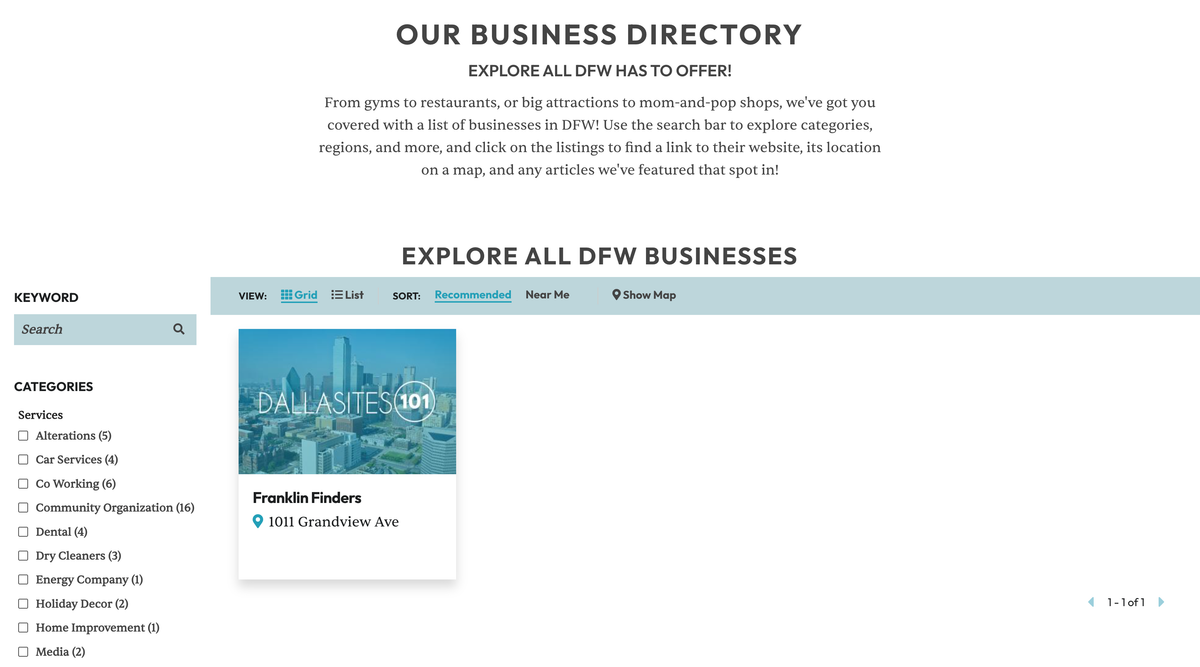
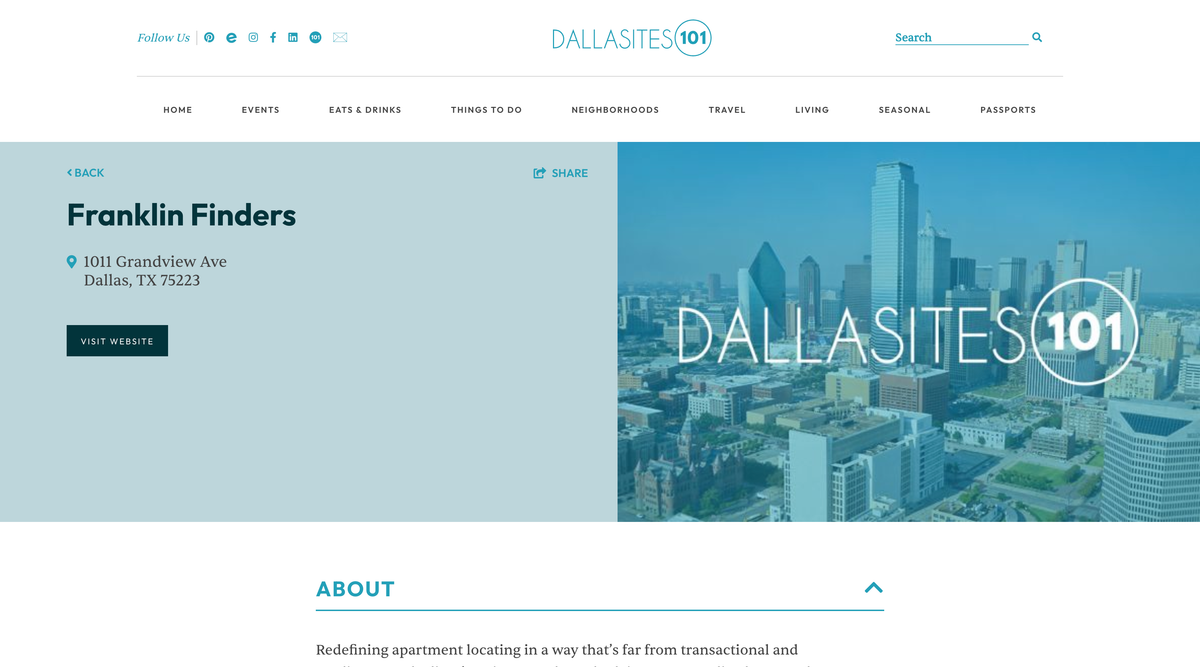
The fastest backlinks any brokerage can build are directory citations, listings on platforms that already rank for real estate-related searches in your market.
The highest-value directories for real estate teams include Zillow, Realtor.com, Rate My Agent, Google Business Profile, Homes.com, your local chamber of commerce business directory, Yelp, and any franchise directory if you're part of a national brand. Alumni organization profiles, industry associations (NAR, local REALTOR boards), and local business improvement district directories are also worth claiming.
The critical detail most teams miss is NAP consistency. Your Name, Address, and Phone number must be identical across every platform.
Every inconsistency tells Google a slightly different story about who you are. Google cross-references these signals constantly, and when they align, they build a coherent entity profile that strengthens your local pack visibility.
Beyond the backlink, these profiles generate leads directly. A fully built Zillow profile that links to your site earns you both a citation and a lead channel.
Guest Posting on Real Estate and Adjacent Sites
Guest posts earn editorial backlinks, the type Google values most. A well-placed article on a relevant site with a link back to one of your service pages or blog posts passes real equity.
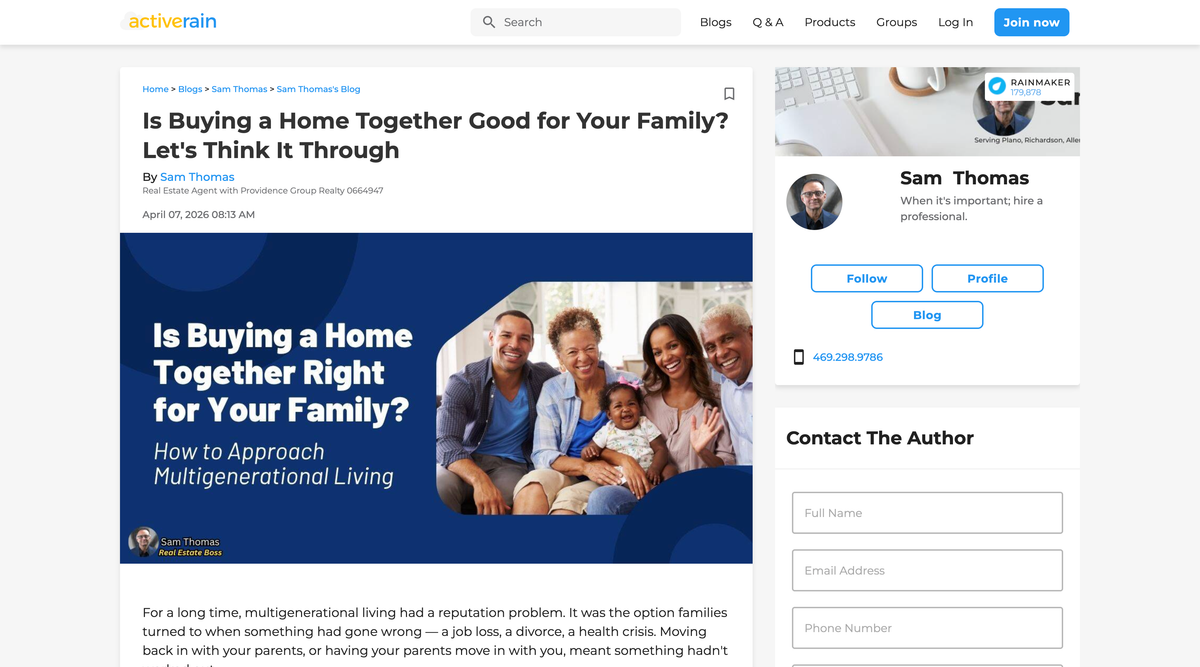
The categories of publications that actually link to real estate content:
- Local business magazines
- Personal finance blogs
- Home improvement and design sites
- First-time buyer resource guides
- Relocation websites
- Local news outlets
Adjacent professional sites like mortgage brokers, estate lawyers, home inspectors, and movers are frequently overlooked and often willing to link out to complementary content.
The pitch that gets opened isn't "I'd like to write about real estate." Editors at local business publications receive that pitch constantly.
What gets traction is identifying a specific problem their readers face: "Your readers are first-time buyers in [city]. I'd like to write a practical guide to navigating the current bidding process in our market." This allows you to connect your business with the audience of the website.
It's a win, win, win as the website gets content, the audience gets expert information and you get a backlink.
Pro Tip: Do not use AI to generate the full article. Its a great starting point but you need to injection your personality, expertise and the brand guidelines of who you are working with. Readers are getting much better at detecting AI slop and you don't want your brand to be associated with that.
Local Partnerships and Sponsorships
This is one of the highest-ROI link building tactics available to brokerages, and most teams never try it.
Sponsor a local charity golf tournament, contribute to a school fundraiser, or support a neighborhood sports league. In most cases, the sponsoring organization publishes a "Thank you to our sponsors" page on their website with links back to each sponsor's site.
A single $300 to $500 sponsorship can earn a link from a local nonprofit whose website carries genuine community authority. Getting that same link through a paid outreach campaign would cost $600 or more.
Look for organizations that already maintain an active web presence and update their sponsors page regularly. Local foundations, neighborhood business associations, youth athletic leagues, and school parent organizations are all strong starting points.
Pro Tip: The reason this is also great is in addition to growing your website, you get great local visibility and in front of your target audience.
HARO and Journalist Outreach
HARO (Help A Reporter Out), now operating as Connectively, is the fastest legitimate path to backlinks from DR 70+ news and media sites. Journalists post queries asking for expert sources, you respond with a usable quote, and if they use it, your name and website get cited in the story.
Here's how the process works:
- Sign up as a source at Connectively.
- Set category alerts for real estate, personal finance, and local business.
- Check the daily digest and identify queries where you have genuine expertise to contribute.
- Write a tight, direct response of three to five sentences that gives the journalist a publishable quote without requiring editing.
- Include your name, title, brokerage, and website URL.
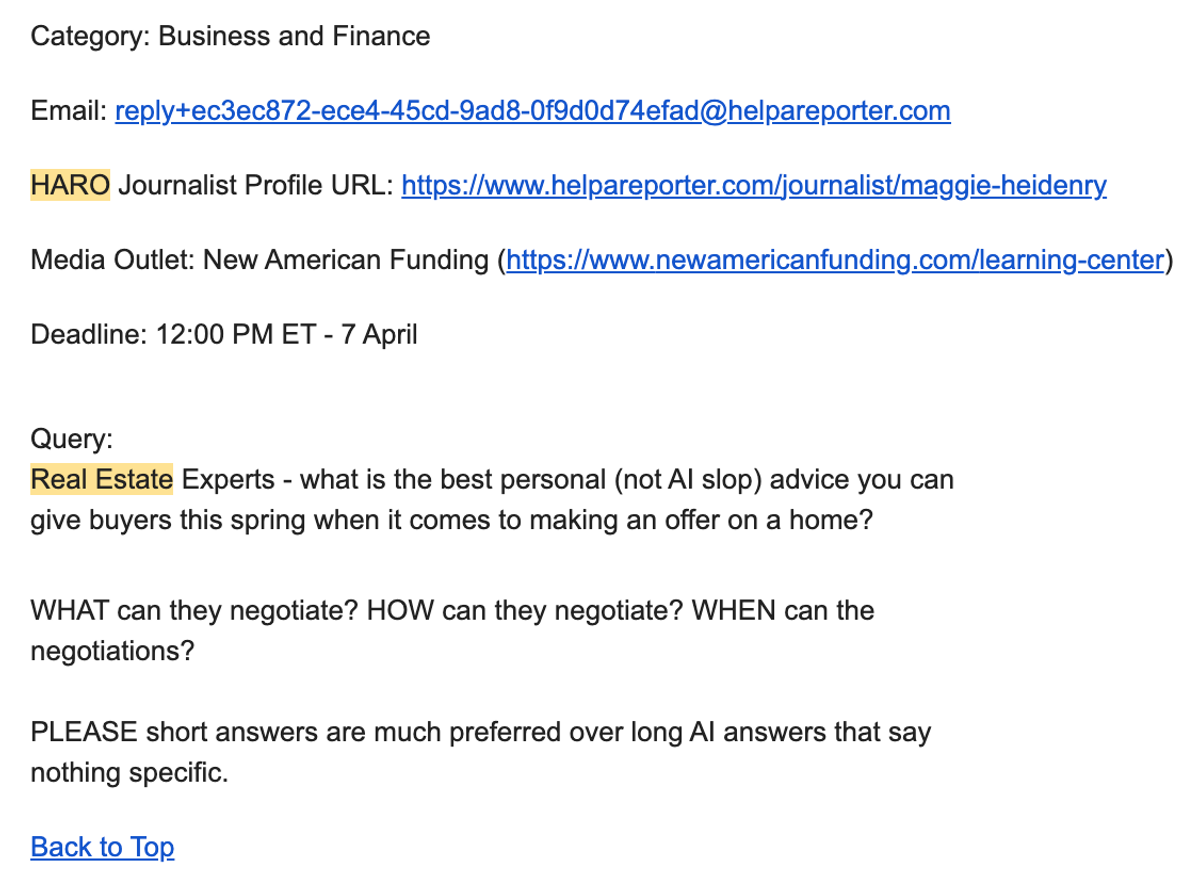
The timing detail that matters most: responses submitted within the first 15-20 minutes of a query going live get picked up at a disproportionately higher rate. Journalists are on deadline, and early, specific responses get read while late ones rarely do.
Pro Tip: Do not use AI to generate a response. This is even in their conditions as no journalist wants recycled information that they could ask ChatGPT themselves.
Digital PR and Local Media Outreach
Local journalists need sources. If your team is consistently tracking market data, you're already sitting on the raw material for media coverage.
The stories that earn local coverage aren't individual listings, they're insights: "Sales in [neighborhood] are up 18% year-over-year while inventory has dropped 22%. Here's what that means for buyers this spring." A new listing announcement is not a story.
Build a short media list covering the real estate and business reporters at your local newspaper, the editors of neighborhood blogs, and the hosts of local business podcasts. Send them a brief, once-a-quarter data update and the ones that run it will cite your team and link to your site.
One published story in a local outlet often earns a DR 50+ link. The relationship compounds over time as reporters learn they can rely on you for a quote.
A great way to find email addresses is Hunter.io, you can simply scan an entire domain and it will return job titles so you can identify the most senior person to reach out to.
Once you have the emails its all about crafting a great pitch. The key to a great pitch includes
- A cold interest or something in common. Don't use a "I read your article here and found it interesting" thats obviously not true.
- Incorporate social proof. Add clients you've worked with if they are high profile, the types of homes you have sold and your years of experience.
- Have a very specific ask and offer. Provide some reports you offer clients about trends you're seeing, how interest rates could impact mortgages, then tie it back to helping them create an article about it.
Podcast Appearances
Real estate investing shows, local business podcasts, and personal finance programs all feature guests and include a link to the guest's website in their show notes. A 30-minute appearance on a well-subscribed local podcast earns a permanent backlink and direct exposure to an audience that trusts the host's recommendations.
Pitch by leading with what you can give their audience, not yourself. "Your listeners who own rental properties in [city] would benefit from hearing how the current rate environment is affecting lease renewal negotiations" is a pitch that gets a response.
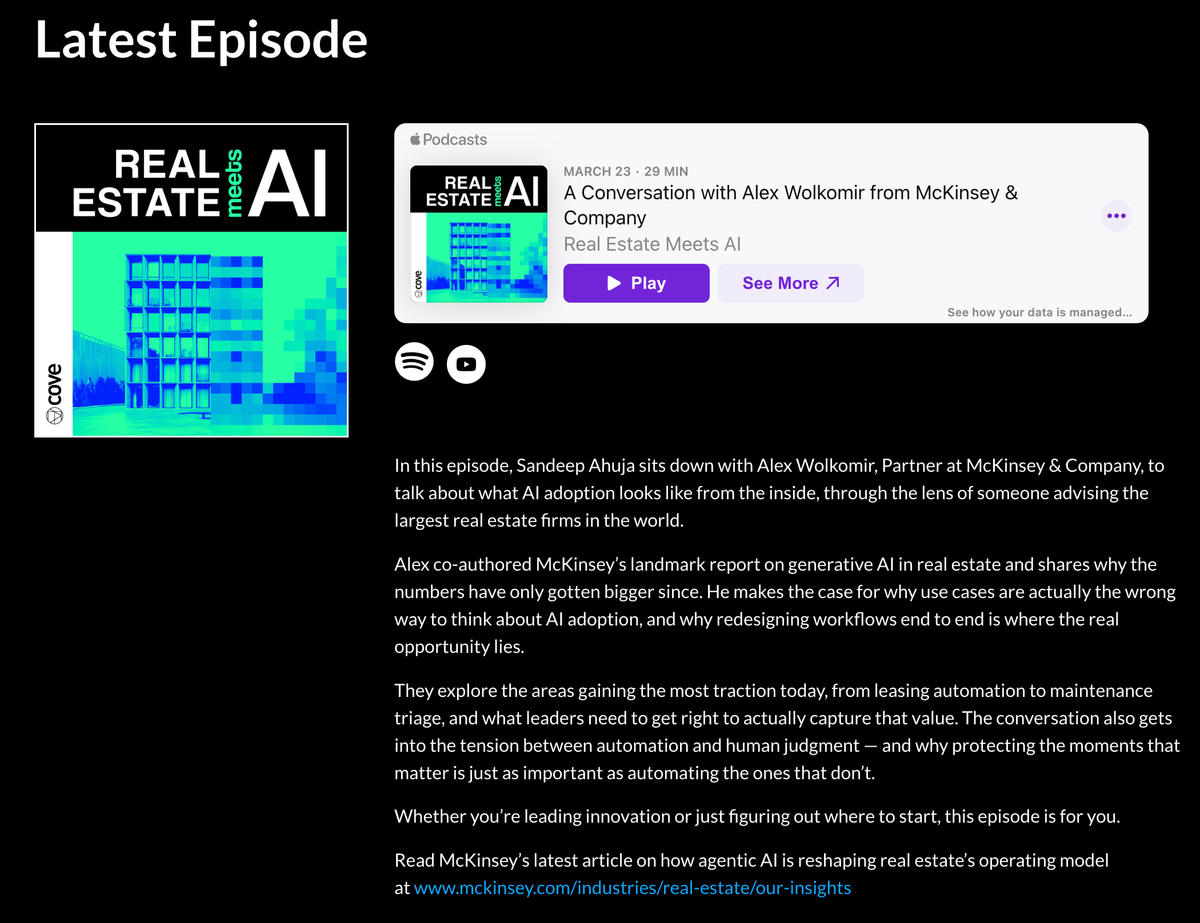
This strategy works best once you have built up your digital presence either through social media or SEO as the podcaster can easily learn about you when they google your name.
Linkable Content That Earns Links Without Outreach
Some content earns links naturally because it solves a problem that adjacent websites want to solve for their own readers.
Neighborhood guides earn links from relocation resources, local blogs, and employer HR sites that help new hires find housing. Market reports earn links from local news, mortgage brokers, and financial planners who share data with their own clients.
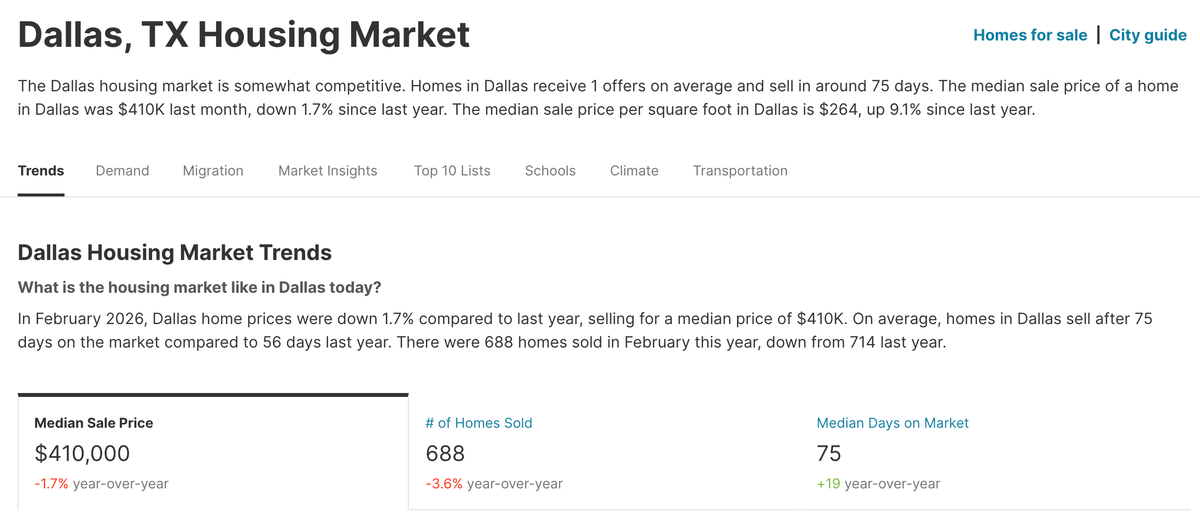
Before you create a piece of linkable content, ask: who publishes content for the same audience I'm trying to reach, and would they benefit from pointing their readers here?
Matching content to the audience that would link to it is what separates link-worthy assets from content that gets ignored.
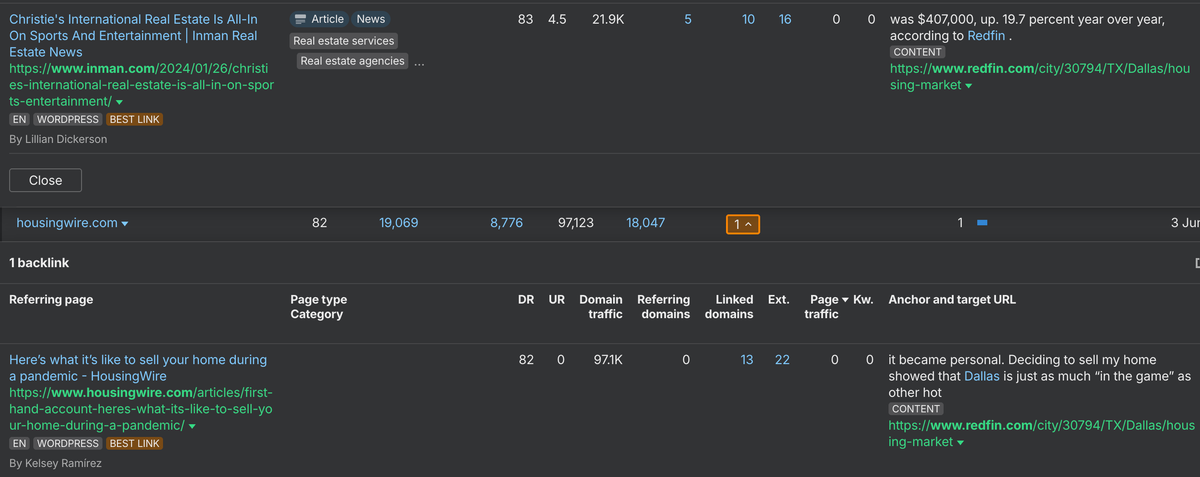
Teams that build this kind of content consistently attract links through content without relying on outreach alone. Starting with a structured blog strategy is the right foundation.
Skyscraper Outreach to Competitor Backlink Sources
Find out what content your competitors are earning links to, create something better, and reach out to the sites that linked to the original.
The three-step process:
- Use Ahrefs, Semrush, or Moz Link Explorer to pull the top linked pages from a competitor's domain. Look for blog posts or guides, not product pages.
- Identify the page that earns the most backlinks and ask what it's missing. Outdated data, thin depth, a missing use case, or poor formatting are all opportunities.
- Create a stronger version on your own site. Then reach out to sites that linked to the original: "I noticed you linked to [article]. We just published a more updated version covering [specific improvement] that might be more useful for your readers."
The outreach that converts isn't "my version is better." It's showing the specific improvement and making it easy for the linking site to swap.
Pro Tip: This doesn't convert super well as its difficult to get people to change their link once its set but it works as a supplemental effort to your existing content marketing strategy.
Backlink Marketplaces (Use With Caution)
Platforms like PressWhiz, Backlinks and Linkbroker can scale link acquisition faster than organic outreach.
The risk is that many links sold through these platforms come from sites that exist primarily to sell links, and Google treats those differently from editorially earned links.
A practical rule for evaluating marketplace links: avoid any link priced below $50 on a site with under 500 monthly organic visitors, and not ranking on google, regardless of the DR score shown. DR can be inflated through private blog networks that Google has partially devalued, and organic traffic from real search queries is a better quality indicator.
When you use a marketplace, treat the links as a supplement to earned links. Not a replacement for them.
This strategy is probably the most effective as you can lots of certainty with your link velocity but if you choose the wrong domains or incorrect anchor text it could tank the link and your site.
What Kills Your Backlink Profile Before It Has a Chance to Work
Most backlink penalties don't come from one catastrophic decision. They accumulate from a pattern of signals that, taken together, look manipulative to Google's algorithm.
- Anchor text over-optimization is the most common hidden problem. If every link pointing to your site uses the exact same keyword phrase as anchor text, such as "real estate agent [city]" repeated across 30 links, that pattern looks manufactured. Natural link profiles have varied anchor text: branded anchors, partial match anchors, naked URLs, and descriptive anchors mixed together.
- Unnatural velocity is the second-most common issue. Acquiring 50 links in a single month then nothing for the next four months creates a spike pattern that doesn't match how real content earns links organically. Pace your outreach campaigns to maintain a reasonably consistent acquisition rate.
- Linking only to your homepage signals that your inner pages have thin content. Build links to blog posts, neighborhood guides, service area pages, and market report pages, not just your domain root.
- Building backlinks from orphan pages or pages not indexed. You need Google to be able to efficiently find the link to get the authority passed to your site and an orphan page, which has no internal links pointing to it, makes this more difficult and an not indexed page means that Google doesn't even show it in search results.
Pro Tip: Physically look at the website you're getting a link from. Does it have gambling, pharmaceutical or adult content? If yes to any then hardpass. The reason? If they post this content they are likely trying some aggressive black hat SEO strategies that can get your site penalized in the crossfire.
How Backlinks Pass Power to the Pages That Actually Convert Leads
This is the section of backlink strategy that most teams miss, and it's where the real business value lives.
Backlinks typically point to content pages, things like blog posts, guides, and market reports, rather than service pages. People link to useful information, not to "Book a Consultation" pages.
The solution is internal linking.
When a blog post earns backlinks from external sites, it accumulates link equity, and strategic internal links within that post point some of that equity toward your service pages.
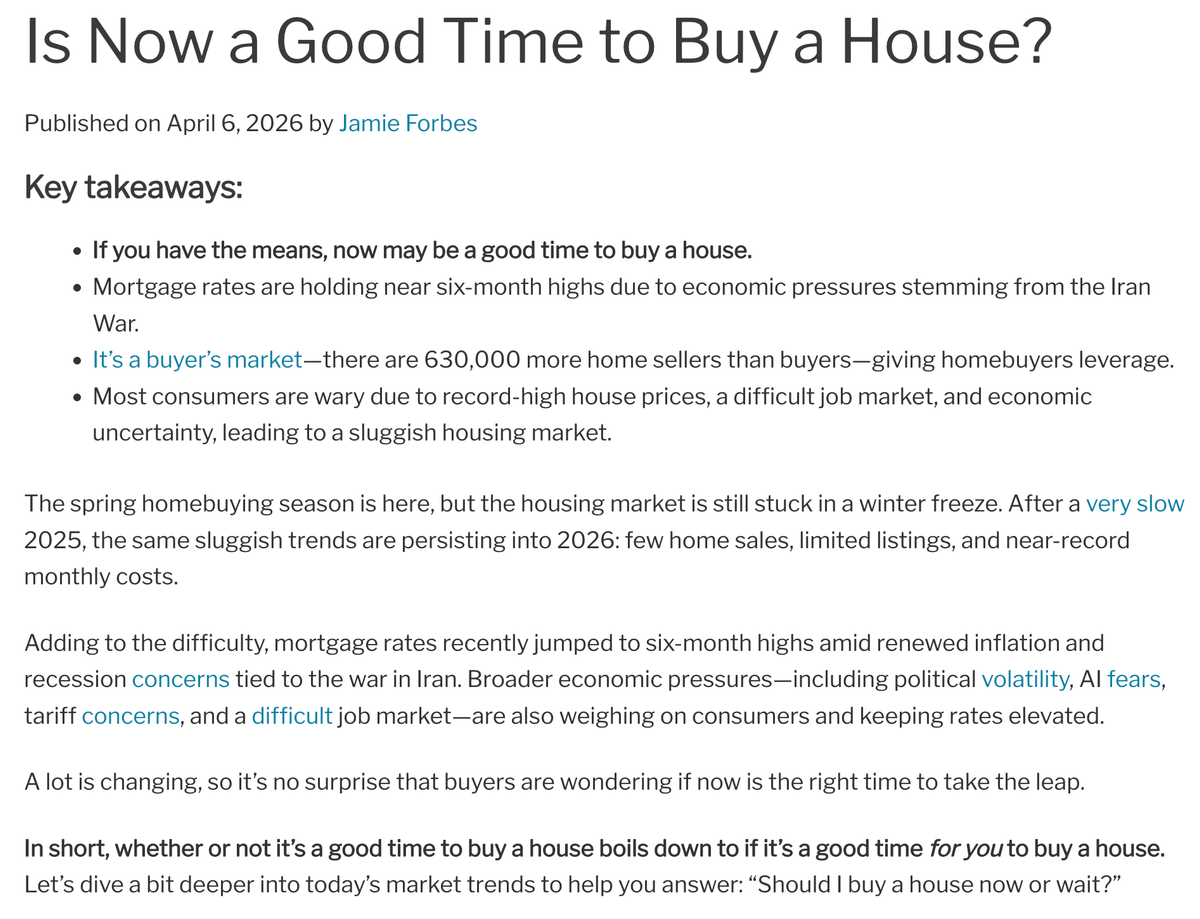
Here's a concrete example: your post on the local housing market earns links from three local news outlets, and inside that post you include a natural internal link to your buyer consultation page.
The link equity from those three press mentions flows partly through to your consultation page, improving its ranking potential without any direct external links pointing to it.
When you build your internal linking structure, you want to align links with keywords your target service pages are trying to rank for. Anchoring internal links to topically relevant terms reinforces the relevance signals Google reads on both the linking page and the destination page.
People know the value of links these days. You aren't getting anything of major value for free.
Sure, you might be able to convince some random DR 50 site to do a link swap with you, but content that consistently helps you gain local citations through outreach will always compound better than exchanged links.
Pro Tip: Google is great at identifying link building patterns so you shouldn't create any obvious footprints. For example, if all your links are exchanges with another website that looks suspicious or if you have too many links from the same domain that looks suspicious.
How to Track Your Backlink Health Without Obsessing Over Metrics
The goal of monitoring isn't to celebrate link counts. It's to catch problems early and identify what content is earning links naturally so you can create more of it.
Use Google Search Console's Links report weekly. It shows which of your pages are earning external links and which sites are linking to you, and it's more reliable for penalty detection than third-party tools.
The most useful insight GSC backlink data gives you: it tells you which of your pages are earning links naturally. Those pages are your template. The topics, format, depth, and specificity of your top-linked content is the formula for your next linkable asset.
Three practical actions based on your data:
- When a page earns multiple backlinks from local sources, create a follow-on piece on a closely related topic and promote it to the same sources.
- Track month-over-month referring domain growth, not link count. Domains are a cleaner signal of profile health than raw link volume.
However, for actual backlink metrics the two that you should use are
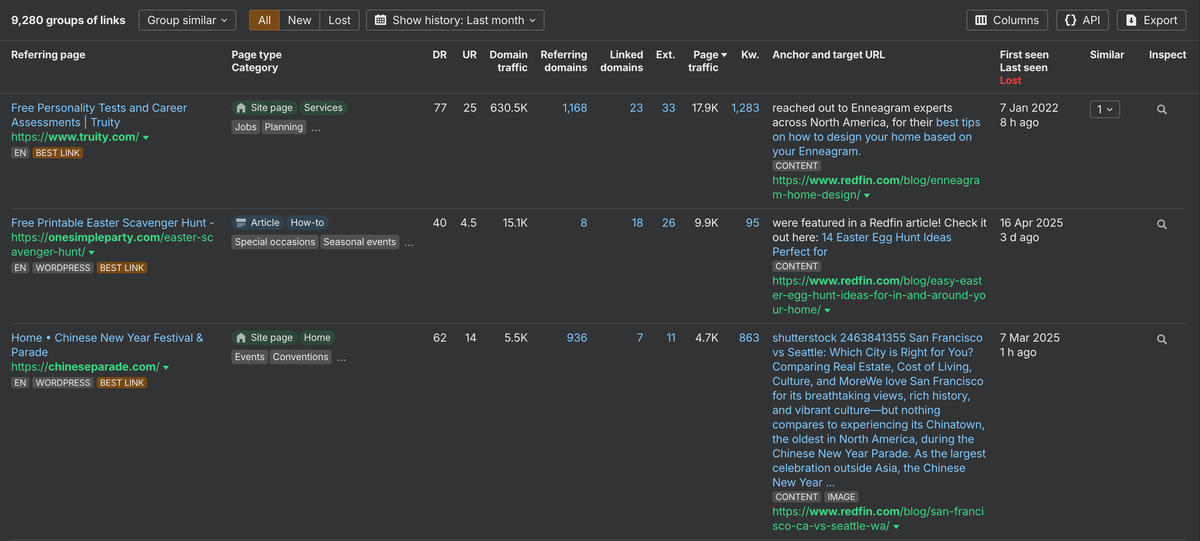
Ahrefs: The Site Explorer tool provides detailed visibility into your backlink profile and competitive landscape. You can see the domain traffic, number of linked domains, anchor text, page traffic and much more.
Majestic: They have a different perspective on backlink quality through its proprietary Trust Flow and Citation Flow metrics.
- Trust Flow measures link quality based on the trustworthiness of referring sites.
- Citation Flow counts link quantity regardless of source.
Pro Tip: If you want a more well rounded SEO tool suite then Ahefs is the way to go, but if you want highly detailed information specifically related to links then Majestic is the better choice.
Frequently Asked Questions About Real Estate Backlinks
Is it worth paying for backlinks for a real estate website?
Paid links can work, but the risk can be significant. Google explicitly prohibits buying links that pass ranking value, however, everyone does it. The risk is you can get hit with a penalty for link spam which can cut organic traffic by 50 to 90 percent and take over a year to recover from.
If you use paid placement, use credible marketplace platforms and evaluate the referring site's organic traffic rather than just DR. Keep paid links as a supplement to earned links, not your primary strategy.
How much does real estate link building typically cost?
A single quality link from a legitimate editorial source through an outreach campaign runs $100 to $500 in staff time or agency fees. Marketplace links range from $50 to over $1,500 per placement depending on the site's authority.
Brokerages with active community relationships, including sponsorships, local PR, and guest posting, can build quality links for far less than pure marketplace spend.
Is link building still relevant for real estate SEO in 2026?
Yes, backlinks remain one of Google's top confirmed ranking signals, and the quality bar has risen considerably. Google has become significantly better at identifying low-quality and manipulative links.
The practical result: legitimate earned links are worth more now than they were five years ago, while spammy links are more likely to create liabilities than benefits. Links from relevant, trusted sites that your clients might actually read are the ones worth building.
What should real estate teams avoid when building backlinks?
Four things account for most backlink-related penalties: buying links from low-quality link farms, over-optimizing anchor text by repeating the same exact-match keyword phrase across many links, building links at an artificially fast velocity, and using services that can't explain how their links are obtained.
Any service promising guaranteed rankings or a specific link count at a suspiciously low price should be treated as a serious risk. Recovering from a penalty costs far more in lost traffic and time than building links correctly from the start.
Turn the Traffic Backlinks Bring Into Leads
Backlinks are how you get found. What happens when visitors arrive determines whether the SEO investment actually pays off.
Before you launch an outreach campaign, take time to optimize pages before outreach so that every link you earn lands on a technically sound, well-structured page. Internal link structure, schema, and page load speed all affect whether Google passes the full authority value of the links you've earned.
The teams that see the best returns from link building invest in the full chain: building backlinks that improve rankings, creating content that helps convert backlink traffic into engaged visitors, and using the right tools to turn those visitors into clients.
If you've built the organic presence to bring buyers and sellers to your site, Madison, Realty AI's real estate chatbot, engages them 24/7, qualifies them in real time, and schedules appointments automatically so the leads your SEO effort earns don't sit unanswered.
See it in action
Ready to engineer your lead gen?
See how Madison qualifies, books, and routes leads in 2 seconds, across every page on your site.