Real Estate Schema Markup: A Complete Guide for Agents and Brokerages
Real estate schema markup won't push your listings to the top of Google, and it won't replace strong content or backlinks. What it does is help search engines understand exactly what your content represents, whether that's an active listing, a verified agent, or an upcoming open house. This guide breaks down which schema types actually matter for real estate, how to implement them in JSON-LD, and how to validate everything before it goes live.
NNathan SmithPublished Dec 11, 2025Updated Sep 15, 20269 min read
Schema markup does not replace good content, strong backlinks, or your site's technical SEO.
What it does is make sure the content you already have is fully understood and properly surfaced. That same clarity is what generative engine optimization needs before a model will quote you.
What is Schema Markup?
Schema markup is structured data code written in JSON-LD that you add to your website to help search engines understand exactly what your content is about.
It acts as a bridge between your property listings and Google’s algorithms, which is essential for strong local real estate SEO.
When you list a property at "123 Main Street" on your website, search engines see text. But when you add schema markup, they see a structured property listing with a specific address, price, square footage, and number of bedrooms.
These markups help turn text into Things by establishing relationships between your content elements and recognized entities in Google's knowledge graph.
What is the difference between Schema Markup and Rich Results?
Schema markup is the code you add to your website, while rich results are what appears in search results when that code works properly.
Schema markup doesn't guarantee rich results, but it makes them possible.
What is the purpose of Schema Markup?
Schema markup serves three critical functions for real estate websites.
First, it improves your visibility by helping search engines understand and display your listings more prominently.
Second, it dramatically increases click-through rates,
Third, it communicates property details to search engines with precision that plain text simply can't match, enabling more effective long-tail real estate keyword targeting.
When you implement schema markup correctly, you're not just hoping Google understands your content, you're giving them exactly what they need to showcase your properties to potential buyers actively searching for homes.
Schema Markups For Real Estate
Here's what separates amateur real estate SEO from professional implementation: knowing which schema types to use and when.
Real estate websites need multiple schema types working together.
A single property listing might use three or four different schemas to fully communicate its details to search engines. A comprehensive strategy includes property schemas, agent schemas, organizational markup, and content schemas, each serving a specific purpose in your overall visibility.
RealEstateListing
The RealEstateListing schema is your primary weapon for property visibility. This schema type is specifically designed for real estate and includes properties like listing price, date listed, property type, address, and listing status.
Use this schema on every individual property listing page. It tells search engines: "This is an active real estate listing" and provides structured information about price ranges, location details, property features, and availability status.
The key properties you should always include are the listing type (sale or rental), price or price range, address with full postal details, and property category (residential, commercial, land). Smart agents also include lease length for rentals, year built, and square footage when available.
JSON-LD Code Example:
JSON
<script type="application/ld+json">
{
  "@context": "https://schema.org",
  "@type": "RealEstateListing",
  "name": "Beautiful 3-Bedroom Home in Arlington Heights",
  "url": "https://www.yourwebsite.com/listings/123-main-street",
  "description": "Stunning renovated home with modern kitchen, hardwood floors, and large backyard perfect for entertaining.",
  "datePosted": "2024-11-15",
  "validThrough": "2025-05-15",
  "address": {
    "@type": "PostalAddress",
    "streetAddress": "123 Main Street",
    "addressLocality": "Arlington Heights",
    "addressRegion": "IL",
    "postalCode": "60004",
    "addressCountry": "US"
  },
  "price": "450000",
  "priceCurrency": "USD",
  "availableAtOrFrom": {
    "@type": "Place",
    "address": {
      "@type": "PostalAddress",
      "streetAddress": "123 Main Street",
      "addressLocality": "Arlington Heights",
      "addressRegion": "IL",
      "postalCode": "60004"
    }
  }
}
</script>
SingleFamilyResidence
While RealEstateListing tells search engines it's a property for sale, SingleFamilyResidence tells them what type of property it is.
This schema includes detailed specifications unique to single-family homes, number of bedrooms and bathrooms, parking capacity, property size, and lot dimensions.
Use SingleFamilyResidence in combination with RealEstateListing on home pages. This layered approach gives search engines both the listing context and the specific property details they need to match your listing with relevant searches.
The Apartment schema serves the same purpose as SingleFamilyResidence but for multi-unit dwellings. It includes properties specific to apartment living, floor level, pet policies, amenities, and lease terms.
The difference between Apartment and ApartmentComplex schemas is crucial: Apartment is for a specific unit, while ApartmentComplex (which we'll cover next) is for the entire property.
Include unit-specific details like floor plan type, square footage, number of occupants allowed, lease duration, and included utilities.
This schema includes properties like total number of units, available amenities, contact information, and general pricing ranges.
Use this schema onlanding pages for apartment buildings or complexes. It's perfect for property management companies managing multiple units within a single location.
The key distinction here is scale.
While individual Apartment schemas handle unit-specific details, ApartmentComplex communicates building-wide information, pool facilities, parking structures, pet policies, and community amenities that apply across all units.
The Person schema complements RealEstateAgent by adding broader professional and personal details that don't fit in the real estate-specific schema.
This includes your educational background, awards, social media profiles, and professional images.
Layer Person schema with RealEstateAgent schema on profile pages. Together, they create a comprehensive professional profile that search engines can fully understand and potentially display in knowledge panels or enhanced search results.
Your brokerage or agency needs markup too. Organization schema structures your company information, legal name, address, logo, contact details, and areas of service.
Implement Organization schema on your homepage, about page, and contact page. This schema establishes your business entity in search engines' understanding and is crucial for local SEO and Google Business Profile integration.
Key properties include your official business name, complete address with geographic coordinates, company logo, telephone number, email address, and social media profiles.
Event schema is designed for open houses, property tours, first-time homebuyer seminars, and any real estate-related events you host.
It includes start and end times, location details, registration information, and event descriptions.
JSON-LD Code Example:
JSON
<script type="application/ld+json">
{
  "@context": "https://schema.org",
  "@type": "Event",
  "name": "Open House - 123 Main Street",
  "description": "Join us for an open house at this beautiful 3-bedroom home in Arlington Heights. Tour the property, ask questions, and learn about the neighborhood.",
  "startDate": "2024-12-14T13:00:00-06:00",
  "endDate": "2024-12-14T15:00:00-06:00",
  "eventStatus": "https://schema.org/EventScheduled",
  "eventAttendanceMode": "https://schema.org/OfflineEventAttendanceMode",
  "location": {
    "@type": "Place",
    "name": "123 Main Street",
    "address": {
      "@type": "PostalAddress",
      "streetAddress": "123 Main Street",
      "addressLocality": "Arlington Heights",
      "addressRegion": "IL",
      "postalCode": "60004",
      "addressCountry": "US"
    }
  },
  "image": "https://www.yourwebsite.com/listings/123-main-street/photos/front.jpg",
  "organizer": {
    "@type": "RealEstateAgent",
    "name": "Sarah Mitchell",
    "telephone": "+1-847-555-0123",
    "email": "sarah@yourwebsite.com",
    "url": "https://www.yourwebsite.com/agents/sarah-mitchell"
  },
  "offers": {
    "@type": "Offer",
    "url": "https://www.yourwebsite.com/listings/123-main-street",
    "price": "0",
    "priceCurrency": "USD",
    "availability": "https://schema.org/InStock",
    "validFrom": "2024-11-15T00:00:00-06:00"
  }
}
</script>
FAQPage
FAQPage schema structures your frequently asked questions so they can appear as rich results directly in search.
Use FAQPage schema on property detail pages with common questions, neighborhood guides with local FAQs, and dedicated FAQ sections addressing buyer or seller concerns.
Include questions about property specifics, neighborhood details, buying processes, and financing options relevant to your listings.
JSON-LD Code Example:
JSON
<script type="application/ld+json">
{
  "@context": "https://schema.org",
  "@type": "FAQPage",
  "mainEntity": [
    {
      "@type": "Question",
      "name": "What is included in the sale of 123 Main Street?",
      "acceptedAnswer": {
        "@type": "Answer",
        "text": "The sale includes all kitchen appliances (refrigerator, dishwasher, range, and microwave), washer and dryer, window treatments throughout, the shed in the backyard, and all lighting fixtures. The home also comes with a one-year home warranty for added peace of mind."
      }
    },
    {
      "@type": "Question",
      "name": "What are the property taxes for this home?",
      "acceptedAnswer": {
        "@type": "Answer",
        "text": "The current annual property taxes are approximately $8,200. This is based on the most recent tax year. Property taxes in Arlington Heights are subject to change based on assessments and local tax rates."
      }
    },
    {
      "@type": "Question",
      "name": "What school district is this property in?",
      "acceptedAnswer": {
        "@type": "Answer",
        "text": "This home is located in Arlington Heights School District 25 for elementary and middle school, and Township High School District 214 for high school. The assigned schools are Thomas Middle School and Hersey High School, both of which have excellent ratings."
      }
    },
    {
      "@type": "Question",
      "name": "Is the basement finished?",
      "acceptedAnswer": {
        "@type": "Answer",
        "text": "Yes, the basement is fully finished with a family room, full bathroom, and additional bedroom. The basement also includes a utility room with the furnace, water heater, and plenty of storage space."
      }
    }
  ]
}
</script>
BlogPosting
Your real estate blog posts deserve structured data too. BlogPosting schema tells search engines exactly what each article is about, who wrote it, when it was published, and what topics it covers.
Implement BlogPosting schema on every article in your real estate blog, market updates, neighborhood guides, home buying tips, and property spotlights.
This schema includes properties like headline, author, publication date, featured image, and article body.
JSON-LD Code Example:
JSON
<script type="application/ld+json">
{
  "@context": "https://schema.org",
  "@type": "BlogPosting",
  "headline": "Arlington Heights Real Estate Market Update - December 2024",
  "alternativeHeadline": "What Buyers and Sellers Need to Know About Arlington Heights Home Prices",
  "image": "https://www.yourwebsite.com/blog/images/arlington-market-dec-2024.jpg",
  "author": {
    "@type": "Person",
    "name": "Sarah Mitchell",
    "url": "https://www.yourwebsite.com/agents/sarah-mitchell"
  },
  "publisher": {
    "@type": "Organization",
    "name": "Premier Realty Group",
    "logo": {
      "@type": "ImageObject",
      "url": "https://www.premierrealtygroup.com/images/logo.png"
    }
  },
  "datePublished": "2024-12-04",
  "dateModified": "2024-12-04",
  "description": "Comprehensive analysis of the Arlington Heights real estate market including median home prices, inventory levels, days on market, and predictions for 2025.",
  "articleBody": "The Arlington Heights real estate market continues to show resilience...",
  "url": "https://www.yourwebsite.com/blog/arlington-heights-market-update-december-2024",
  "mainEntityOfPage": {
    "@type": "WebPage",
    "@id": "https://www.yourwebsite.com/blog/arlington-heights-market-update-december-2024"
  },
  "keywords": [
    "Arlington Heights real estate",
    "home prices Arlington Heights",
    "real estate market update",
    "buying a home Arlington Heights"
  ]
}
</script>
Video
Video schema marks up your virtual tours, property walkthroughs, and real estate educational content with structured information about duration, upload date, description, and thumbnail.
Use Video schema on property pages with virtual tours, YouTube embeds on your website, and dedicated video gallery pages. Include properties like video name, description, thumbnail URL, upload date, and content URL.
JSON-LD Code Example:
JSON
<script type="application/ld+json">
{
  "@context": "https://schema.org",
  "@type": "VideoObject",
  "name": "Virtual Tour - 123 Main Street, Arlington Heights",
  "description": "Take a complete virtual tour of this stunning 3-bedroom home in Arlington Heights featuring hardwood floors, renovated kitchen, and beautiful backyard. See every room and all the amazing features this property has to offer.",
  "thumbnailUrl": "https://www.yourwebsite.com/listings/123-main-street/video-thumbnail.jpg",
  "uploadDate": "2024-11-20T08:00:00-06:00",
  "duration": "PT3M45S",
  "contentUrl": "https://www.yourwebsite.com/videos/123-main-street-tour.mp4",
  "embedUrl": "https://www.youtube.com/embed/abc123xyz",
  "publisher": {
    "@type": "Organization",
    "name": "Premier Realty Group",
    "logo": {
      "@type": "ImageObject",
      "url": "https://www.premierrealtygroup.com/images/logo.png"
    }
  },
  "potentialAction": {
    "@type": "SeekToAction",
    "target": "https://www.yourwebsite.com/videos/123-main-street-tour.mp4?t={seek_to_second_number}",
    "startOffset-input": "required name=seek_to_second_number"
  }
}
</script>
How Does Structured Data Markup Enhance Real Estate Listings in Search Results?
It makes your listings more visible and more clickable without changing your rankings directly.
When implemented correctly, Google can display enhanced information alongside your search result, all visible before anyone clicks:
Price and price range
Property type and availability
Open house dates and times
Star ratings and reviews
Structured data also helps with more accurate indexing, better matching to specific searches, and visibility in AI-powered search tools that pull directly from structured data to answer property queries.
Schema does not replace good content or strong backlinks. What it does is make sure the content you already have is fully understood and properly surfaced.
How To Add Schema Markup To Your Website
Most real estate agents stumble at implementation not because it's technically impossible, but because they don't have a clear roadmap. Here's the step-by-step process that takes you from zero schema to fully validated structured data.
Step 1: Audit Your Current Pages
Start by identifying every page type on your website that needs schema markup. Property listings need RealEstateListing schema, agent profiles need RealEstateAgent and Person schemas, your blog posts need BlogPosting schema, and your homepage needs Organization schema.
Create a simple spreadsheet listing each page type, the primary schema it requires, and any secondary schemas you'll layer on top.
Step 2: Choose Your Schema Format
You'll need to decide how you want to write your structured data. JSON-LD is Google's recommended format and the easiest to implement, but understanding your options helps you make an informed choice.
Step 3: Generate Your Schema Code
For each page type identified in your audit, create the appropriate schema markup. Start with your highest-traffic pages, typically property listings and your homepage, then work through agent profiles and blog content.
Use the examples provided earlier in this guide as templates, but customize every property to match your actual content. Generic schema that doesn't match your page content is worse than no schema at all.
You need to ensure that this markup aligns with your Google My Business profile, otherwise you will send mixed signals which dilutes your ranking authority.
Step 4: Add Code To Your Website
The implementation location depends on your website platform. For custom-built sites, add JSON-LD code to the head section of each page template.
Most modern real estate platforms include custom code sections specifically designed for schema markup. IDX sites may require coordination with your provider to ensure schema appears on all listing pages.
Step 5: Validate Before Going Live
Never deploy schema markup without validation. Run every page through multiple validators to catch syntax errors, missing required properties, and logic issues that would prevent search engines from understanding your structured data.
Use Schema.org's validator first to check basic compliance, then Google's Rich Results Test to verify rich result eligibility, then Classy Schema for detailed error analysis.
Step 6: Monitor And Update
Schema markup isn't set-it-and-forget-it. When property prices change, listing statuses update, or agents join or leave your brokerage, your schema needs updating too.
Set a monthly reminder to review your most important pages and verify schema accuracy.
Pay special attention to active listings where price reductions or status changes require immediate schema updates.
What Are The Different Schema Markup Formats?
While most guides focus exclusively on JSON-LD, understanding all three schema formats helps you make informed decisions about implementation and troubleshoot issues when working with different platforms.
The primary advantage is separation of concerns. JSON-LD sits in a script tag in your page's head section, completely separate from your visible HTML content.
This means you can add, edit, or remove schema markup without touching your page design or risking breaking your layout.
Microdata
Microdata embeds schema markup directly into your HTML tags using attributes like itemscope, itemtype, and itemprop. Instead of separate structured data code, you're adding attributes to the HTML elements that display your content.
Here's what that looks like for a simple property address:
HTML
<div itemscope itemtype="https://schema.org/RealEstateListing">
  <span itemprop="name">Beautiful Home in Arlington Heights</span>
  <div itemprop="address" itemscope itemtype="https://schema.org/PostalAddress">
    <span itemprop="streetAddress">123 Main Street</span>
    <span itemprop="addressLocality">Arlington Heights</span>
    <span itemprop="addressRegion">IL</span>
  </div>
</div>
The advantage of Microdata is direct correspondence between visible content and structured data. What users see is exactly what search engines interpret, reducing the risk of schema-content mismatches.
The disadvantage is maintenance complexity. Every time you update your page design or content structure, you're also potentially updating schema markup.
For real estate websites with dynamic listing content, this creates ongoing technical debt.
RDFa
RDFa is Resource Description Framework in Attributes, another method of embedding structured data directly into HTML. It's similar to Microdata but uses different attribute names like vocab, typeof, and property.
Here's the same property address in RDFa:
HTML
<div vocab="https://schema.org/" typeof="RealEstateListing">
  <span property="name">Beautiful Home in Arlington Heights</span>
  <div property="address" typeof="PostalAddress">
    <span property="streetAddress">123 Main Street</span>
    <span property="addressLocality">Arlington Heights</span>
    <span property="addressRegion">IL</span>
  </div>
</div>
RDFa offers more flexibility than Microdata for complex semantic relationships and was originally developed for the semantic web. Some content management systems favor RDFa because it integrates with their existing infrastructure.
For real estate websites specifically, RDFa has limited advantages over JSON-LD and shares Microdata's maintenance challenges.
Which Format Should You Choose?
JSON-LD is the clear winner. Google recommends it, it's easier to implement and maintain, it separates structured data from page design, and it handles complex nested schemas more elegantly.
The only scenario where alternative formats make sense is when your platform enforces a different approach.
Schema Markup Generation Tools
The manual process of writing schema markup from scratch intimidates most agents, which is why generation tools exist.
Here's what I tell agents, automated tools are starting points, not finished solutions.
The limitation with standard generators is their generic approach. They don't understand the nuances of real estate schema or how to layer multiple schema types for maximum impact.
Cursor + Schema.org Knowledge Base
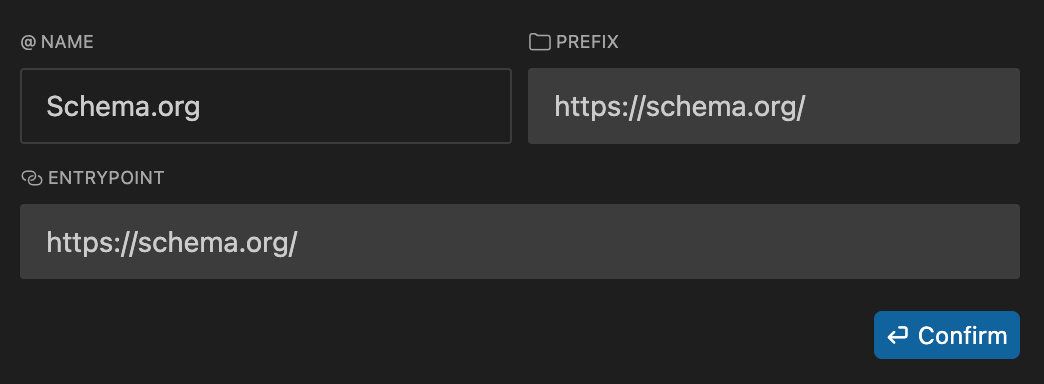
Cursor is an AI-powered code editor that can reference the entire Schema.org knowledge base while generating custom schema markup for your specific properties.
Instead of using a template generator that knows nothing about your three-bedroom Victorian with original crown molding, you're working with AI that understands both schema structure and your unique property details.
The advantage is customization at scale. You can generate highly specific schema markup for unusual property types, layer multiple schemas intelligently, and include niche properties that generic generators ignore.
Writing It Yourself
The ultimate control comes from writing schema markup manually, directly from Schema.org documentation. This approach requires understanding JSON-LD syntax and the specific properties available for each schema type.
When is manual writing necessary?
When you have highly unusual properties, when you're implementing complex nested schemas, or when automated tools consistently produce errors in their output.
The skills required include
Basic JSON understanding
Familiarity with Schema.org documentation structure
Attention to detail for proper syntax.
The benefit is complete control, you include exactly the properties you want, structure nested schemas precisely, and create implementations that perfectly match your content.
How To Validate Schema Markup
Validation checks your schema markup for syntax errors, incorrect property types, and logic issues that would prevent search engines from understanding your structured data.
Before deploying any schema markup to your live real estate website, run it through multiple validators.
Each validator catches different issues, and using several ensures comprehensive error detection.
Schema.org Validator
The Schema.org validator is your first line of defense. This official tool checks whether your schema markup follows the Schema.org specification, proper syntax, valid property names, correct nesting structure, and appropriate property types.
Access it directly on Schema.org's website. Paste your schema markup code into the validator, and it returns a detailed report highlighting any errors or warnings.
Rich Results Validator
Google's Rich Results Test serves a different purpose than general schema validation. This tool specifically checks whether your schema markup qualifies for rich results in Google Search.
Here's the critical distinction: valid schema doesn't guarantee rich results. Google has additional requirements beyond basic validity, certain required properties, content guidelines, and quality standards that determine rich result eligibility.
Run your property page URLs through this validator to see both the structured data Google detects and whether that data meets rich result requirements.
Classy Schema Validator
Classy Schema offers more detailed error reporting and additional insights beyond basic syntax validation. This third-party validator provides clearer explanations of errors, context-aware suggestions for fixes, and warnings about properties that could be improved even when not technically errors.
It catches edge cases that other validators miss and provides the clearest explanations for fixing complex errors.
Turn Your Search Visibility Into Captured Leads
Schema markup earns richer, more visible search results, which pulls more of the right visitors to your pages.
That visibility is the setup; capture is the payoff.
The real estate website features that improve lead capture rates are what turn all that new attention into actual leads.
Convert Organic Traffic From Schema Markup Into Leads With Madison
Here's the reality check most agents need: increased visibility from schema markup means nothing if you can't convert that traffic into actual client relationships.
This is where I see the biggest gap. Agents implement perfect schema markup, watch their search visibility improve, see traffic increase, and then lose those visitors because their website has no systematic lead capture strategy.
Answer engine optimization explained for real estate: how AI answers pick their sources, what to publish, what to measure, and the fair housing line to stay behind.
Generative engine optimization for real estate teams: how to get cited by ChatGPT, Gemini and AI Overviews, with a checklist and the data behind it.
About Madison
The AI assistant built for real estate lead gen
Madison is Realty AI's conversational assistant for real estate websites. It engages visitors instantly, qualifies buyers, sellers, and renters through natural dialogue, routes summaries to your CRM, and keeps your team focused on closing.
5.0 average from 2,500 customer reviews
“We captured 3 new transactions worth over $3.3 million in just a few months using Realty AI.”
Sarah Logue
Broker & Owner, Top 0.1%
“Within our first week of using Realty AI, I had an engaged seller ready on the phone. This has never happened before in 4 years.”
Mark Jensen
Owner & Broker of Record
“It feels like having a personal assistant on my website 24/7, sending me instant notifications so I never miss a potential client.”