NNathan SmithPublished Mar 25, 2026Updated Sep 15, 20267 min read
TLDR: Most real estate teams lose leads to slow responses, dropped handoffs, and websites that never start a conversation. The fixes aren't complicated, but they have to be built into the process, not left to chance.
Most teams know they're losing leads.
What they don't know is where.
Each missed lead represents an estimated $7,500 or more in lost commission potential, and the gaps are rarely dramatic:
Aslow response here
A dropped follow-up there
A website that doesn't have enough conversion opportunities.
Most are fixable with simple process changes. None of them are about bad agents.
1. The Response Time Gap
The problem: According to the Inman Real Estate Technology Survey, 2025, the average real estate agent takes 917 minutes to respond to a new lead. That's over fifteen hours. By then, 78% of homebuyers have already committed to working with the first agent who got back to them.
Agents who respond within five minutes are 21 times more likely to qualify the lead than those who wait thirty.
How to fix it:
Set a response time target and measure it. Aim for five minutes during business hours. Log into your CRM, sort leads by creation time versus first contact timestamp, and find your team's real average. Most teams are surprised by what they find.
Assign a lead monitor during busy windows. Evenings and weekends generate a disproportionate share of inquiries. Rotating which agent covers new leads during those hours means someone is always ready without putting everyone on call.
Make sure CRM notifications actually reach people. If a new lead enters the system and the assigned agent doesn't get an instant phone notification, that's where the delay starts. Check notification settings before assuming the process is working.
2. Nobody Is Covering After-Hours
The problem: Based our state of conversations report, 40% of all leads captured in conversations occur after hours. This makes sense given the majority of people work from 9 -5, giving them only time after this period to browse for homes or contact you.
The team simply wasn't designed to handle leads during the hours when most people browse.
How to fix it:
Check when your leads actually arrive. Pull 90 days of lead data sorted by submission time. For most teams, well over half come in after 5 pm.
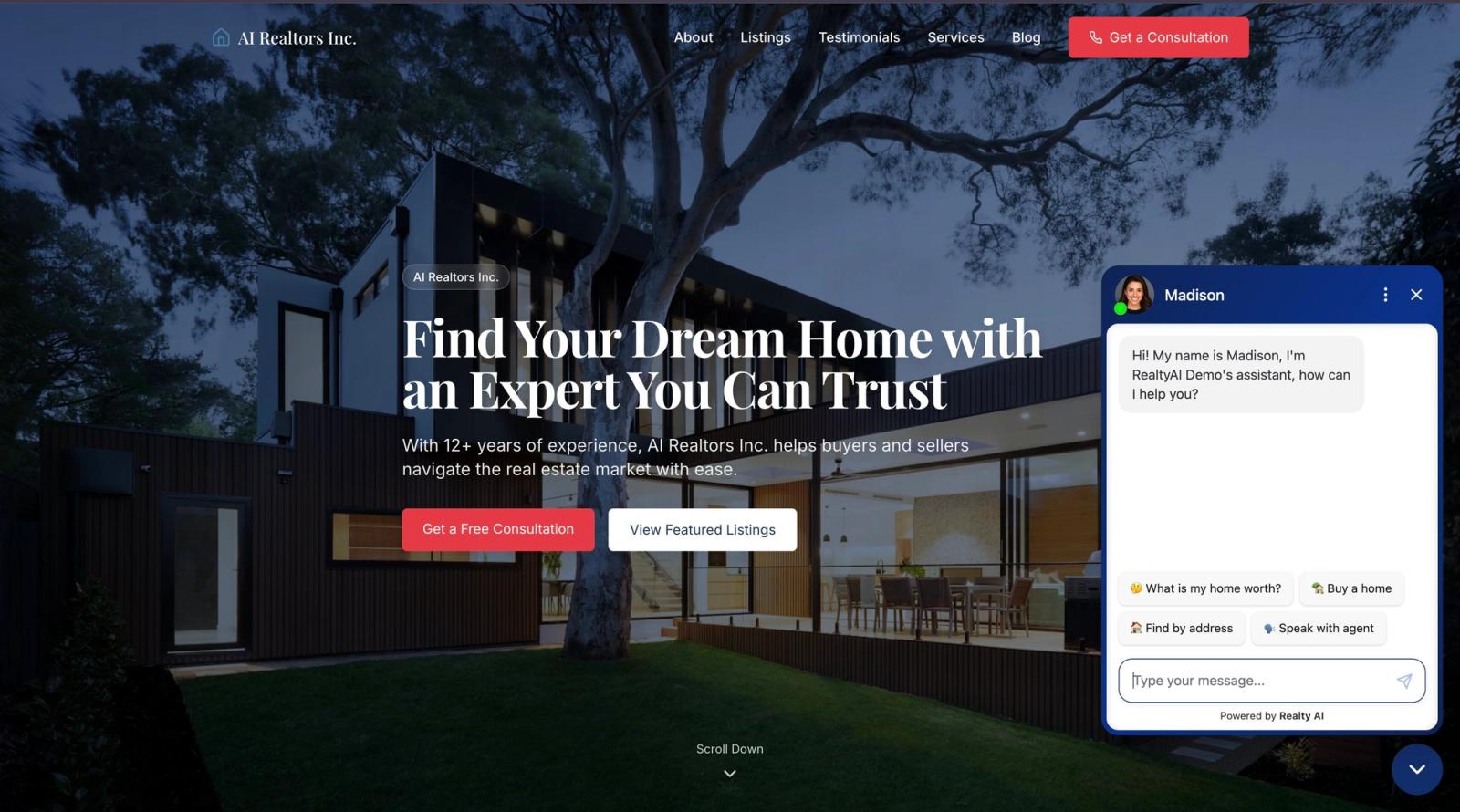
Add always-on website coverage using an AI chatbot.Madison runs on your website around the clock, so someone browsing at 11pm gets a real response right away rather than a form confirmation. The lead stays warm until your team picks it up in the morning.
Set up a morning handoff and an after-hours auto-response. One team member reviews overnight inquiries each morning and assigns follow-ups. A quick response is with information gathered from the chatbot is significantly better than a generic reply.
3. Not Enough Ways to Convert Website Traffic
The problem: Most team websites display listings and wait for someone to fill out a contact form.
A motivated buyer might spend ten minutes browsing and leave without ever making contact, not because they weren't interested, but because there was no easy way in.
Based on our internal analysis of 5 million interactions across Canadian real estate sites, 74.2% of AI-guided conversations ended in a captured lead or meeting request, compared to the 50%+ bounce rates typical of standard contact forms.
The visitors were already there. The site just wasn't designed to start a conversation.
How to fix it:
Browse your own website as a first-time visitor. Open it in an incognito window and count how many natural ways there are to reach out. A website should feel like a conversation, not a pamphlet you hand someone and walk away from.
Engage every visitor the moment they land, no matter what page they're on. The easiest way to do that is a chatbot that can actually answer real estate specific questions such as "what's the market doing", "what can I afford", "what's a good neighborhood to live in for families". That's what makes it different from a generic pop-up.
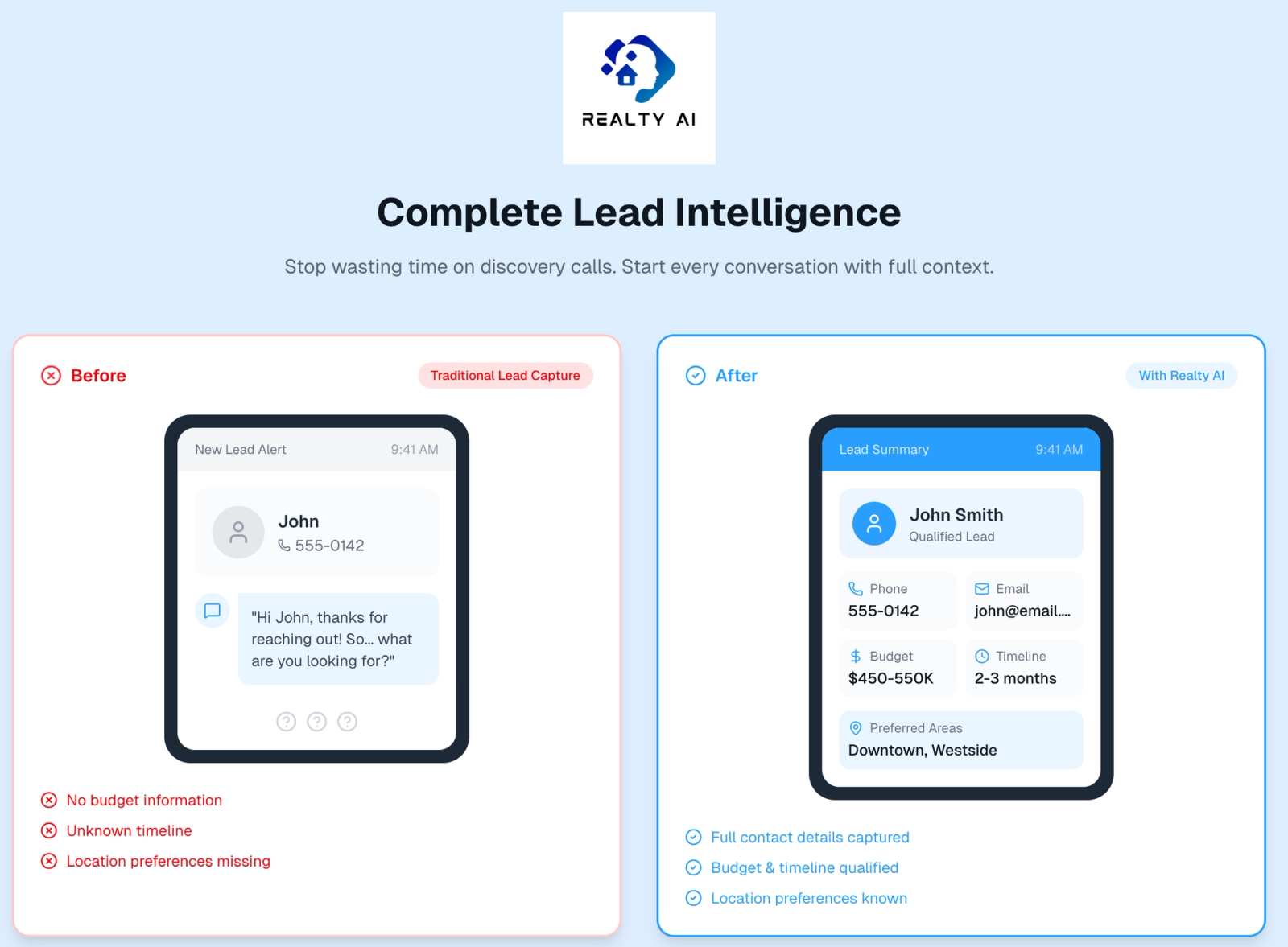
If you stick with a form, keep it to name and contact method only. Asking for budget, timeline, and property type upfront feels like a job application, and most visitors won't finish it. The problem with forms is that you still have to call the lead cold to get the context you actually need or risk loosing the lead by asking for too much information.
4. Follow-Up That Stops Too Soon
The problem: Based on real estate reports, 80% of sales require five or more touch points. Most agents stop at one or two. A lead who doesn't respond to the first message isn't necessarily uninterested. They might have seen it at a bad moment.
The goal isn't persistence for its own sake. It's a handful of well-timed, genuinely useful touchpoints. This doesn't mean constant emails asking if they want to sell.
How to fix it:
Give the team a simple default sequence. A reasonable pattern: a text on day one, an email on day two with something useful (a relevant listing or market note), and a brief call on day four. Consistent is more important than elaborate.
Make each touchpoint worth receiving. "Just checking in" is easy to ignore. "A home in your price range just came on in Westside, thought you'd want to see it" is actually useful. Lead with value, and start with a small ask: offer a curated listing list or a quick call before asking for a meeting.
Send an intro email automatically when a new lead enters your CRM. Include the agent's name and photo. By the time the agent calls, the lead already knows who they're talking to.
5. Leads Are Getting Lost Between Agents
The problem: When a new lead hits a shared inbox or group chat, a few agents see it, assume someone else is handling it, and nobody responds.
How to fix it:
Map how a lead currently moves from inquiry to first contact. Write out each step. Any step that relies on "whoever sees it first" is where delays happen.
Set up automatic assignment in your CRM. Leads should go to one specific agent the moment they come in, based on simple rules: geography, specialty, or rotation. One person is responsible, and they know it immediately.
Add a fallback and pass context with every assignment. If the assigned agent hasn't made contact within a set window, the lead should route to the next available person automatically. Whatever you already know about the lead (budget, timeline, property type) should travel with the assignment so the agent can continue the conversation.
6. No Plan for the Lead Who Isn't Ready Yet
The problem: A lot of real leads aren't ready to move for six months or more. Most teams treat this as a dead end and move on. However, this person still is a lead, but they just need to be nurtured over time.
"According to Realty AI's 2025 report analyzing 5 million interactions, nearly half (48.8%) of all buyer conversations came from people planning to act 'soon', not today. And even among long-range planners with 6+ month timelines, 57.1% still converted when engaged through conversation."
These people are still ready to find an agent and get started. The only question is whether you're still in the picture when they do.
How to fix it:
Ask about timeline at the first touchpoint and use the answer. "Are you thinking about moving in the next few months, or still in the early stages?" is a natural question that tells you exactly how to follow up. Build it into your intake form or first call script, then set the lead onto the right nurture track based on their answer.
Set up simple automated tracks in your CRM. For leads moving soon, more frequent contact makes sense. For leads 6-12 months out, a monthly email with local market data and relevant listings is enough. Set each track up once and let it run.
Watch for re-engagement signals. When a long-term lead starts opening emails or clicking listings more frequently, it's worth a personal follow-up. Most CRMs can flag this automatically.
7. Reaching Out on the Wrong Channel
The problem: According to the Zillow Group, 89% of leads prefer text over phone calls for first contact. Most teams still lead with a call. The lead sees an unknown number, lets it go to voicemail, and that's usually the end of it.
Not because they weren't interested, but because a cold call isn't how most people want to be contacted anymore.
How to fix it:
Start with a text, and make it specific. A short text will almost always get more traction than a call for first contact. "I saw you were looking at the Elm Street listing, happy to send you a few similar ones if that would help" signals you paid attention. A generic "saw your inquiry" doesn't.
Give agents a small library of opening texts. Improvised first messages get inconsistent results. Three or four solid templates mean everyone is starting conversations the same way.
Bring calls in after rapport exists. Once someone has replied to a couple of texts, a call feels natural. Before that, it feels like a cold call, because it is.
8. Leads Aren't Qualified Before They Reach an Agent
The problem: When leads arrive without context, agents spend the first part of every conversation gathering basic information: timeline, budget, property type, whether they're working with someone.
That time adds up, and it pulls focus away from leads who are actually ready to move.
We have found that on average a team saves 11+ hours every month from Madison qualifying leads for them.
How to fix it:
Decide what you need to know before a lead reaches an agent and build that into intake. The four most useful questions: timeline, price range, property type, and whether they're currently working with another agent. Collect these through an intake form, an ISA, or a website chatbot.
Use a chatbot to qualify website leads at the point of capture. A chatbot like Madison can ask those questions naturally and pass a complete profile to your CRM so that you can skip this entire process.
Madison send agents a summary, not just contact info. Agents receive a full profile including location, timeline, budget, name, property preferences/details, contact info and special circumstances. You will receive a summary such as "John wants a 3-bed 2 bath under $450K in Frisco neighborhood of Dallas Texas. He is pre-approved, wants to move by fall or within 6 months and doesn't currently have an agent".
This allows agents to continue the conversation instead of starting a new one.
9. The CRM Nobody Trusts
The problem: The CRM is supposed to be the central record for every lead.
In practice, many teams have CRMs full of incomplete records which involve missing contact info, leads without assigned agents, notes that say "interested buyer, call back" with nothing else.
When the data is unreliable, agents stop using the system and leads fall through without anyone noticing.
How to fix it:
Do a quick audit first. Pull leads from the last 90 days and filter for incomplete records: no phone number, no assigned agent, no recent activity. That list shows you where things are slipping. Work through it before changing anything else.
Connect every lead source directly to the CRM with structured fields. Website forms, Zillow, Realtor.com, open house sign-ins, and AI chatbots should each should push into the CRM automatically. Any source that still requires manual entry is where data quality breaks down.
Keep it clean with a short monthly review. Thirty minutes once a month to merge duplicates, reassign orphaned leads, and archive dead contacts keeps the system usable. This time done each month can have compounding benefits as data issues break quietly unless you have the right systems in place.
10. Every Agent Doing It Their Own Way
The problem: When a new agent joins, they bring their own habits, scripts, follow-up timing, logging notes. Without a clear onboarding process, leads handled by newer agents get inconsistent treatment from day one.
It's not that the agent is bad. It's that nobody showed them the standard before letting them figure it out on their own.
How to fix it:
Document your process before you hire for it. If your team has a follow-up sequence, a qualification flow, and a CRM convention that works, write it down. A simple SOP doesn't need to be long. It needs to cover what happens from the moment a lead arrives to the moment it's handed off or closed.
Require new agents to run the SOP as written for the first 30 days. Not a modified version, not their old way from a previous team. The process exists because it's been tested. They need to understand why it works before they start adjusting it. Most agents who skip this step don't realize how much they're improvising until something falls through.
Then let them bring their style to it. You hired them for a reason. Once they know the foundation, there's plenty of room for personality in how they write, how they talk, and how they build relationships. The SOP covers the process. Everything else is theirs.
Optional: use a real estate recruiting chatbot to vet candidates before they reach you. Most of the time spent screening applicants goes toward people who aren't a fit. A chatbot can ask the right questions upfront such as their work style, how they handle rejection, what they're looking for in a team and surface the coachable, high-drive candidates worth your time.
By the time they reach your desk, you already have a sense of whether they'll embrace a process or fight it.
Putting It Together
The common thread across all nine is simple: when the process depends on the right person doing the right thing at the right moment, it's inconsistent.
When it's built into the system, it happens reliably.
Most of these changes are small.
A response time target.
A default follow-up sequence.
Leads that arrive with context.
A CRM that reflects reality.
None of this strategies require a major overhaul or a change to your business.
Your website already gets traffic. Most teams just aren't converting it.
Book a demo with us and we'll show you how to capture 20 to 40 more leads a month from the visitors you're already getting.
Related articles
More in RE Operations
Keep reading in the same category to go deeper on the topics that matter to your team.
The best real estate recruiting chatbot and AI recruiting tools in 2026, compared. Real features, pros and cons, and the compliance rules brokerages miss.
Maximize lead conversion with a Real Estate ISA. Learn the 2026 costs, AI integration, and the "handoff" secrets to ensure appointments turn into closings.
About Madison
The AI assistant built for real estate lead gen
Madison is Realty AI's conversational assistant for real estate websites. It engages visitors instantly, qualifies buyers, sellers, and renters through natural dialogue, routes summaries to your CRM, and keeps your team focused on closing.
5.0 average from 2,500 customer reviews
“We captured 3 new transactions worth over $3.3 million in just a few months using Realty AI.”
Sarah Logue
Broker & Owner, Top 0.1%
“Within our first week of using Realty AI, I had an engaged seller ready on the phone. This has never happened before in 4 years.”
Mark Jensen
Owner & Broker of Record
“It feels like having a personal assistant on my website 24/7, sending me instant notifications so I never miss a potential client.”