New Report: Discover key insights from over 5 million interactions
Download NowNew Report: Discover key insights from over 5 million interactions
Download Now


TLDR: Property management growth runs on a 3-stage funnel: SEO, social media, and visual content build top-of-funnel visibility; a strong website and reviews build mid-funnel trust; then outreach closes. Invest in brand-building first - once trust is established, lead generation gets easier and cheaper over time.
Most property management companies are bleeding money on marketing. A Google ad here. A social media post there. Maybe a newsletter once in a while. Then they wonder why their pipeline feels inconsistent.
This article will provide specific strategies to build a consistent pipeline.
A marketing funnel is a series of steps that you define with the goal of reaching and converting property owners.
It breaks down into three stages:
Let's make this distinction simple.
The problem? Most property management only focus on lead generation strategies and don’t factor in how this aligns with the brand they are building.
When you invest in marketing first, lead generation gets dramatically easier and cheaper because you have built a level of familiarity and trust.
{{CTA}}
The purpose here is simple: get discovered by property owners who don't know you exist yet.
This stage isn't about conversion. It's about reach. And the effort you invest here compounds over time.
Most property management companies think local SEO means claiming a Google Business Profile and calling it a day. This could not be more wrong.
Local SEO starts with your website. Every service page needs to target the specific keywords property owners in your area are actually typing into Google. That means optimizing:
However, the true key to growing a website is what happens off site. You need links from other websites to yours.
Without links you could have the best service pages and best content in the world but no one will ever see it.
There are four ways to get links
The key to social media marketing is consistency. Not every post will go viral.
Instead post consistently, figure out what works then double down on it.
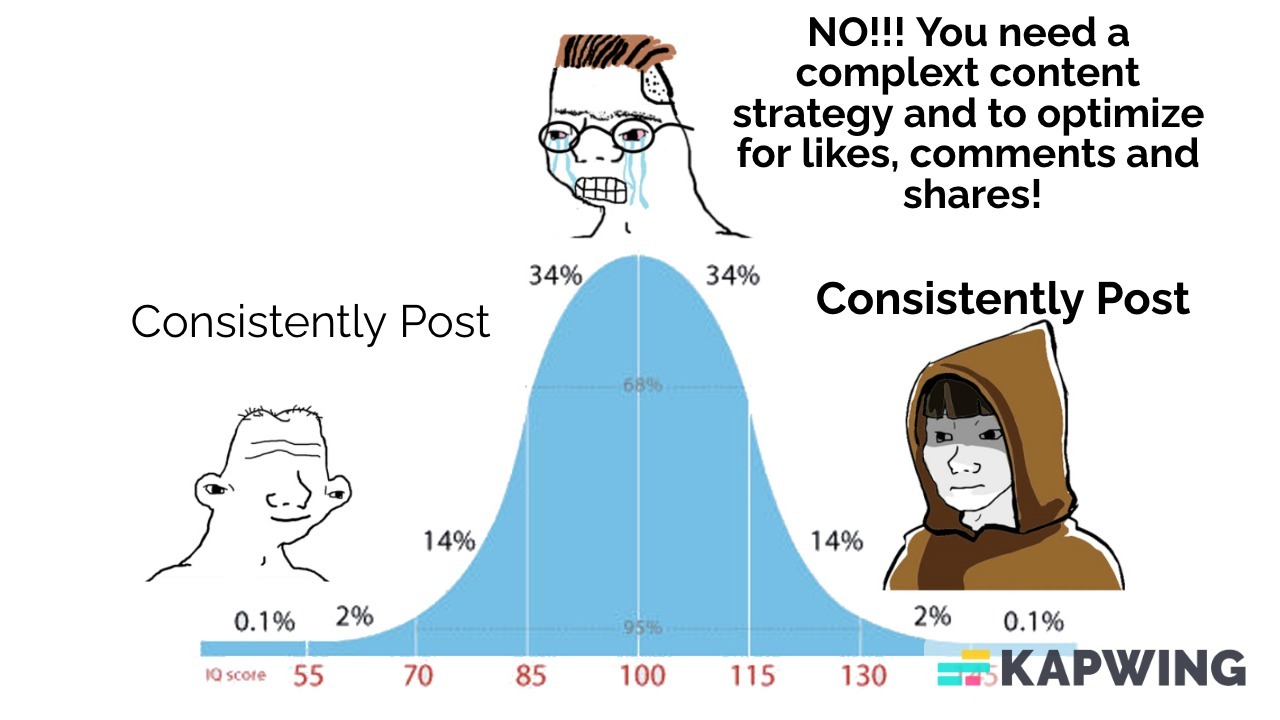
Each social media is different due to the audience it attracts.
To improve consistency you can use AI for social media but do so sparingly. AI is flooding social media and consumers are getting smarter at being able to identify if something is truly authentic or not.
If you decide to use AI, start by building some essential prompts that are specifically geared towards helping you create relatable content. Then from there always sprinkle in your own sense of humour.
Here's an opportunity most property management companies are completely missing.
While your competitors are posting dim, poorly lit photos taken on a phone, you could be showcasing properties with:
High-quality visual assets serve a dual purpose.

Middle-of-funnel marketing builds trust and keeps your company top of mind during the weeks or months an owner spends evaluating their options.
Most property management websites fail at their one fundamental job: turning visitors into inquiries.
That's a problem, because there is no point in driving traffic to your website if you cannot effectively capitalize on that traffic.
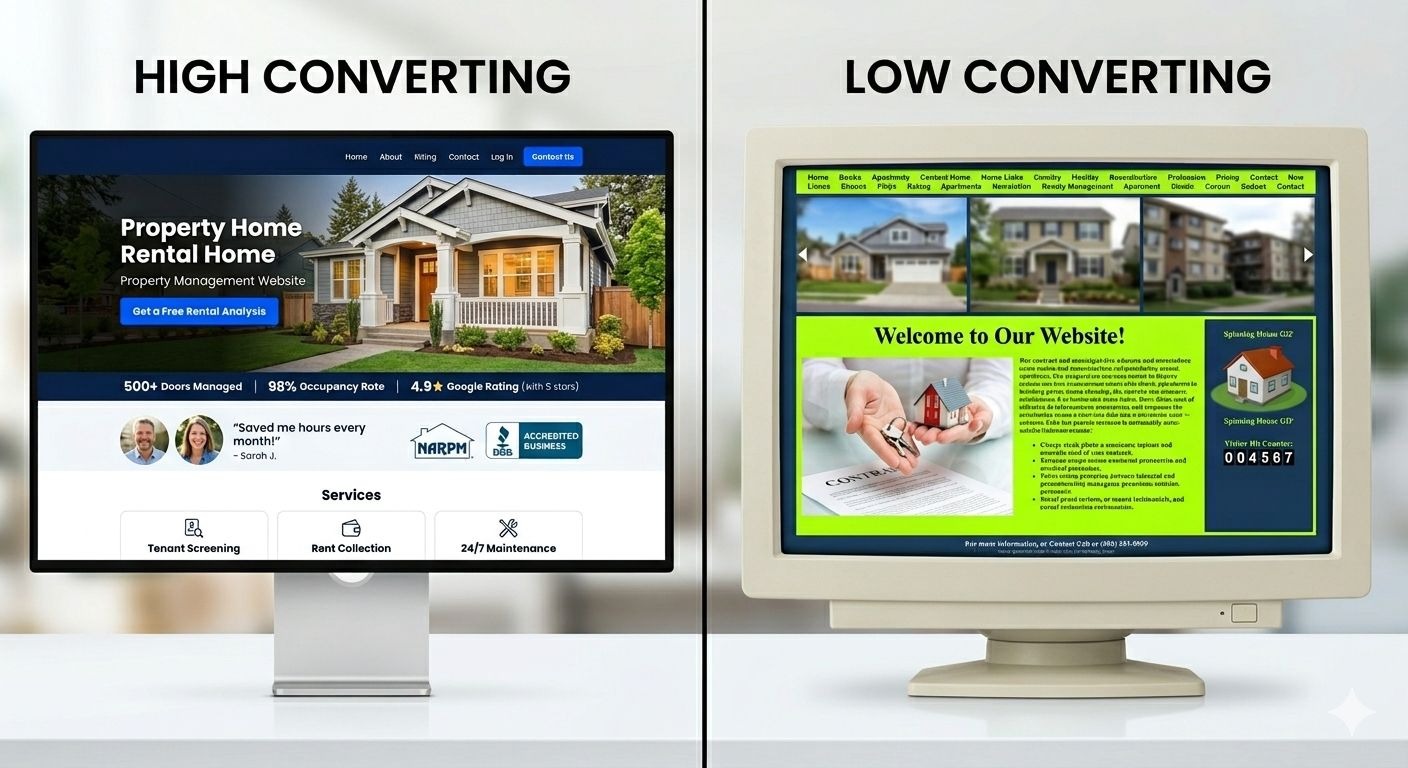
A high-converting property management website needs:
When a property owner is seriously evaluating management companies, one of the first things they do is check your reviews.
What they find often carries more weight than anything on your website.
To address this, ask for reviews at the right moments such as:
But gathering reviews is only half the equation.
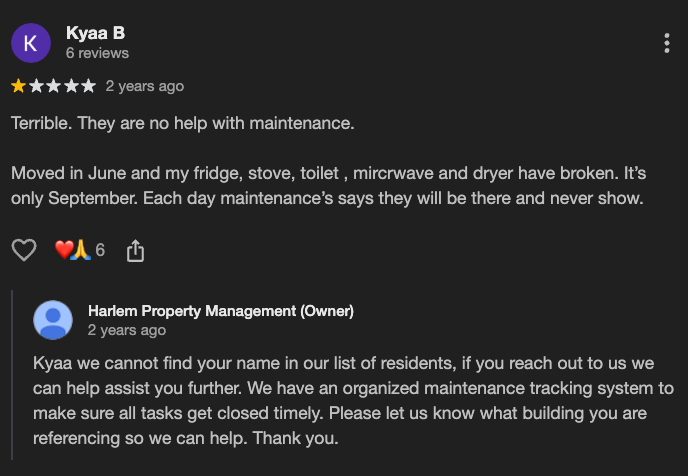
How you handle negative reviews matters just as much. A thoughtful, professional response to a critical review can actually build more trust than a five-star rating with no engagement.
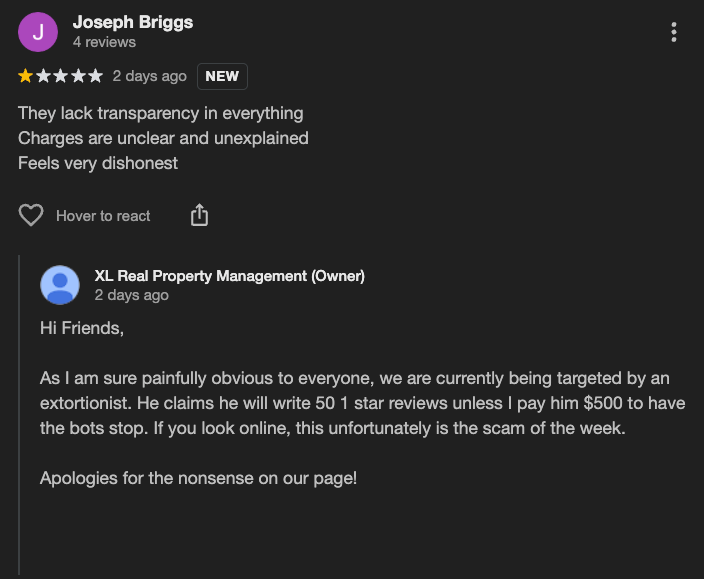
It shows prospective clients you take feedback seriously and handle problems with professionalism, the exactly the qualities they want in someone managing their property.
PPC is perfect for staying visible to owners who are actively researching but haven't made a decision yet.
There are two distinct approaches:
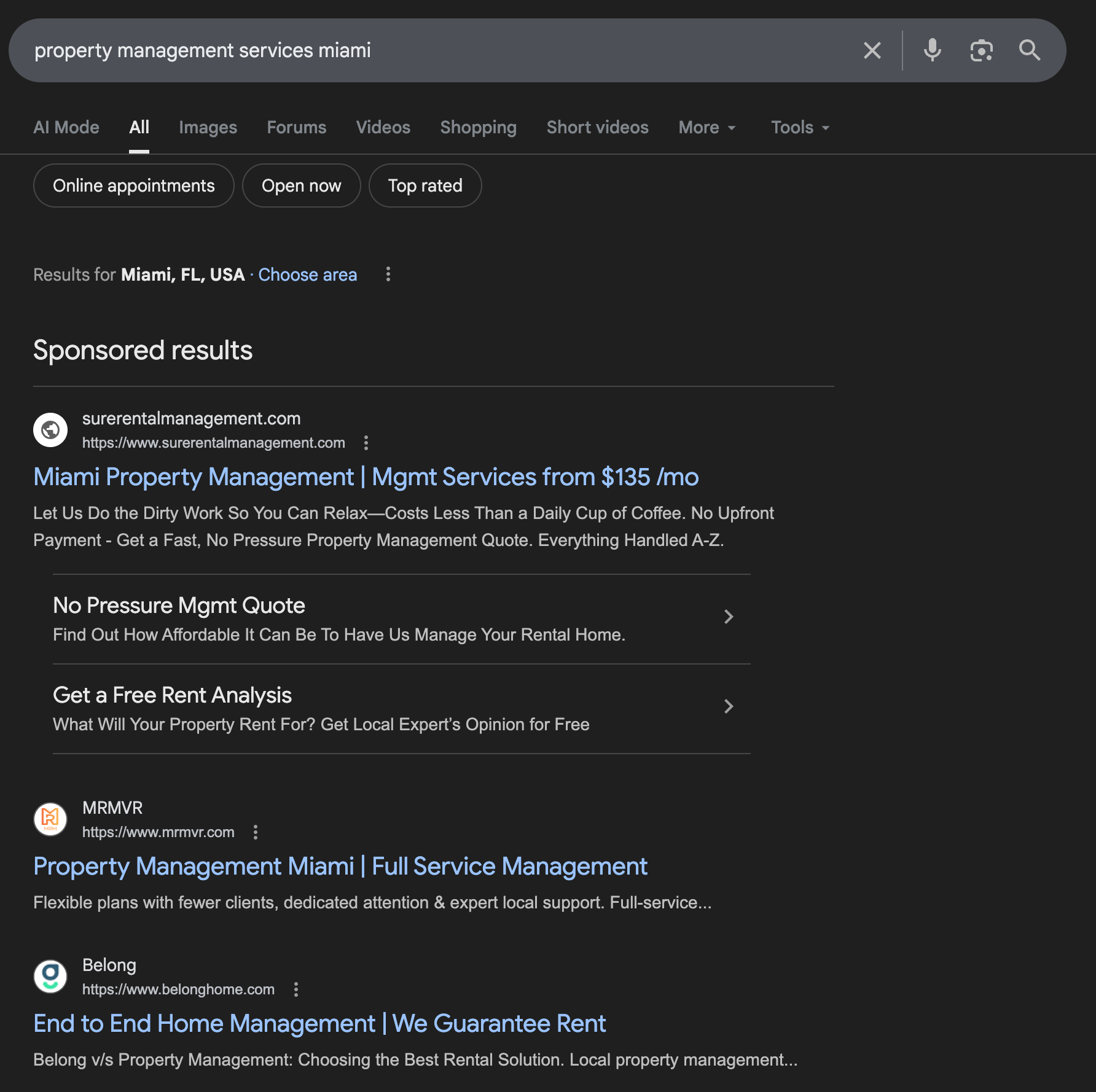
The key to middle-of-funnel PPC is matching your messaging to where the owner is in their decision process.
One of the most common mistakes I see is spending serious money on ads only to send that traffic to a poorly designed landing page. It doesn't matter how well your ad performs if the destination fails to build confidence.
Email marketing is a great way for staying top of mind with owners who aren’t ready to sign yet.
Step one: segment your list. An owner who downloaded your rental market report is in a different headspace than one who attended a webinar or requested a proposal. When you tailor your messaging to where they are in the process, every email feels relevant instead of generic.
Step two: deliver value consistently. The types of emails that move the needle include:
Step three: automate. Once your sequences are built, they run on their own, keeping your company in front of warm leads for weeks or months without manual follow-up.
Most property managers avoid talking about the competition. That's a mistake.
At this stage, owners are almost always comparing you to one or two other companies. Pretending those competitors don't exist doesn't make the comparison go away, it just means you don’t have control over the narrative.
AI has also fundamentally changed how property owners evaluate you. Instead of traditional search where you are forced to read each webpage, AI now reads everything it can find and synthesizes it into a single answer.
The places they love to pull from include:
As such, it's important to control the narrative by publishing direct comparisons or roundup articles.
However, the key is to be fair with our assessment.
Transparency builds tremendous trust.
When you're willing to give credit where it's due and still clearly explain what makes you different, it shows confidence and honesty.
At the decision stage, "Great company, highly recommend!" isn't enough. Property owners want proof.
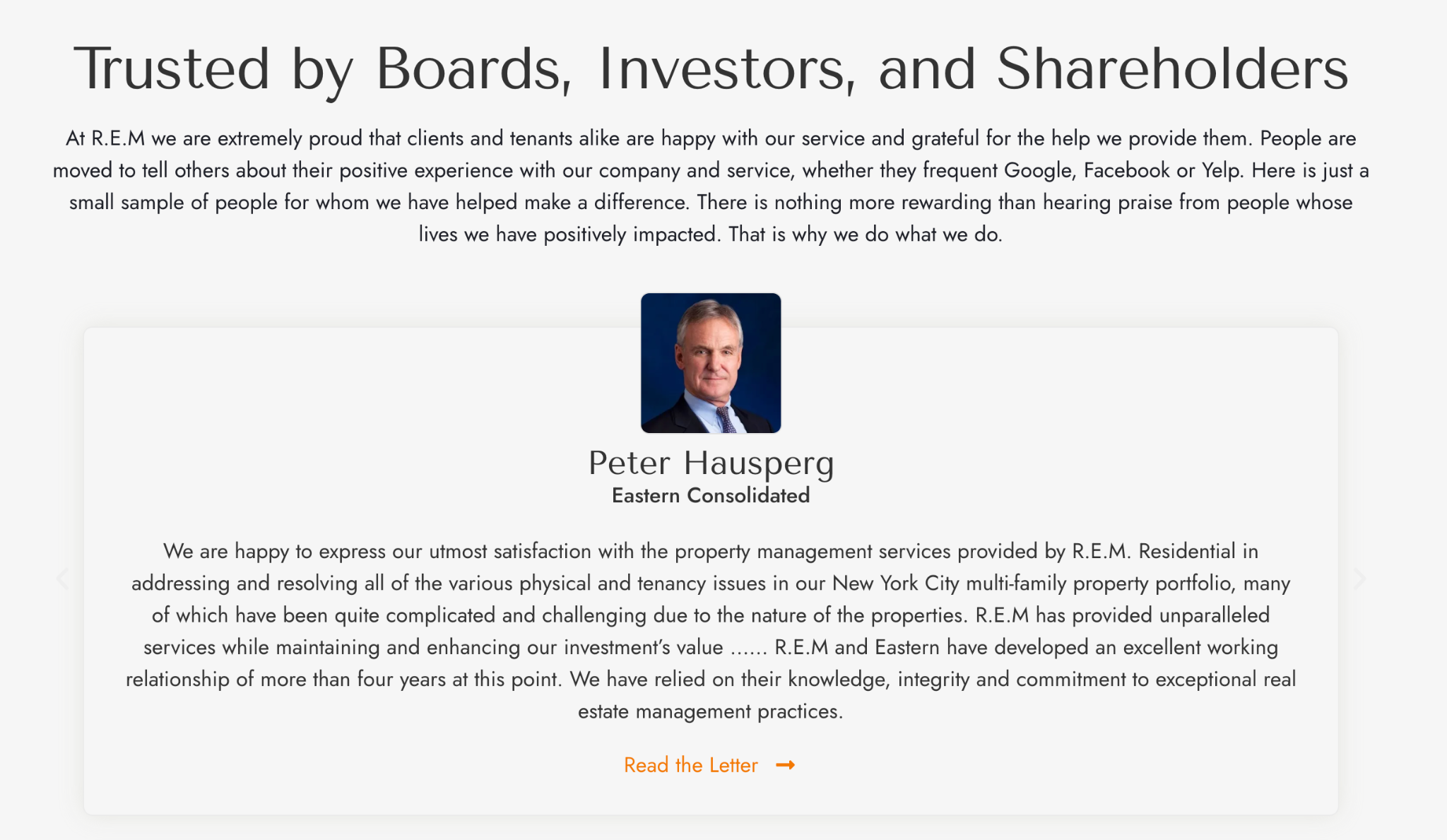
The best testimonials tell a story with real numbers:
Structure every testimonial around three elements:
At this stage, the property owner has done their research and they’re reached out.
Your job: Address final concerns and secure a signed management agreement.
Your pitch deck is often the last thing a property owner sees before deciding. It says as much about how you run your business as anything in it.
An effective presentation should:
Here's what separates companies that close from those that don't: customization.
A generic template signals you didn't bother understanding their situation. But a presentation that references their property, addresses their concerns, and aligns with their goals shows you will manage with the same attention to detail you brought to winning their business.
The owner is at the finish line, but don't assume the race is over.
This is actually the "danger zone" where deals quietly fizzle out. Usually, it’s not because they found someone better, it’s just that the thought of switching feels like a massive, stressful gamble.
Slow down before you close
You want to ask questions that prove you’re actually listening, not just waiting for your turn to talk:
These questions can help you figure out if you’re actually going to enjoy working together and it shows the owner you care about the long-term relationship.
Paint them a picture of Day One
Be very clear with what will happen on week 1, week 2 and the first month. When people know exactly what’s happening next, that "switching anxiety" disappears.
All of these strategies will help you drive more traffic to your website, but traffic doesn't close deals.
You need a system to capture and qualify visitors the moment they arrive. Most property management websites rely on basic contact forms that do nothing to gauge lead quality, and many visitors are hesitant to fill them out in the first place.
Realty AI's property management chatbot solves this by acting as your 24/7 leasing and sales assistant:
Don't let another potential client walk away because your website wasn't able to engage them and capture their information.
Before you spend another dollar on marketing that doesn't convert, take 2 minutes to see how Madison turns your existing website traffic into a steady stream of qualified appointments.

Within just a few months, Realty AI helped Team Logue capture 15 high-quality leads, resulting in 3 new transactions worth over $3.3 million. This success generated an estimated $82,500–$95,000 in gross commission income (GCI).

Explore what Realty AI can do for your business
By contacting us you agree to both our privacy policy and our terms and conditions