Nathan SmithPublished Mar 13, 2026Updated Jul 10, 20266 min read
TLDR: Bad tenants cost $3,500–$10,000+. Prevent this by pre-screening before showings, verifying income/employment independently (don't trust documents alone), calling previous landlords, and cross-referencing verbal answers against written applications.
A single bad tenant placement could cost between $3,500 and $10,000 before it's over. That's legal fees, the $2,540 in lost rent that piles up over a 2–3 month eviction process, property damage, and turnover costs to get the unit back online.
And that's just the money.
It doesn't account for the months of stress or the time you'll never get back.
The fix is a $35–$50 background check and asking ther right questions at the right time.
That's a roughly 100:1 return before the check even clears.
This guide breaks the process into stages pre-screening call, application and interview, reference check and covers the specific questions that matter at each one.
For each question, you'll find why it's worth asking, when to ask it, and what a good answer looks like versus a red flag. There's also a section on what you legally cannot ask, because getting that wrong costs more than a bad tenant ever would.
If you're still working on filling your property management leads pipeline, that comes first, but once the applicants are coming in, this is how you make sure the right ones stay.
Why Getting This Right Is Worth More Than Landlords Think
Most landlords treat screening like a formality or a box to check.
They run a background check, scan the application, pick whoever seems fine. That's not a process. It's a coin flip with a four to five figure downside.
The fraud problem makes it worse.
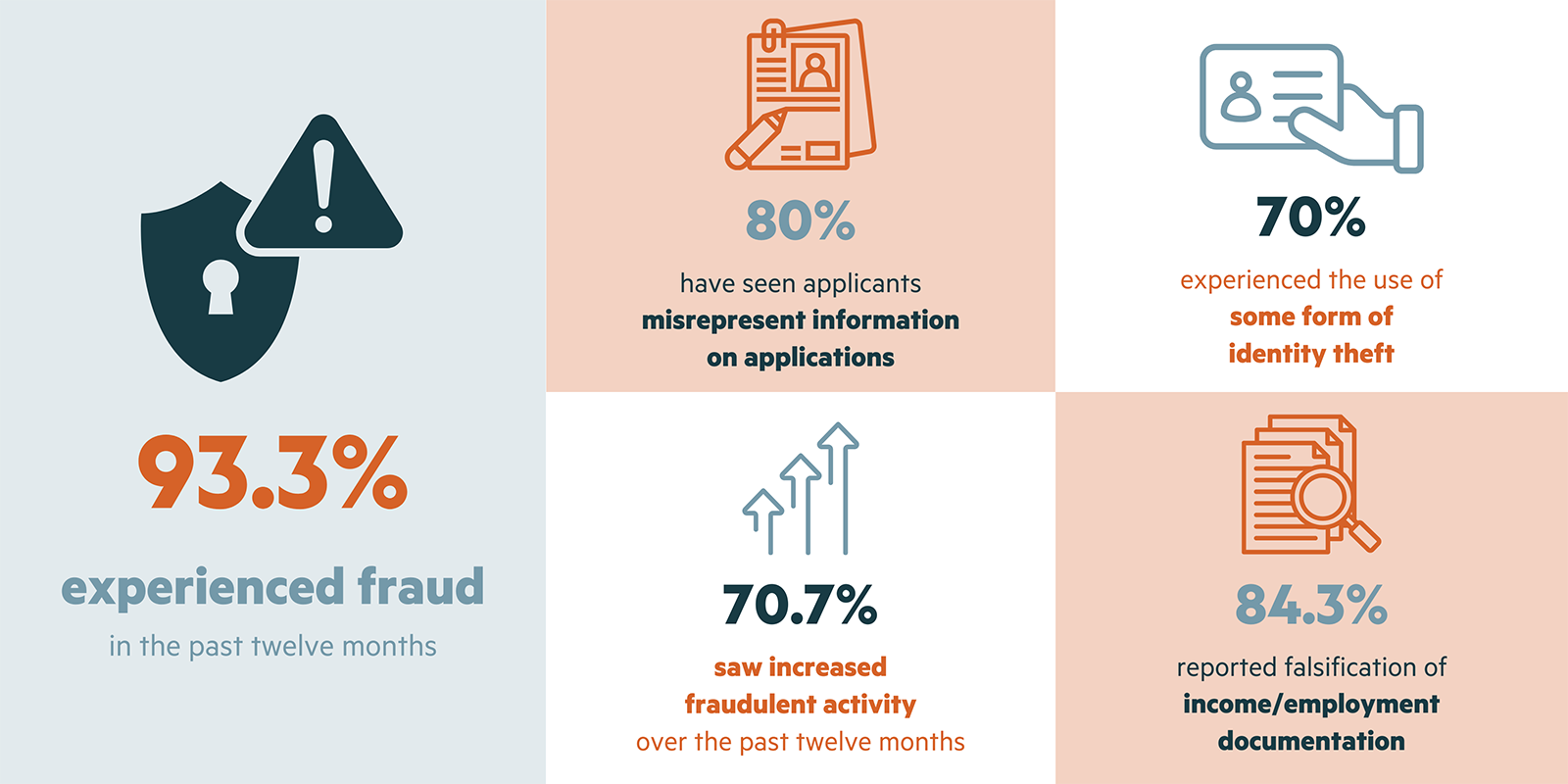
A 2024 National Multifamily Housing Council survey found that 84% of property managers encountered applicants submitting fake income or employment documents that year.
About 80% reported applicants misrepresenting information on rental applications. And nearly 24% of eviction filings over the past three years were linked directly to fraudulent applications.
What that means practically: don't take paperwork at face value.
The way you protect yourself is by asking questions that require consistency then cross-referencing what an applicant has submitted against you verbally against third-party verification you've confirmed yourself.
💡 Before you start: Write down your minimum qualification criteria before you look at a single application which include income threshold, credit minimum, rental history requirements.
Pre-Screening Call Questions
These go before the showing.
Five minutes on the phone rules out obvious mismatches and saves everyone's time. The goal isn't deep qualification, it's logistics and basic fit.
The ones who bristle at a quick call before they've even seen the unit are worth paying attention to.
"What's your target move-in date?"
Why ask it: A two-month mismatch in either direction is usually a dealbreaker. Finding out at the showing, after you've already scheduled, driven out, and walked someone through the unit, is a waste of both your time and theirs.
When to ask: First question on the pre-screening call, before anything else.
Good response: A specific date that aligns with your availability, or a small gap they're flexible on. "We're hoping for the 1st, but the 15th works too" is a good sign.
Red flag response: Vagueness about timing, especially combined with pressure to see the unit immediately. "We need to move as soon as possible" without a clear date can mean they're being displaced on short notice.
"How many people will be living in the unit?"
Why ask it: Occupancy compliance. Most jurisdictions use a rough standard of two people per bedroom. You need to know the total before the showing, not after.
When to ask: Pre-screening call, after confirming move-in timing.
Good response: A clear, specific number that aligns with local occupancy rules and the unit size. "Two adults, no kids" or "a family of four for a three-bedroom" which is both specific and reasonable.
Red flag response: Hesitation, vagueness ("just a couple of us, maybe my cousin for a while"), or a number that clearly exceeds what's appropriate for the unit.
"Do you have any pets?"
Why ask it: If your policy is no pets, or no dogs over a certain weight, find out now, not after a showing. You're also establishing expectations about your pet policy upfront.
When to ask: Pre-screening call. Cover this before the showing without exception.
Good response: A direct answer that matches your policy. "No pets" is simple. "We have one cat, indoor only" is specific and gives you something to work with. An applicant who proactively asks about your deposit or pet addendum is showing you they've rented with pets before and know the process.
Red flag response: A vague answer when you've asked a direct question, or mentioning a pet after you've already discussed a no-pets policy.
Note: If an applicant mentions a service animal or emotional support animal, don't handle that under your pet policy. It's a separate accommodation request governed by Fair Housing law.
"Have you reviewed the rent amount, and do you meet the income requirement?"
Why ask it: Most landlords require 2.5–3x monthly rent in gross income. If someone can't confirm they meet that threshold on a phone call, you're about to waste an hour showing a unit they can't qualify for.
When to ask: Pre-screening call, after covering occupancy and pets. State your threshold clearly — "we require at least 3x monthly rent in gross income, which is $X for this unit" and ask them to confirm.
Good response: A direct "yes" with a number, or a confident acknowledgment of the threshold and an offer to verify. "I make about $Y gross, so that works" is ideal. Bonus points if they already factored it in before calling.
Red flag response: A vague answer about income, an immediate pivot to asking if there's any flexibility on the requirement, or silence followed by "well, my partner might also be contributing."
"Would you have any concerns about a standard background and credit check?"
Why ask it: This isn't a trap. It's information. A confident "no" tells you something. So does a long pause followed by "well, there was this one thing." Asking upfront also makes it easier to have a productive conversation later if the check surfaces something unexpected.
When to ask: Last question on the pre-screening call, before confirming the showing.
Good response: A direct "no, go ahead" or "no issues." Some applicants will proactively mention a blemish they can explain — a medical debt that went to collections, an eviction from years ago during a difficult period. That kind of honesty is usually a good sign.
Red flag response: Deflection ("do you really need that?"), resistance to the idea of a check, or a vague mention of "some stuff from a while ago" without any willingness to elaborate.
Income and Employment Questions
These go on the formal application and in any follow-up interview.
The goal is threefold:
Confirm the income meets your threshold
Verify it's real
Understand whether it's stable.
"What is your gross monthly income, and how do you receive it?"
Why ask it: You're establishing the baseline for your income-to-rent ratio, but you're also probing for the type of income as each type requires different documentation to verify. Self-employed or gig applicants aren't automatically risky. They just require more documentation.
When to ask: On the application, with a follow-up in the interview if the answer is vague.
Good response: A specific gross figure that meets your threshold, with a clear income type. "I make $6,200/month gross from my full-time job at [employer]" is ideal. A self-employed applicant who immediately offers to provide two years of tax returns and recent bank statements has done this before and knows what you need.
Red flag response: A round number with no detail ("about $5,000 a month"), income from multiple informal sources they can't clearly document, or a figure that exactly hits your threshold with no margin.
"Are you currently employed? What's your employer's name and a contact I can verify with?"
Why ask it: This is where the fraud problem shows up most. Pay stubs can be faked. But if you call the employer number they will likely give you independent verification.
When to ask: Application stage, required field. Follow up with a phone call to the employer independently and look up the company's main number yourself rather than calling the number provided on documentation.
Good response: Specific employer details — company name, location, manager name — with consistent information across the application and any verbal conversation. Even better: a LinkedIn profile or company website that confirms the employer is real and the applicant works there.
Red flag response: An employer you can't find with a basic search, a phone number on the pay stub that goes to a personal voicemail, or an "HR contact" who only confirms employment with scripted answers and no specific details. These are common patterns in fraudulent applications.
"How long have you been in your current job, and is your income consistent or variable?"
Why ask it: Income stability matters as much as income level. Someone six weeks into a new job earning $6,000/month is a different risk than someone who's been at the same company for four years at the same income.
When to ask: Application stage, with a follow-up if the answer surfaces inconsistency.
Good response: At least 6–12 months in the current role, with stable or growing income. A commissioned salesperson who can show consistent monthly draws over 12 months is solid. A freelancer with two years of tax returns that match their claimed income is solid.
Red flag response: A new job that conveniently started just before they began their apartment search, a job change that explains a gap in rental history, or variable income they can't document consistently.
Rental History Questions
Patterns tell you more than any single fact.
Someone who's rented from the same landlord for four years is telling you something. Someone who's moved five times in two years warrants a follow-up question.
"Can you walk me through your rental history for the past three years — addresses, dates, and reasons for leaving?"
Why ask it: You're building a timeline. Gaps in that timeline, inconsistencies with what they've told you verbally, or a pattern of frequent moves are all worth noting. The reason for leaving each residence is where you often find the most useful information.
When to ask: Application form, with a follow-up conversation if anything doesn't line up.
Good response: A clear, consistent timeline with specific dates and addresses. Reasons that make sense — lease ended, landlord sold, relocated for work, wanted more space. An applicant who can answer this from memory without checking is usually someone with a stable history.
Red flag response: Gaps in the timeline they can't explain, an inability to provide specific addresses or dates, or reasons for leaving that shift between the application and the conversation. "We just decided to move" for three consecutive moves in two years deserves a direct follow-up: such as "What were you looking for that your previous places didn't offer?"
"Have you ever been evicted or broken a lease early?"
Why ask it: This is one of the questions you're legally allowed to ask directly. An eviction from several years ago that the applicant can explain such as a job loss, a documented dispute or difficult period they've recovered from is different from a recent eviction with no context.
When to ask: Application form and verbally in the interview. Ask it twice, in both places, and compare the answers.
Good response: A direct answer, one way or the other. "Yes, once in 2020, I lost my job during COVID and had to break my lease. I paid the early termination fee and here's the reference from that landlord." That kind of specificity and accountability is actually reassuring.
Red flag response: "I don't think so" or "not exactly". Or a "no" on the application followed by a yes that surfaces in the reference check.
"Can you provide full contact information for your previous landlords including a name, phone, and email?"
Why ask it: You need real contact information to run a reference check. Vague references to "the management company" without a direct contact are patterns that prevent you from verifying the most important part of the application.
When to ask: Application form. If the information is incomplete, follow up before proceeding.
Good response: Specific contact details including the landlord name, direct phone number, and email for each residence in the history. An applicant who offers to reach out to their previous landlord and introduce you is also being proactive in a way that matters.
Red flag response: "I don't have the number anymore" for a landlord they rented from twelve months ago. Or a reference whose contact information turns out to be a friend's cell number.
Lifestyle and Occupancy Questions
These questions aren't about judging how someone lives.
They're about making sure the property is used within your lease terms and your local policies.
Ask them directly and apply the same standard to every applicant.
"Does anyone plan to live in the unit who isn't listed on the application?"
Why ask it: Unauthorized occupants are one of the most common lease violations and one of the harder ones to address after the fact. This question establishes the expectation that everyone living in the unit needs to be on the application and gives you something to point to if it becomes an issue later.
When to ask: Application stage, with a re-confirmation in the interview.
Good response: A clear "no" or a complete list of everyone who will live there, matching the occupant count they gave you in pre-screening. Consistency between the call and the application is the signal here.
Red flag response: A list on the application that doesn't match what they said on the pre-screening call, or an evasive answer about whether a "friend might stay for a while."
"Do you plan to operate any kind of business from the unit?"
Why ask it: Running a commercial operation out of a residential unit can violate local zoning laws, affect your insurance coverage, and create liability you didn't sign up for. Most residential leases prohibit it. Ask directly.
When to ask: Application stage, especially for applicants who are self-employed or work remotely. Remote office work is generally fine — you're asking about business operations with clients, deliveries, employees, or commercial activity.
Good response: "No" — or "I work from home on a laptop, that's it." The distinction between remote knowledge work and commercial operations is clear to most people when you ask.
Red flag response: Vagueness about what they "do" from home, or a yes to a business operation that wasn't volunteered until you asked directly.
"Does anyone in the household smoke?"
Why ask it: Non-smoking policies are enforceable in your lease, and smoke damage is among the most expensive to remediate. This is a legitimate logistical question — not a personal one — and setting the expectation upfront prevents disputes at move-out.
When to ask: Pre-screening call is fine for this one. Confirm it on the application as well.
Good response: A direct answer. If someone smokes and your policy prohibits it, better to know now than at move-out.
Red flag response: "Not usually" or "only outside" when your policy prohibits smoking on the premises entirely.
Background and Credit Check Questions
Consent and context-setting matter here.
The goal is to make sure the process is clear to the applicant and to give them the chance to explain anything before you pull the report.
"Our application includes a background and credit check. Do you consent to that, and is there anything I should know before I run it?"
Why ask it: You need written authorization to run a background check. But asking verbally first does two things
It confirms the applicant understands what's coming, and it opens the door for them to provide context before you see it in a report.
An applicant who gets ahead of a blemish voluntarily is usually more trustworthy than one who hopes you won't notice.
When to ask: Application stage, before running the check.
Good response: Written consent on the application and a verbal "no issues" or a proactive explanation such as "I have a medical debt from 2022 that went to collections — it's paid, but it might still show up".
Red flag response: Pushback on the check itself, or a "clean" verbal assurance followed by a report that surfaces significant issues they didn't mention.
"Can you help me understand [specific item] on your report?"
Why ask it: Background reports aren't self-explanatory. An eviction from 2019 might reflect a documented dispute, a job loss, or a genuinely problematic pattern. You can ask a clarifying question but you can't do is make decisions based on arrests that didn't lead to convictions.
Several states restrict or prohibit this entirely, so check your jurisdiction's rules.
When to ask: After reviewing the report, if something needs context.
Good response: A clear, specific explanation with verifiable details such as dates, circumstances and what's changed since then. You're looking for honesty and accountability.
Red flag response: Anger, deflection, or an explanation that directly contradicts what the report shows. Or a claim that the report is wrong without any ability to explain what's supposedly inaccurate.
Questions to Ask the Previous Landlord
This is the most underused part of the screening process. Most landlords skip it or send a form that gets ignored. That's a mistake.
A five-minute call with a previous landlord tells you more than anything else in the stack. They've actually rented to this person. They've seen how they handle late payments, maintenance issues, and move-out.
Note: the same Fair Housing rules apply here. Ask about tenancy behavior, not personal characteristics.
"Did they pay rent on time consistently?"
Why ask it: On-time payment is the most direct proxy for reliable tenancy. But this question requires follow-up, "mostly" and "always" are very different answers.
When to ask: Reference call with previous landlord.
Good response: "Yes, always on the 1st" or "occasionally a few days late but always within the grace period." Specific and consistent.
Red flag response: "For the most part" or "when things were going well." Ask the follow-up: "Were there months where rent was more than two weeks late?" If they hesitate before answering, that's your answer.
"What condition was the unit in when they moved out?"
Why ask it: Move-out condition is where deferred maintenance, unreported damage, and cleaning issues show up. This is a concrete, factual question most previous landlords will answer directly.
When to ask: Reference call.
Good response: "Normal wear and tear but we repainted." Or "they left it in better shape than when they moved in." Either is a strong signal.
Red flag response: "We had to do more work than usual" without specifics. If this is the case follow up with, "Can you give me an idea of what needed to be addressed?"
"Were there any complaints from neighbors or issues with other tenants during their time there?"
Why ask it: Noise complaints, disputes, and neighbor conflicts won't show up in a credit check. A tenant who makes life difficult for the rest of a building is a management problem that compounds fast and the best property management tips won't undo a bad placement decision.
When to ask: Reference call.
Good response: "No, I never heard a word. They kept to themselves and were never a problem." Simple and direct.
Red flag response: A pause, a vague "there were a couple of things," or an unwillingness to elaborate. Ask directly: "Were there any formal complaints or incidents involving neighbors?" If the previous landlord won't answer clearly, assume the answer isn't good.
"Would you rent to them again?"
Why ask it: This is the question. It cuts through everything. No careful framing, no hedged language, just a direct answer from someone who's actually experienced what you're about to agree to.
When to ask: Last question on every reference call.
Good response: An immediate "yes, absolutely" or "yes, I was sorry to see them go." Certainty and specificity.
Red flag response: Hesitation before answering. "I mean, sure" or "under the right circumstances." Or a pause that lasts a beat too long before "I'd rather not say." None of those are a yes. Treat them accordingly.
What Landlords Cannot Ask And Why It Matters
According to HUD, violating Fair Housing Laws carry fines that start at $23,011 for a first offense and increase to $115,054 for third violations.
More important than the fine: these protections exist to make sure every applicant is evaluated on their ability to pay rent, care for the property, and comply with the lease, not on who they are.
The Protected Classes Every Landlord Must Know
Fair Housing Protected Classes
Many states and localities add further protections such as source of income (including housing vouchers), sexual orientation, gender identity, immigration status, and marital status are common additions. Check your state's specific rules before finalizing your question list.
How an Ordinary Question Can Become a Fair Housing Problem
💡 The indirect question trap: The trickier risk isn't the obvious prohibited questions, it's the neutral-sounding ones that surface protected information.
Asking about weekend availability could reveal religious practices.
Asking why someone needs a first-floor unit could reveal a disability.
Asking whether a spouse co-signs could surface marital status or sexual orientation.
The test to apply to every question is simple: does this help me evaluate whether this applicant can pay rent, care for the property, and follow the lease?
If not, leave it out.
Red Flags That Don't Require a Question
Some warning signs emerge from behavior, not answers such as:
Reluctance to provide previous landlord contact information. A qualified applicant with nothing to hide will give you real contact details.
Inconsistencies between verbal statements and the written application. Note any contradictions regarding move-in dates or employment status that indicate a shifting narrative.
Urgency to skip steps. Pressure to "just do the paperwork now" before the process has started. Qualified tenants who've rented from organized landlords understand why screening exists.
Income documentation that looks off. Inconsistent fonts, employer details that don't match a basic search, round numbers on every pay stub.
Defensive responses to routine questions. This one's subjective, so treat it as a data point alongside others. An applicant who gets defensive about why they're moving, or who changes their timeline story, is working harder to conceal than to clarify.
One flag can usually be explained. Three or four together is a pattern.
A Good Screening Process Is How Good Properties Retain Value
All of that work only matters if the right applicants actually reach you first.
Too many property managers build a solid screening process and then lose qualified leads at the very first touchpoint due to a response gap when they are out of office.
If you're putting real effort into finding good tenants, it's worth making sure that first inquiry gets captured when it happens. Realty AI's leasing chatbot responds at the moment of interest and keeps qualified leads in your pipeline long enough to make it to your screening process actually count.
The best real estate recruiting chatbot and AI recruiting tools in 2026, compared. Real features, pros and cons, and the compliance rules brokerages miss.
About Madison
The AI assistant built for real estate lead gen
Madison is Realty AI's conversational assistant for real estate websites. It engages visitors instantly, qualifies buyers, sellers, and renters through natural dialogue, routes summaries to your CRM, and keeps your team focused on closing.
5.0 average from 2,500 customer reviews
“We captured 3 new transactions worth over $3.3 million in just a few months using Realty AI.”
Sarah Logue
Broker & Owner, Top 0.1%
“Within our first week of using Realty AI, I had an engaged seller ready on the phone. This has never happened before in 4 years.”
Mark Jensen
Owner & Broker of Record
“It feels like having a personal assistant on my website 24/7, sending me instant notifications so I never miss a potential client.”