NNathan SmithPublished Jun 17, 2026Updated Jun 18, 20269 min read
Most agents know they need more leads. Fewer know why website visitors keep leaving without sharing their info.
A lead magnet fixes that. Give someone a free, useful resource in exchange for their contact info, and a one-time visitor becomes a lead you can follow up with.
This guide covers the best lead magnets for every client type on your roster.
What Is a Real Estate Lead Magnet?
A lead magnet is a free resource you offer in exchange for contact info, typically a name and email address.
The key is being specific. A generic resource like "Home Buyer's Guide" will not cut it. A specific one like "First-Time Buyer's Guide to [City]" works because it speaks directly to where that person is right now.
Lead Magnet Type
Best For
Purpose
Home Evaluation
Sellers, Investors, Landlords
Capture intent to sell or refinance
Selling Guide
Sellers
Educate and build trust pre-listing
Market Report
Sellers, Buyers, Investors
Position you as the local expert
Buyer Guide
First-time buyers, Move-up buyers
Educate and qualify buyer leads
Checklist
All audiences
Easy to consume, high perceived value
ROI / Cash Flow Calculator
Investors
Qualify motivated investors
Relocation Package
Relocators
Capture out-of-area leads early
Neighborhood Guide
Buyers, Relocators, Luxury
Showcase local knowledge
Seller Lead Magnets
Sellers are your most motivated leads. They are already thinking about their home's value before they ever call an agent. Your job is to be there when they start looking.
Home Evaluations
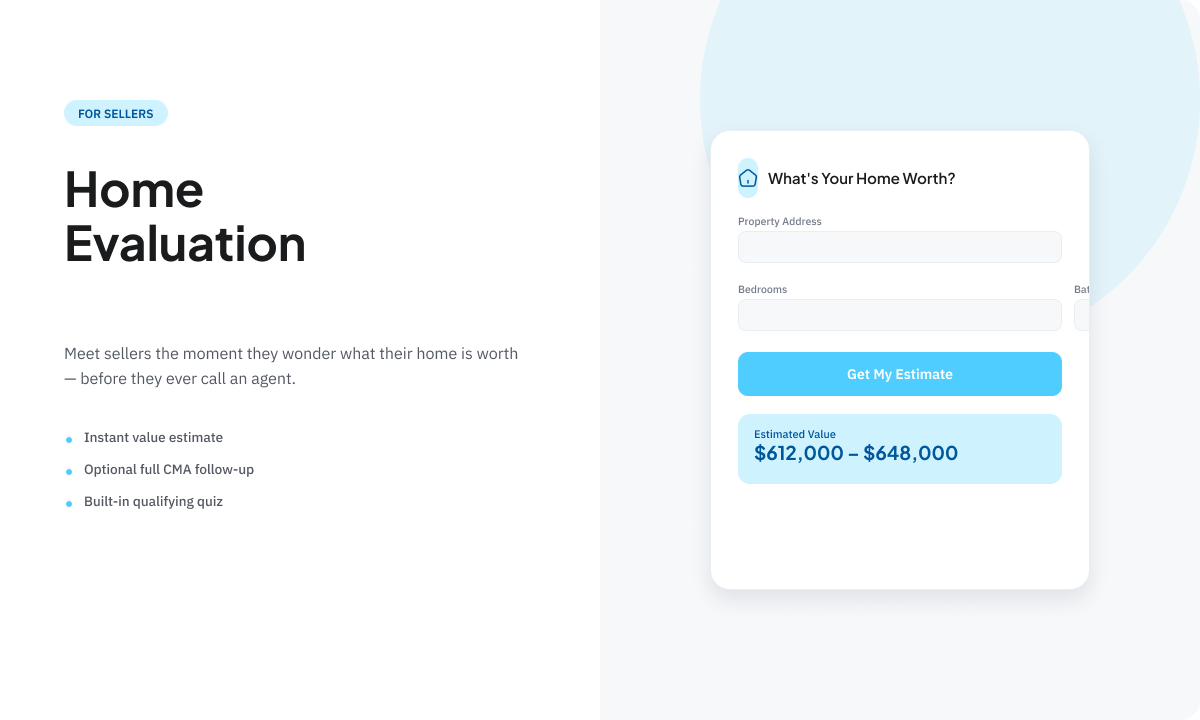
A home evaluation is the most direct thing you can offer a seller. Before any seller calls an agent, they want to know what their home is worth. This magnet meets them at that exact moment and gets you into the conversation first.
What to include:
Interactive home value estimator (inputs: address, bedrooms, bathrooms, condition)
Option to request a full agent-prepared CMA after the estimate
A short quiz asking about recent updates, timeline, and reason for selling to qualify the lead
Gate with name, email, and property address
Selling Guides
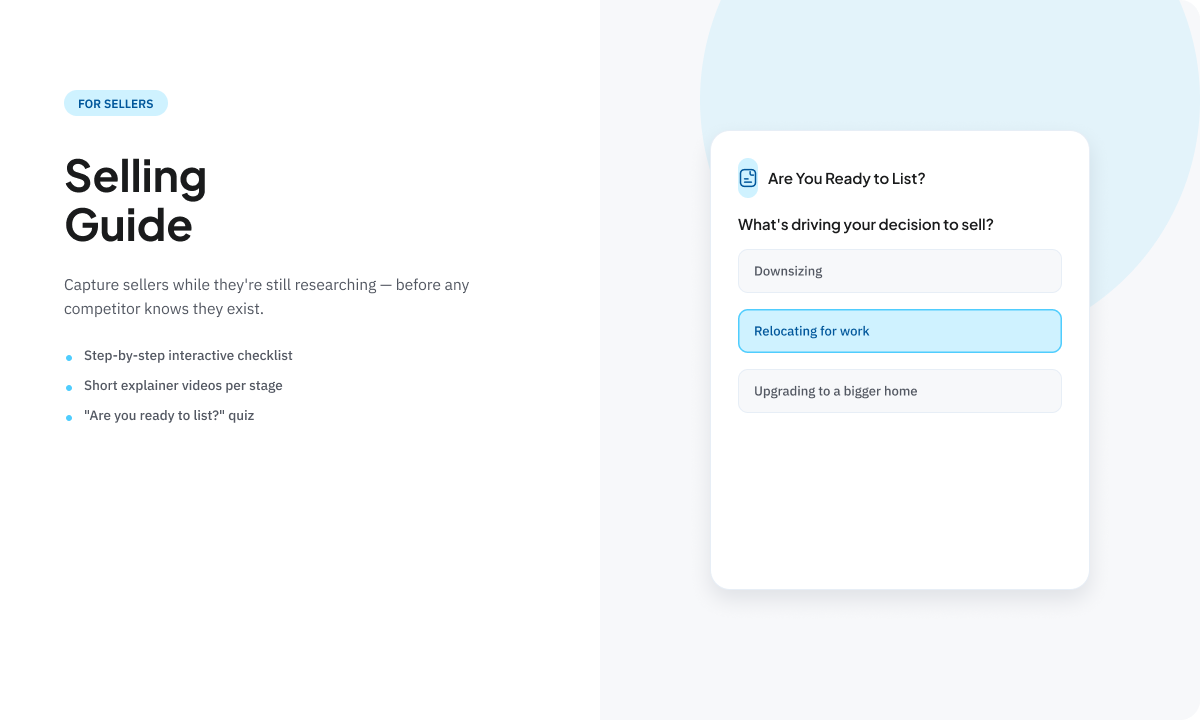
Most sellers spend weeks or months researching before they pick up the phone. A selling guide captures them during that window and positions you as the agent who helped them understand the process before any competitor even knew they existed.
What to include:
Interactive checklist they can work through at their own pace (staged as a step-by-step tool, not a static PDF)
Short explainer videos for each stage: prep, pricing, listing, negotiating, closing
A self-assessment quiz: "Are you ready to list?" that segments leads by timeline
Embedded CTA to request a home evaluation at the end
Market Reports
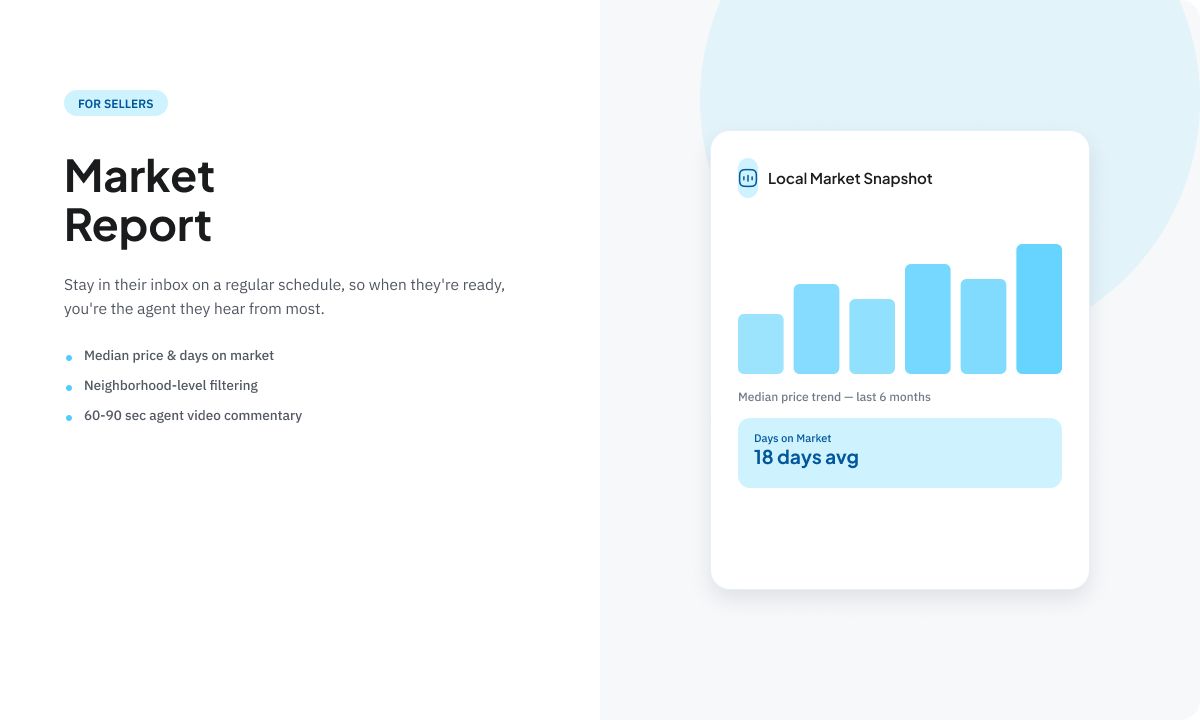
Sellers who are not ready to list yet are still watching the market. A monthly or quarterly report gives you a reason to stay in their inbox on a regular schedule, so when they are ready, you are already the agent they hear from most.
What to include:
Interactive charts showing median price, days on market, and list-to-sale ratio over time
A poll asking visitors what factor matters most to them (price, timing, or market conditions)
Neighborhood-level data with a toggle or filter by area
A brief video commentary from the agent (60-90 seconds) summarizing the key takeaway
Buyer Lead Magnets
Generic buyer guides do not convert well. The more specific you are about who the buyer is, the better your results will be.
First-Time Buyer Guide
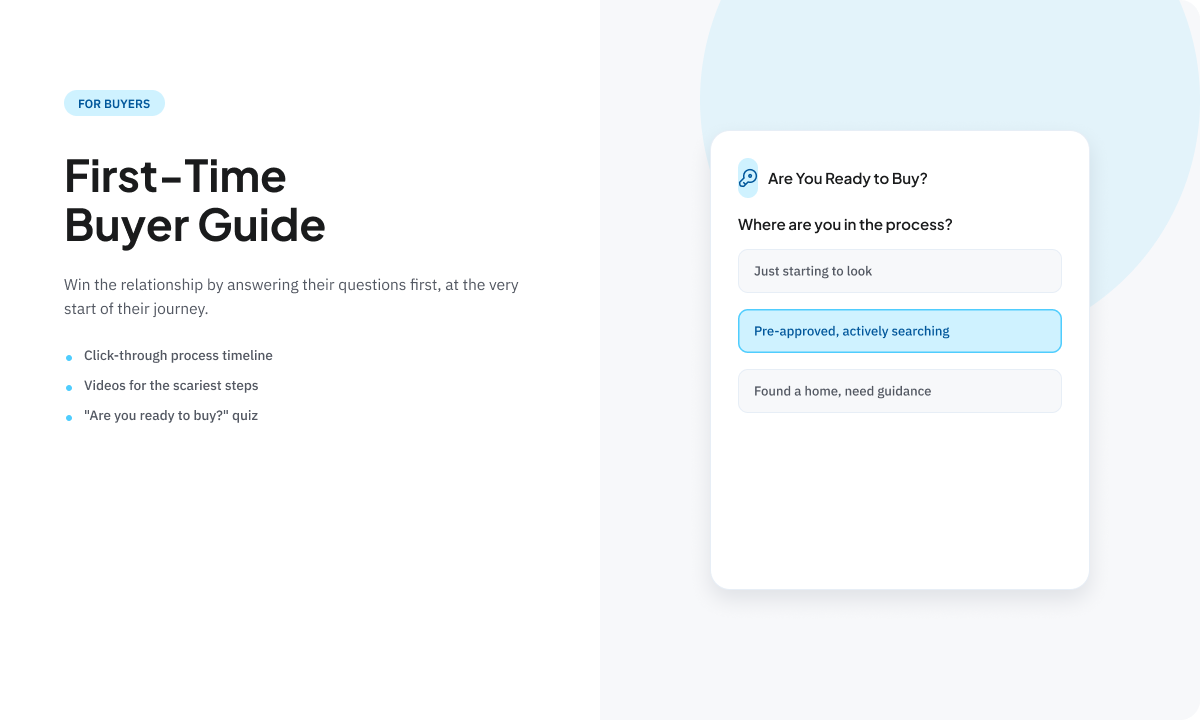
Buying a first home is overwhelming. Most first-time buyers spend months researching on their own before they contact anyone, and the agent who answers their questions first usually wins the relationship. A guide that walks them through the full process gives you a way in at the very start of their journey.
What to include:
Interactive step-by-step timeline they can click through at their own pace
Short videos for the stages buyers fear most: making an offer, home inspections, closing day
A readiness quiz: "Are you ready to buy?" that captures where they are in the process
Local market context, including financing norms, competition, and typical timelines
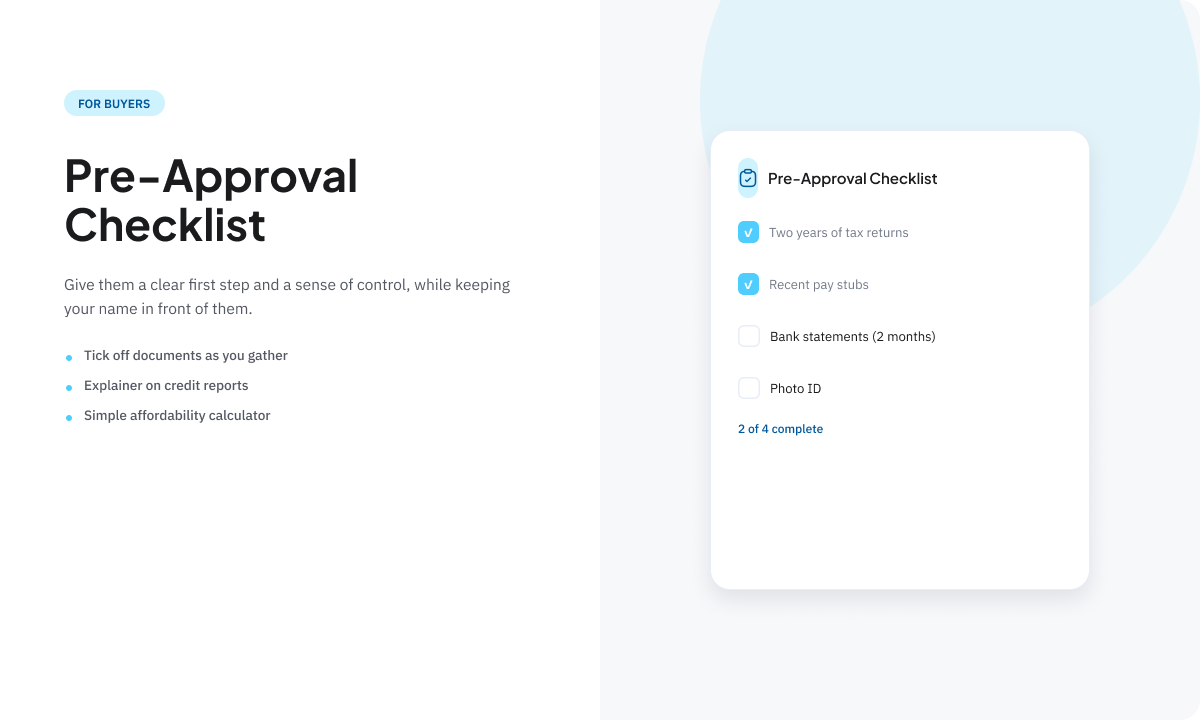
Mortgage Pre-Approval Checklist
Many buyers stall because they are not sure if they are ready to talk to a lender. A pre-approval checklist removes that uncertainty. It gives them a clear first step and a sense of control, while keeping your name in front of them.
What to include:
Interactive checklist they can tick off as they gather each document
A short explainer video on what lenders actually look at and how to read a credit report
A simple affordability calculator (income, debt, down payment) to help them understand their range
Your preferred lender's contact info (co-branded if possible)
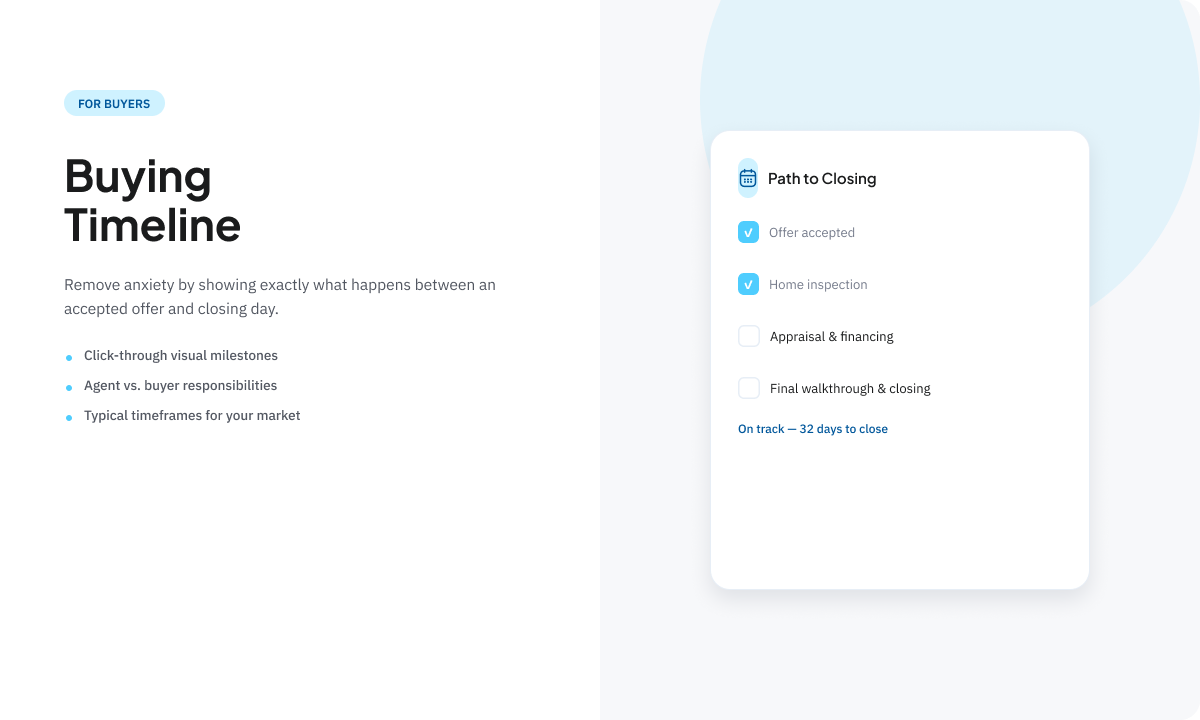
Home Buying Process Timeline
Most buyers do not know what actually happens between an accepted offer and closing day. The uncertainty makes them nervous and slow to commit. A clear visual timeline removes that anxiety and shows exactly what you handle on their behalf before they have signed anything.
What to include:
Interactive visual timeline they can click through step by step
Each milestone labeled: what the agent handles, what the buyer handles
Short video clips or tooltips explaining what happens at each stage
Typical timeframes for each step in your market
Investor Lead Magnets
Investors respond to data and financial clarity. Lead magnets for this group need to lead with numbers.
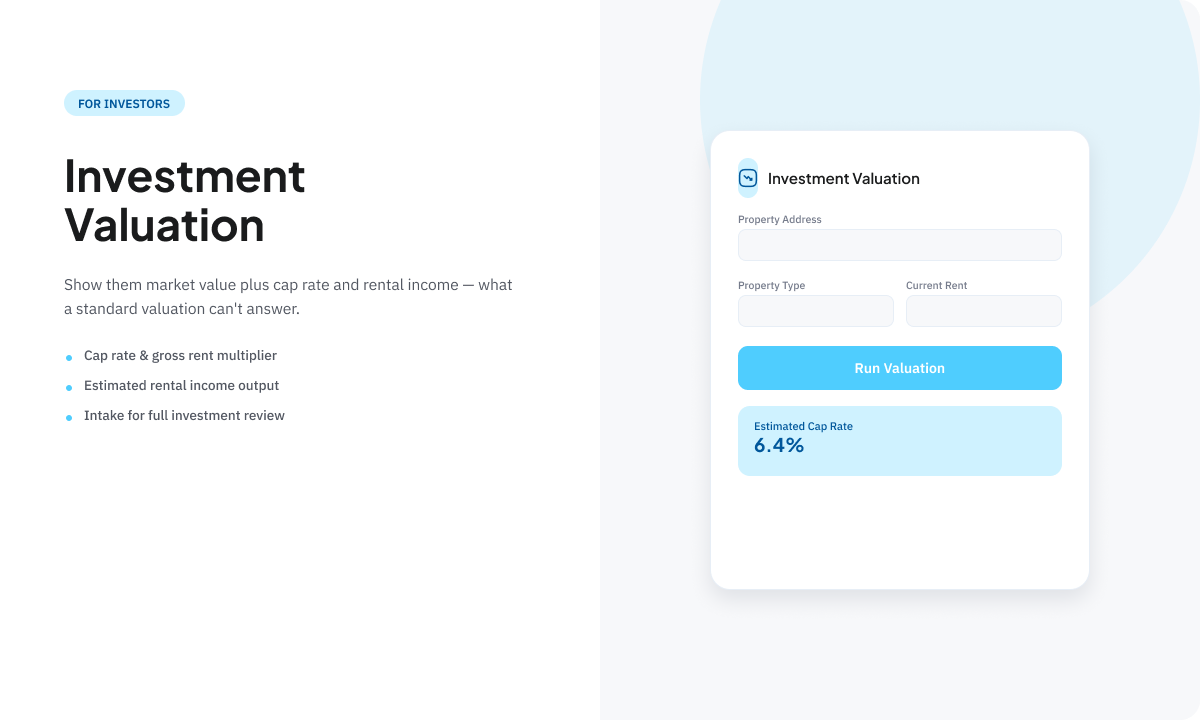
Investment Property Valuation
Investors do not just want to know what a property is worth. They want to know if it makes financial sense to own it. A standard home valuation does not answer that. An investment property valuation does, and it signals immediately that you speak their language.
What to include:
Interactive valuation tool with inputs for property type, address, and current rent
Output showing market value, estimated rental income, cap rate, and gross rent multiplier
A short video from the agent explaining how to read the results
Intake form to request a full investment review
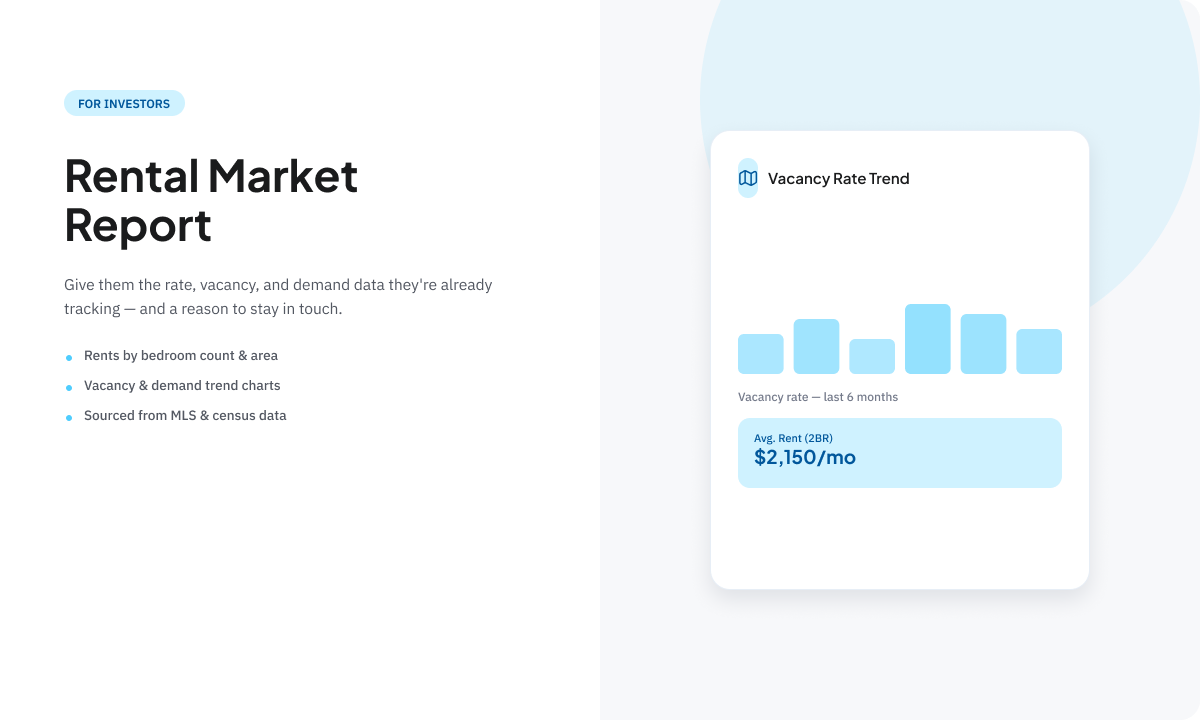
Rental Market Report
Investors make decisions based on what the rental market is doing right now. A report that tracks rates, vacancy, and demand by area gives them the data they are already looking for, and gives you a recurring reason to stay in front of them.
What to include:
Interactive map or filter showing average rents by bedroom count and neighborhood
Charts tracking vacancy rates and demand trends over time
A poll asking what type of investment they are focused on (single family, multi-unit, short-term rental)
Data sources cited (Rentometer, MLS, census data)
Cash Flow / ROI Calculator
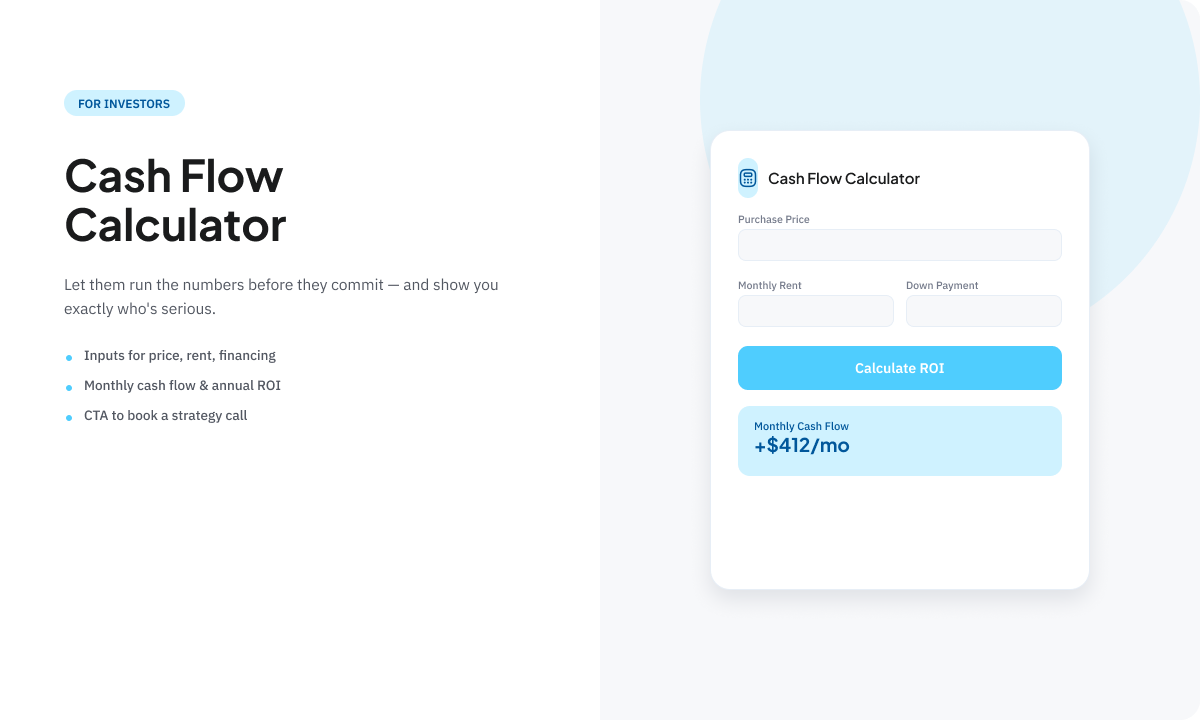
Before an investor commits to a deal, they want to run the numbers. A calculator that does that work for them is one of the most useful things you can offer. It also shows you exactly who is serious. The investors who come back with specific numbers are your best prospects.
What to include:
Embeddable interactive calculator with inputs for purchase price, rent, mortgage rate, taxes, insurance, and maintenance
Outputs: monthly cash flow, annual ROI, cap rate, and break-even rent
A short video walkthrough showing how to use it with a real example property
A CTA to book a strategy call after they run their numbers
Top Investment Neighborhoods Guide
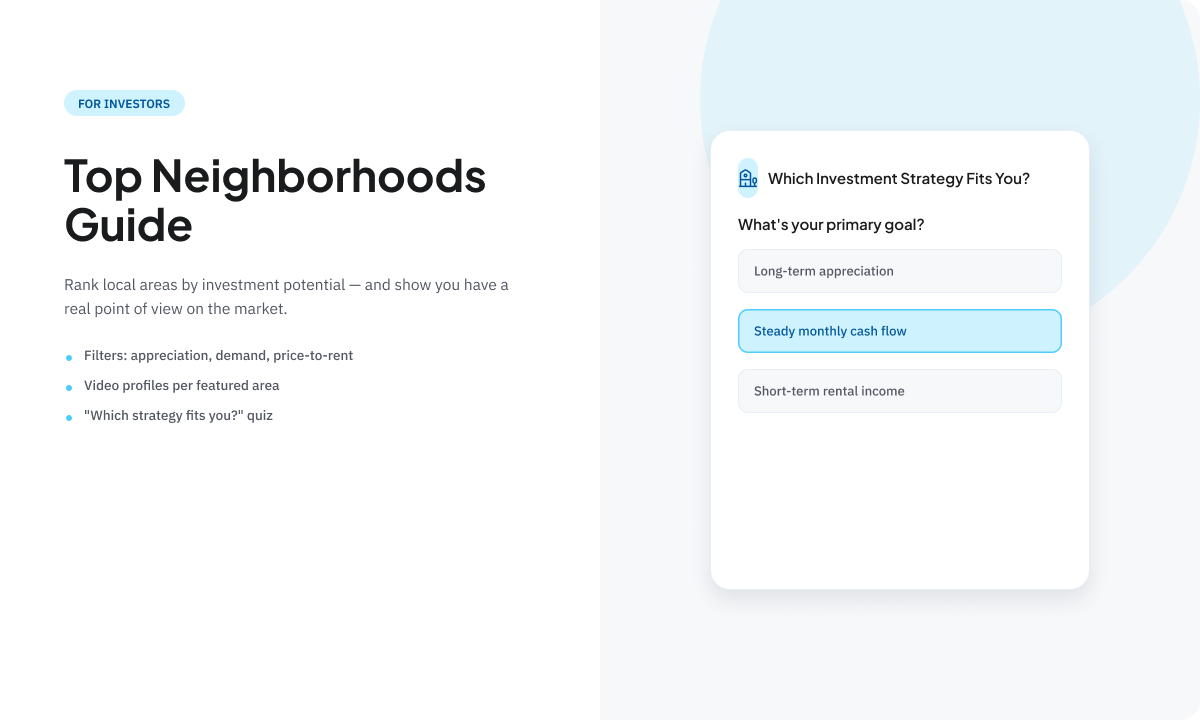
Most investors are trying to figure out where to buy next. A guide that ranks local neighborhoods by investment potential gives them a clear answer backed by data. It also shows them you have a real point of view on the market, which sets you apart from agents who just list properties.
What to include:
Interactive neighborhood comparison tool with filters for appreciation rate, rental demand, and price-to-rent ratio
Short video profiles for each featured area (60-90 seconds, shot on location)
A quiz: "Which investment strategy fits your goals?" that segments leads by type
Updated each year with past editions saved for reference
Landlord Lead Magnets
Landlords are easy to overlook because they are not buying or selling right now. But many of them sell later, refer other investors, and keep growing their portfolio. They are worth staying close to.
Rental Property Performance Audit
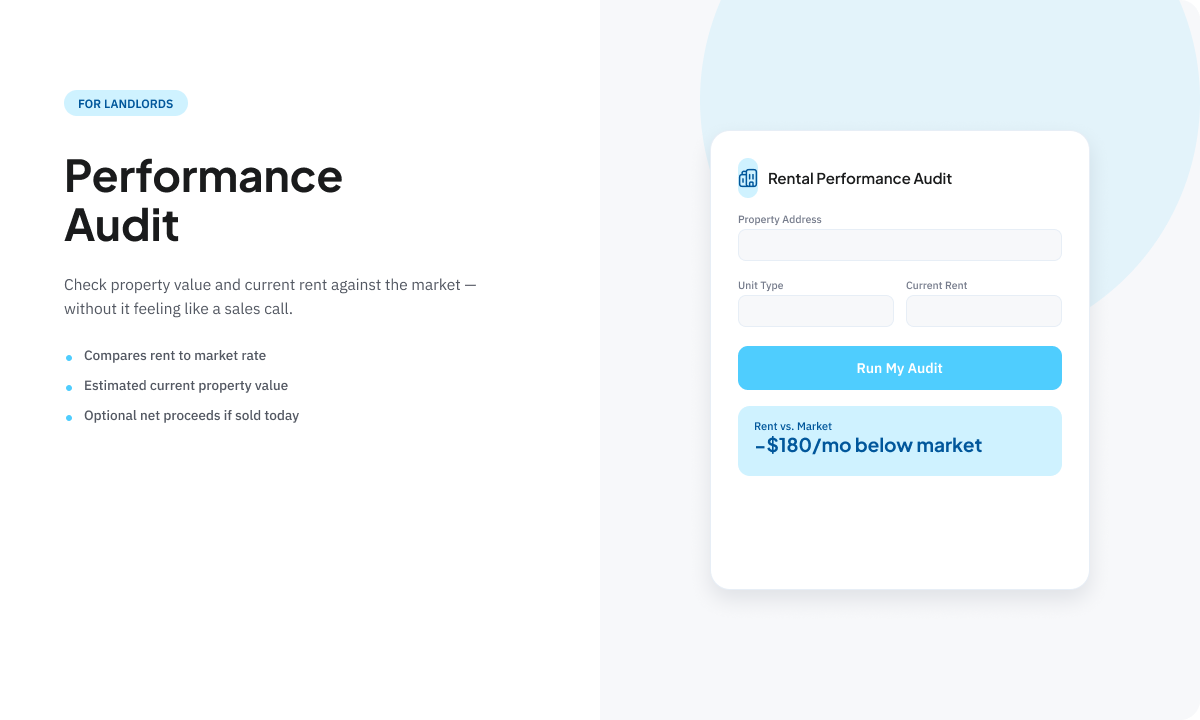
Landlords rarely know if their property is performing as well as it could. A free audit that checks both the property value and the current rent against the market gives them something useful and gives you a way into the relationship without making it feel like a sales call.
What to include:
Interactive audit tool: inputs for address, unit type, current rent, and year purchased
Output comparing current rent to market rate and estimated current property value
A short video from the agent walking through what the numbers mean
Optional: estimated net proceeds if sold today
Rental Pricing Guide
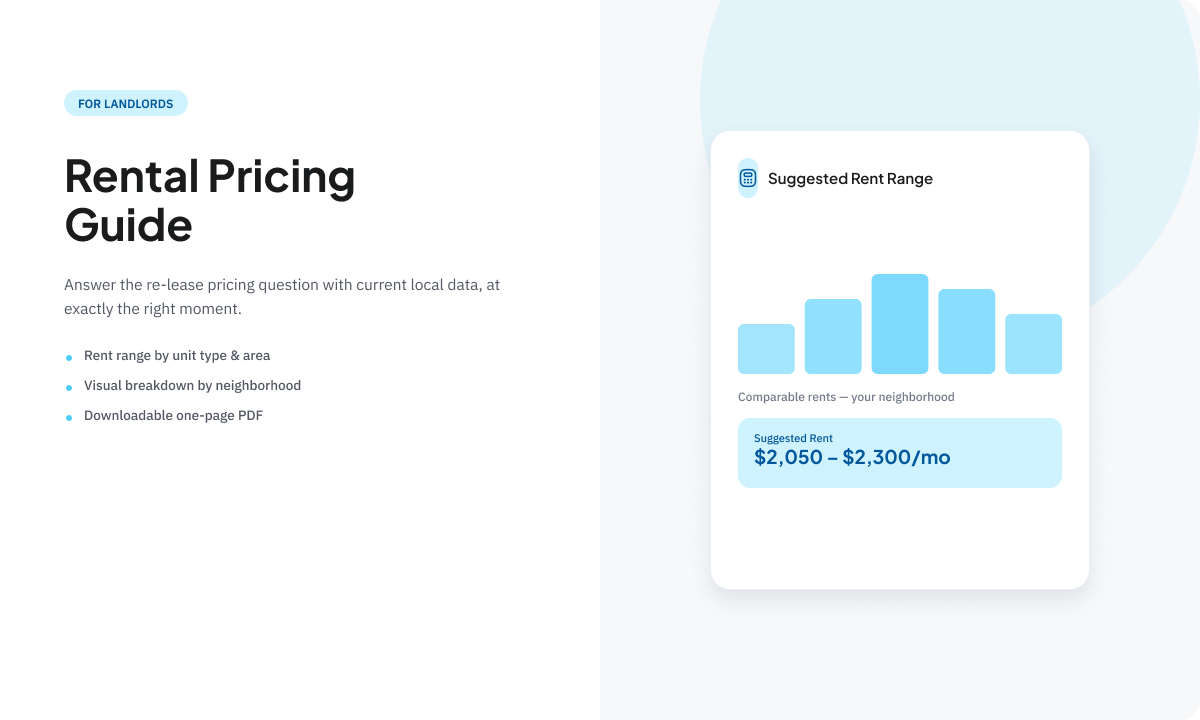
When a landlord is getting ready to re-lease, pricing is the first question they have. A guide that answers it with current local data catches them at exactly the right moment and positions you as someone who knows the market, not just someone looking for a listing.
What to include:
Interactive rent range tool: inputs for unit type, neighborhood, and condition
Current market rents with a visual breakdown by area
A poll: "What is your biggest challenge as a landlord right now?" to learn what they need most
One-page downloadable PDF version for landlords who want to save it
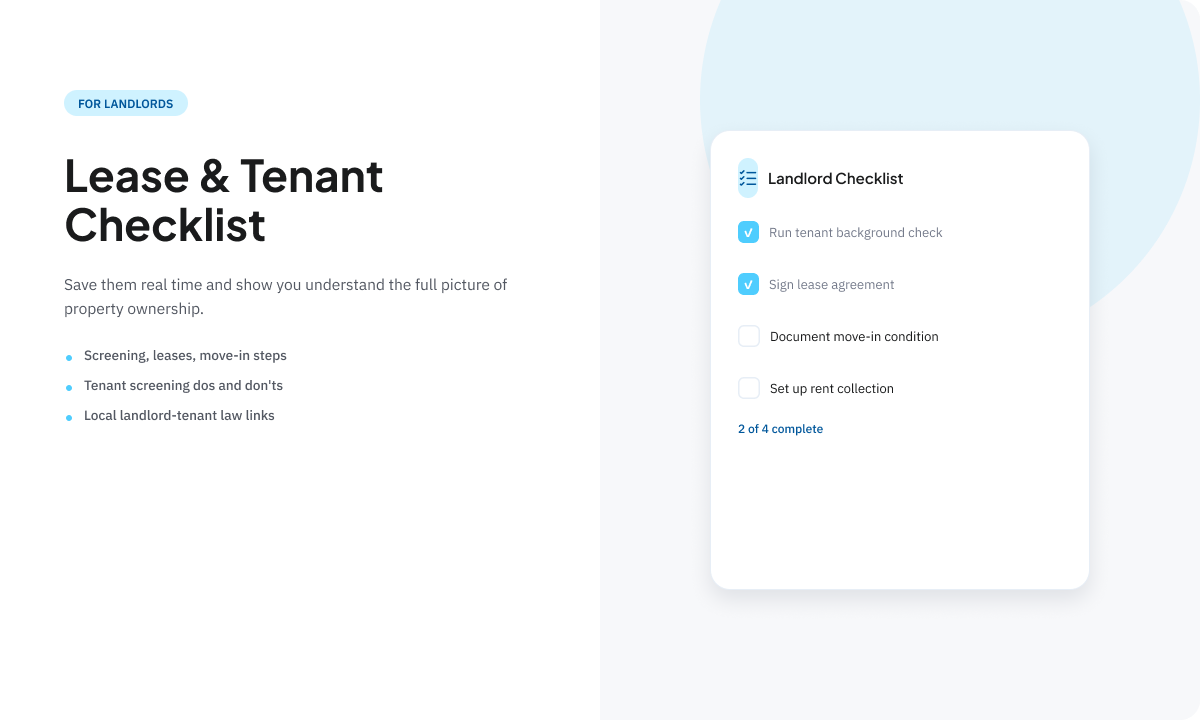
Landlord's Lease and Tenant Checklist
Many landlords, especially those who ended up with a rental property by accident, are figuring out the process as they go. A checklist that covers screening, leases, and move-in procedures saves them real time and shows them you understand the full picture of property ownership.
What to include:
Interactive checklist they can work through and save or print
Short video on tenant screening dos and don'ts in your state
Lease must-haves and move-in/move-out steps organized by phase
Reference to local landlord-tenant law with links to official sources
Downsizer Lead Magnets
Downsizers often have a lot of home equity and are not in a rush. They respond well to honest, helpful information.
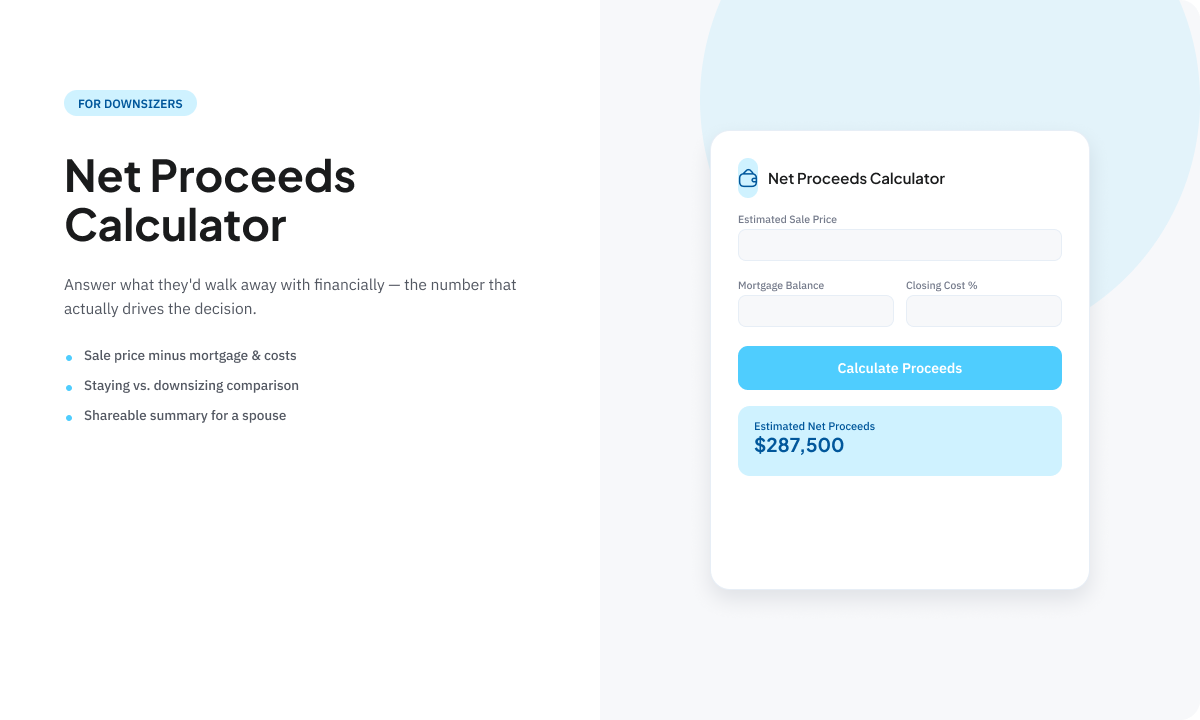
Net Proceeds Calculator
Downsizers are not just asking what their home is worth. They are asking what comes next financially. A calculator that shows them exactly what they would walk away with after a sale answers the question that actually drives their decision, and it often reveals a number that makes moving feel much more possible.
What to include:
Interactive calculator with inputs for estimated sale price, mortgage balance, and local closing cost rates
Output showing net proceeds and optional comparison: cost of staying vs. cost of downsizing
A short agent video framing the results and explaining next steps
Downloadable summary they can share with a spouse or financial advisor
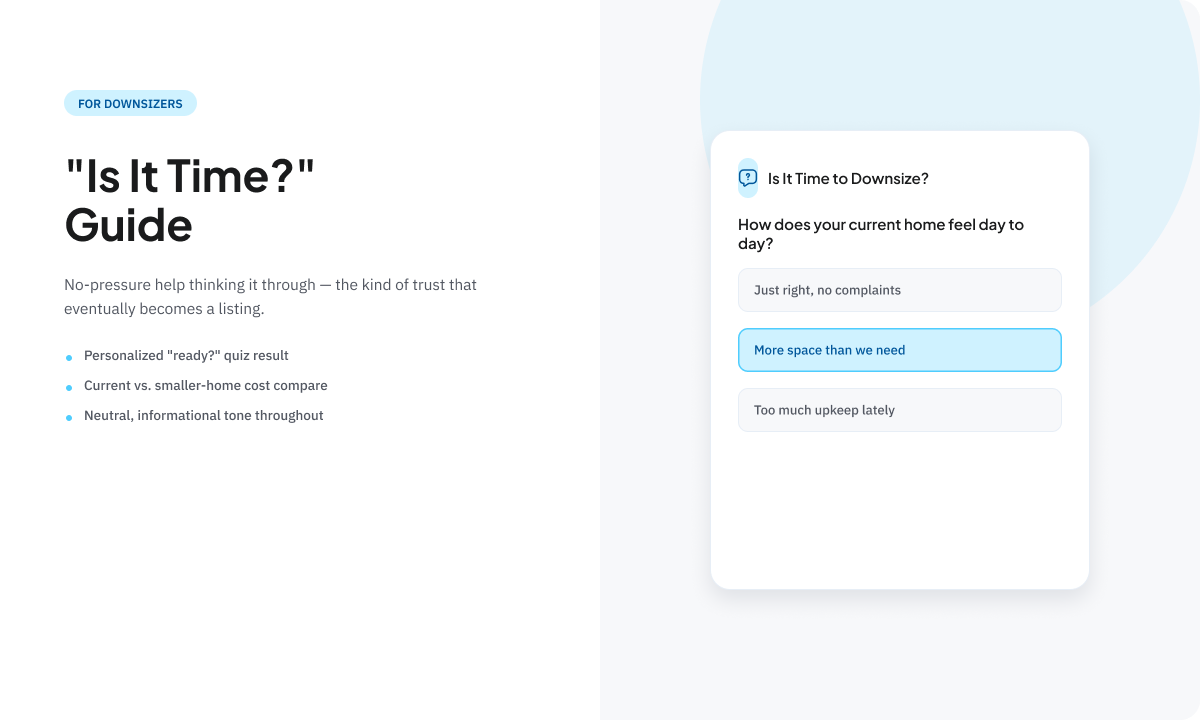
Is It Time to Downsize Guide
Most downsizers sit in the consideration phase for months or even years. They are weighing a big life change and need information more than they need a pitch. A guide that helps them think it through with no pressure builds the kind of trust that eventually becomes a listing.
What to include:
An interactive quiz: "Is it time to downsize?" with a personalized result based on their answers
Financial comparison tool: current home costs vs. projected costs in a smaller property
Short video testimonials or agent commentary on common downsizing stories
Neutral, informational tone throughout with no hard sell
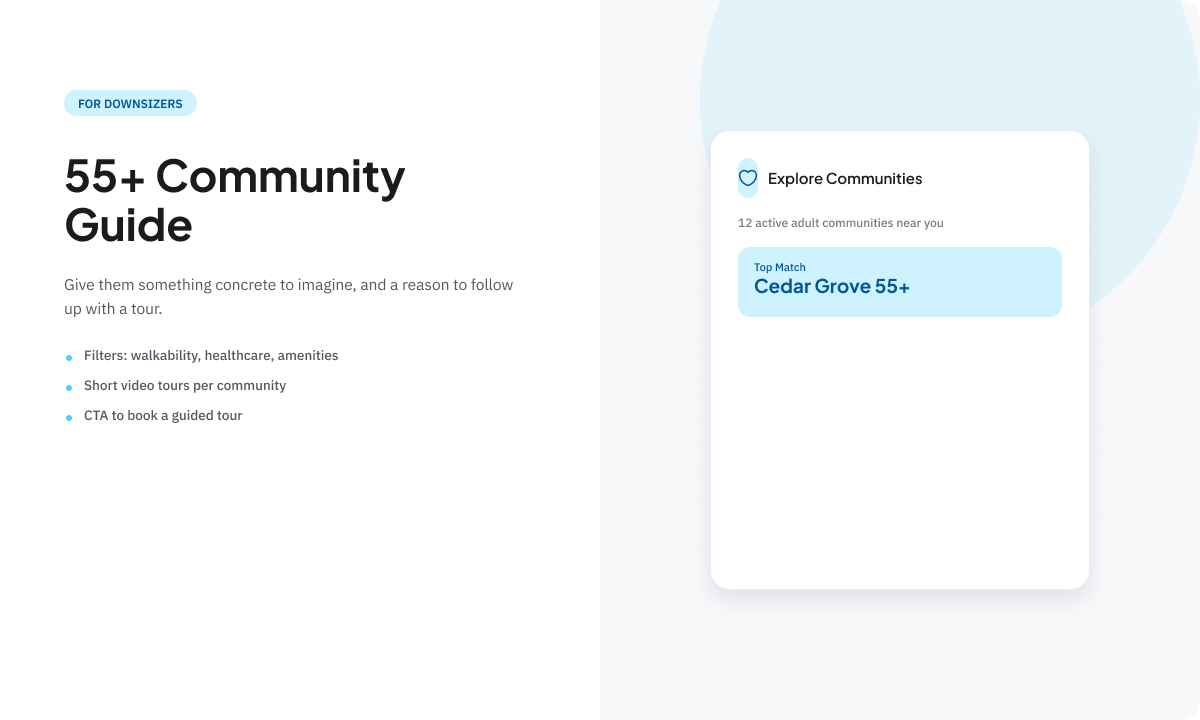
55 Plus Community and Neighborhood Guide
Downsizers often stay stuck because they cannot picture where they would go next. A local guide to active adult communities and popular neighborhoods gives them something concrete to imagine and gives you a reason to follow up with a tour or consultation.
What to include:
Interactive neighborhood explorer with filters for lifestyle preferences (walkability, healthcare, amenities)
Short video tours of featured communities (60-90 seconds each)
A poll: "What matters most in your next home?" to personalize follow-up
CTA to book a guided tour or consultation
Relocator Lead Magnets
Relocators are buying in a market they do not know well and are often on a short timeline. They want someone who can help them get up to speed fast.
Remote Home Sale Assessment
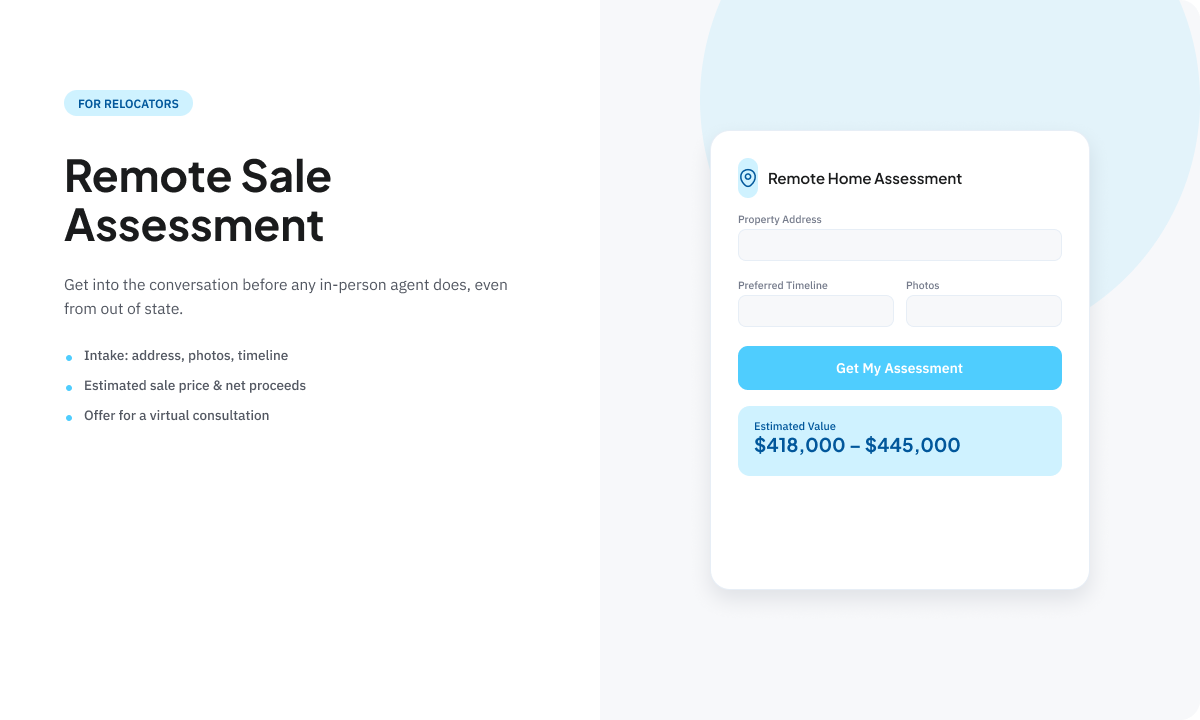
Before a relocator can buy in your market, they usually need to sell where they are. But they cannot easily meet with a local agent in person. A virtual valuation removes that barrier and gets you into the conversation before any in-person agent does.
What to include:
Online intake form with fields for address, photos, basic property info, and preferred timeline
Estimated sale price and net proceeds delivered via follow-up call or email
A short video from the agent explaining the remote assessment process
Offer for a virtual consultation as the next step
City and Area Relocation Guide
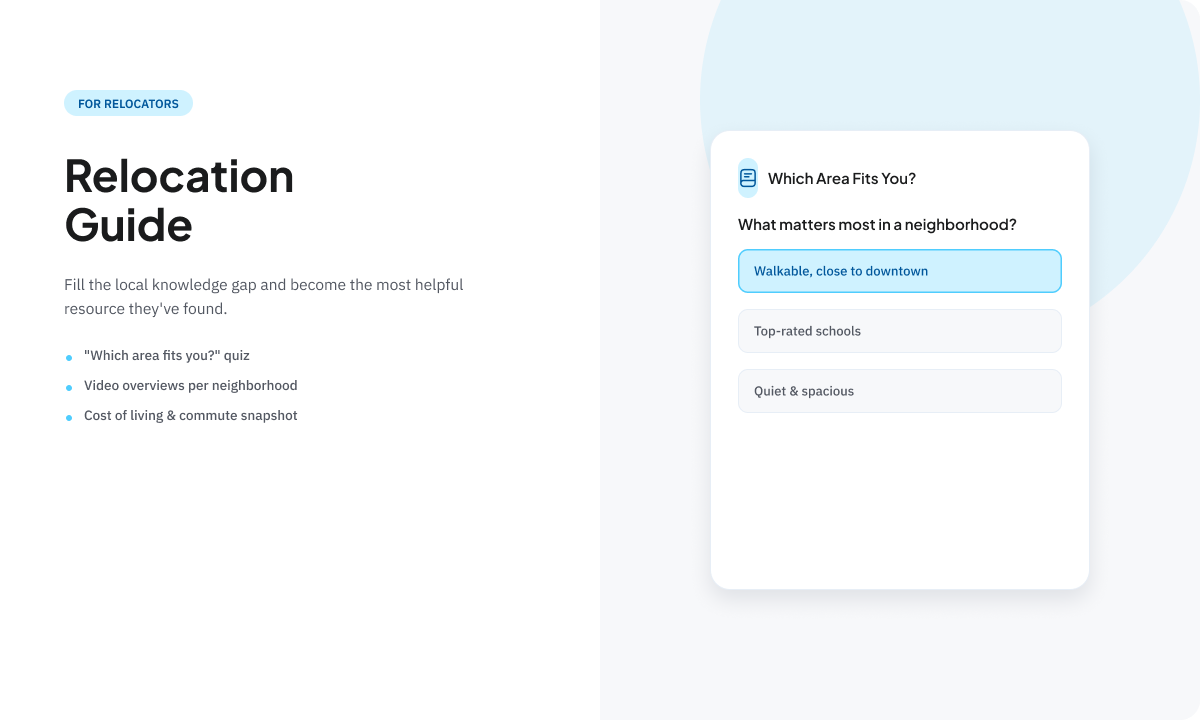
Relocators are making major decisions with very little local knowledge. A comprehensive guide to your market, organized by lifestyle and life stage, fills that gap and immediately positions you as the most helpful resource they have found.
What to include:
Interactive neighborhood quiz: "Which area fits your lifestyle?" with a personalized result
Short video overviews for each featured neighborhood (shot on location)
Cost of living snapshot and commute time tool
Local tips that do not show up in a Google search
School District and Neighborhood Report
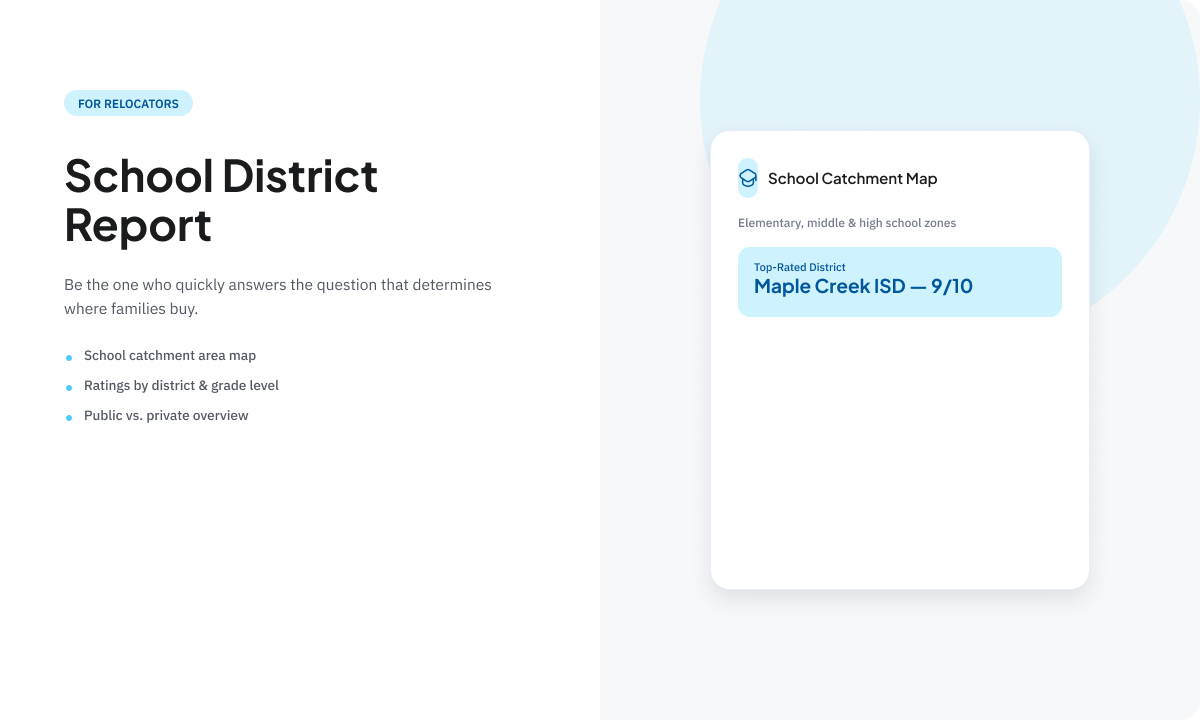
For families moving to a new area, school zones often determine where they buy. If they cannot quickly find a clear answer to that question online, they will keep searching until they find someone who gives them one. Be that person.
What to include:
Interactive map showing school catchment areas by neighborhood
School ratings by district (sourced from GreatSchools or Niche) with filters by grade level
A quiz: "What school factors matter most to your family?" to personalize follow-up
Overview of public vs. private options with notes on special programs
Cost of Living Comparison
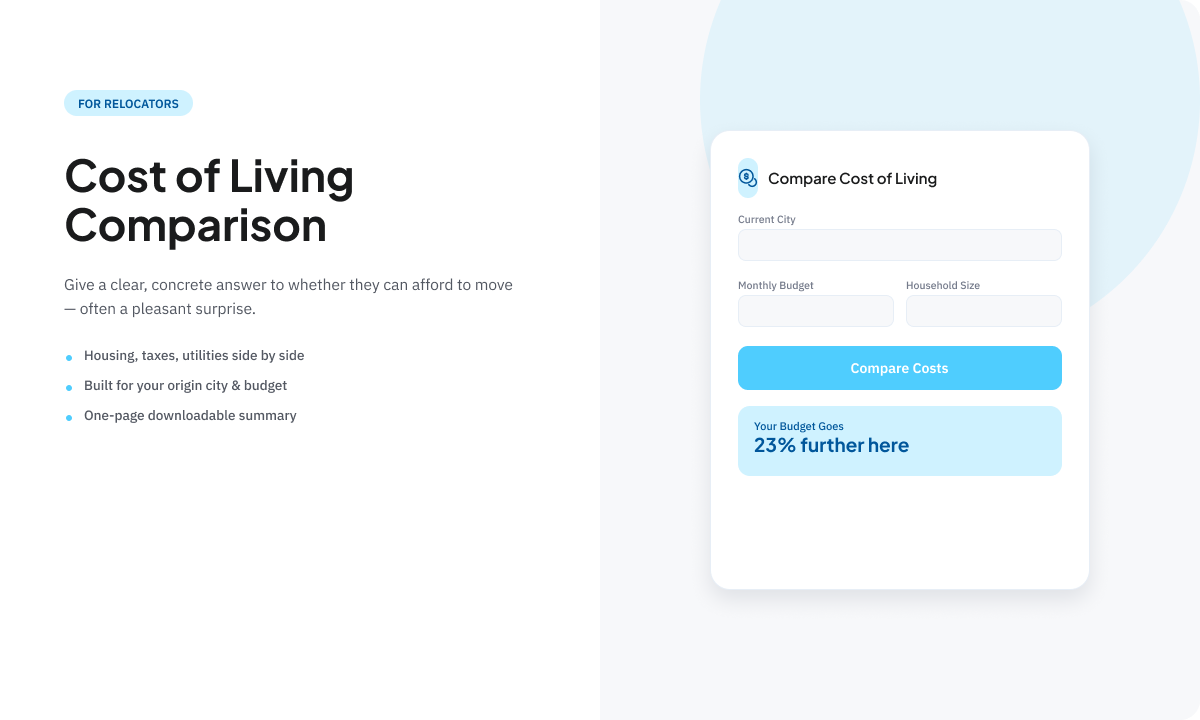
Relocators often hold back because they are not sure if they can afford to move. A side-by-side cost comparison that shows what their current budget gets them in your market gives them a clear, concrete answer, and often a pleasant surprise.
What to include:
Interactive comparison tool: inputs for origin city and household budget
Output showing housing, taxes, utilities, groceries, and transportation side by side
A short agent video summarizing what the numbers mean for buyers moving from high-cost markets
One-page downloadable summary
Luxury Lead Magnets
Luxury buyers and sellers expect things to feel exclusive. Lead magnets for this group should feel personal and curated.
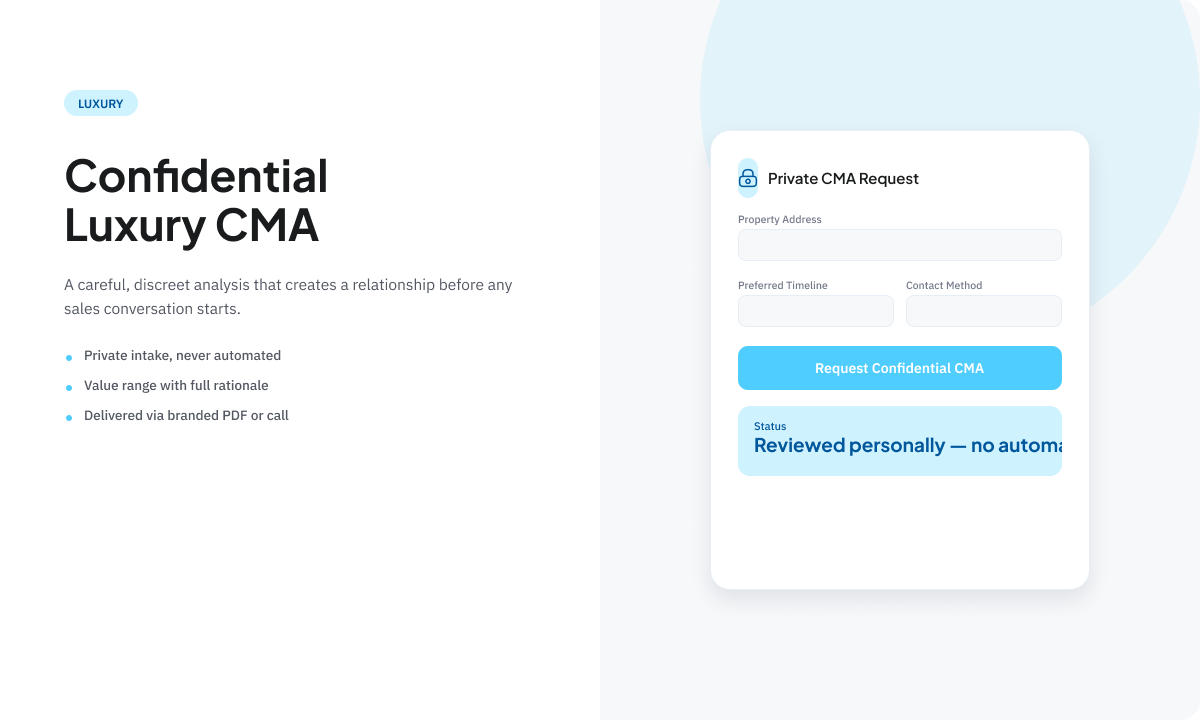
Confidential Luxury CMA
High-end sellers are not going to request a Zestimate. They want a careful, expert analysis delivered with discretion. A confidential CMA positions you as that expert and creates a relationship before any sales conversation starts.
What to include:
A private intake form requesting address, property features, and preferred timeline
Estimated value range with supporting rationale delivered via branded PDF or personal call
A short introductory video from the agent explaining what makes a luxury CMA different from a standard one
Luxury Market Report
Luxury clients follow their segment of the market closely. A well-designed report that delivers the data they are already tracking, organized and delivered by you, keeps you top of mind as their go-to source.
What to include:
Interactive charts for price per square foot, absorption rate, and days on market at the luxury tier
Notable recent sales presented as a visual gallery (where MLS rules allow)
A short agent video commentary on what the data means for buyers and sellers right now
Professional layout, since design quality reflects on your brand
Exclusive Off-Market Property Preview
Luxury buyers want access to things that are not available to everyone else. An off-market or coming-soon property list delivers exactly that and signals that you have the kind of network that gives them an edge.
What to include:
A private sign-up page with a short intake form (budget, timeline, property preferences)
Curated property previews delivered via personalized email, never a mass blast
Short walkthrough videos or photo slideshows for each featured property
Framed as VIP access throughout
Luxury Lifestyle and Neighborhood Guide
Luxury buyers moving to a new market want to understand more than the floor plan and the price. They want to know what their life will look like. A guide that sells the experience of living in a specific area earns a level of trust that a property listing never could.
What to include:
An interactive lifestyle quiz: "Which luxury neighborhood fits you?" with a personalized result
Short video tours of featured areas focused on lifestyle, architecture, and culture
Community profile, including who lives there and what day-to-day life looks like
Local luxury brand mentions or partnerships to reinforce the positioning
How To Create Lead Magnets For Your Website
Most teams can build and launch a lead magnet in one afternoon using AI tools. Gamma is the fastest way to do it.
Step 1: Build It in Gamma
Gamma is an AI-powered tool that turns a prompt or outline into a fully designed, interactive document in minutes. Paste in your content or describe what you want, and Gamma builds the structure, layout, and visuals for you.
What makes Gamma useful for lead magnets is the output options. Every piece you build can be:
Published as a live web page that acts as its own landing page with a built-in URL you can drive traffic to
Embedded directly on your website as an interactive experience visitors engage with without leaving your site
Exported as a PDF for leads who want a downloadable version to save or share
For interactive elements like quizzes, calculators, or polls, Gamma lets you embed third-party tools from platforms like Typeform, Outgrow, or Google Forms directly into the presentation. Build the content in Gamma, then drop the interactive element in wherever it fits.
Step 2: Choose How to Deploy It
Once your magnet is built, choose the right deployment option based on how you plan to use it:
As a landing page: use Gamma's shareable link and drive traffic to it directly from social, email, or paid ads. Gate it with a simple sign-up form added via Typeform or your CRM's form embed.
As an embedded tool: copy the embed code from Gamma and paste it into a page on your website. Visitors engage with it without leaving your site.
As a downloadable asset: export to PDF and set up your CRM to deliver it automatically after a form submission.
For most teams, the landing page option is the fastest to launch. The embedded version takes slightly more setup but keeps visitors on your site longer.
Step 3: Iterate Based on What Converts
Launch your first magnet, then improve it. Look at where people drop off, which headlines get clicks, and which forms get filled out. Small changes to the title, the form length, or the first screen can move conversion rates significantly.
Check form completion rates to see if the ask is too long or too early in the experience
Review which magnets generate booked calls, not just downloads, and prioritize those
Update content regularly so market reports, calculators, and guides reflect current data
Lead Magnets Bring People In. Here Is How To Convert Them.
Getting someone to download your lead magnet is step one. Step two is converting them.
Most leads do not convert right away. They download your guide, look around your site, and leave. Most do not book a call or fill out a form. That is where most teams lose the lead.
An AI chatbot fills that gap. When someone downloads your seller guide at 9pm and still has questions, a chatbot can answer them right then, qualify the lead, and book a call before they move on to the next agent's website. Madison, Realty AI's real estate chatbot, is built for this. It talks to leads the moment they land on your site, handles common questions for every client type, and passes warm conversations to your team.
Your lead magnets bring people in. Madison makes sure they do not leave without a next step. Book a demo to learn more
Related articles
More in SEO & Marketing
Keep reading in the same category to go deeper on the topics that matter to your team.
Answer engine optimization explained for real estate: how AI answers pick their sources, what to publish, what to measure, and the fair housing line to stay behind.
Generative engine optimization for real estate teams: how to get cited by ChatGPT, Gemini and AI Overviews, with a checklist and the data behind it.
About Madison
The AI assistant built for real estate lead gen
Madison is Realty AI's conversational assistant for real estate websites. It engages visitors instantly, qualifies buyers, sellers, and renters through natural dialogue, routes summaries to your CRM, and keeps your team focused on closing.
5.0 average from 2,500 customer reviews
“We captured 3 new transactions worth over $3.3 million in just a few months using Realty AI.”
Sarah Logue
Broker & Owner, Top 0.1%
“Within our first week of using Realty AI, I had an engaged seller ready on the phone. This has never happened before in 4 years.”
Mark Jensen
Owner & Broker of Record
“It feels like having a personal assistant on my website 24/7, sending me instant notifications so I never miss a potential client.”