A Complete Guide To Real Estate Lead Generation: 15 Effective Strategies
Real estate lead generation is what keeps an agent's pipeline full and business growing. This guide covers what it is, why it matters, and the inbound and outbound strategies top agents use to generate leads consistently.
Nathan SmithPublished Oct 30, 2025Updated Sep 15, 202615 min read
What is Lead Generation in Real Estate?
Lead generation is the process of attracting and capturing potential buyers, sellers, or renters and converting their interest into contact information an agent can follow up on.
The funnel typically works in four stages:
Attract: Draw in prospects through channels like listing portals, social media, SEO/content, paid ads, open houses, and referrals.
Capture: Convert that attention into a lead by getting contact details, usually via a landing page, property inquiry form, home valuation tool, or newsletter signup.
Nurture: Stay top-of-mind with follow-up emails, drip campaigns, market updates, and personalized outreach until the lead is ready to act.
Convert: Move the nurtured lead to a transaction: a showing, listing appointment, or signed contract.
Why is Lead Generation in Real Estate Important?
Without a steady stream of leads, your business can't run or grow. As one deal closes another one should start moving.
Having a steady stream of deals helps by:
Filling the pipeline and stabilizing income, instead of relying on one-off deals.
Giving the agents an edge in a crowded, especially in competitive markets.
Building lasting client relationships that turn into referrals and repeat business.
How is Lead Generation Changing in Real Estate?
Buyer and seller expectations are evolving, and AI is changing how agents meet them.
Buyers expect instant, personalized attention: they want fast responses, relevant listings, and answers on their schedule, not a generic form that goes unanswered.
Sellers expect more insight and less guesswork: they want agents who can show market knowledge and pricing strategy upfront, not just list a property and wait.
Both expect a smoother, more informed experience: With information readily available online, buyers and sellers expect agents to add real value and expertise, not just access.
AI is helping agents keep pace: By qualifying leads and responding faster, AI lets agents meet these rising expectations while staying focused on building the relationship.
Inbound Lead Generation Strategies For Real Estate
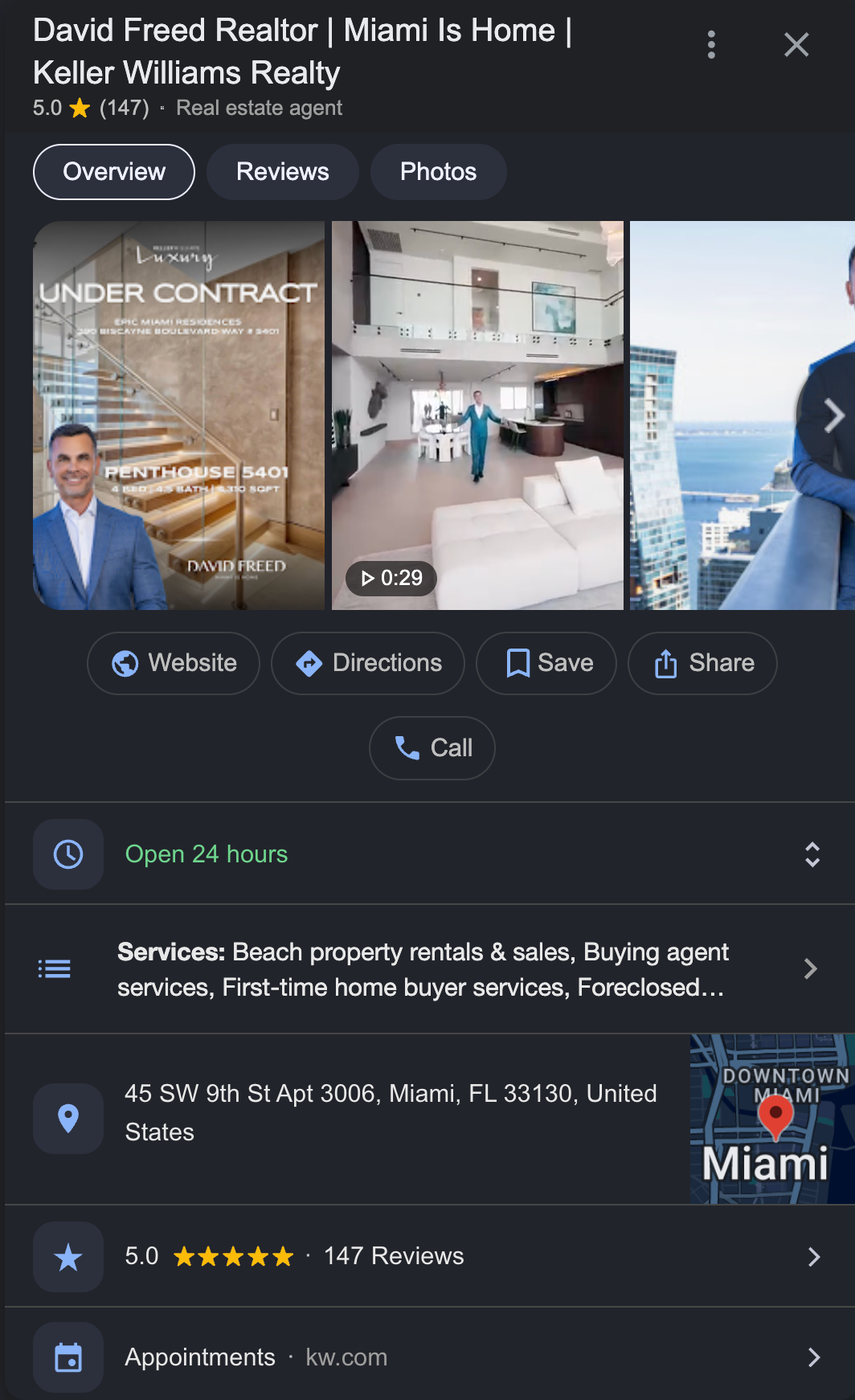
1. Optimize Your Google My Business Profile
Your Google Business Profile is often the first impression a prospective buyer or seller gets when they search your name or "realtor near me." A complete, active profile builds trust before a lead ever visits your website.
Keep it optimized by:
Filling out every field completely: service areas, hours, phone number, and website link.
Adding fresh, high-quality photos of listings, your team, and recent closings.
Collecting and responding to reviews consistently, since review volume and recency both influence local ranking.
2. Create Local SEO Content
Local SEO content means building pages written specifically about a neighborhood or submarket, not a whole city, designed to rank for the exact searches buyers and sellers in that area are making.
There are two core page types:
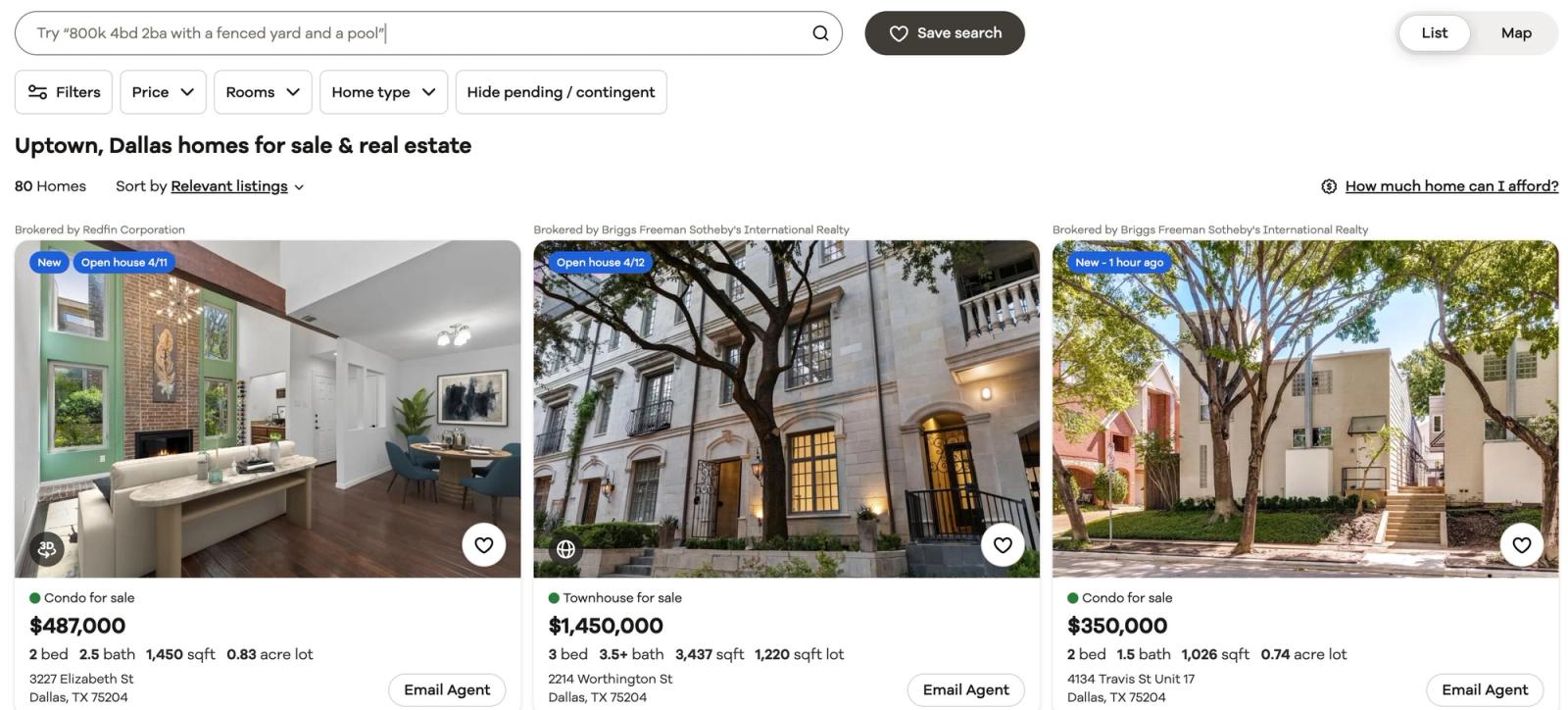
1. A "money" location page built for buyers, featuring live MLS data for that specific area
2. A service location page built for sellers, focused on your expertise and track record in that neighborhood.
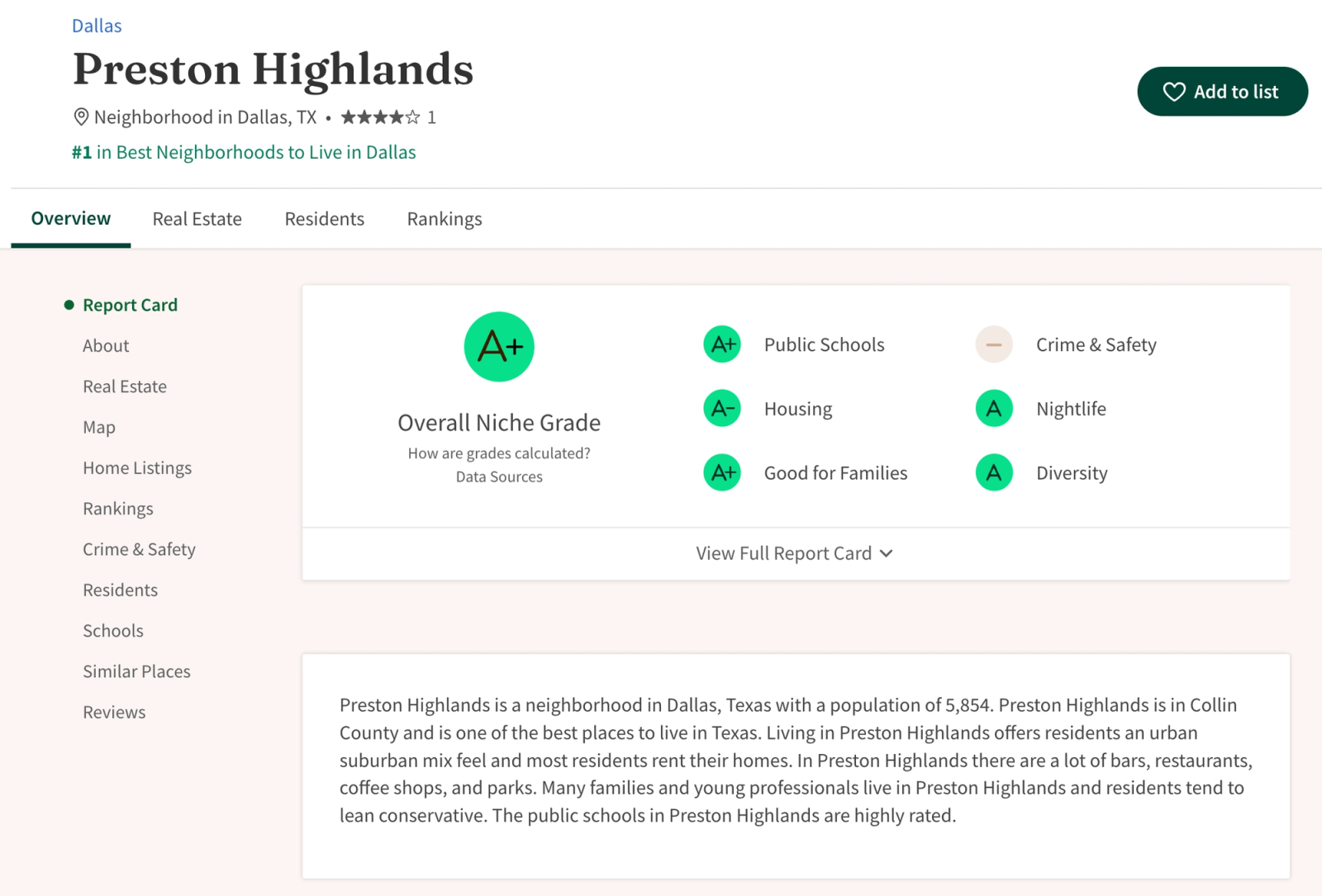
3. A neighborhood guide, covering things like schools, amenities, commute times, and community character for people still deciding where to live.
The goal across all three is highly specific, unique information that no other site is covering, the kind of detail that makes the page genuinely useful rather than generic filler.
Example of a well structured MLS page:
Example of good neighborhood guide:
Once these pages are live you want to build backlinks to them to ensure that Google sees them as trustworthy, not just relevant.
3. Email Marketing Campaigns
A weekly email campaign is a recurring, short-form message sent to your contact list on the same day every week.
Not a monthly newsletter, not a blast when you have something to promote, but a consistent and predictable presence in your contacts' inboxes.
Email is the only owned channel that doesn't depend on an algorithm to reach people. So your goal is to build it as quickly as possible to maximize your reach.
A good weekly email has three parts:
Spotlight: one local business or resource worth knowing about.
Stat: one market observation grounded in a specific number.
Insight: one useful takeaway or CTA linking to a relevant page.
Examples of what to send:
A market stat with a one-line interpretation ("Inventory in Riverside dropped 18% this month, here's what that means for buyers").
A local business or restaurant spotlight relevant to your audience's neighborhood.
A seasonal tip, like preparing a home for showings or year-end tax considerations.
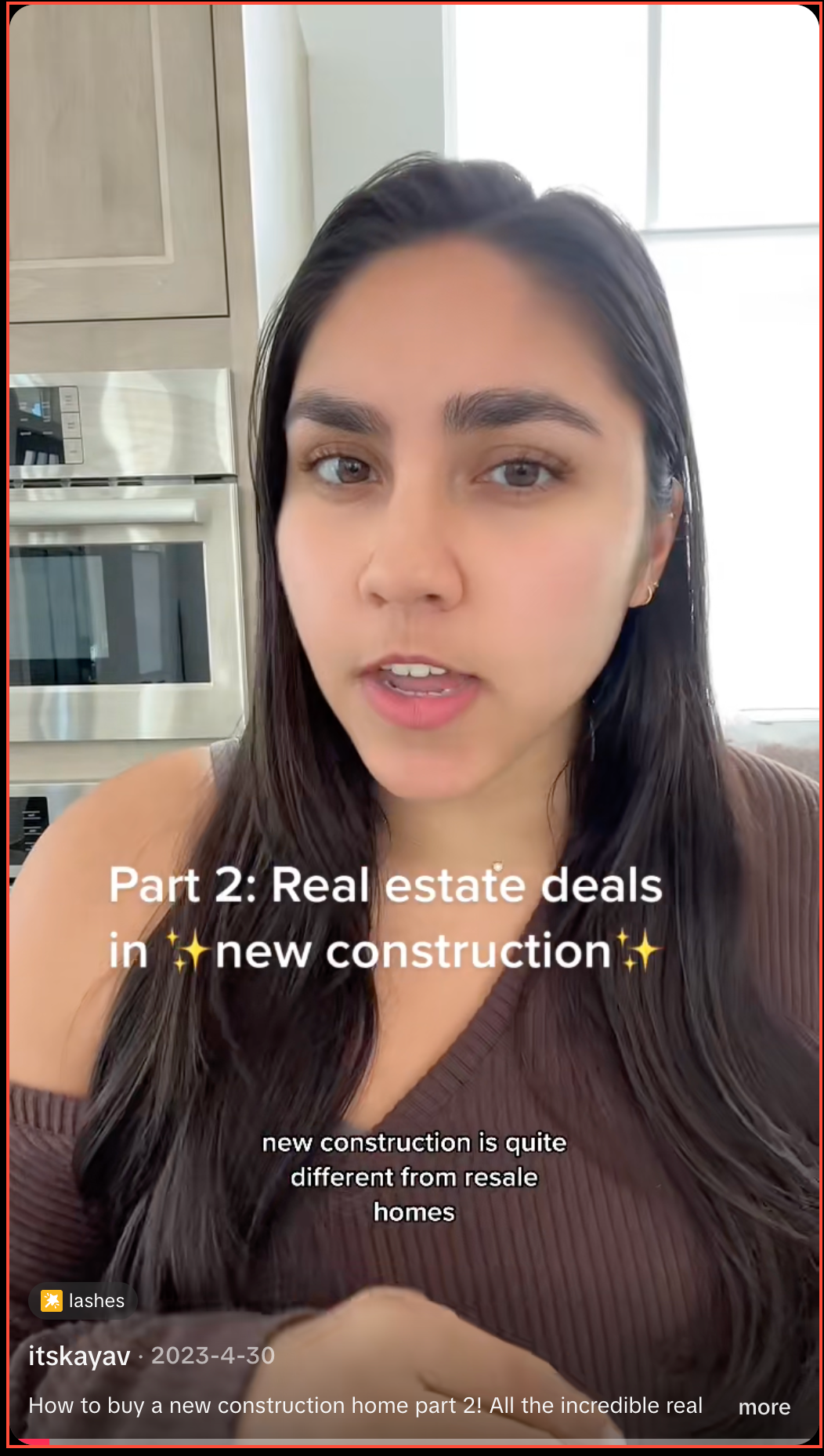
4. Social Media Videos & Posts
The most effective content mixes trending market news with insights only an agent on the ground would know, things buyers and sellers can't find in a generic listing or news article.
A good post has three parts:
Hook: something that stops the scroll in the first second.
Story: a real insight, deal moment, or local observation that delivers value.
Offer: a clear next step for the viewer, like a DM, link, or call.
Examples of what to post:
A breakdown of how a recent negotiation played out and what made it work.
A reaction to a rate change or market report, translated into what it means locally.
A quick tour of an interesting or unusual property feature.
A myth-busting post correcting a common buyer or seller misconception.
5. Lead Magnets
A lead magnet is something useful you offer in exchange for a visitor's contact information. The more specific and genuinely useful the tool, the better it converts compared to a plain "contact us" form.
Examples of effective lead magnets:
Home valuation tool: an instant estimate in exchange for an address and email, ideal for capturing seller leads.
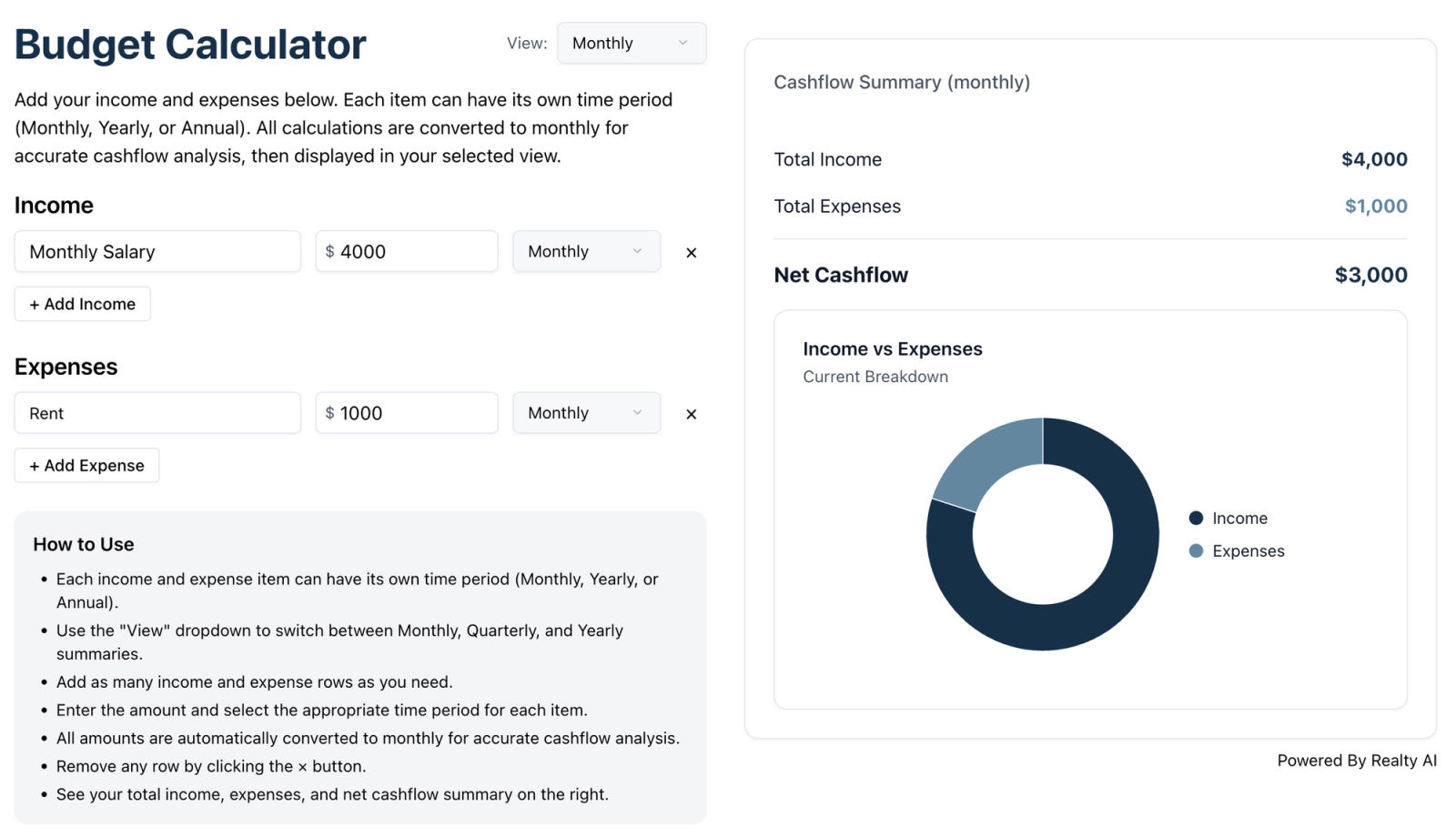
Mortgage or affordability calculator: helps buyers gauge what they can afford while capturing their info.
Buyer's or seller's guide: a downloadable PDF walking through the process step by step.
Whichever tool you use, follow up immediately after it's requested, since the moment someone submits a lead magnet is when their interest is highest.
6. Portal Leads
Portal leads come from paying real estate listing sites, like Zillow Premier Agent, Realtor.com, and Redfin, for placement and exposure in front of the millions of buyers and sellers already browsing those platforms.
Instead of building your own audience, you're renting access to theirs, which makes it one of the fastest ways to get in front of active buyers, but also one of the most expensive and least owned.
Pros:
Instant volume: access to a large, already-active buyer audience without building your own traffic.
Low setup effort: no content, SEO, or ad creative needed to get started, just budget.
High buyer intent: leads are already browsing specific properties, so they're often further along than cold traffic.
Cons:
Ongoing cost: you're paying per lead or per zip code indefinitely, with no asset left behind if you stop.
Shared leads: the same buyer may be routed to multiple competing agents on the platform.
No owned relationship: the portal, not you, controls the audience, pricing, and platform rules going forward.
Outbound Lead Generation Strategies For Real Estate
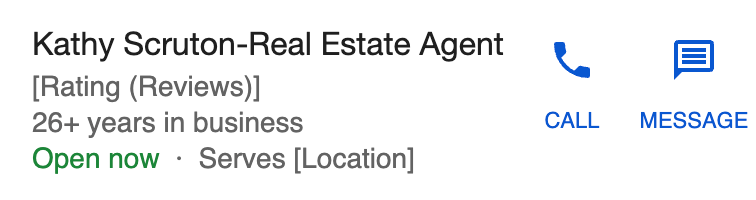
7. Local Service Ads
Local service ads are pay per lead ads that appear at the very top of the search results. Instead of operating on a pay per click model you only pay for each lead that is captured.
These ads are designed for service based local businesses and are directly connected to your Google My Business Profile.
Example of a Local Service Ad:
8. Google Profile Ads
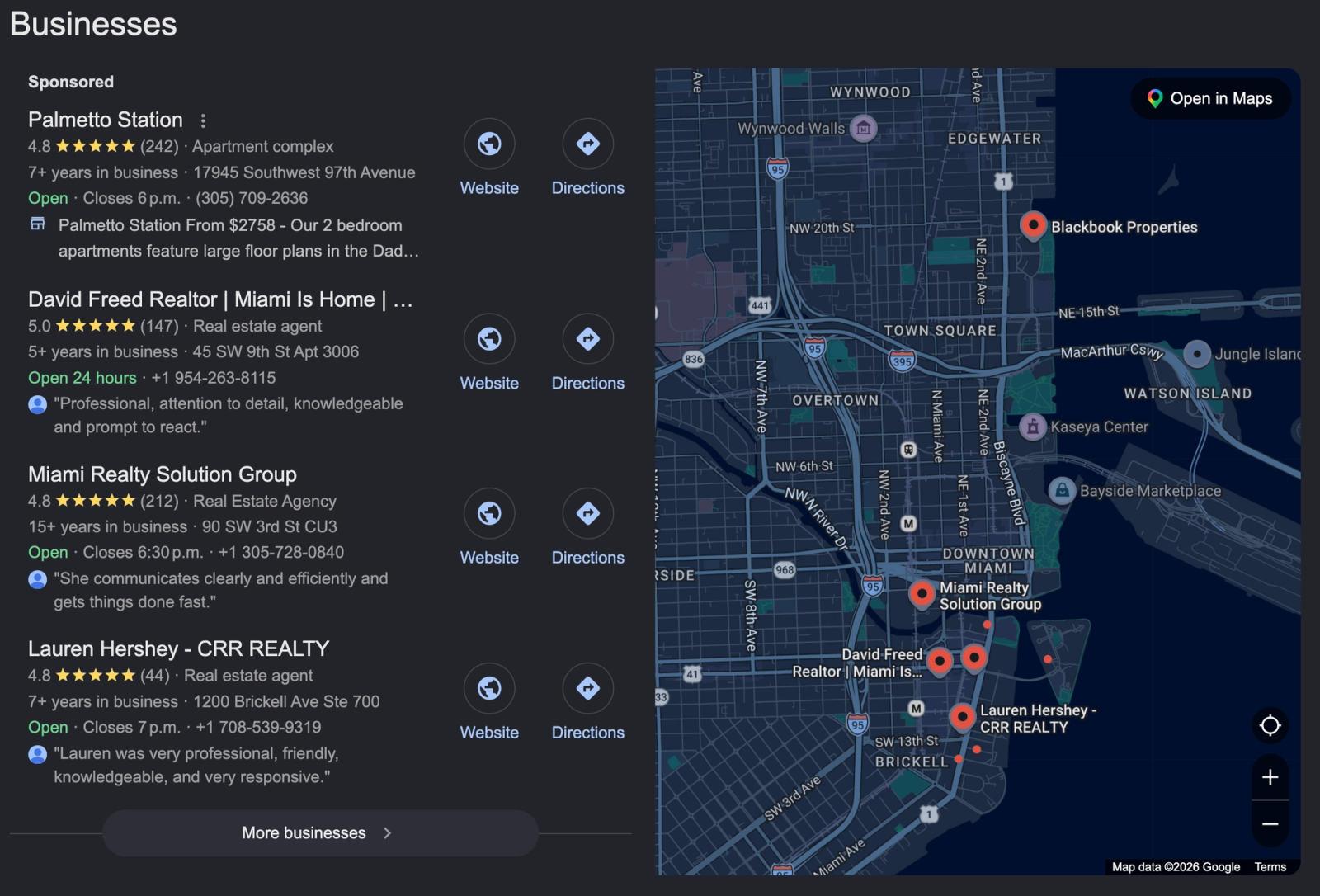
Google Profile Ads are standard Google ads enhanced with information pulled directly from your Google Business Profile, like your address, phone number, star rating, and reviews, displayed right alongside the ad text. Instead of just a headline and link, searchers see proof of your credibility before they even click.
This format works well because it often appears in the local "map pack" when someone searches something like "best real estate agents in [city]," placing you next to a few competing agents where reviews and ratings become the deciding factor.
Example of a Google Profile Ad:
9. Google Search Ads
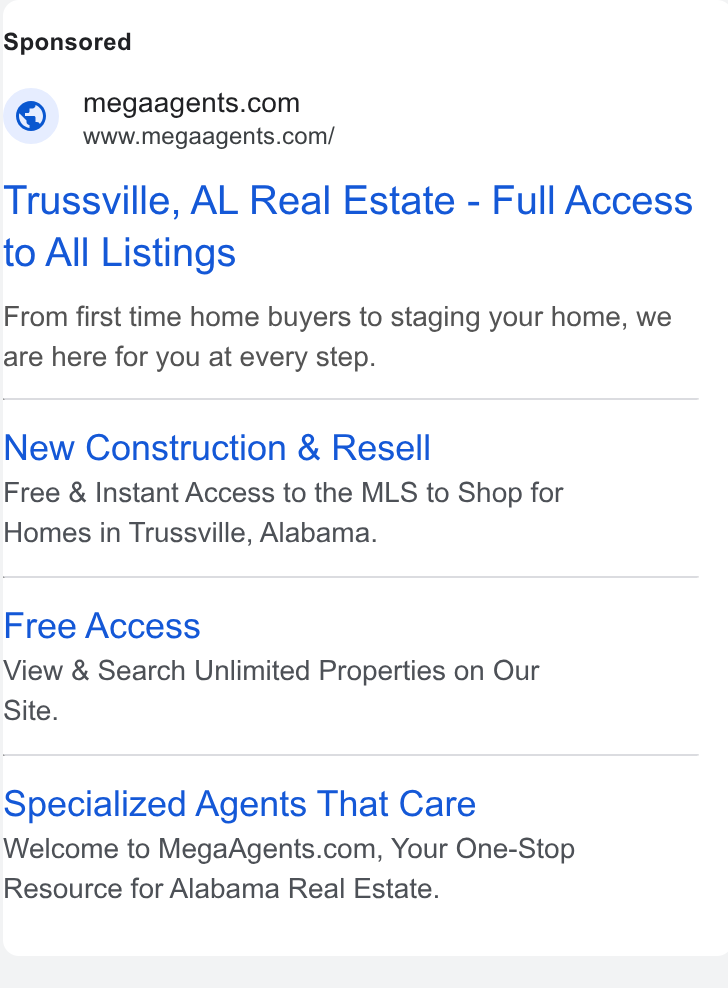
Google search ads appear at the top of the search results and lead to a specific landing page.
This makes them ideal for targeting high-intent commercial keywords, like "homes for sale in [city]" or "sell my house fast," where searchers are actively looking to take action.
Example of a Google Seach Ad:
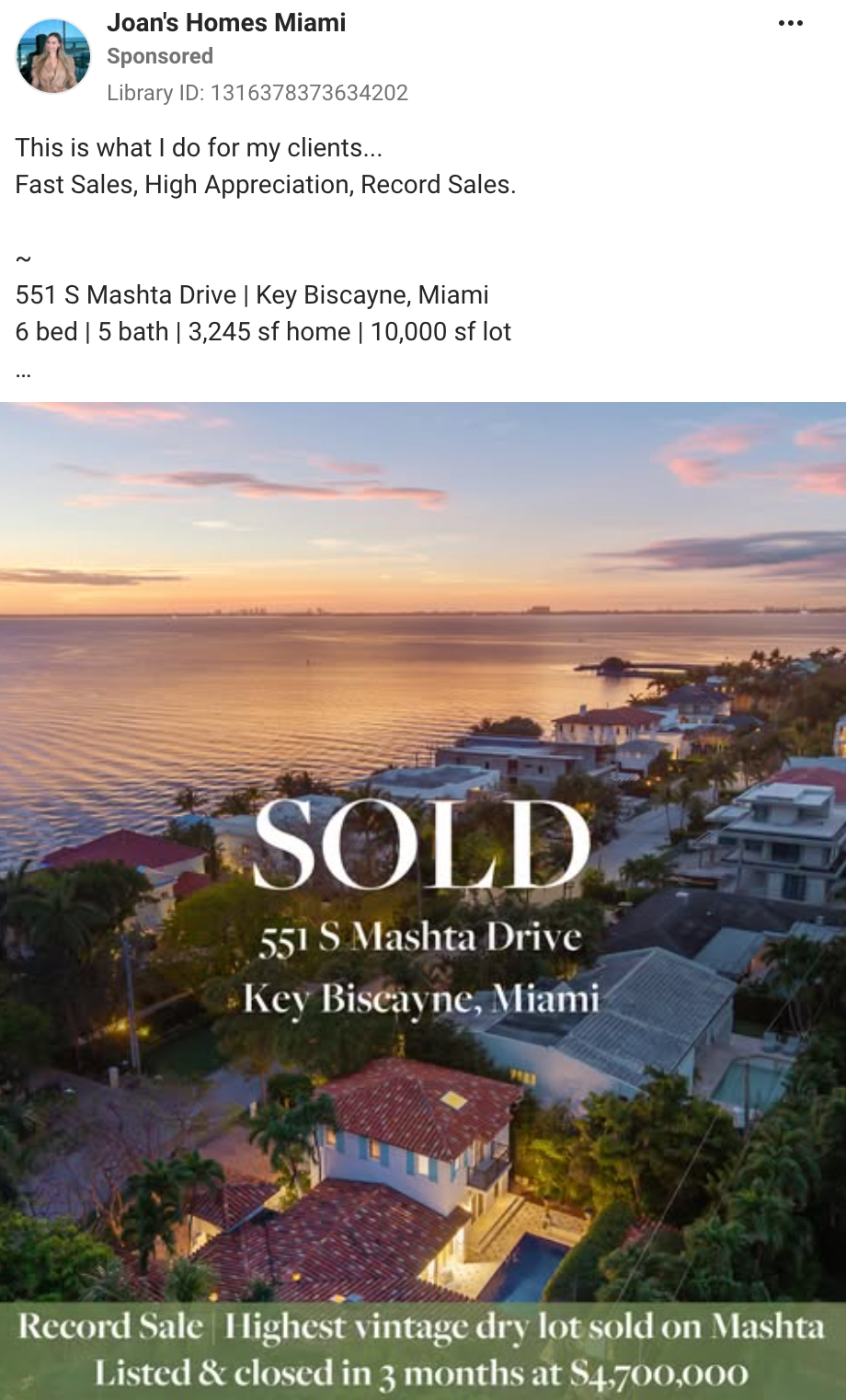
10. Facebook Ads
Facebook real estate ads are shown to users based on their interests, behaviors, and demographics rather than active search intent.
This makes them effective for building brand awareness and staying top of mind with potential buyers and sellers who aren't actively searching yet, using formats like lead forms, retargeting, and video to nurture prospects over time.
Example of a Facebook Ad:
11. FSBO and Expired Listing Prospecting
FSBO and expired listing prospecting is a structured outbound strategy targeting two groups of sellers who have already decided they want to move but have not yet found the right representation.
FSBO sellers are attempting to sell without an agent.
Expired listings are properties that sat on the market and did not sell for a long period of time.
Set up a daily alert for new expired listings in your target areas, and write a four-touch follow-up sequence (Day 3, 7, 14, and 30) before making your first call.
For expired listings, reference the specific property and a likely reason it didn't sell.
Keep outreach sustainable (five to ten contacts per agent per week), log every attempt in your CRM, and standardize your opening, objection responses, and next steps across the team. After 60 days, review which touchpoint is generating the most responses and adjust accordingly.
12. Geographic Farming with Direct Mail
Geographic farming is a long-term direct mail strategy in which your team sends branded, data-rich mailers to the same group of homeowners in a defined neighborhood, consistently, for at least 12 months.
Before starting, check that the neighborhood has enough home sales to justify the cost, pick an area where you already have a sale or listing, and mail at least 300–500 homes.
Example of a business card to mail:
Track results with a QR code or link on each mailer, personally follow up with anyone already in your CRM, and consider door-knocking around month six to add a face-to-face touch.
13. Referral Partner Network Development
A referral partner network is a group of professionals in adjacent fields whose clients regularly experience life events that trigger a real estate decision.
The strongest networks come from businesses that interact with clients right as they're becoming ready to buy or sell:
Divorce attorneys: their clients often need to sell a shared home as part of the settlement.
Estate attorneys: their clients are frequently liquidating inherited property.
Corporate HR coordinators: they relocate employees into and out of your market on an ongoing basis.
Financial advisors: their clients may be buying, downsizing, or investing in property as part of a financial plan.
Divorce/family mediators: similar to attorneys, they work with clients navigating asset division that includes real estate.
Contractors and home inspectors: they often meet homeowners considering a sale or major renovation before listing.
14. Hosting Educational Seminars
Seminars turn you into the go-to local expert instead of just another name on a sign. Attendees show up already interested in a real estate decision, making them warmer leads than most online sources.
Example of a seminar poster:
Some useful topics to use:
Navigating today's mortgage rates
Preparing a home for sale
Understanding property taxes and assessments
Buying in a new construction development
Relocating to the area.
Always charge a small entry fee, or asking for a suggested donation to a local charity. This will naturally screens for serious attendees and makes the seminar feel more valuable than a free event.
15. Community Sponsorships
Sponsoring local youth sports teams, school events, or charity fundraisers keeps your name and face in front of the same community over and over.
Unlike a one-off ad, a sponsorship signals that you're invested in the neighborhood, not just trying to sell in it.
Good sponsorships to consider:
Youth sports teams
School fundraisers or PTA events
Local charity events or 5Ks
How To Analyze & Optimize Your Lead Generation Campaigns
Track Cost Per Lead and Cost Per Close
Cost per lead only tells half the story. Track spending across each channel alongside how many of those leads actually convert to closed deals, since a cheap lead that never converts costs more than an expensive one that does.
Test One Variable at a Time
A/B test ad copy, landing pages, or follow-up timing individually to see what actually moves results. Small, consistent tests compound into meaningfully better performance over time.
Reallocate Budget Based on Data
Every 30 to 60 days, shift spend away from underperforming channels and toward the ones producing the best cost-per-close, rather than spreading budget evenly out of habit.
Real Estate Lead Generation FAQs
How To Use Chatbots for Real Estate Lead Generation?
Chatbots engage website visitors instantly, before they leave, by asking a few quick questions like budget, timeline, and whether they're buying or selling. This qualifies leads automatically and captures contact info from visitors who'd otherwise never fill out a form.
How To Generate Real Estate Leads Using Social Media Ads?
Show ads to people who already showed interest, like past website visitors or people similar to your past clients, and target specific neighborhoods.
Offer something specific, like a home valuation or buyer's guide, rather than a generic "contact me." Route every lead into immediate follow-up, since unanswered leads rarely convert.
How to Improve my Real Estate Website for Lead Capture?
Make sure your site loads fast and works well on phones, since a slow or clunky mobile experience loses visitors before they see anything.
Key things to get right:
Above-the-fold copy: a clear, specific offer visitors see immediately, no scrolling required.
Multiple capture points: a home value tool, chatbot, or saved search, not just one generic contact form.
Local content: neighborhood pages that bring in visitors from Google search.
Fast follow-up: instant notifications so you can respond within minutes, not hours.
Turn Real Estate Leads Into Clients With An AI Chatbot
Building a lead generation system that scales isn't about doing more, it's about doing the right things consistently enough that they run without you.
None of this requires perfection, just commitment long enough for it to compound. Pick two strategies that fit your team right now, run them well for 90 days, then add a third.
Ready to start securing an additional 10-20 leads from your existing website traffic using an AI chatbot?
The best real estate recruiting chatbot and AI recruiting tools in 2026, compared. Real features, pros and cons, and the compliance rules brokerages miss.
About Madison
The AI assistant built for real estate lead gen
Madison is Realty AI's conversational assistant for real estate websites. It engages visitors instantly, qualifies buyers, sellers, and renters through natural dialogue, routes summaries to your CRM, and keeps your team focused on closing.
5.0 average from 2,500 customer reviews
“We captured 3 new transactions worth over $3.3 million in just a few months using Realty AI.”
Sarah Logue
Broker & Owner, Top 0.1%
“Within our first week of using Realty AI, I had an engaged seller ready on the phone. This has never happened before in 4 years.”
Mark Jensen
Owner & Broker of Record
“It feels like having a personal assistant on my website 24/7, sending me instant notifications so I never miss a potential client.”