The Complete Guide to Real Estate Backlinks: Strategies, Tools & Tracking
Real estate backlinks are one of the most overlooked levers in SEO, yet they directly determine whether your site outranks competing agents and national portals. This guide covers what backlinks are, why they matter, and eight strategies to start earning them.
Nathan SmithPublished Dec 3, 2025Updated Sep 11, 202615 min read
What Is a Real Estate Backlink?
A backlink is a single link from another website to a page on yours, like a local news outlet linking to your team's market update blog post.
The clickable text of that link is called the anchor text, and it helps Google understand what the linked page is about.
Backlinks are often confused with referring domains, but they're not the same thing.
A referring domain is the unique website hosting it, so ten links from the same site count as one referring domain but ten backlinks.
What Are The Different Types of Backlinks?
Follow links (also called dofollow links) are the default link type. They pass link equity, or ranking power, from the referring site to yours.
NoFollow links carry a rel="nofollow" attribute that tells search engines not to pass equity but they still drive real referral traffic.
Sponsored links use a rel="sponsored" attribute to flag paid placements. These don't pass ranking value, but they generate brand awareness and direct traffic.
What Are The Different Types of Anchor Text?
Anchor text is the clickable, visible text of a link, and its type affects how Google reads the connection between the linking page and yours.
Exact match: uses the precise keyword you want to rank for, e.g. "real estate agent Austin."
Partial match: includes a variation of the keyword, e.g. "top-rated agent in Austin."
Branded: uses your business name, e.g. "Realty AI."
Naked URL: the raw link itself, e.g. "www.realty-ai.com."
Generic: vague, non-descriptive phrases, e.g. "click here" or "learn more."
How To Assess Backlink Quality For Real Estate Domains
Not all backlinks carry the same value. Look for:
Relevance: the linking site is related to real estate, local news, or your community.
Authority: DR 30+, from a site that's trusted and well-established.
Stable, ranking domain: the site's overall traffic and keyword rankings should be steady over time, no sudden spikes or drops.
Ranking page: the specific page linking to you should itself be indexed and ranking for keywords.
Clean link profile: no influx of links from the same IP address.
Dofollow: the link passes authority to your site (a "nofollow" link mostly doesn't).
Anchor text: the clickable text is natural and descriptive, not stuffed with keywords.
Doesn't sell placements directly: the site earns links editorially rather than openly selling link spots.
Clean content: the site doesn't link out to gambling, adult, or pharmaceutical content.
Placement matters: You want your link within the body of the article, not tucked into a footer or sidebar. Footer and sidebar links carry less weight and can even be read as a spam signal.
Why Are Backlinks Important For Real Estate?
Backlinks are beneficial for 3 main reasons:
Build domain authority: This signals to Google that other credible sites vouch for yours, helping you rank above competing agents and national sites.
Drive referral traffic: Links from local news sites, community blogs, or partner businesses send visitors directly to your site.
Strengthen local credibility: Links from relevant, local sources reinforce your reputation in the specific market and improve your local SEO.
How Do Backlinks Improve Real Estate SEO?
SEO, at its core, is a measure of two things: relevance and authority.
Relevance is how closely a page matches what someone is searching for, real estate content, local terms, the right topic.
Authority is how much trust Google places in a page, and that's the piece backlinks directly improve.
Every backlink adds authority, and authority is what lets you compete for harder keywords. Low-difficulty, long tail keywords can rank with little authority, but broader terms like "real estate agent [city]" require significantly more backlinks to break into the top results.
8 Real Estate Linking Strategies
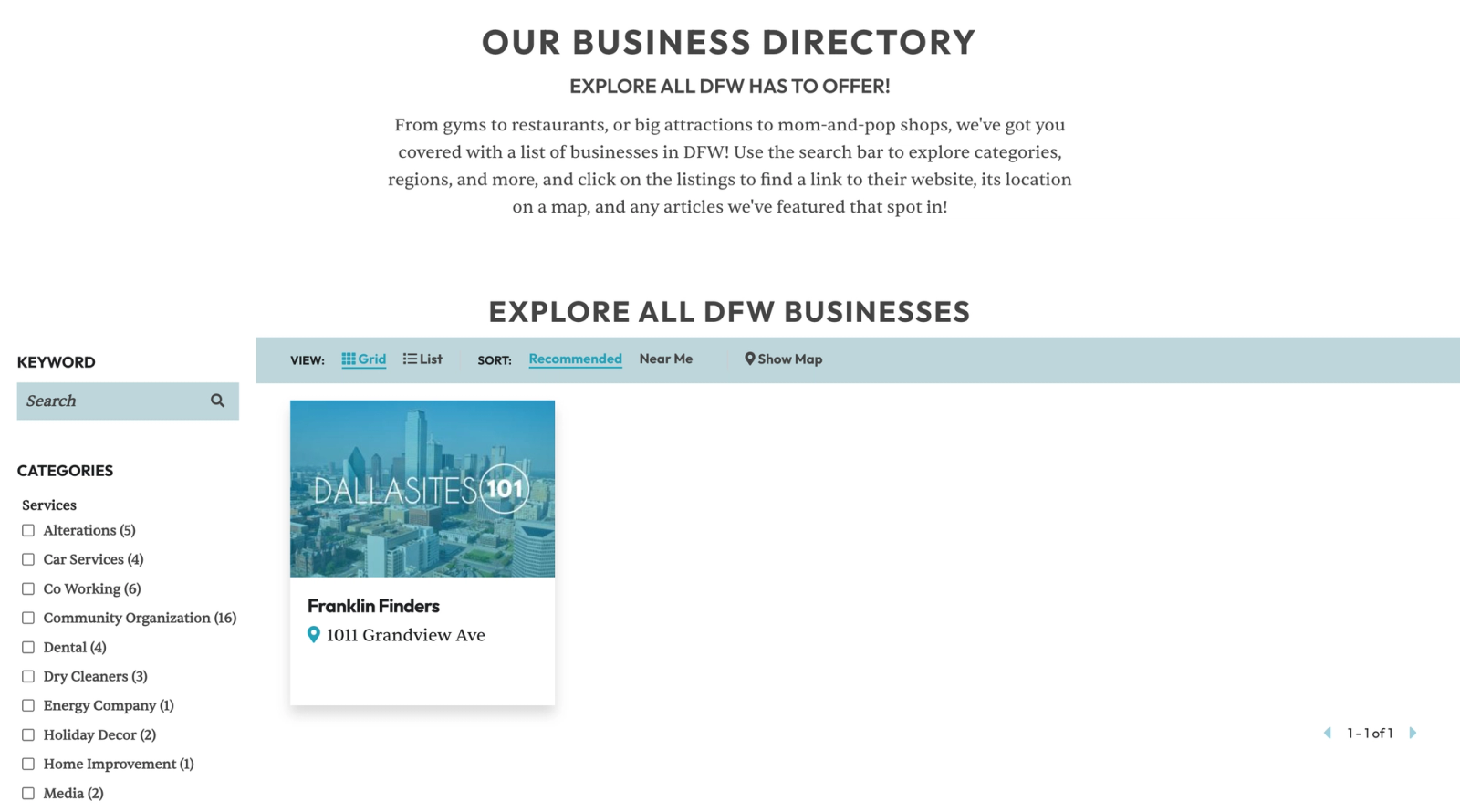
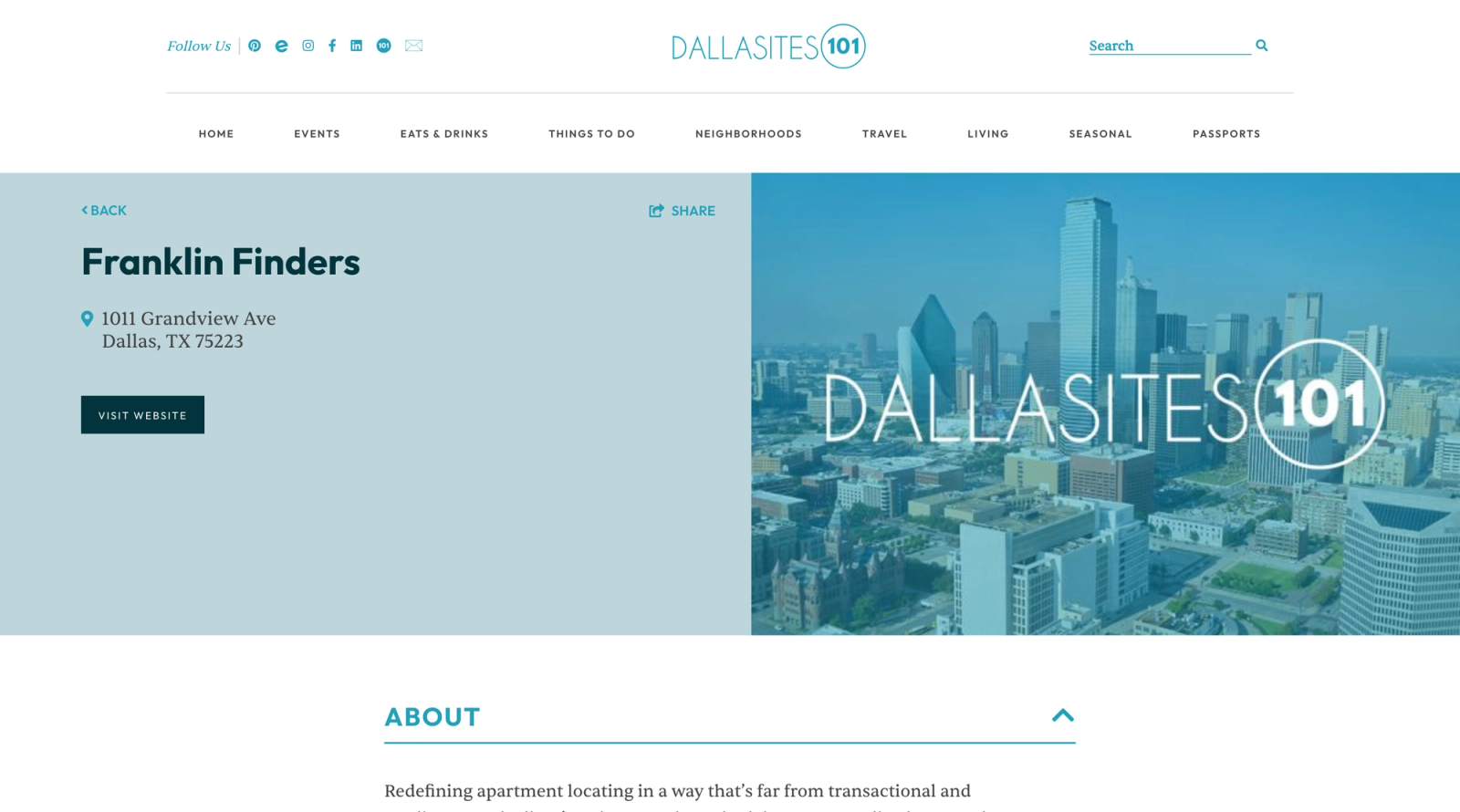
1. Create Profiles on Business & Real Estate Directories
The fastest backlinks any you can build are directory citations, listings on platforms that already rank for real estate-related searches in your market.
The highest-value directories for real estate teams include
Zillow
Realtor.com
Rate My Agent
Rank My Agent
Google Business Profile
Homes.com
Local chamber of commerce business directory
Yelp
Franchise directory if you're part of a national brand.
Alumni organization profiles, industry associations (NAR, local REALTOR boards), and local business improvement district directories are also worth claiming.
The critical detail most teams miss is NAP consistency. Your Name, Address, and Phone number must be identical across every platform. This helps optimize your Google Business profile.
2. Guest Posts on Real Estate Adjacent Sites
Guest posting means writing an article for another relevant site in exchange for a link back to your own content.
Because the link sits naturally within real, editorial content rather than being paid for or self-placed, Google treats it as one of the more trustworthy signals a site can earn.
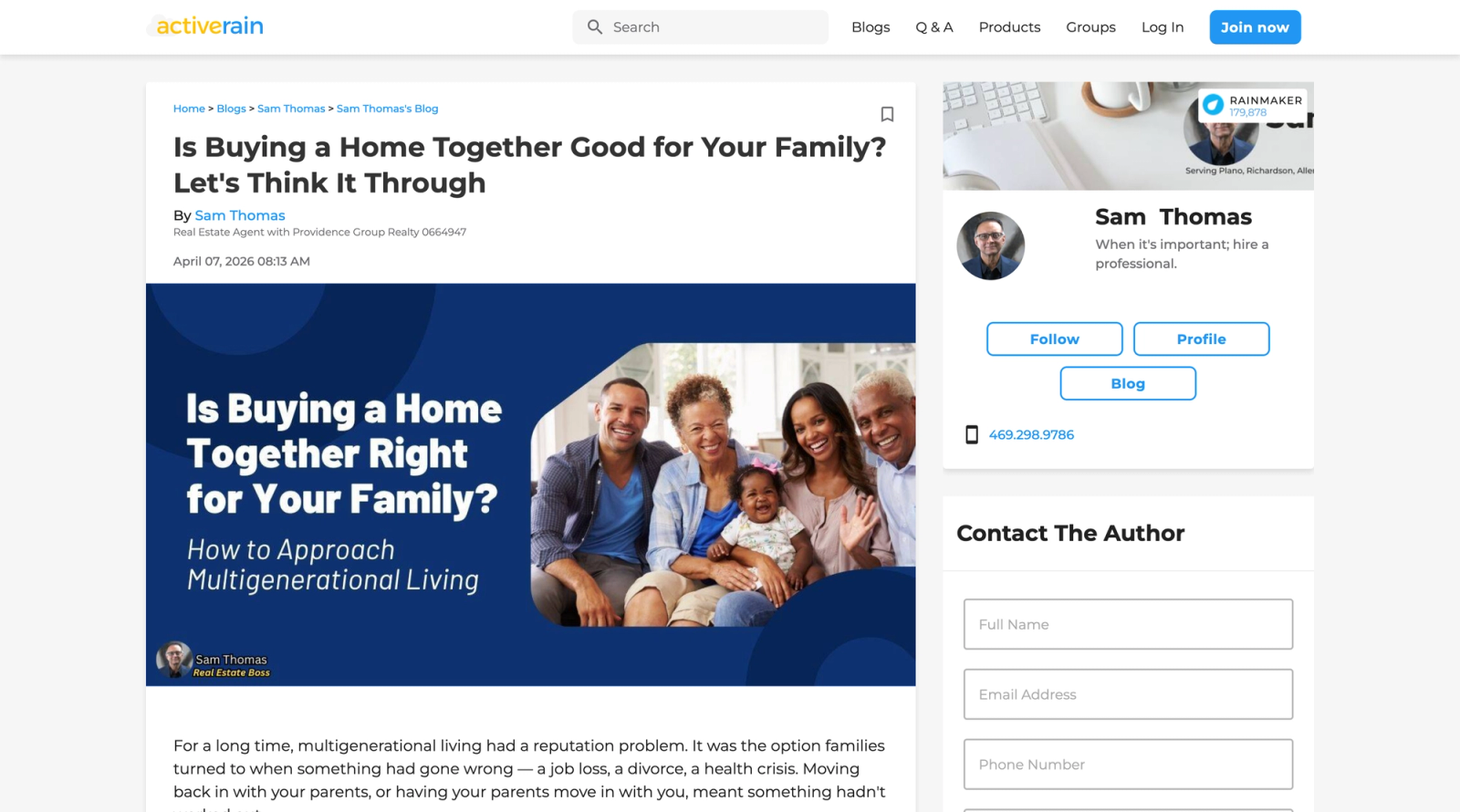
Example of guest post on activerain:
The categories of publications that actually link to real estate content:
Local business magazines
Personal finance blogs
Home improvement and design sites
First-time buyer resource guides
Relocation websites
Local news outlets
It's a win, win, win as the website gets content, the audience gets expert information and you get a backlink.
Pro Tip: Do not use AI to generate the full article. Its a great starting point but you need to injection your personality, expertise and the brand guidelines of who you are working with. Readers are getting much better at detecting AI slop and you don't want your brand to be associated with that.
3. Local Partnerships and Sponsorships
This is one of the highest-ROI link building tactics available to brokerages, and most teams never try it.
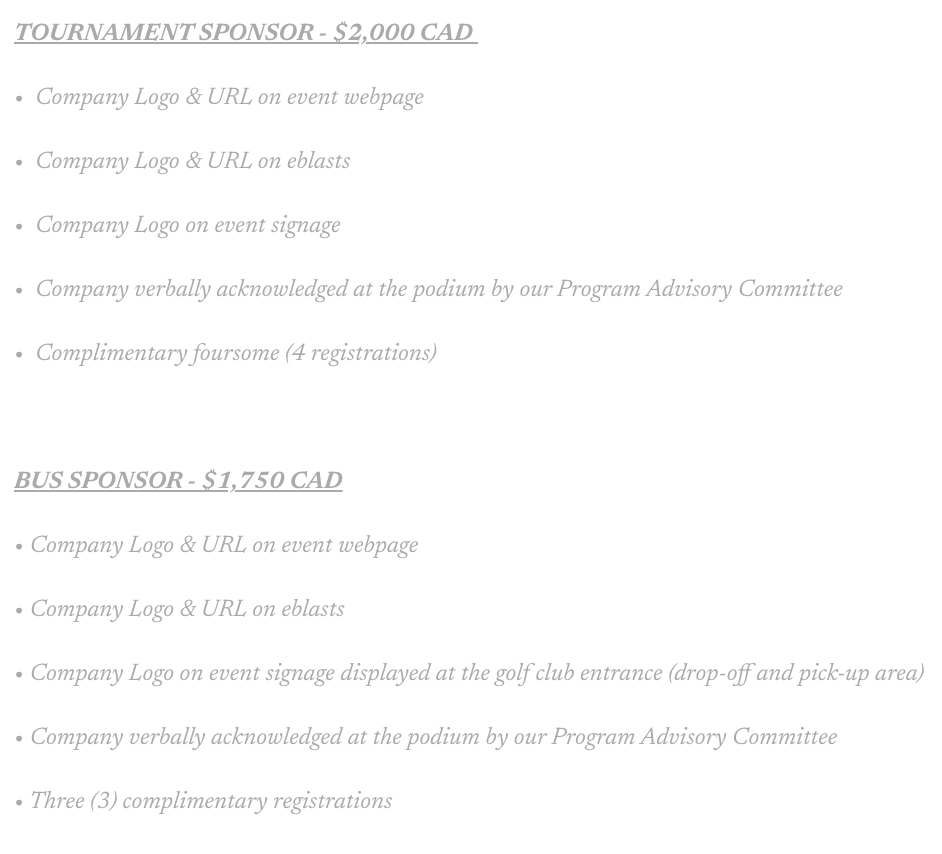
Sponsor a local charity golf tournament
Contribute to a school fundraiser
Support a neighborhood sports league
In most cases, the sponsoring organization publishes a "Thank you to our sponsors" page on their website with links back to each sponsor's site.
Look for organizations that already maintain an active web presence and update their sponsors page regularly.
4. HARO and Journalist Outreach
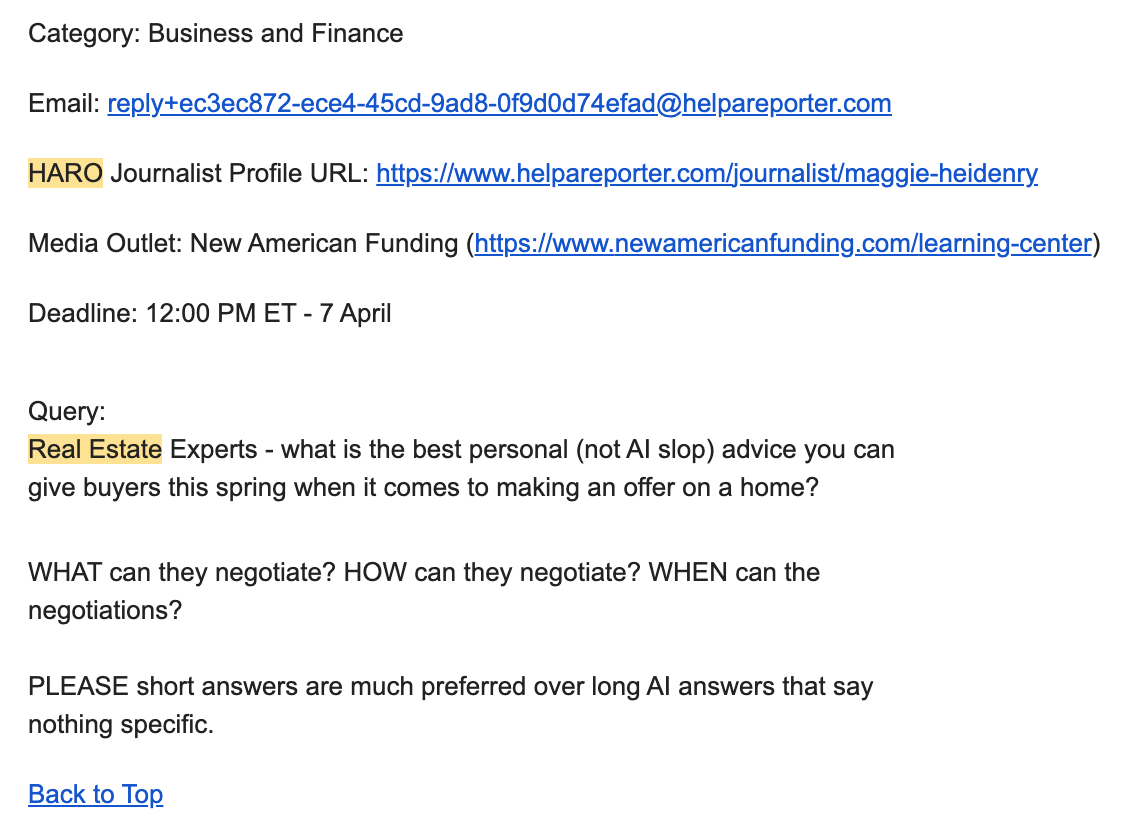
HARO (Help A Reporter Out), now operating as Connectively, is the fastest legitimate path to backlinks from news and media sites.
Journalists post queries asking for expert sources, you respond with a usable quote, and if they use it, your name and website get cited in the story.
Here's how the process works:
Sign up as a source at Connectively.
Set category alerts for real estate, personal finance, and local business.
Check the daily digest and identify queries where you have genuine expertise to contribute.
Write a tight, direct response of three to five sentences that gives the journalist a publishable quote without requiring editing.
Include your name, title, brokerage, and website URL.
5. Podcast Appearances
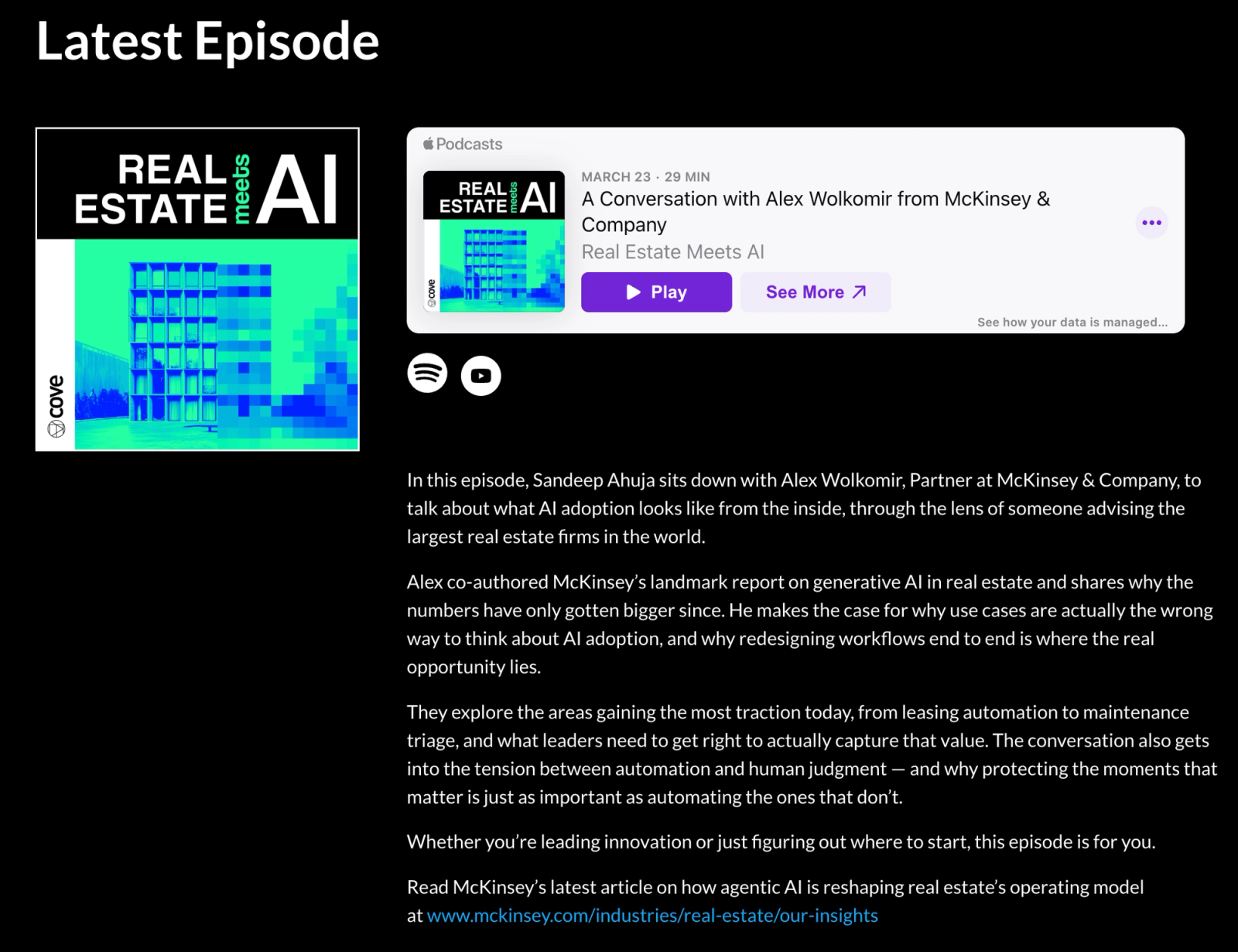
Podcasts are one of the more overlooked backlink opportunities because they publish more than just audio.
A single appearance earns a permanent backlink plus exposure through the episode's social promotion, YouTube upload, and any clips the host shares, reaching an audience that already trusts the host's recommendations.
6. Linkable Content That Earn Links Overtime
Some content earns links on its own because it solves a problem other sites want to solve for their own readers, no outreach required.
The best of it can't be replicated by AI in five minutes, it's built on original data, real experience, or a genuine point of view, which is exactly why other sites choose to reference it instead of writing their own version.
Strong examples include:
Proprietary data studies, like an analysis of your own closed transactions showing how list-to-sale price ratios shifted over a year.
Original surveys, such as polling local buyers or sellers on what's actually driving their decisions this year.
Stat-heavy market reports built from MLS data no one else has packaged that way.
Opinion or contrarian pieces, like why a popular local investment strategy is riskier than it looks, backed by real numbers or deal experience.
Case studies from actual transactions, showing the real negotiation, pricing, or problem-solving involved.
7. Outreach to Competitor Backlink Sources
Find content your competitors already earn links for, build a better version, then ask the sites linking to the original to link to yours instead.
The process:
Use Ahrefs, Semrush, or Moz to find a competitor's most-linked blog posts or guides.
Spot what's missing, like outdated data, thin content, or poor formatting.
Publish a stronger version, then reach out to the linking sites: "I noticed you linked to [article]. We just published an updated version covering [specific improvement] that may be more useful for your readers."
Lead with the specific improvement, not just "ours is better," and make the swap easy for them to make.
8. Backlink Marketplaces (Use With Caution)
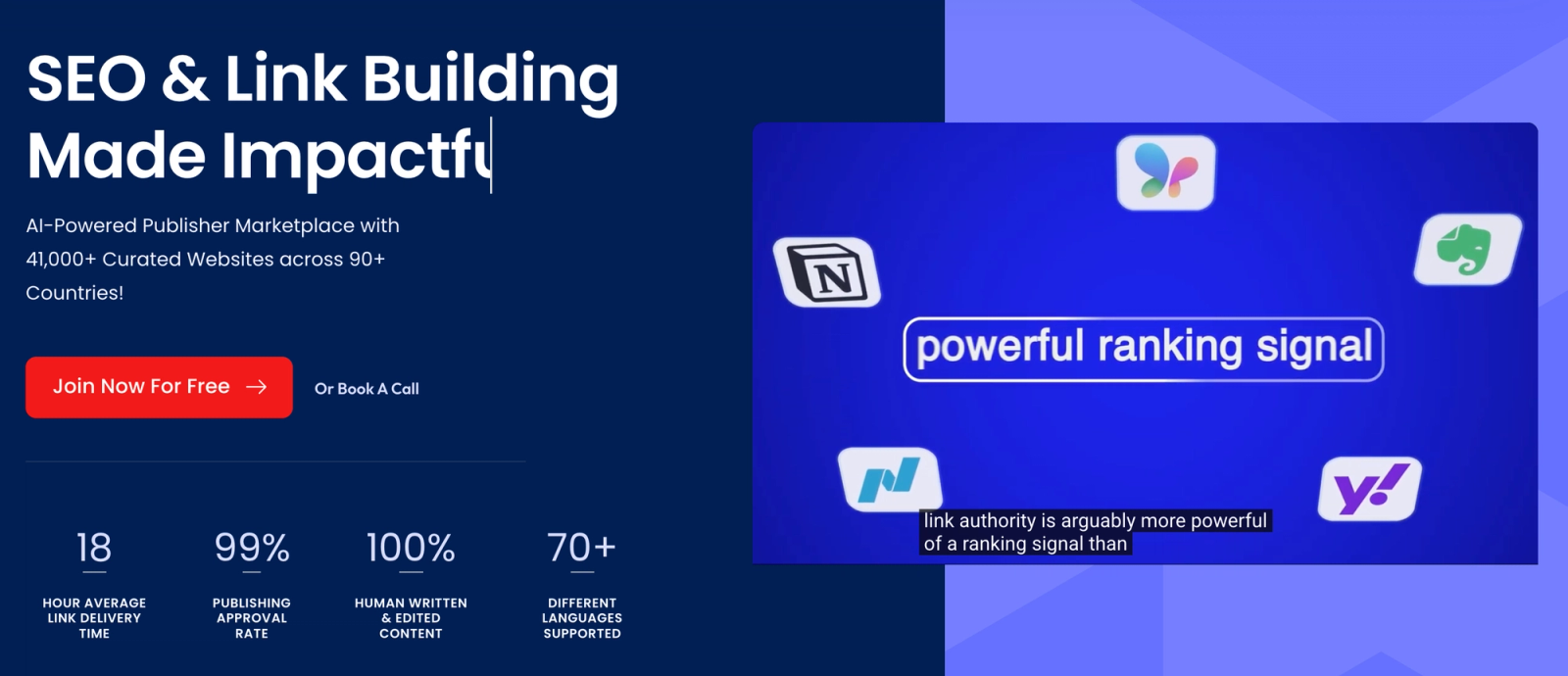
Platforms like PressWhiz, Backlinks and Linkbroker can scale link acquisition faster than organic outreach.
Pros:
Speed: Links can be acquired in days rather than the weeks or months organic outreach takes.
Predictability: You know the cost and placement upfront, rather than depending on a journalist or site agreeing to link.
Volume: Easier to scale link acquisition when you need it quickly.
Cons:
Penalty risk: Google can detect and devalue or penalize paid link patterns.
Lower quality: Many marketplace sites exist solely to sell links, offering little real relevance or authority.
No lasting relationship: Unlike PR or guest posting, there's no ongoing rapport with the site, just a one-time transaction.
Common Backlink Building Mistakes
You want your backlinks to look as natural as possible. Avoid these issues:
Anchor text over-optimization: Using the same exact keyword phrase (like "real estate agent [city]") across dozens of links looks manufactured.
Unnatural velocity: Acquiring 50 links in one month, then nothing for four months, creates a spike that doesn't match how links are earned organically.
Low-quality or irrelevant sources: Chasing volume from link farms, unrelated niches, or spammy directories does more harm than good.
Backlink Building Tools
Ahrefs
One of the most comprehensive tools for backlink analysis, competitor research, and Domain Rating tracking. It's the industry standard for finding link opportunities and monitoring your profile over time.
Semrush
Similar to Ahrefs in scope, with strong backlink audit and toxic link detection features. Useful for spotting harmful links before they hurt your rankings.
Majestic
Specializes in link intelligence, with some of the deepest historical backlink data available. Good for researching a site's full link history, not just recent activity.
Google Search Console
Free, and the most reliable source for seeing exactly which links Google has indexed to your site. It will only show your backlinks.
Bing Webmaster Tools
Bing's equivalent to Search Console, showing links and visibility specific to Bing search. This is different from Google Search Console as it will your competitor backlinks as well.
How to Track Your Backlink Building
You don't need fancy software to stay on top of this, a simple Google Sheet works fine. A basic tracking table might look like:
From
To
Anchor Text
DR
localnews.com/article
example.com/market-report
local market trends
62
citymom-blog.com/moving-guide
example.com/neighborhoods/riverside
Riverside neighborhood guide
42
Five numbers matter most:
Total backlinks: Raw count of links pointing to your site.
Referring domains: More important than link count, since links from ten different sites outweigh ten links from one.
Domain Rating: Your overall authority trend, a steady climb means it's working.
Traffic increases: Rising organic traffic to linked pages confirms real impact.
Keyword rankings: Track whether target keywords climb as your link profile grows.
Frequently Asked Questions About Real Estate Backlinks
How many backlinks do you need to rank?
There's no fixed number, it depends on how competitive your market and keywords are.
Quality matters far more than quantity: a few links from authoritative, relevant local sites will outperform a large volume of weak or unrelated ones, whether you're ranking a hyperlocal neighborhood page or competing for a broad term like "real estate agent [major city]."
How long does it take to see results from backlinks?
Backlinks typically take a few weeks to a few months to show measurable ranking movement, since Google needs time to discover, crawl, and factor in each new link.
Results also compound: a link earned today adds to your authority alongside every other link you've built, so consistent, ongoing link building tends to outperform a one-time push.
What pages should I build backlinks to?
Prioritize the pages that drive business, like neighborhood guides, service pages, and high-value blog content, rather than spreading links thin across every page on your site.
Your homepage naturally earns links too, but it shouldn't be the only target.
Why link building is more challenging in real estate?
A handful of major sites, Zillow, Realtor.com, Redfin, dominate search results and hold most of the authority in real estate, making it hard for any individual agent to compete on strength alone. Most agents also rely on referrals and repeat clients rather than a strong web presence, so few quality local sites exist to link to or from.
That scarcity makes link building slower, though it also means less competition for the links that do exist.
Turn the Traffic Backlinks Bring Into Leads
Backlinks get you found, but what happens after visitors arrive determines the real return.
Before launching outreach, make sure your technical SEO is in order so the pages you point links at can be crawled and indexed:
Strong internal linking so authority flows to key pages.
Proper schema markup.
Fast load times.
The best results come from the full chain: earn backlinks, convert traffic with strong content, then turn visitors into clients.
That’s where Madison, Realty AI's real estate chatbot, engages them 24/7, qualifies them in real time, and schedules appointments automatically so the leads your SEO effort earns don't sit unanswered.
Answer engine optimization explained for real estate: how AI answers pick their sources, what to publish, what to measure, and the fair housing line to stay behind.
Generative engine optimization for real estate teams: how to get cited by ChatGPT, Gemini and AI Overviews, with a checklist and the data behind it.
About Madison
The AI assistant built for real estate lead gen
Madison is Realty AI's conversational assistant for real estate websites. It engages visitors instantly, qualifies buyers, sellers, and renters through natural dialogue, routes summaries to your CRM, and keeps your team focused on closing.
5.0 average from 2,500 customer reviews
“We captured 3 new transactions worth over $3.3 million in just a few months using Realty AI.”
Sarah Logue
Broker & Owner, Top 0.1%
“Within our first week of using Realty AI, I had an engaged seller ready on the phone. This has never happened before in 4 years.”
Mark Jensen
Owner & Broker of Record
“It feels like having a personal assistant on my website 24/7, sending me instant notifications so I never miss a potential client.”