The Complete Guide to Local SEO for Real Estate: Strategies, Tools & Tips
Local SEO for real estate determines whether buyers and sellers in your market find you first, or find a competitor instead. This guide covers what it is, why it matters, and the strategies that actually move rankings in a hyperlocal market.
Nathan SmithPublished Dec 1, 2025Updated Sep 15, 202612 min read
What is Local SEO For Real Estate?
Local SEO is the practice of building your online presence so you appear when someone nearby searches for real estate services.
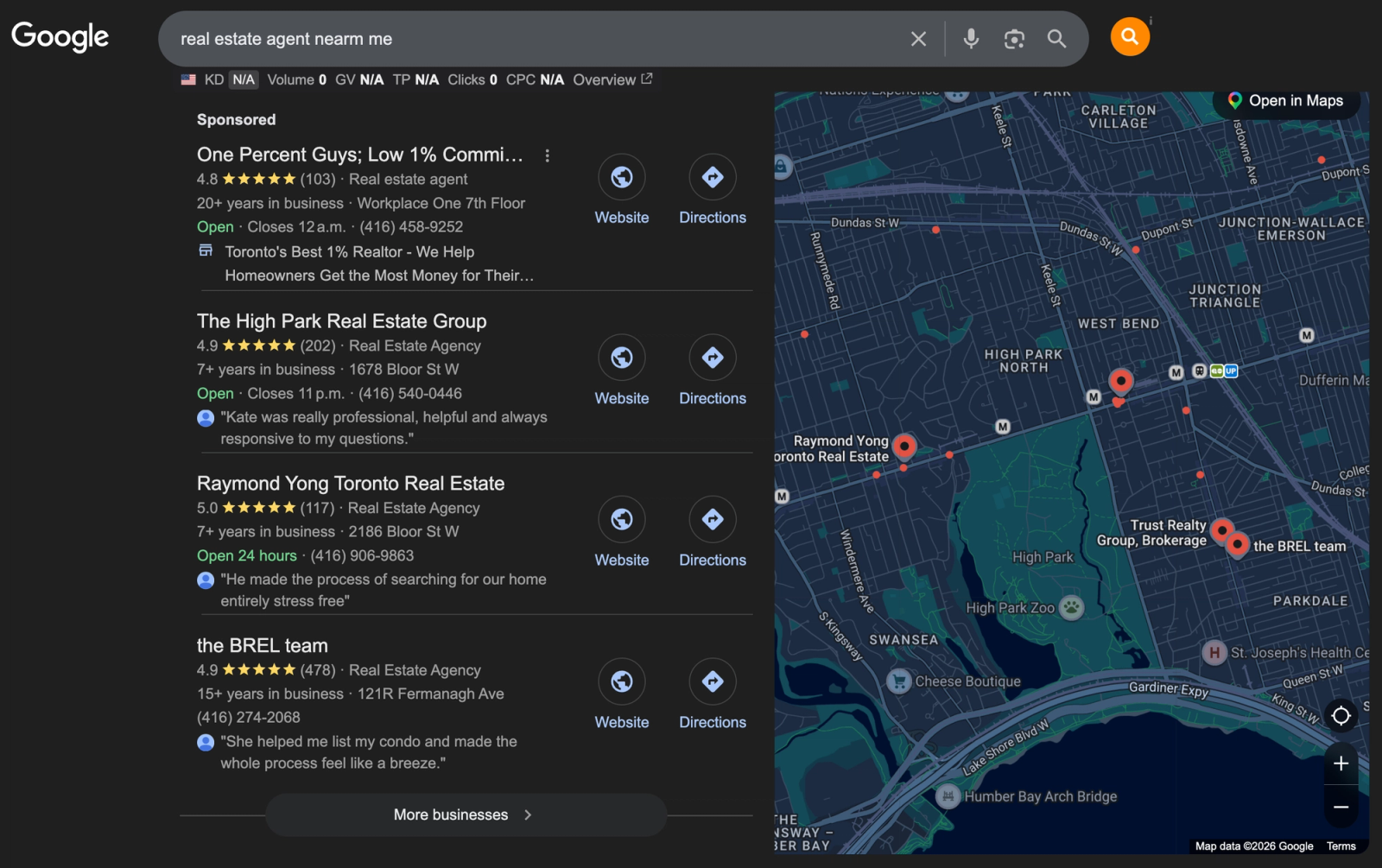
This means ranking in the Google local pack (the map with three profiles that appears above organic results), showing up in Google Maps, and ranking on page one for the neighborhood and city queries buyers and sellers actually use.
General SEO vs Local SEO For Real Estate Agents
Factor
General SEO
Local SEO
Goal
Rank nationally for broad keywords
Rank in a specific city or area
Keywords
"How to Stage a Home for Sale"
"realtor in [city]," "homes for sale near me"
Intent
Informational/broad commercial
Ready-to-act, local commercial
Key Factor
Backlinks, domain authority
Google Business Profile, citations
Content
Guides, evergreen topics
Neighborhood pages, local content
Google Results
Standard organic listings
Map Pack + organic
Why is Local SEO Important in Real Estate?
Most buyers and sellers start their search with a local query, like "realtor near me" or "homes for sale in [neighborhood]." Local SEO determines whether you show up for those searches or lose the lead to a competitor.
Captures high-intent traffic: Local searches often come from people ready to act, not just browsing.
Builds visibility in map results: Ranking in the local map pack puts you ahead of most organic results.
Establishes trust before contact: Appearing prominently, with strong reviews, signals credibility before a lead ever reaches out.
The Key Factors of Local SEO
Optimized Google Business Profile: accurate hours, service areas, and photos that keep you visible in Maps and the local pack.
Local Citations: consistent name, address, and phone number across directories.
Local Backlinks: links from local news, businesses, and organizations that signal real trust to Google.
Location-Optimized Website: pages built around the specific neighborhoods you serve, not just your city.
Genuinely Useful Content: local, specific content people actually want to read, not filler for a keyword.
7 Practical Strategies To Improve Local SEO
1. Optimize Your Google Business Profile
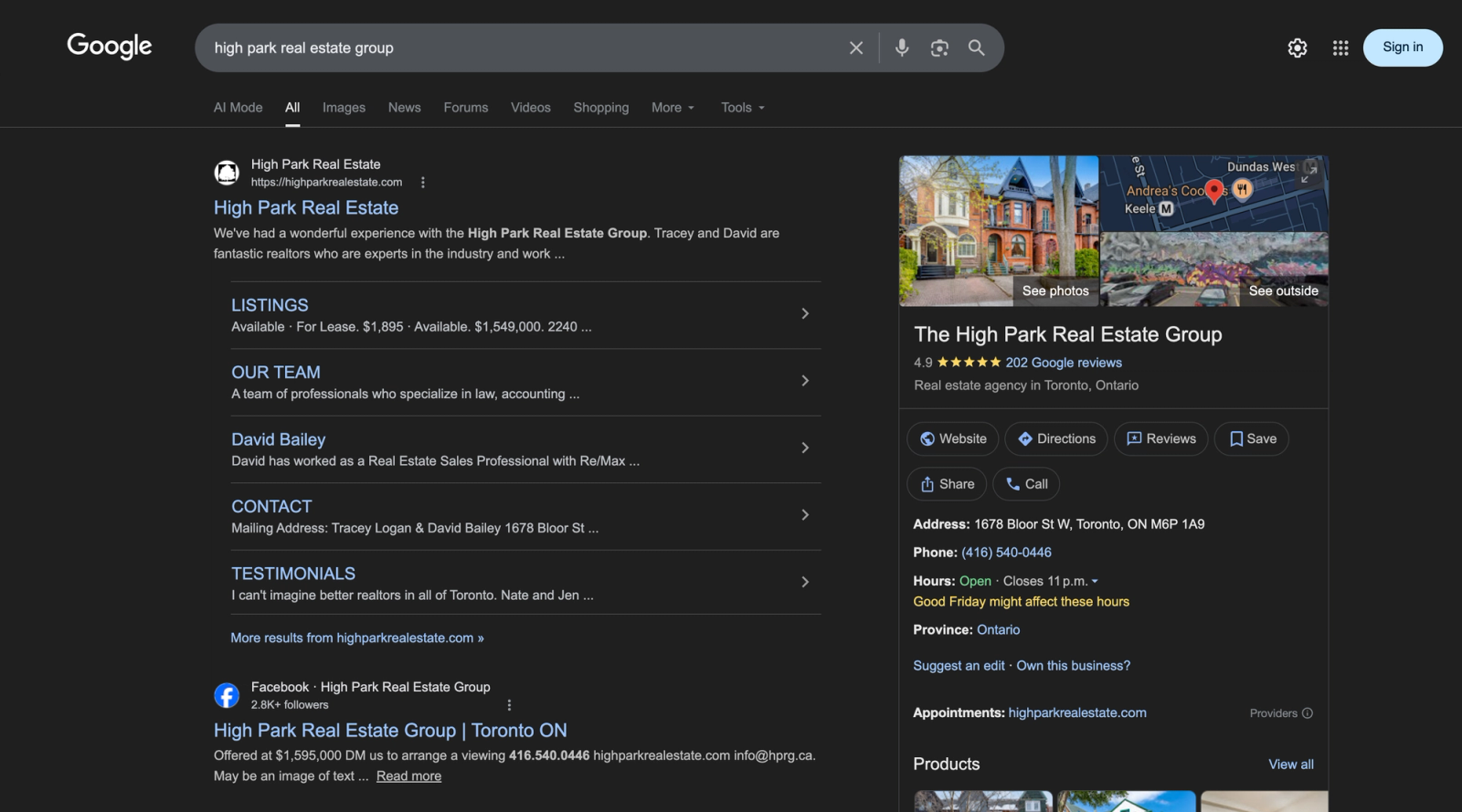
Your Google Business Profile is the first thing most buyers see before they ever visit your website. It appears in the local pack, in Google Maps, and in Google's knowledge panel when someone searches your name directly.
Key optimizations:
Complete every field: service areas, hours, phone number, and website link.
Add fresh, high-quality photos of listings, your team, and recent closings.
Choose accurate primary and secondary categories (e.g., "Real Estate Agent").
Post regular updates, like new listings, open houses, or market news.
Collect and respond to reviews consistently.
2. Build Neighborhood-Specific Landing Pages
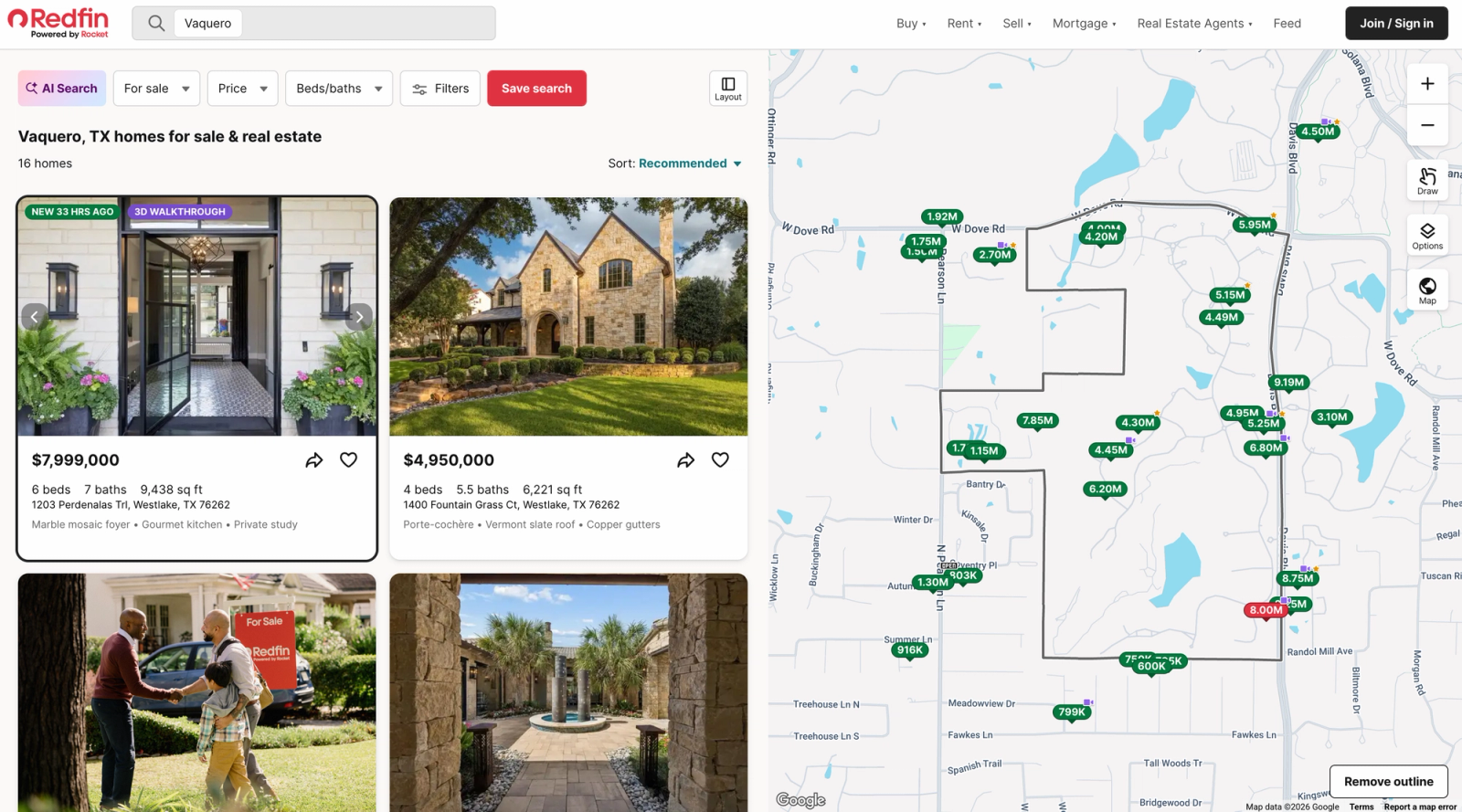
A neighborhood-specific landing page is a page built around a single, narrow area rather than an entire city or region, giving search engines and visitors alike a clear, focused topic to match against.
Each page should include:
A clearly defined focus, such as a single neighborhood, subdivision, or micro-market.
Current, accurate listing or pricing data relevant to that specific area.
Internal links to related searches either in the same neighborhood or close by.
Local details that help someone evaluate the area, like nearby amenities, schools, or general character of the community.
Enough original insight or context that the page offers real value beyond what a listing search alone would show.
These pages perform better because they target long-tail keywords that face far less competition than broad city-wide terms, which are typically dominated by large national portals.
3. Build Citations With NAP Consistency
Citations are mentions of your business name, address, and phone number online, even without a link. Consistent citations across directories strengthen your local presence by giving Google more cross-references to confirm your business information.
Start with the core 15, in this order:
Google Business Profile
Yelp
Facebook Business Page
Zillow Agent Profile
Realtor.com Agent Profile
Your Brokerage Website
HomeAdvisor
Better Business Bureau
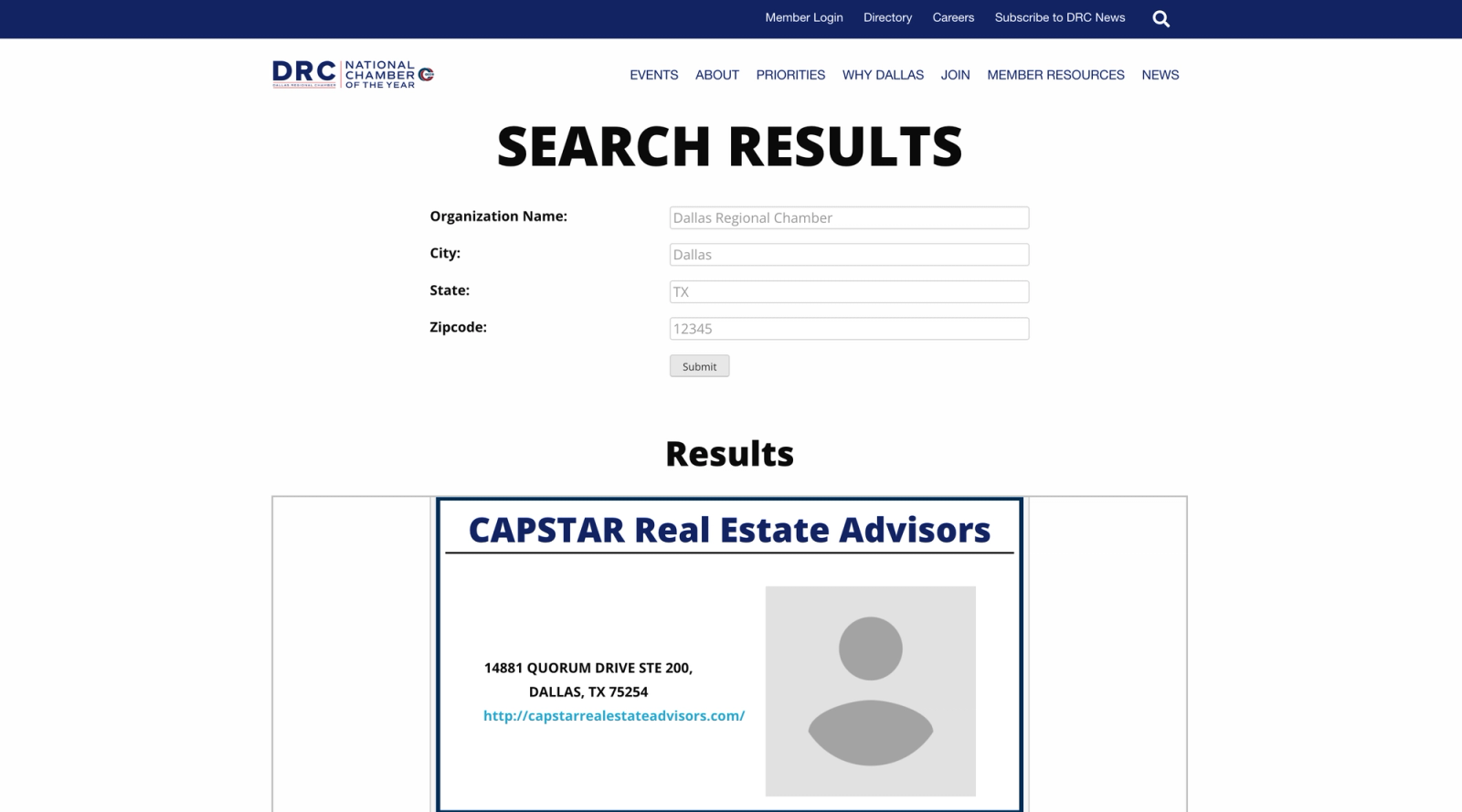
Your local Chamber of Commerce website
LinkedIn Company Page
Apple Maps (via Apple Business Connect)
Bing Places for Business
Nextdoor Business Profile
Your local neighborhood association websites
Your state real estate association directory
Angi (formerly Angie's List)
After those 15, incremental volume has diminishing returns. Accuracy and consistency beat quantity every time.
4. Build Local Backlinks
Local backlinks are links from other websites in your specific market, like local news outlets, community organizations, chambers of commerce, and local bloggers, back to your site.
They signal to Google that real, established businesses in your area recognize and trust you.
Example of backlink with anchor text: insurance service
Practical ways to earn them:
Sponsor local events, sports teams, or charity fundraisers, most publish a "thank you to our sponsors" page with a link back.
Pitch local journalists market data and insights for stories, in exchange for a citation and link.
Partner with adjacent local businesses, like lenders, inspectors, or contractors, for reciprocal mentions or co-created content.
Get listed on local chamber of commerce and business association directories.
Prioritize relevance over volume: a handful of links from real, active local sites will do more for your rankings than a large number of generic, unrelated ones.
5. Build & Grow Profiles on Independent Review Sites
Reviews on independent platforms do more than build trust, they help you show up for keywords nearly impossible to win on your own site.
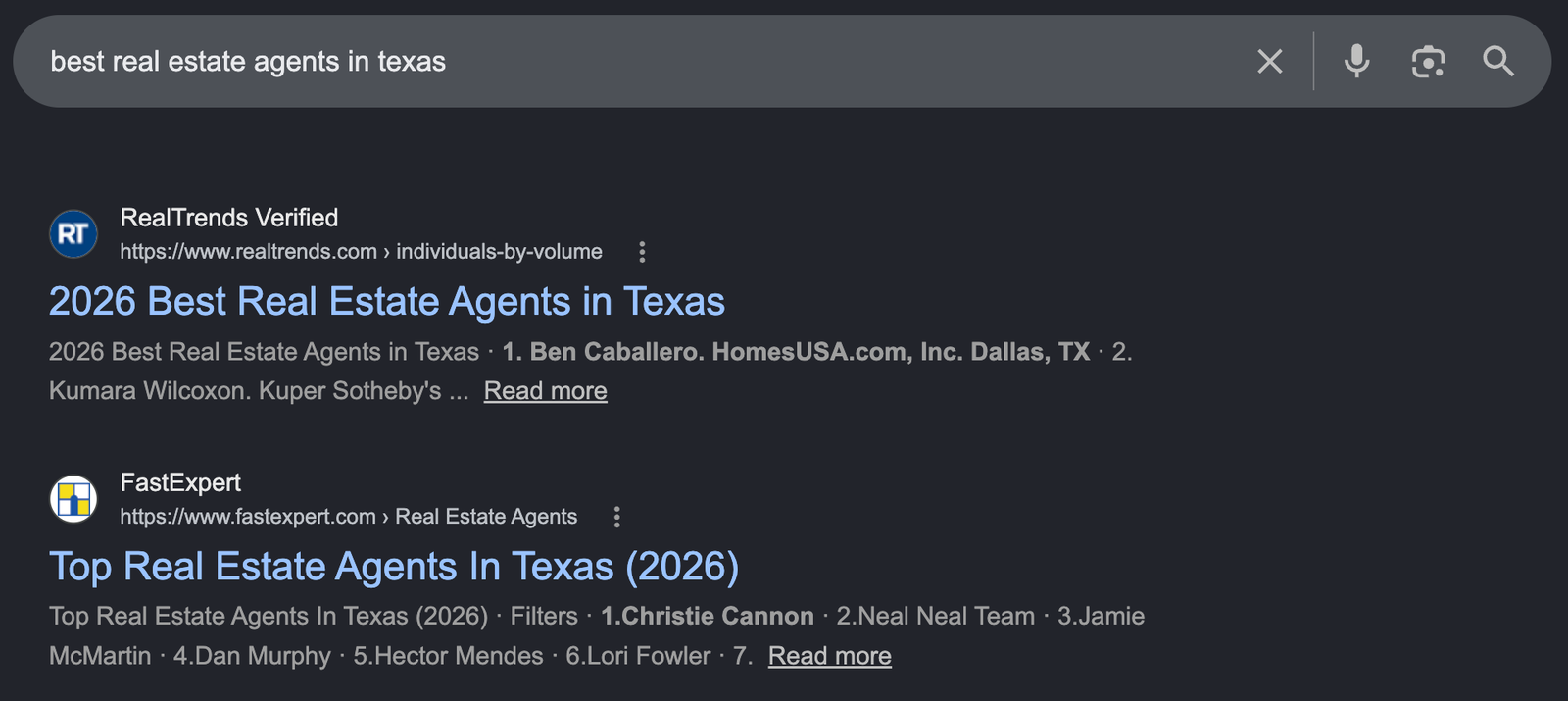
These platforms regularly publish "best agent" roundups for specific cities, and their established authority often outranks individual agent websites for those searches.
Rank My Agent
Rate My Agent
RealTrends Verified
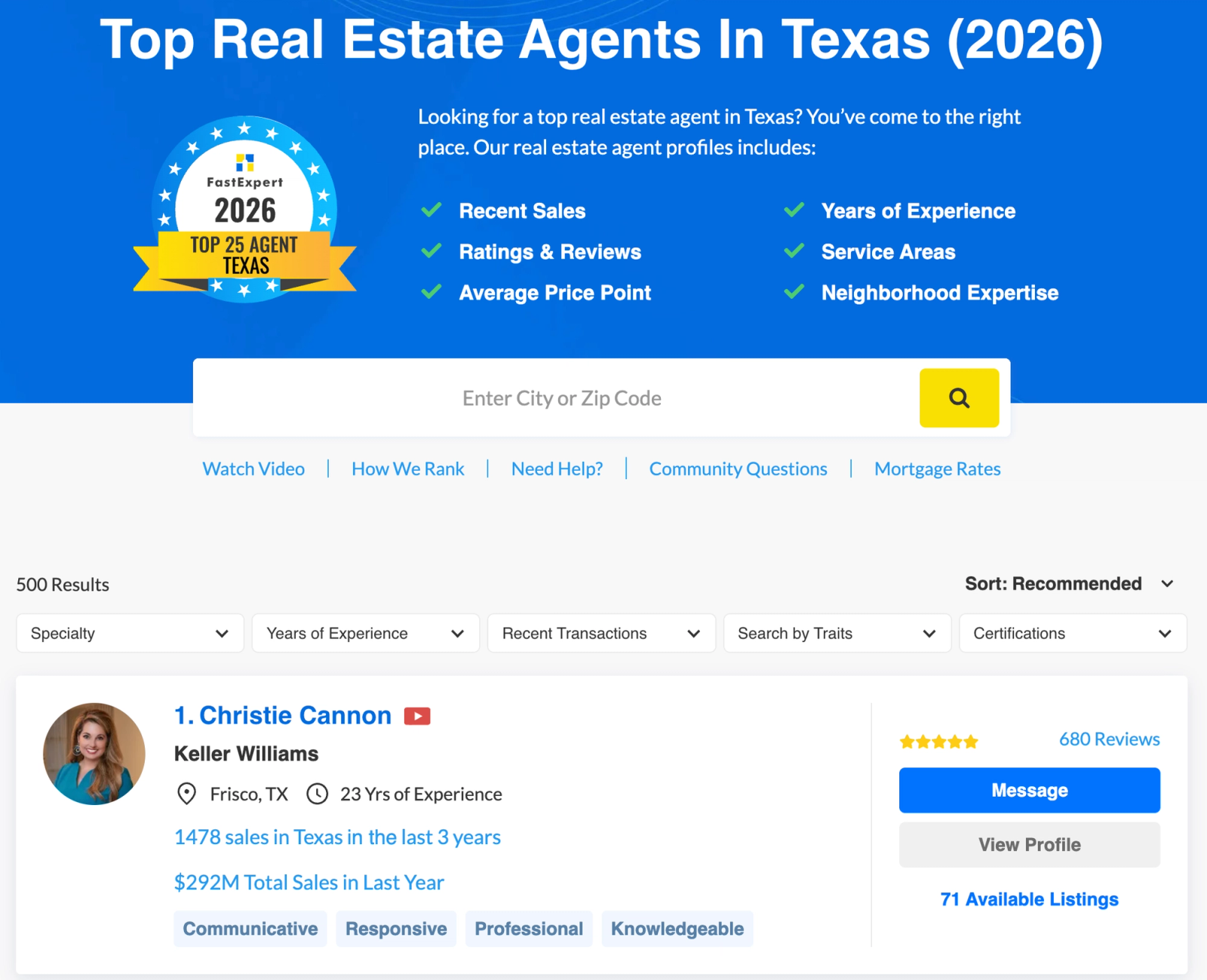
FastExpert
Agent Pronto
HomeLight
They also help you occupy more of the results page. Instead of relying on one link, your own site, profiles across multiple review sites let you hold several positions at once, crowding out competitors.
6. Add Schema Markup
Schema markup is a snippet of code you add to your website that spells out exactly what a page contains, business type, listing details, location, in a format search engines can read directly, instead of relying on guesswork from your page's text and design.
For real estate specifically, this makes your listings, agent bios, and neighborhood pages easier for Google to categorize correctly and display with richer detail in search results, which can improve both visibility and click-through rate. Those same structured facts are a building block of generative engine optimization when an AI answer picks a source to cite.
7. Create Local Content
Local content means writing about the actual area you serve, not generic real estate advice that could apply anywhere.
The goal is to give people a genuine, firsthand perspective on what it's actually like to live there, the kind of detail only someone on the ground would know.
Strong examples include:
Roundups of the best coffee shops, restaurants, or parks in a neighborhood.
School district comparisons and reviews.
Local event guides and community calendars.
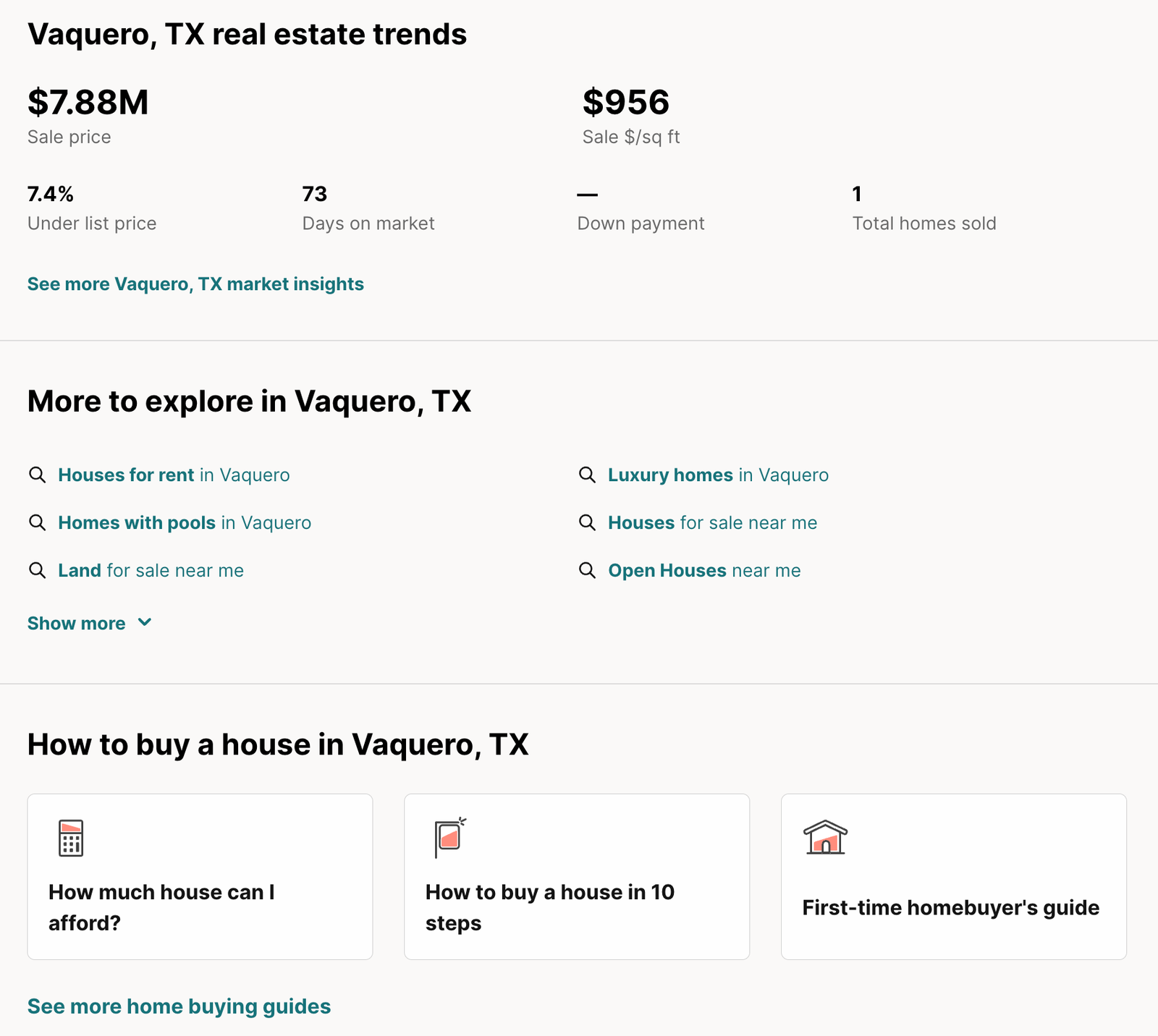
Median sale price, days on market, and inventory trend posts for a specific area.
How to Use AI to Improve Local SEO
AI works best for local SEO when it's connected directly to your data, through MCP integrations like Google Search Console, Ahrefs, and DataForSEO.
With live access, AI can pull real keyword volumes, rankings, and competitor backlink data on demand and put it to work immediately.
What this unlocks:
Keyword research: Clusters hyperlocal opportunities and spot content gaps.
Content generation: Drafts neighborhood guides and local content informed by actual search demand.
Review responses: Draft personalized replies to new reviews for quick approval.
Data analysis: Turn raw clicks, impressions, and ranking data into actionable steps.
Common Local SEO Mistakes
Keyword stuffing: Repeating "Austin real estate agent" five times in a paragraph reads as spam to Google and to humans.
Thin template IDX pages: Auto-generated listing pages that pull MLS data with no added content are treated as low quality, one of the most common technical SEO problems on IDX sites.
Poor internal linking: Pages on your site with no internal links pointing to them get crawled less frequently and rank lower.
Treating reviews as a one-time campaign: Collecting 40 reviews in a month and then stopping is counterproductive. Google weights recent reviews heavily.
No schema markup: Adding RealEstateListing schema takes 15 minutes and directly improves how your pages are understood and displayed.
Ignoring video SEO: Teams not publishing neighborhood video content are ceding a local signal that grows the same way organic content does, to competitors who haven't started yet.
How to Track Local SEO Performance
A few key metrics give you a clear picture of whether your local SEO is actually working:
Google Business Profile insights: Calls, direction requests, and map views from local search.
Local keyword rankings: Your position for terms like "realtor in [city]."
Reviews: Count and rating, both directly influence local ranking.
Organic traffic: Rising visits to location pages confirm local content is working.
Check these monthly rather than daily as short-term keyword rankings can be misleading.
Free Tools Local SEO Tools
Google Search Console
Google Search Console is the first place to look. It shows you exactly what people are typing into Google to visit your website.
It tracks two key metrics:
Clicks: The number of people who actually visited your site
Impressions: The number of people who saw your site in search results but didn't click through.
Google Autofill
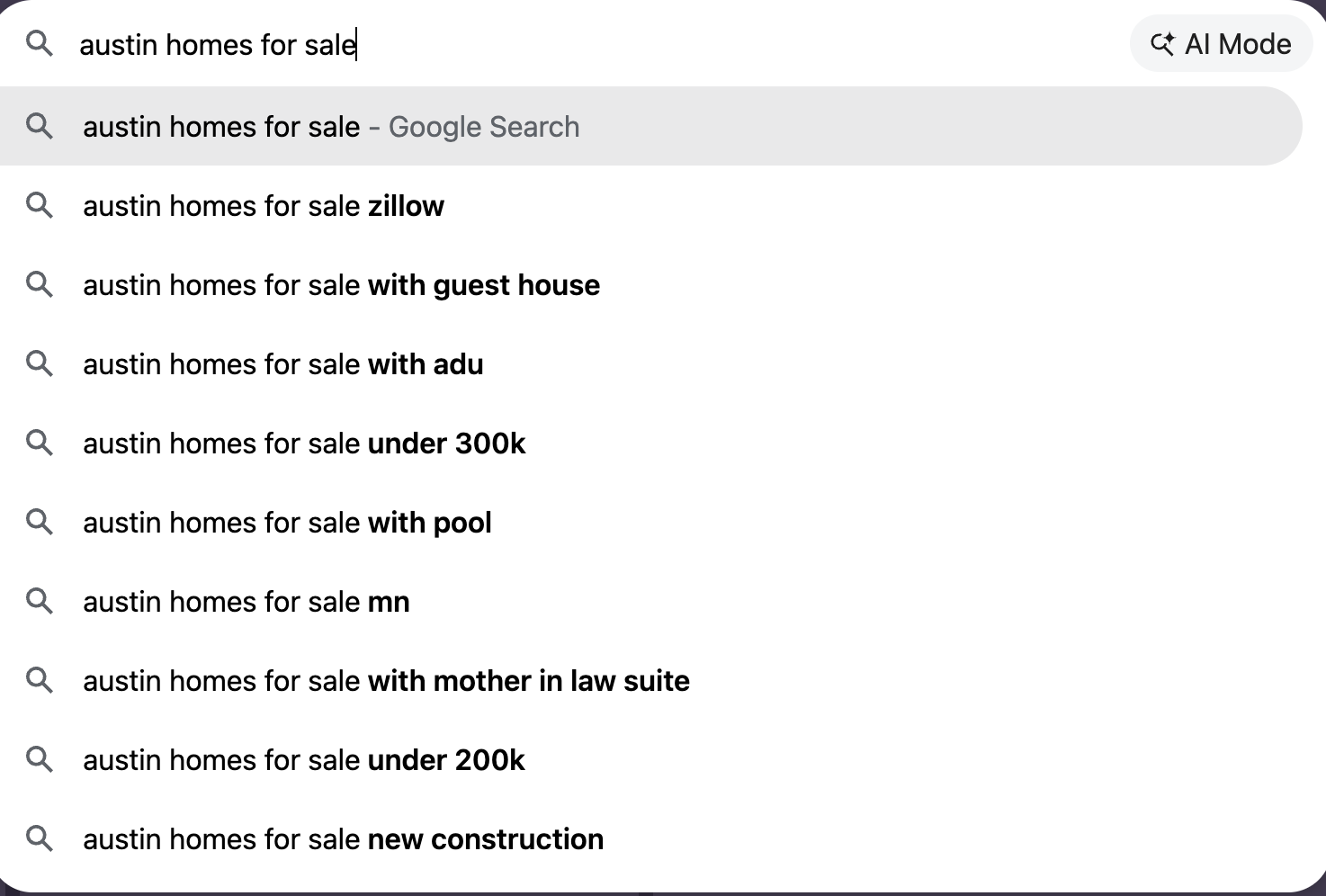
Google Autofill shows you what real people are actually searching. Start typing "[city] homes for sale" and watch what autocomplete suggests. Every suggestion is a real query with real search demand behind it.
People Also Ask
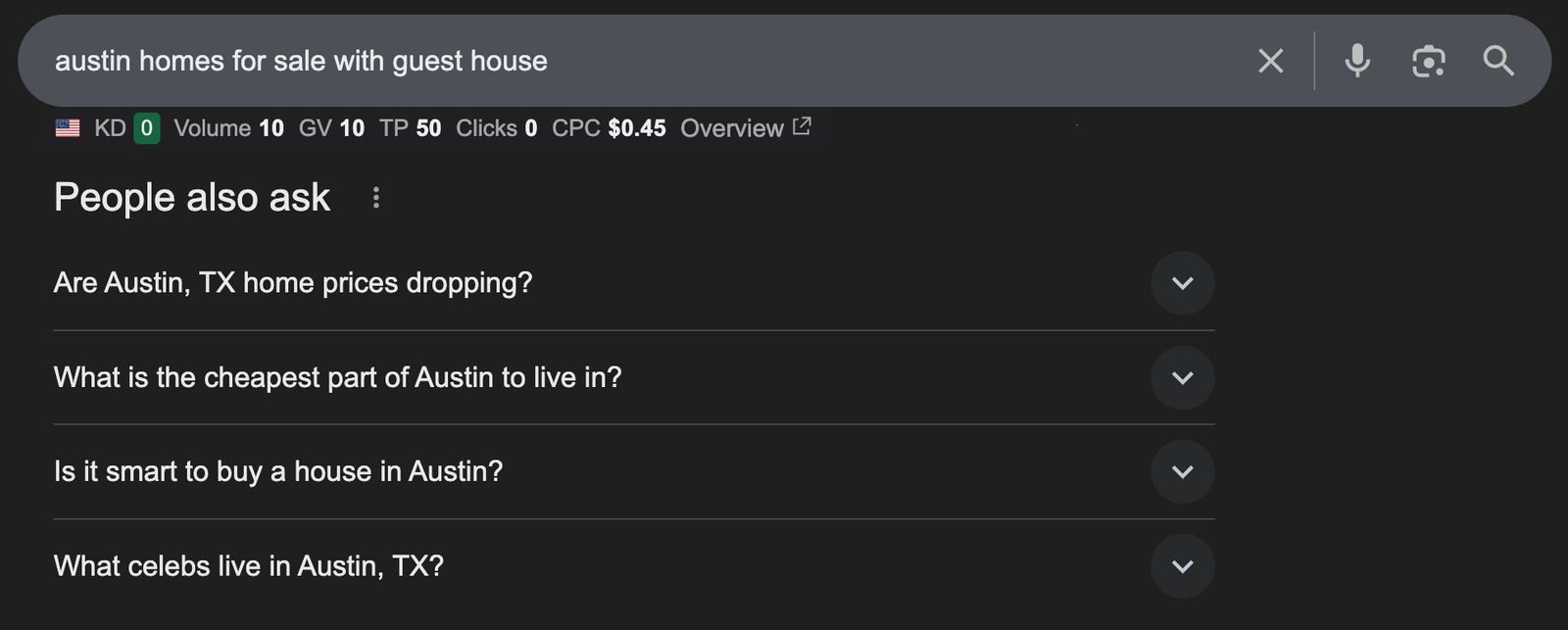
People Also Ask in search results surfaces the questions buyers ask alongside your target keywords. Each question is a content opportunity with confirmed demand attached to it.
Paid Tools For Local SEO
Ahrefs
Ahrefs is a comprehensive SEO platform offering keyword research, competitor analysis, and backlink monitoring.
The Site Explorer tool lets you enter any competitor's website and see their top-ranking pages, keywords, and backlink sources.
Whitespark
Whitespark specializes in local SEO tools, with particular strength in citation building and local rank tracking.
The citation finder identifies directories and websites where you should list your business and the reputation management features to monitor and respond to reviews across multiple platforms.
Answer The Public
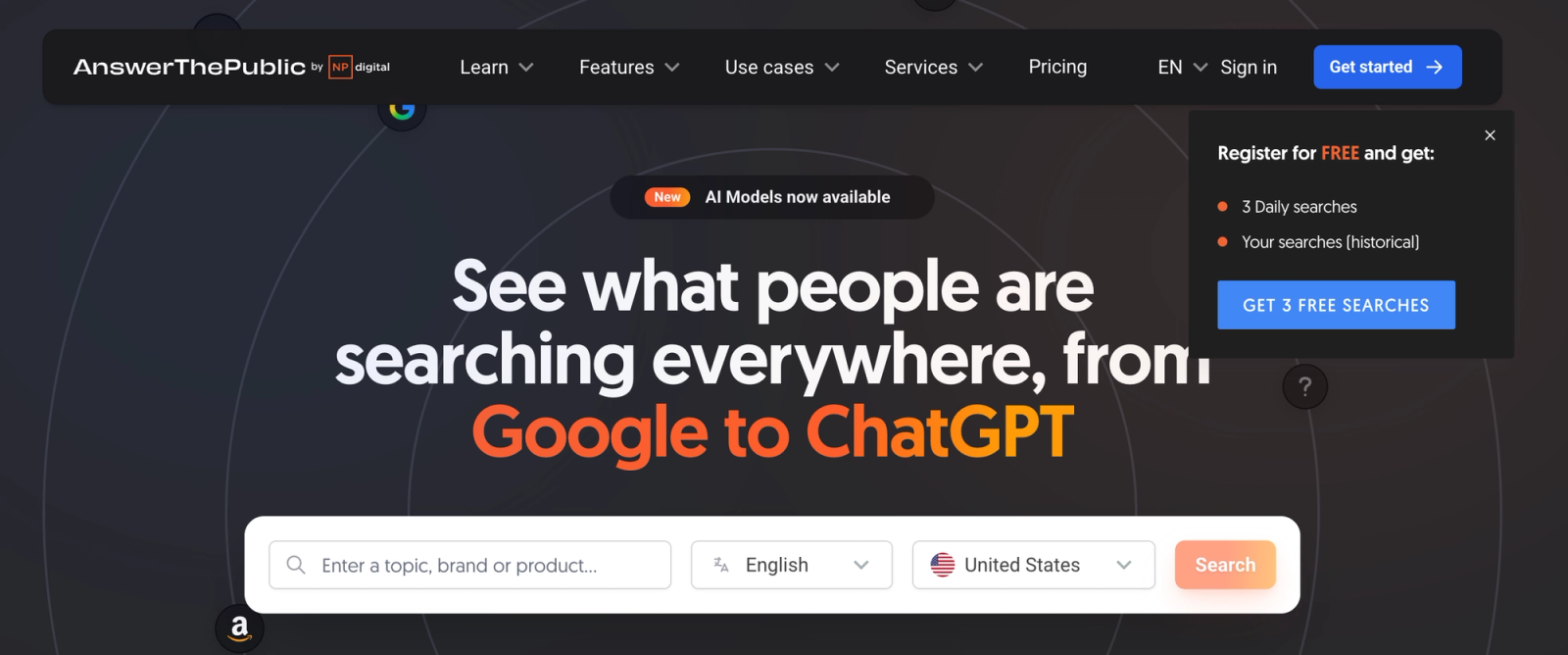
Answer The Public visualizes search questions and queries related to any keyword, organizing them into categories: questions (who, what, when, where, why, how), prepositions (for, with, near, to), and comparisons.
This helps you understand the questions prospects ask at different stages of their buyer or seller journey.
AlsoAsked
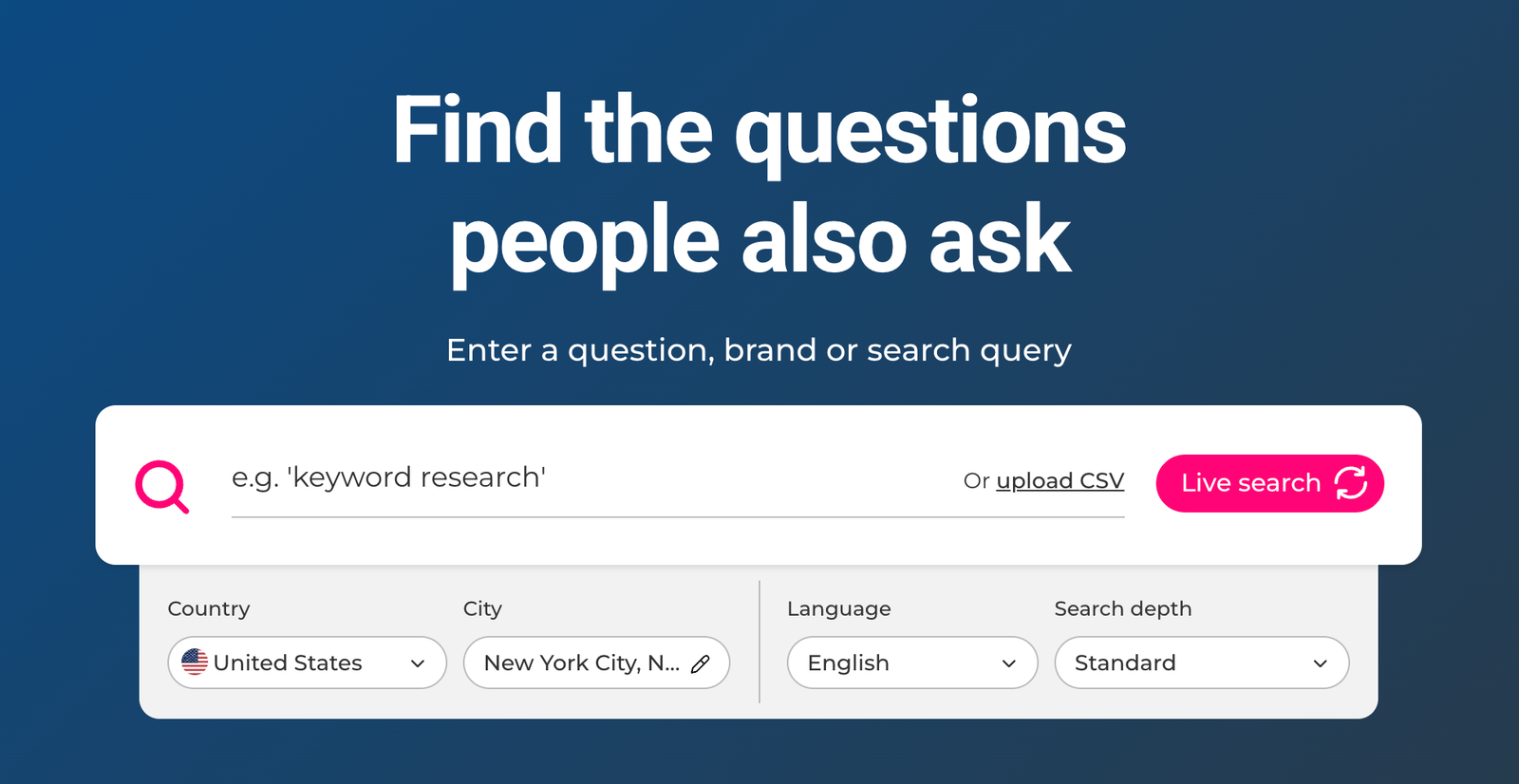
AlsoAsked takes the "People Also Ask" concept deeper by mapping out the full question hierarchy. When you search a term, it shows not just the initial questions but the follow-up questions people ask after clicking those initial queries.
This reveals likely next questions that buyers and sellers have about a specific topic.
Local SEO Real Estate FAQs
How long does it take till I achieve results from local SEO?
Most agents see measurable movement within 3 to 6 months, with stronger gains around 6 to 12 months as citations, reviews, and content accumulate.
Results also compound over time, work done in month one keeps paying off well past month six. Consistency matters more than speed, steady effort tends to outperform a big push followed by nothing.
How do I optimize my real estate listings for local SEO?
Include your keyword in the title tag, H1, and URL.
Lead the property description with the same keyword in the first sentence, rather than burying it further down. This reinforces relevance right where Google and readers look first.
Local SEO Increases Site Traffic a Chatbot Converts It
Local SEO is one of the most durable lead generation ideas available to real estate teams precisely because the traffic compounds instead of stopping when you pause a budget, but that traffic only becomes revenue if your site converts when visitors arrive.
Madison our real estate chatbot, that qualifies site visitors through a conversation, collects their contact information, and books a showing on your calendar.
Answer engine optimization explained for real estate: how AI answers pick their sources, what to publish, what to measure, and the fair housing line to stay behind.
Generative engine optimization for real estate teams: how to get cited by ChatGPT, Gemini and AI Overviews, with a checklist and the data behind it.
About Madison
The AI assistant built for real estate lead gen
Madison is Realty AI's conversational assistant for real estate websites. It engages visitors instantly, qualifies buyers, sellers, and renters through natural dialogue, routes summaries to your CRM, and keeps your team focused on closing.
5.0 average from 2,500 customer reviews
“We captured 3 new transactions worth over $3.3 million in just a few months using Realty AI.”
Sarah Logue
Broker & Owner, Top 0.1%
“Within our first week of using Realty AI, I had an engaged seller ready on the phone. This has never happened before in 4 years.”
Mark Jensen
Owner & Broker of Record
“It feels like having a personal assistant on my website 24/7, sending me instant notifications so I never miss a potential client.”