Long Tail Keywords for Real Estate: The Complete Guide to Ranking in Your Local Market
Long tail keywords for real estate are how smart agents stop losing traffic to the big listing portals and start ranking for searches that actually convert. This guide covers how to find them, validate their search volume, match them to the right content type, and deploy them across your listings, blog, and location pages.
Nathan SmithPublished Dec 4, 2025Updated Sep 11, 202612 min read
If you're trying to get more traffic from Google, you've probably heard that targeting long tail real estate keywords can be easier and more effective than competing for broad terms like "real estate agent" or "homes for sale."
But what exactly makes a keyword "long tail," and how do you know which ones are actually worth targeting?
Before building your keyword strategy, you’ll likely have questions like:
What are long tail real estate keywords, and how are they different from broad keywords?
What are some examples of long tail keywords for real estate buyers, sellers, renters, and landlords?
Why are long tail keywords valuable for real estate SEO?
How can I find long tail keywords with actual search volume and manageable competition?
Can ChatGPT or other AI tools help with long tail keyword research?
Where should I use long tail keywords on my real estate website?
How do I determine which long tail keywords are worth creating content for?
In this guide, we'll break down what long tail keywords are, show you examples across different real estate audiences, and walk through a practical process for finding and using them to build a more effective real estate SEO strategy.
What is a Long Tail Real Estate Keyword?
Long tail real estate keywords are specific, multi-word search phrases that target a narrow query with clear intent.
Unlike broad terms, these keywords typically contain four or more words and reflect exactly what a potential buyer or seller is looking for.
They have lower search volume but because they are more specific, these searches are significantly more qualified.
What are Some Examples of Long Tail Keywords?
The following examples are based on keyword data from DataForSEO, helping identify specific, high-intent searches that buyers and sellers are actively making.
second chance apartments that accept evictions near me
880
1
Commercial
Broken lease + eviction history
apartments that accept broken leases and evictions
260
1
Commercial
No-credit-check rent-to-own
rent to own homes no credit check
390
7
Commercial
No-credit-check rent-to-own (no down payment)
rent to own homes no credit check no down payment
50
7
Transactional
Landlord Focused Examples
Topic
Long Tail Keyword
Volume
KD
Intent
Property manager lead-gen
best property management company near me
720
20
Commercial
Eviction without lease guidance
can you evict a tenant without lease
590
1
Informational
Commercial tenant eviction
evict commercial tenant without lease
20
7
Transactional
Why Are Long Tail Keywords Important for Real Estate SEO?
They are important for 4 main reasons.
Higher Conversion Rates: Because you're matching the searcher's exact intent, the people who find you are further along and more likely to actually reach out.
Lower Competition: Most real estate websites target broad terms with high search volume, which means more people are looking, but far more websites are competing for those same searches.
Quality Over Quantity: More specific search terms bring in fewer visitors, but those visitors are serious buyers or sellers.
Faster Results: Because there's less competition and less content already written for these specific phrases, you can start ranking and showing up in search results much sooner, instead of waiting months to compete for broad terms.
How To Find Long Tail Keywords For Real Estate
Step 1: Start With a Topic / Idea
Begin by brainstorming core topics relevant to your real estate business.
Specific features: Pool, home office, large yard, updated kitchen, smart home features, accessibility modifications.
Step 3: Put These Topics & Variations Into a Keyword Research Tool
While everyone has their preferences, the tools that consistently deliver real estate keyword insights are Ahrefs, SEMrush, and Google Keyword Planner.
Input your variations and focus on three critical metrics:
Search volume tells you if anyone is actually looking for this. You want enough volume to matter but not so much that competition is overwhelming.
Keyword difficulty reveals how hard it will be to rank. This is an estimation made based on backlinks & authority.
Related keywords often reveal even better opportunities you hadn't considered. The tool shows what else people search for around your topic.
Don't just grab the first keywords you see.
Export the data and look for patterns. Sometimes the best opportunities are the related terms with decent volume and low competition that you didn't think to search for.
Step 4: Review The Intent Of Each Identified Keyword By Looking At The Top Results
For each promising keyword, search it yourself and analyze the top five results.
Are they property listings? That signals transactional intent so the searcher wants to see actual homes.
Are they informational blog posts? That means people want to learn before they're ready to buy.
Are they comparison guides or neighborhood overviews? That indicates research-stage buyers gathering information.
Match your content type to what's already ranking.
Can You Use ChatGPT or Other LLMs For Long Tail Keyword Research?
Yes and no.
How LLMs can help with keyword research:
Brainstorming topic variations you might not have considered.
Creating lists of related questions your target audience might ask.
Suggesting different ways to phrase the same concept, which can reveal keyword opportunities you missed.
Why LLMs aren’t enough:
Provide actual search volume data. When ChatGPT tells you a keyword gets "moderate searches," that's a complete guess.
Give you competition metrics. It has no idea which keywords are actually competitive in your market.
How To Use Long Tail Keywords Effectively
Property Listing Pages
Your property descriptions are prime real estate for long tail keywords.
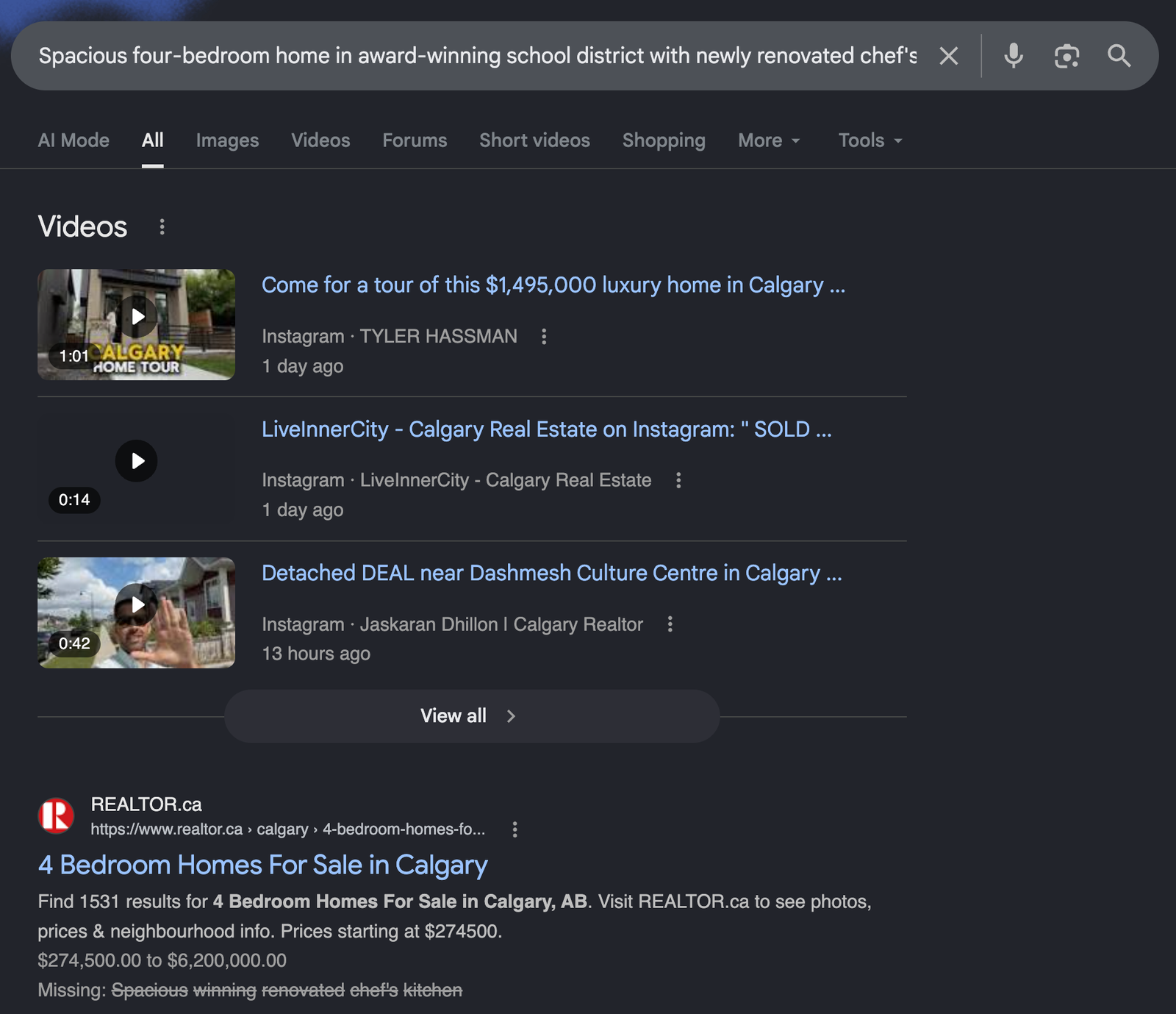
Instead of generic descriptions like "beautiful home with modern updates," incorporate the specific terms buyers are searching for: "Spacious four-bedroom home in award-winning school district with newly renovated chef's kitchen and home office."
This is really important as your listing will be distributed by the MLS and be on lots of different websites.
This allows you to rank for keywords that are important to sellers.
Get more visibility for your listings, keeping your clients happy.
Blog Content
Blog posts are your opportunity to capture informational searches and build trust before someone is ready to buy.
By targeting specific long tail keywords like "What to know before buying a condo in downtown Austin" or "Best neighborhoods for young professionals in Denver”, you can directly speak to your audience.
Service Pages
Your buyer representation, seller services, and specialty pages should target long tail keywords that match what potential clients are searching for when they need your specific services.
Instead of a generic "Buyer Services" page, create targeted pages like "First-Time Homebuyer Services in [Your City]" or "Luxury Home Buyer Representation in [Neighborhood]."
Open with the exact problem or question your target keyword implies.
Include the specific benefits, your process and your unique value proposition
Add local credibility signals like market knowledge, neighborhood expertise, and testimonials
Answer common questions that this audience has.
Location Pages
Focus on creating pages that pre-filter by price, property type, location or amenities.
Instead of one broad page, build multiple targeted pages like "3 bedroom homes under 400k in [neighborhood] with garage" or "single-story homes near [school district] with pool."
This should be validated by keyword research, don’t just randomly create them.
Video Content
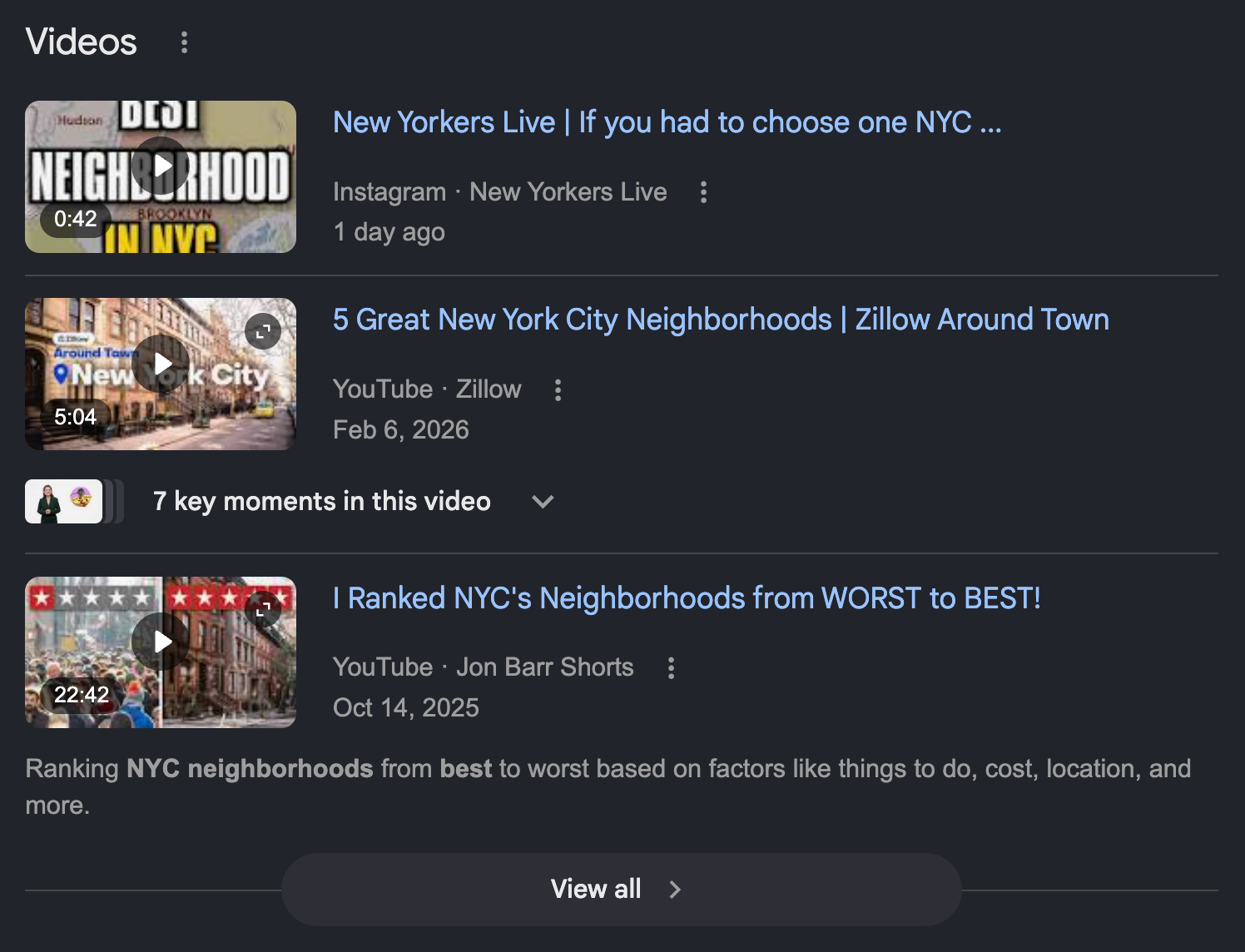
Adding long tail keywords to video titles, content and descriptions is a great way to show up in multiple places as YouTube is appearing more often in Google Search Results.
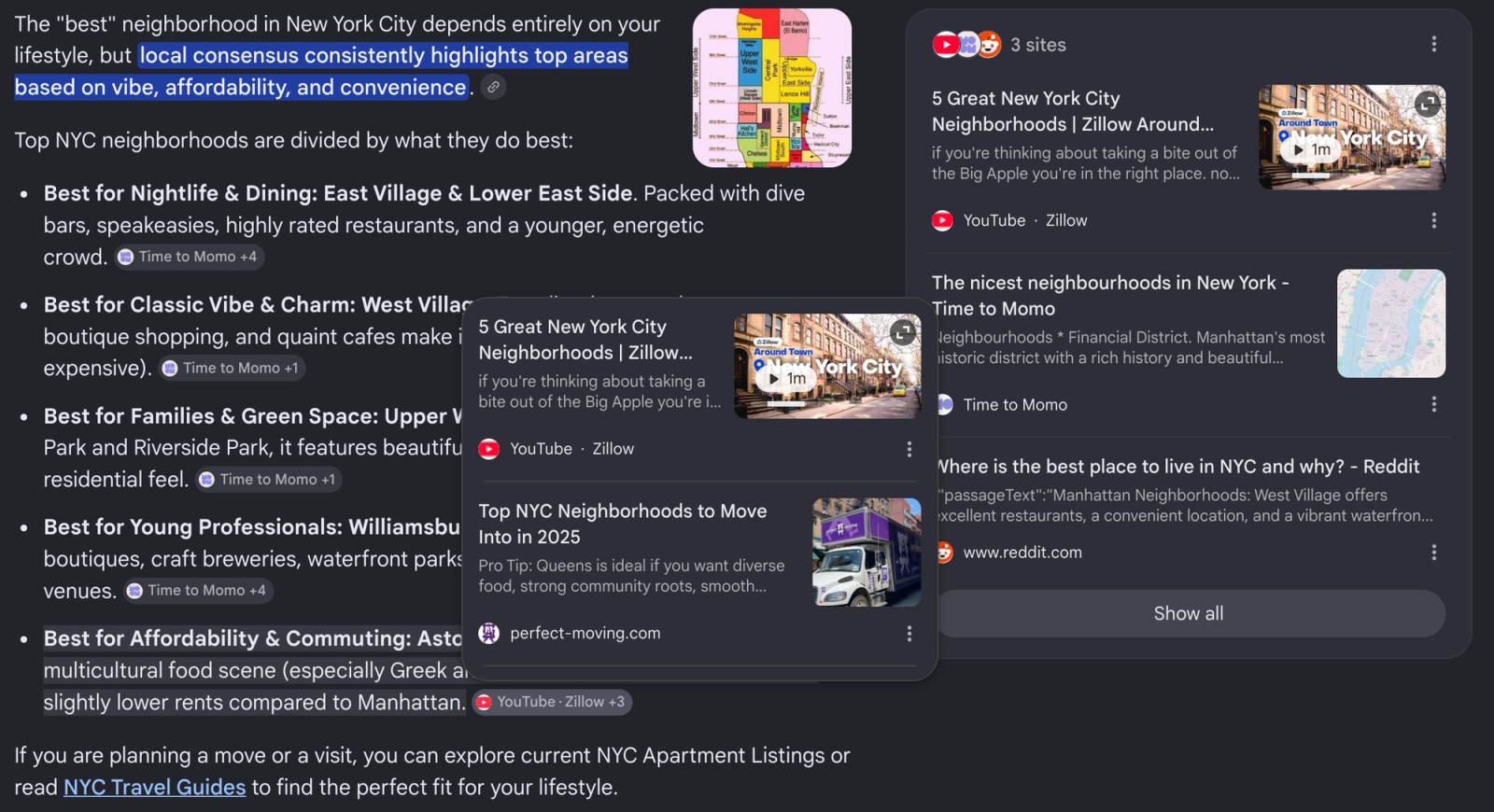
They now appear in the AI overview.
As well as in their own section.
If you also have a blog post on this topic you can appear on the SERP 3x giving you more total visibility.
Long Tail Keyword FAQs
What is a Long Tail vs Seed Keyword?
Seed keywords are the broad, foundational terms that define your general topic. Think "real estate," "homes for sale," or "condos for sale."
Long tail keywords are the expanded, specific versions of those seed terms. They add context, qualifiers, and intent signals that narrow down exactly what the searcher needs.
Are Long Tail Keywords Less Competitive?
Yes, because less people are searching them. But the type of person searching it is more qualified.
What are Some Good Keywords To Use For Real Estate Agents?
Answer engine optimization explained for real estate: how AI answers pick their sources, what to publish, what to measure, and the fair housing line to stay behind.
Generative engine optimization for real estate teams: how to get cited by ChatGPT, Gemini and AI Overviews, with a checklist and the data behind it.
About Madison
The AI assistant built for real estate lead gen
Madison is Realty AI's conversational assistant for real estate websites. It engages visitors instantly, qualifies buyers, sellers, and renters through natural dialogue, routes summaries to your CRM, and keeps your team focused on closing.
5.0 average from 2,500 customer reviews
“We captured 3 new transactions worth over $3.3 million in just a few months using Realty AI.”
Sarah Logue
Broker & Owner, Top 0.1%
“Within our first week of using Realty AI, I had an engaged seller ready on the phone. This has never happened before in 4 years.”
Mark Jensen
Owner & Broker of Record
“It feels like having a personal assistant on my website 24/7, sending me instant notifications so I never miss a potential client.”