10 Property Management Marketing Strategies to Win More Property Owner Clients
Property management marketing strategies are what separate companies that grow steadily from those stuck relying on word of mouth alone. This guide breaks down ten proven tactics, from local SEO to referral programs, to help you attract more property owners and grow your portfolio.
Nathan SmithPublished Mar 6, 2026Updated Jul 30, 202612 min read
Why is Property Management Marketing Important?
Property management is a trust-based business where owners compare options before handing over a valuable asset, and marketing is what puts you in front of them at the moment they're deciding who to hire. Without it, even a strong track record stays invisible.
Consistent marketing helps:
Build visibility
Establish credibility
Create a steady pipeline of new clients
1. Create a Google Business Profile
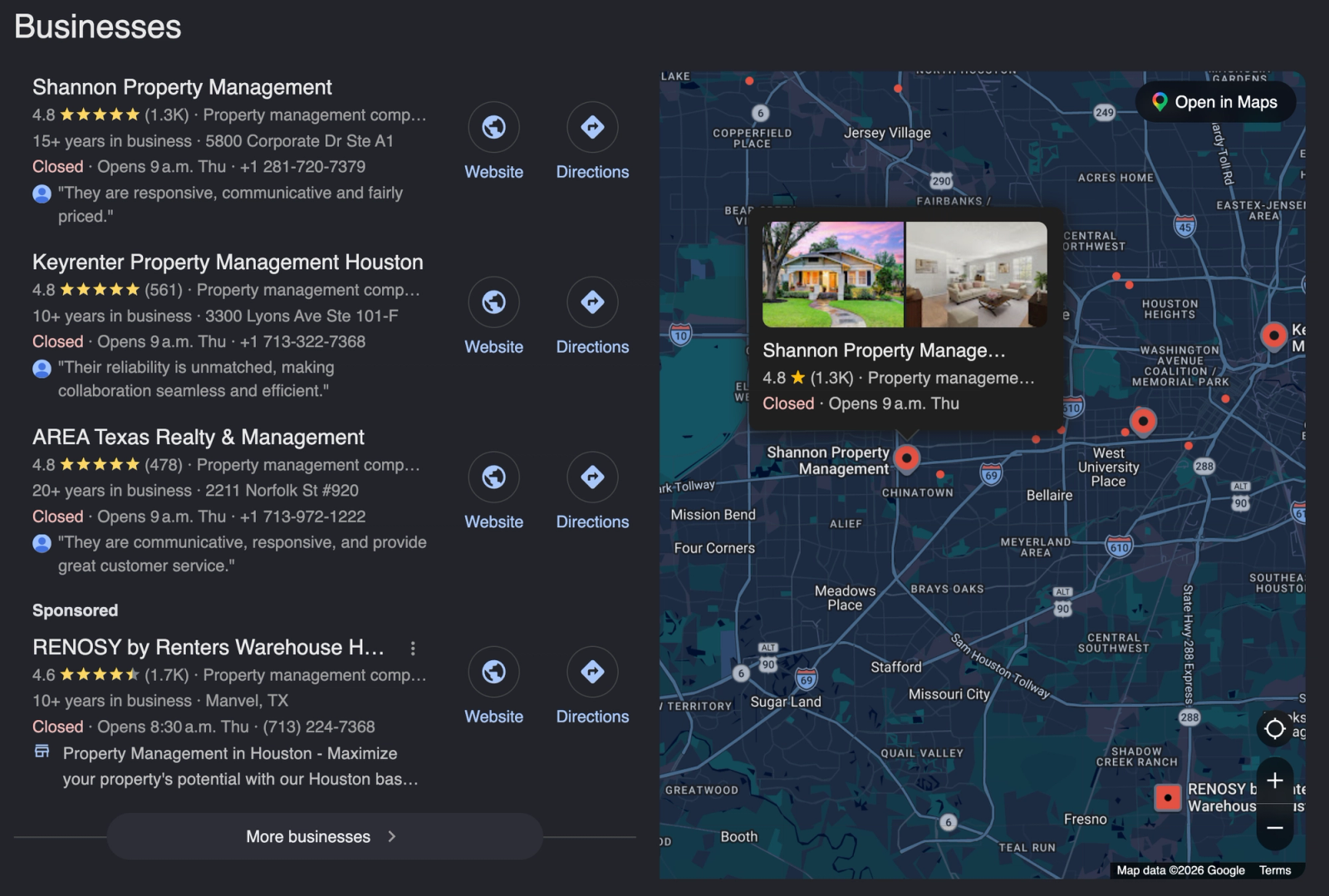
A Google Business Profile is a free listing that shows your business in Google Maps and local search results, including the "3-pack" that appears above regular rankings when someone searches "property management [city]."
The key things to get right:
Category and service area: Choose "Property Management Company" as your primary category, and list every city or region you actually manage properties in
Consistent contact info: Keep your name, address, and phone number identical across your website, directories, and social profiles.
Real photos: Upload high quality photos of your office, team, and managed properties.
Specific services listed: Break out your offerings individually (residential, HOA, commercial, etc.) so you show up when owners search for that exact type of management.
Active review flow: Set up a simple way to request reviews after positive interactions, and respond to all of them.
2. Create a Professional Website
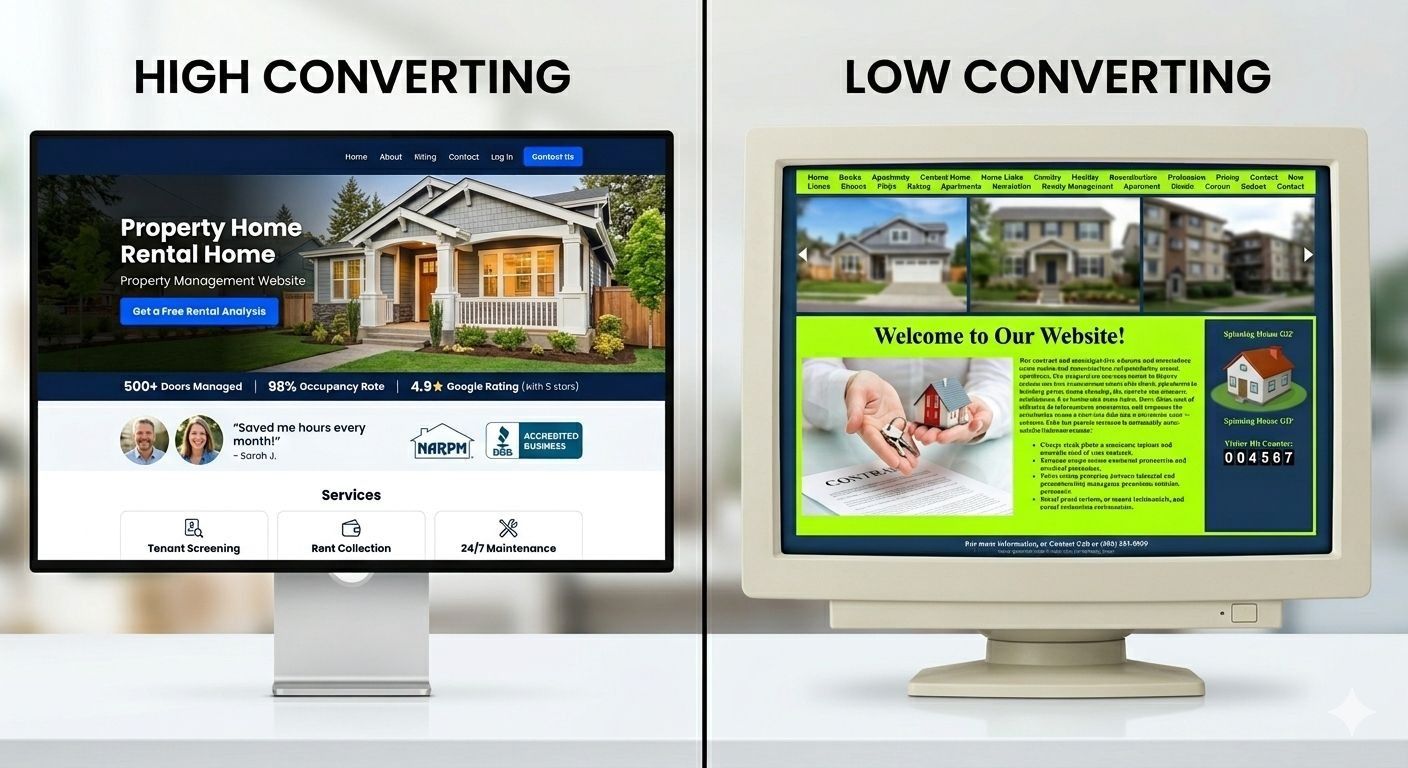
Your website is often the first real look an owner gets at how you operate, so it needs to represent your business well and give them a reason to trust you with their property.
The most important elements of a property management website include:
Modern, mobile-first design: A clean, current design signals that you run a well-managed and professional operation.
Clear service pages: Break down what you offer by property type (residential, HOA, commercial) so owners immediately see their needs reflected.
Trust signals throughout: Include real testimonials, case studies, your team's background, and transparent pricing.
Easy ways to get in touch: Make your contact information and next steps obvious on every page, so interested owners can reach you without any effort.
3. Invest in Local SEO & Content Marketing
Local SEO is how property owners find you when they search "property management [city]," and it goes well beyond just claiming your Google Business Profile.
Target long-tail keywords: Focus on specific phrases like "how to hire a property manager for a duplex in [city]" rather than broad terms, since these are easier to rank for and match what owners actually search.
Create unique content: Build pages and articles that don't already exist elsewhere, rather than rehashing generic industry advice.
Build backlinks: Get other local or industry sites to reference your content, since links act as a vote of confidence that builds your site's authority over time.
4. Consistently Publish Social Media Content
Social media can be a genuine discovery channel for new owner clients, not just a place prospects check after they've already found you.
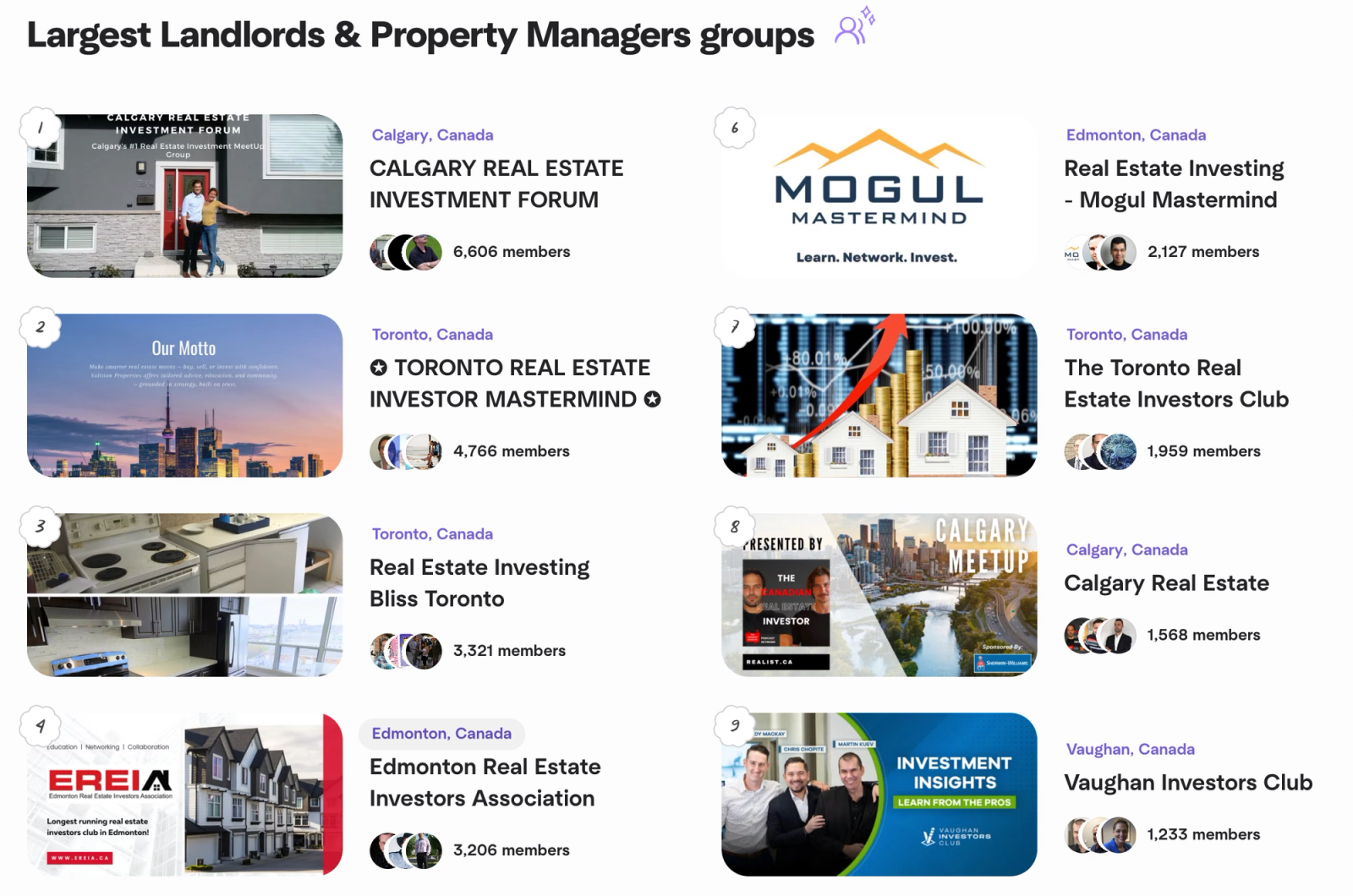
Finding where your ideal clients spend time:
Look at your current best clients and note which platforms they mention using
Check where past referrals or inquiries have actually come from
Search for existing local landlord or investor groups on Facebook and LinkedIn to see how active they are
Good content to create:
Local market updates (rent trends, vacancy rates, new regulations)
Before-and-after property transformations or renovation results
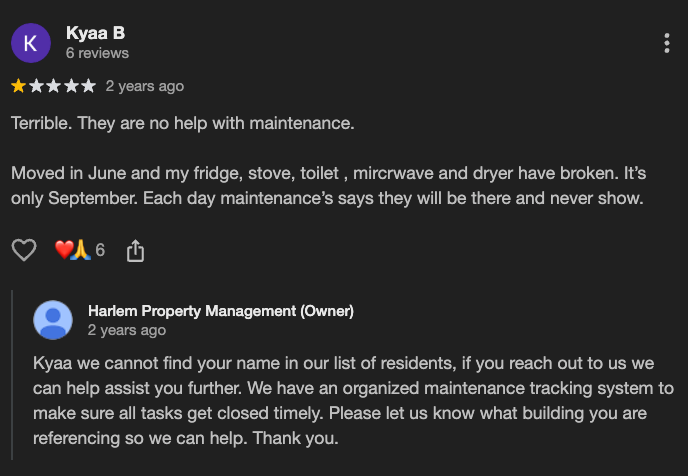
When a property owner is seriously evaluating management companies, one of the first things they do is check your reviews.
What they find often carries more weight than anything on your website.
To address this, ask for reviews at the right moments such as:
After a successful lease-up
After resolving a maintenance issue quickly
After an owner's first positive monthly statement
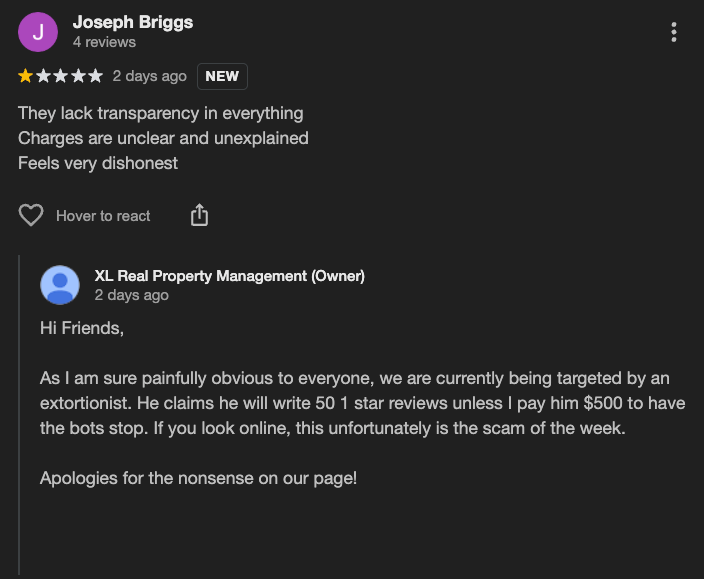
But gathering reviews is only half the equation.
A thoughtful, professional response to a negative review can build more trust than a five-star rating with no engagement, since it shows prospective clients you take feedback seriously and handle problems with the same professionalism.
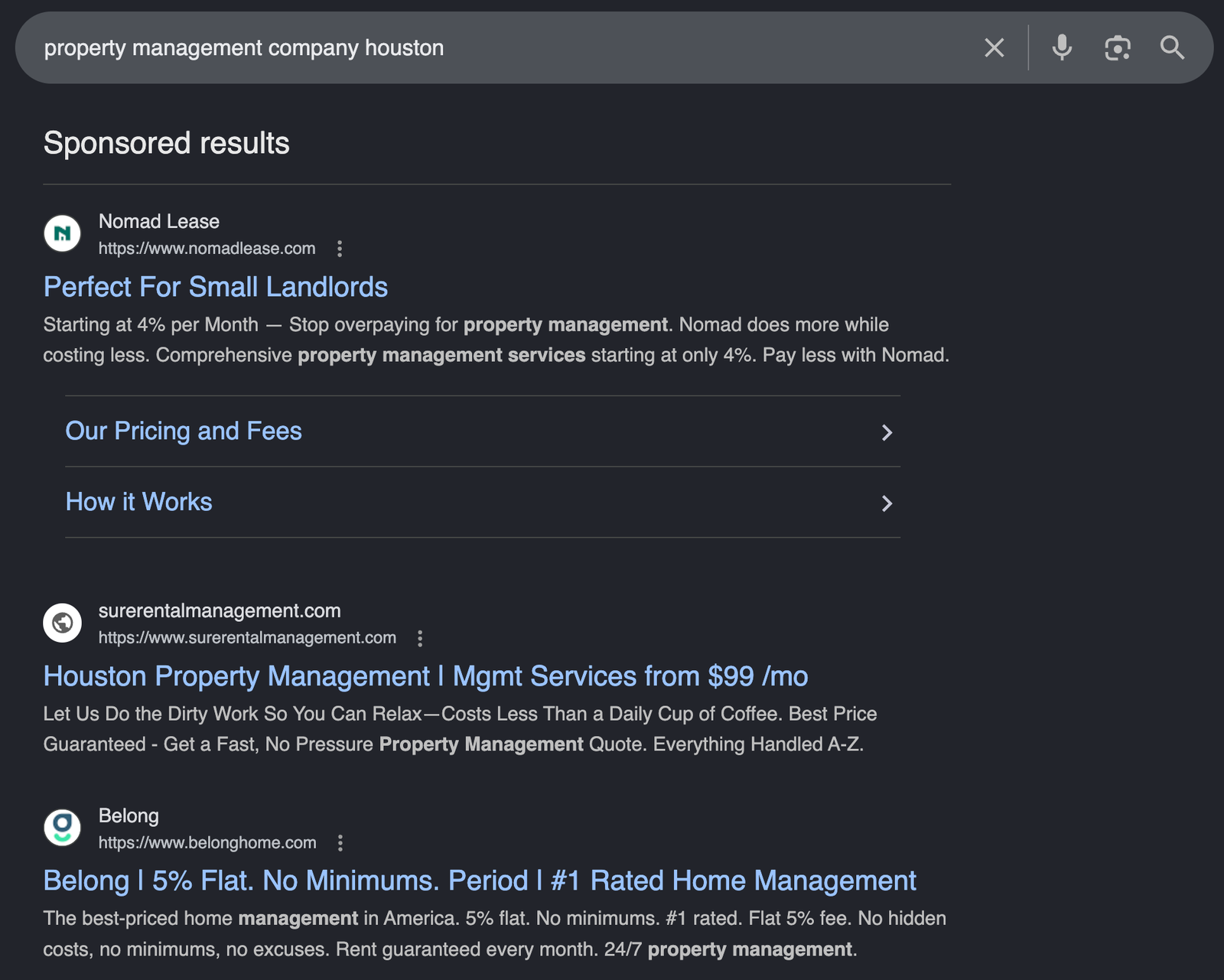
6. Run Targeted Search Ads
Google Search Ads appear above both the map pack and organic results, giving you the top spot for searches.
This makes them especially effective for high-intent commercial terms, searches like "property management company [city]" or "hire a property manager," where the person searching is actively ready to talk to someone.
7. Publish Success Stories
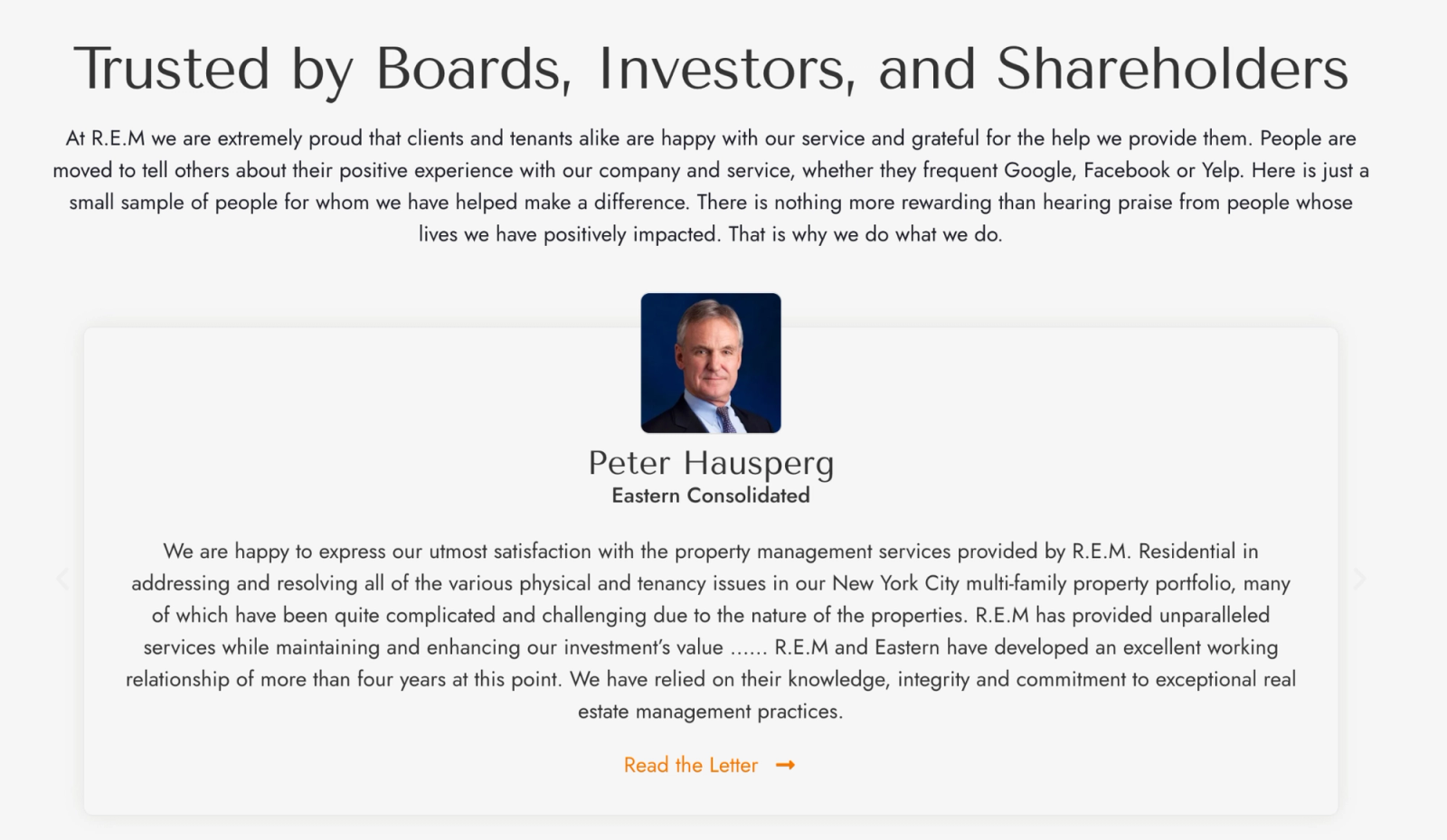
Testimonials are one of the most persuasive tools in your marketing because they let prospective owners hear proof of results from someone other than you.
The strongest testimonials center on real numbers giving owners something concrete to picture happening to their own property.
To structure a strong testimonial page, build each story around three parts:
The owner's problem: What they were struggling with before working with you
Your approach: The specific actions you took to address it
The measurable outcome: The concrete results the owner saw
8. Expand Your Sphere of Influence
Some of your best leads won't come from ads or search at all, they'll come from other professionals who already have the trust of property owners.
Some examples include:
Real estate agents
Real estate attorneys
CPAs who work with landlords
Mortgage brokers
These professionals regularly meet people who just bought a rental or inherited a property and don't want to self-manage.
9. Create a Referral Program
Your current owner clients are often your best source of new business, since real estate investors tend to know other investors, and a personal introduction carries far more weight.
A simple, well-structured referral program makes it easy for happy clients to send business your way.
What makes a good referral program:
A clear, worthwhile incentive: A fee credit, gift card, or cash bonus that feels meaningful enough to motivate action.
A simple ask: Let clients refer someone through a quick form, email, or text, rather than a complicated process.
Prompt, reliable rewards: Follow up on referrals quickly and honor the incentive as soon as one converts.
10. Attend Industry Events
Showing up consistently at events where property owners and investors gather puts you directly in front of prospective clients, often before they've even started searching online.
The key is picking events where owners and investors naturally gather, rather than generic business networking.
Some good events to attend include:
Local real estate investor association (REIA) meetups
Landlord association meetings
Multifamily or commercial investor conferences
First-time landlord workshops hosted by community colleges or housing organizations
Chamber of Commerce mixers and local business networking groups
How To Turn Website Visitors Into Leads
Driving traffic to your website accomplishes little if visitors leave without taking any action, so converting that traffic into actual inquiries needs to be just as much of a priority as attracting it in the first place.
A leasing chatbot: Most websites rely on a basic contact form that goes unfilled since visitors are hesitant to submit their information cold. A chatbot engages visitors the moment they land, day or night, and asks a few qualifying questions about their property and needs to capture details in real time.
CRM integration: Connecting your chatbot or forms directly to your CRM logs every conversation and lead automatically, removing manual data entry and prevents lost inquiries.
Fast follow-up: Owners comparing several companies often go with whoever responds first, so speed to lead is the most important factor.
Property Management Marketing FAQs
Which of these marketing strategies should I start with?
Start with the foundational, low-cost pieces, your Google Business Profile, a professional website, and a system for collecting reviews. These build the trust everything else depends on.
From there, layer in local SEO and content marketing for long-term growth, adding search ads if you want faster results in the meantime.
How long does it take to see results from property management marketing?
Timelines vary by strategy. Google Business Profile optimization, referrals, and networking can generate leads within weeks, since they rely on existing trust rather than building authority from scratch. Search ads work almost immediately, though at an ongoing cost per lead.
Local SEO and content marketing take the longest, typically three to six months, but compound over time into your lowest-cost, highest-volume lead source.
How much should I budget for property management marketing?
Budgets vary based on market size and growth goals, but a few hundred to a couple thousand dollars a month split across priorities is a reasonable starting point.
From there, put remaining budget toward your website, content, and search ads based on what performs best in your market, and track cost per lead so you can shift spend toward what's actually working.
Turn Visitors Into Clients With Realty AI
All of these strategies will help you drive more traffic to your website, but traffic doesn't close deals.
You need a system, like Madison, to capture and qualify visitors the moment they arrive.
The best real estate recruiting chatbot and AI recruiting tools in 2026, compared. Real features, pros and cons, and the compliance rules brokerages miss.
About Madison
The AI assistant built for real estate lead gen
Madison is Realty AI's conversational assistant for real estate websites. It engages visitors instantly, qualifies buyers, sellers, and renters through natural dialogue, routes summaries to your CRM, and keeps your team focused on closing.
5.0 average from 2,500 customer reviews
“We captured 3 new transactions worth over $3.3 million in just a few months using Realty AI.”
Sarah Logue
Broker & Owner, Top 0.1%
“Within our first week of using Realty AI, I had an engaged seller ready on the phone. This has never happened before in 4 years.”
Mark Jensen
Owner & Broker of Record
“It feels like having a personal assistant on my website 24/7, sending me instant notifications so I never miss a potential client.”