55 Chatgpt Prompts for Real Estate Agents: A Complete Playbook
This handbook delivers 50 ChatGPT prompts for real estate agents, organized by team function so listing descriptions, client emails, and social content stay sharp without eating your day. Plus a simple system for keeping every agent on-brand and consistent with AI.
Nathan SmithPublished May 26, 2025Updated Jul 14, 202615 min read
How to Use ChatGPT for Real Estate: A Quick-Start Guide
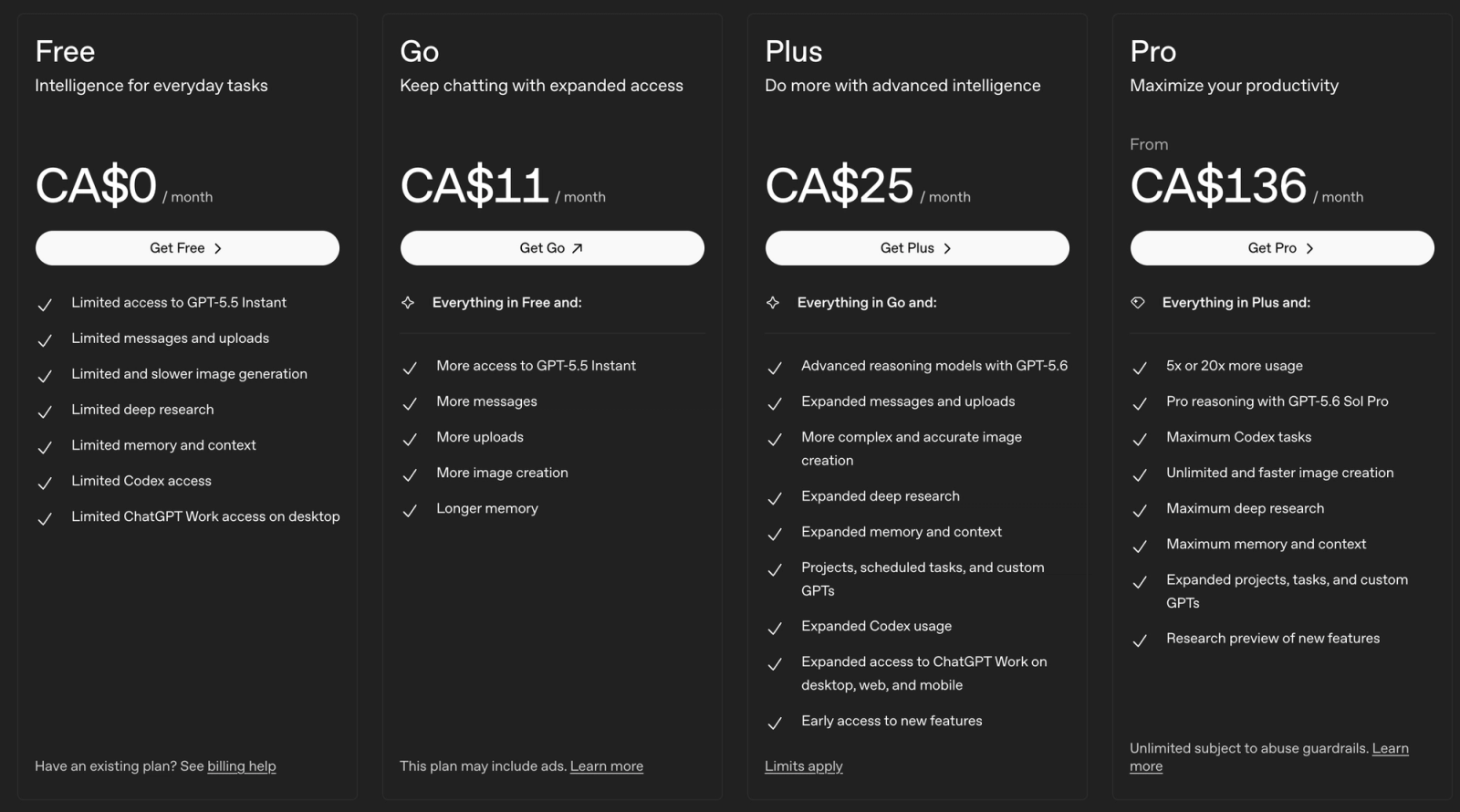
Choose the Right Plan for Your Team
Individual plans (4 tiers):
Free: Good for occasional use, like a one-off email or property descriptions.
Go: More messages, uploads, and image generation than Free, but still shows ads.
Plus: The standard choice for daily use, faster responses, higher limits, no mid-day throttling. This is the right tier for individual agents.
Pro: Built for power users running deep research or heavy coding workflows. This is overkill for most real estate content needs.
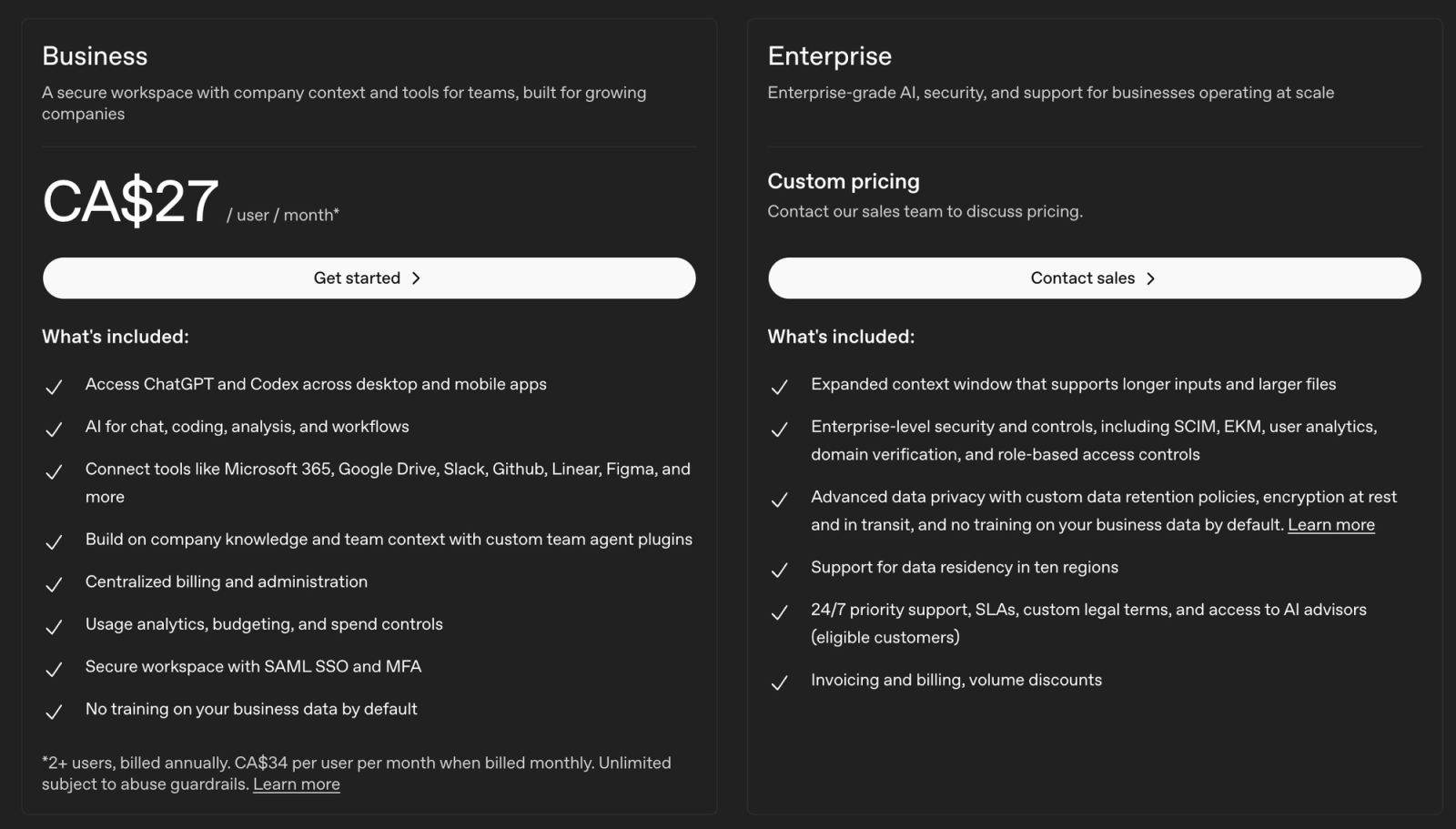
Team plans (2 tiers), for rolling this out brokerage-wide:
Business: Adds a shared workspace, admin controls, and shared custom instructions and prompt libraries.
Enterprise: Only worth exploring once you're managing 100-plus agents and need SSO, dedicated support, and enterprise-grade security.
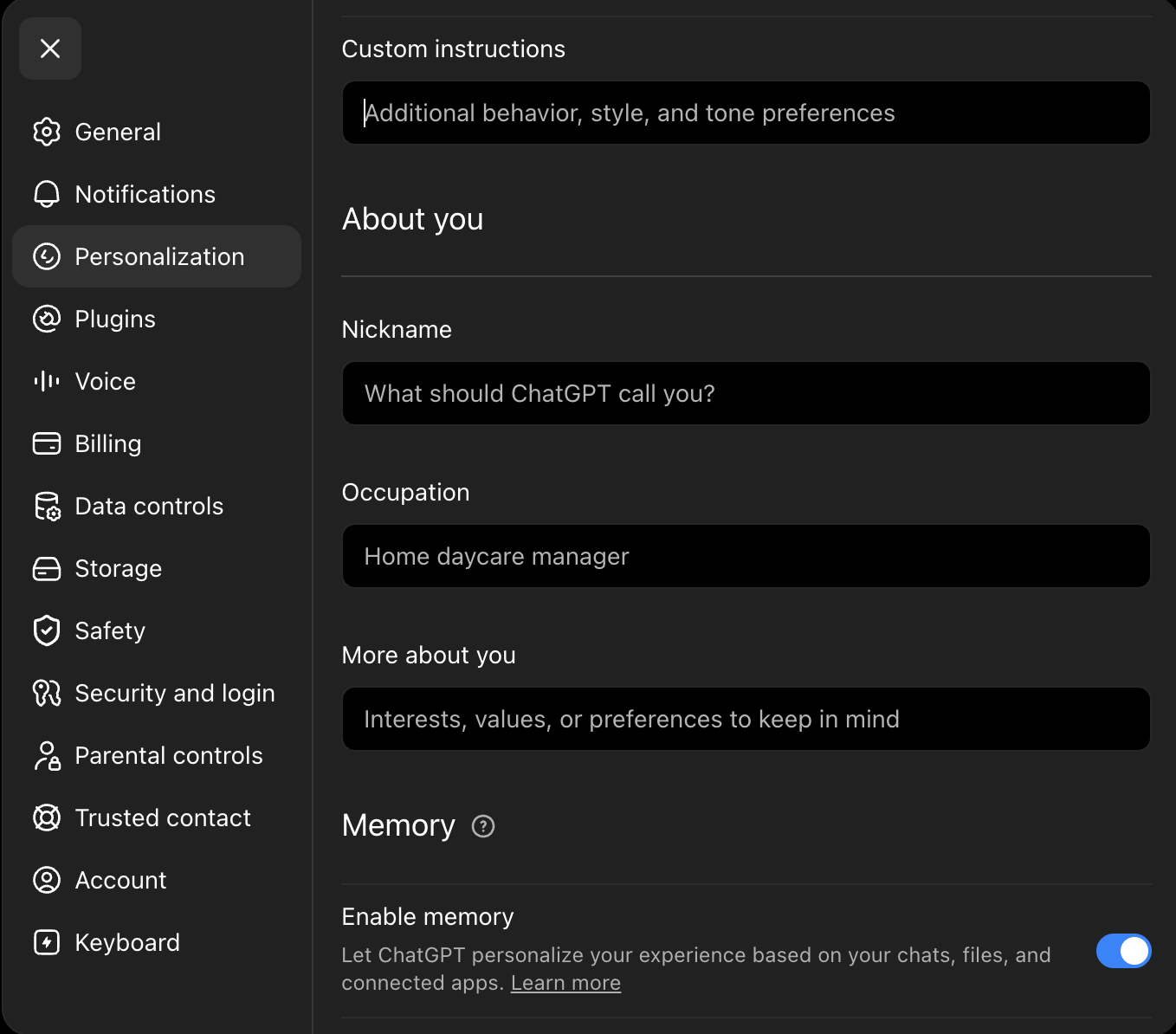
Set Custom Instructions Once, for the Whole Team
In Settings > Personalization, there's a field asking how you'd like ChatGPT to respond. Paste in, once:
Brokerage name
Primary city or region
Brand voice block (see the branding section below)
Every prompt run afterward inherits that context automatically, so you stop re-explaining who you are and what tone you want in every message.
Use the Mobile App for Anything Time-Sensitive
The ChatGPT mobile app supports voice input allowing you to dictate the details of a showing out loud while you are on go.
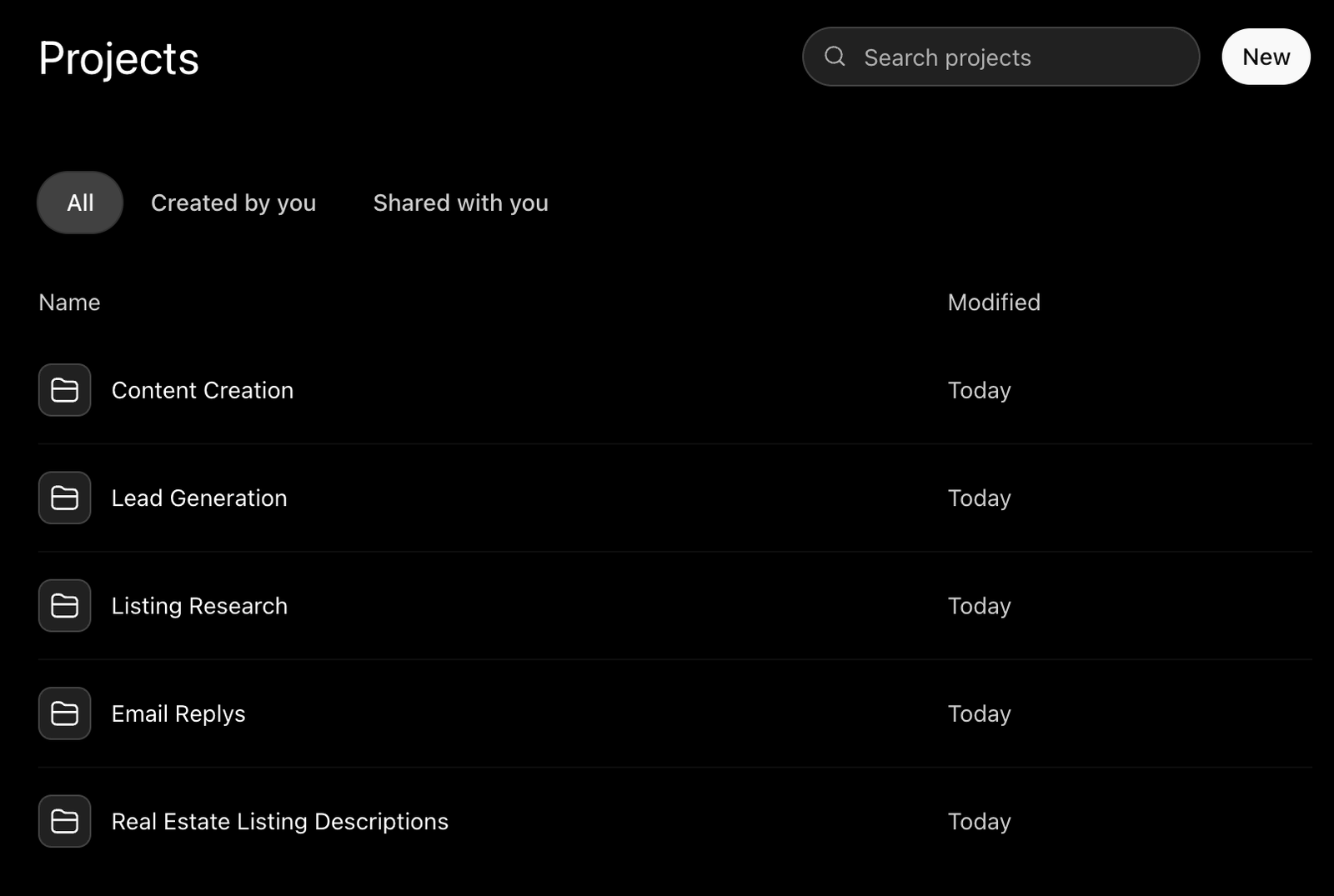
Save Your Best Prompts as Projects
When a prompt produces output you like, save it in a shared doc with your team.
Otherwise use ChatGPT’s projects feature so you don’t always need to copy and paste the prompt.
Treat Every Output as a First Draft, Not a Final One
Before sending anything, check for:
Accuracy: ChatGPT doesn't know your current listings, MLS data, or this week's market activity.
Compliance: It won't guarantee fair housing compliant language on its own.
A human read: every client-facing draft, listing description, ad copy, or email, still needs a final review before it goes out.
Once your account and team are set up this way, the prompt formula below is what turns a generic chatbot into a tool you can rely on consistently.
The Prompt Formula That Gets You Usable Output Every Time
Act as [role] → Write [content type] → For [audience or situation] → Following these constraints: [length, tone, format, specific details]
Here's the same request at three levels:
Vague: "Write a listing description for a condo."
Okay: "Write a 150-word listing description for a 2-bedroom condo in downtown Toronto targeting first-time buyers."
Excellent: "Act as a real estate copywriter specializing in urban condos. Write a 150-word listing description for a 2-bedroom, 1-bath condo on the 12th floor at King and Spadina in Toronto. Highlights: exposed brick, floor-to-ceiling windows, rooftop terrace access, building gym, one underground parking spot included. The target buyer is a working professional aged 28-40 buying their first home. Tone: confident, aspirational, not salesy. End with one sentence that creates urgency without using the word 'opportunity.'"
Role, Context, Output, Constraints
Think of every prompt as four components:
Role: "Act as a luxury real estate copywriter" or "Act as a real estate market analyst writing for first-time buyers"
Context: The specific property, client situation, or scenario ChatGPT needs to understand
Output: Exactly what you want: word count, format, tone, platform
Constraints: What to include, what to avoid, what to end with
Qualifying and Screening Prompts
1. Inbound lead qualification call script
Plain text
"Act as a real estate agent taking a call from someone who just submitted an inquiry on a listing.

Write a 90-second qualification script covering: what prompted their interest, their timeline, and whether they're already working with an agent.

End with a clear next step based on their answers.

Tone: friendly, direct, no wasted time."
These prompts work best layered onto a real framework, not used cold. If you don't have one yet, here's a full breakdown of real estate lead qualification before you spend a single prompt on it.
2. Seller lead qualification questions
Plain text
"Act as a listing agent qualifying a seller lead before booking a listing appointment.

Write 5 qualifying questions to ask a homeowner who inquired about selling in [NEIGHBOURHOOD].

Cover: timeline to sell, reason for selling, whether they've spoken to another agent, and expected price range.

Tone: consultative, not pushy."
3. Buyer budget and needs qualification script
Plain text
"Act as a buyer's agent running an initial consultation with a new buyer lead.

Write 6 questions to determine their real budget, must-haves, deal-breakers, and how firm their timeline is before we start touring homes.

Tone: consultative, not scripted-sounding."
"Act as a property manager qualifying a rental applicant before scheduling a showing.

Write a pre-screening call script covering move-in date, occupancy, pets, and income requirements for [PROPERTY TYPE] renting at [$PRICE]/month.

Keep each question short and direct. End with a question about background check consent.

Tone: professional, straightforward, no hedging."
5. Tenant screening question checklist
Plain text
"Act as a property manager building a full tenant screening process.

Write a checklist of the key questions to ask across the pre-screening call, application, and previous landlord reference check for [PROPERTY TYPE].

Organize by stage. Keep each question short.

Tone: professional, thorough, no wasted words."
For the full breakdown of what to ask at each stage, from the pre-screening call through calling previous landlords, this guide covers the tenant screening questions that actually predict a good tenant.
Cold Outreach and Prospecting Prompts
6. Expired listing outreach
Plain text
"Act as a real estate agent with 10 years of experience listing homes in [NEIGHBOURHOOD].

Write a 150-word email to a homeowner whose listing expired [X] days ago. Acknowledge the frustration without being dismissive.

Offer one specific reason our team gets results others don't: [INSERT YOUR DIFFERENTIATOR — e.g., 'our average days on market is 12 vs. the local average of 34'].

End with a low-pressure ask for a 15-minute call. Tone: direct, warm, confident. No buzzwords."
7. Door-knock follow-up note
Plain text
"Act as a friendly, neighbourhood-savvy real estate agent.

Write a 100-word handwritten note to leave with a homeowner after an unanswered door knock in [NEIGHBOURHOOD].

We recently sold [ADDRESS] nearby at [PRICE]. Reference the local market briefly.

Keep it personal and conversational, not salesy. Include our team name: [TEAM NAME]."
8. Open house follow-up
Plain text
"Act as a buyer's agent following up 24 hours after an open house.

Write a 120-word email to [NAME] who attended our open house at [ADDRESS] and expressed interest in [SPECIFIC FEATURE THEY MENTIONED].

Acknowledge what they said. Share one new listing in [NEIGHBOURHOOD] in the [PRICE RANGE] that matches their needs.

End with a specific CTA to book a showing this week."
9. Cold calling phone script
Plain text
"Act as an experienced real estate agent building a farm in [NEIGHBOURHOOD].

Write a 90-second cold call script for a homeowner who has lived at their address for [X] years and has not listed recently.

Open by referencing a recent sale nearby at [PRICE].

Ask one qualifying question about their timeline.

Handle the most common objection: [OBJECTION — e.g., 'we're not thinking about moving right now'].

End with a low-commitment ask for a future follow-up. Tone: confident, respectful, brief. No scripts that sound scripted."
10. LinkedIn prospecting message
Plain text
"Act as a real estate agent building professional relationships.

Write a 75-word LinkedIn connection message to [PROSPECT TYPE — e.g., 'a corporate relocation manager at a mid-size company in [CITY]'].

Reference their role and how we help people relocating for work find the right neighbourhood fast. Don't pitch immediately.

End with a genuine question about their work.

Tone: professional but conversational. No exclamation marks."
11. Dormant lead re-engagement
Plain text
"Act as a real estate agent reconnecting with a past lead.

Write a 100-word email to [NAME] who inquired about buying in [NEIGHBOURHOOD] approximately [TIMEFRAME] ago but went quiet.

Don't reference the gap as awkward.

Share one specific thing that has changed in the market since they last reached out: [MARKET CHANGE — e.g., 'two new listings came up in the price range you mentioned']. End with an open-ended question, not a hard ask.

Tone: warm, no-pressure, genuinely interested."
These prompts assume you're prospecting locally. International buyers need a different playbook, from financing conversations to building trust remotely. This guide on how to attract international real estate buyers breaks down what changes.
Social Media Lead Generation Prompts
12. Open house social announcement
Plain text
"Act as a real estate marketing coordinator.

Write an Instagram and Facebook post announcing an open house at [ADDRESS] on [DATE] from [TIME].

Include: 3 key property highlights ([FEATURE 1], [FEATURE 2], [FEATURE 3]), the neighbourhood, and a CTA to save the date or share with someone who might be interested.

Keep it under 100 words.

Tone: welcoming, excited but not over-the-top. List 5 relevant hashtags separately."
13. Neighbourhood market update post
Plain text
 "Act as a local real estate expert writing for [BROKERAGE NAME]'s Instagram.

Our brand voice is: [INSERT — e.g., 'knowledgeable but approachable, never corporate, speaks to real families making real decisions'].

Write a 120-word caption about the [NEIGHBOURHOOD] market in [MONTH]. Include: average days on market ([X] days), average sale price ([X]), and one local trend we're seeing.

End with a question that invites engagement. No hashtags in the caption.

List 5 relevant hashtags separately."
14. Facebook lead generation ad copy
Plain text
"Act as a direct response copywriter for real estate.

Write Facebook ad copy for a [BROKERAGE NAME] campaign targeting [TARGET AUDIENCE — e.g., 'couples aged 30-45 in [CITY] who may be thinking about upsizing'].

Headline: under 8 words. Body: 2 short paragraphs, max 50 words each. CTA: drives to our free home valuation tool.

Tone: conversational, not aggressive. Avoid the word 'free' in the headline."
Admin and Operations Prompts
15. New agent onboarding checklist
Plain text
"Act as a real estate operations specialist.

I'm going to describe our onboarding process for new agents and I want you to turn it into a structured checklist.

Our process includes: [DESCRIBE YOUR PROCESS — e.g., 'MLS setup, brand introduction, CRM training, showing tools walkthrough, compliance document signing, first week shadowing schedule'].

Create a checklist organized by Week 1, Week 2, and Week 3. Include the responsible party (agent, coordinator, broker) for each item.

Format as a simple table."
16. Vendor referral email
Plain text
"Act as a real estate team coordinator.

Write a 100-word email to a client recommending our preferred [VENDOR TYPE — e.g., home inspector, mortgage broker, real estate lawyer].

Include: the vendor's name ([NAME]), why we trust them ([REASON — e.g., 'they've worked with over 60 of our clients and have a 48-hour turnaround on reports']), and how to book with them ([CONTACT/BOOKING LINK]).

Tone: warm recommendation from a colleague, not a referral form."
17. Transaction milestone update
Plain text
"Act as a real estate transaction coordinator.

Write a 100-word email to [CLIENT NAME] confirming that [MILESTONE — e.g., 'your home inspection is complete and we've received the report'].

Summarize the next step ([NEXT STEP]). Include the key date they need to know: [DATE AND WHAT IT MEANS — e.g., 'your conditional period expires on [DATE] — we need your decision before 5 PM that day'].

Tone: clear, organized, reassuring. No ambiguity on the date and action required."
18. Team meeting agenda
Plain text
"Act as a real estate brokerage operations lead.

Create a 45-minute weekly team meeting agenda for a team of [X] agents.

Standing items: pipeline review, active listing updates, new lead assignments. This week's focus topic: [TOPIC — e.g., 'Q2 prospecting strategy'].

Format: time blocks for each agenda item, owner of each item, 2-3 discussion questions for the focus topic."
19. Referral partner outreach
Plain text
"Act as a real estate team leader building a referral partnership network.

Write a 150-word email to [CONTACT NAME] at [BUSINESS TYPE — e.g., 'a financial planning firm'].

Introduce our team briefly. Explain specifically why our clients and their clients overlap: [OVERLAP].

Propose a low-commitment first step: [e.g., 'a 20-minute call to explore a mutual referral arrangement'].

Tone: professional, direct, not transactional. No generic 'synergies' language."
20. Team recruiting outreach
Plain text
"Act as a brokerage leader recruiting experienced real estate agents.

Write a 150-word outreach email to [AGENT NAME], a [SPECIALIZATION] agent currently at [BROKERAGE].

Don't lead with compensation.

Lead with one specific reason our brokerage is a better fit for where their career is going: [REASON — e.g., 'we're the top team in [NEIGHBOURHOOD] by transactions closed, and we have a structured mentorship program for agents ready to grow into team leads'].

End with a low-pressure ask for a 20-minute conversation.

Tone: collegial, confident, respectful of their current role."
21. Holiday client greeting
Plain text
"Act as a real estate agent writing a holiday message to past clients.

Write a 100-word email for [HOLIDAY — e.g., 'the holiday season' or 'the new year'] from [AGENT/TEAM NAME].

Keep it warm and genuine without being religious unless appropriate.

Do not pitch or reference real estate at all. Simply express appreciation for the relationship and wish them well.

Optional: include one personal touch, [e.g., 'our team's favourite moment of the year is getting updates from clients about the homes we helped them find'].

Tone: warm, human, brief."
For teams managing tenant communications and leasing workflows, property manager prompts cover that territory specifically as rental management is an entire beast itself.
Listing Description Prompts
22. Luxury single-family home
Plain text
"Act as a luxury real estate copywriter with experience in high-end residential sales.

Write a 180-word listing description for a [BEDROOMS]-bedroom, [BATHROOMS]-bathroom [PROPERTY TYPE] in [NEIGHBOURHOOD].

Top features: [FEATURE 1], [FEATURE 2], [FEATURE 3]. Target buyer: [e.g., 'executive couple, empty nesters downsizing from a larger estate, value privacy and proximity to golf'].

Tone: refined, confident, understated.

Avoid clichés like 'stunning,' 'breathtaking,' or 'must-see.'

End with a line that speaks to lifestyle, not features."
23. One listing, four social captions
Plain text
"I'm going to paste a listing description below.

Rewrite it as four separate social media captions: one for Instagram (visual, lifestyle-focused, 100 words), one for Facebook (neighbourhood context, slightly longer, 120 words), one for LinkedIn (investment angle, professional tone, 100 words), and one for a text message to a buyer client (casual, punchy, under 50 words).

[PASTE LISTING DESCRIPTION]"
24. Urban condo for first-time buyers
Plain text
"Act as a real estate agent who specializes in helping first-time buyers navigate urban condo markets.

Write a 150-word listing description for a [BEDROOMS]-bed, [BATHROOMS]-bath condo in [BUILDING/NEIGHBOURHOOD].

Key features: [FEATURE 1], [FEATURE 2], [FEATURE 3]. Monthly condo fees: [$X].

The buyer is likely [e.g., 'a first-time buyer in their late 20s, concerned about total monthly costs, excited about walkability and amenities'].

Address affordability signals subtly.

Tone: warm, honest, practical."
25. Investment property listing
Plain text
"Act as a real estate agent writing for an investor buyer.

Write a 150-word listing description for a [PROPERTY TYPE] in [NEIGHBOURHOOD].

Current rental income: [$X/month].

Cap rate: [X%].

Vacancy rate in the area: [X%].

Key appeal: [FEATURE — e.g., 'long-term tenants, low maintenance, strong rental demand from university students'].

Tone: analytical, direct, data-forward. No lifestyle language."
26. Townhouse or mid-market family home
Plain text
"Act as a real estate agent who specializes in family homes.

Write a 160-word listing description for a [BEDROOMS]-bedroom townhouse or semi-detached in [NEIGHBOURHOOD].

Key features: [FEATURE 1 — e.g., 'finished basement'], [FEATURE 2 — e.g., 'private backyard'], [FEATURE 3 — e.g., 'walking distance to [SCHOOL NAME]'].

Target buyer: [e.g., 'growing family with young kids, prioritizing school catchment and outdoor space'].

Price range: [$X]. Tone: warm, grounded, specific.

Avoid generic phrases like 'great for entertaining.'"
27. Just listed announcement post
Plain text
"Act as a real estate marketing coordinator.

Write a 'just listed' post for [BROKERAGE NAME]'s Instagram and Facebook.

Property: [PROPERTY TYPE] at [ADDRESS], listed at [$PRICE].

Top 3 highlights: [FEATURE 1], [FEATURE 2], [FEATURE 3].

Include a CTA to book a showing or DM for details. Keep it under 100 words.

Tone: exciting but grounded. [PASTE BRAND VOICE BLOCK].

List 5 relevant hashtags separately."
28. Just sold announcement post
Plain text
"Act as a real estate marketing coordinator.

Write a 'just sold' post for [BROKERAGE NAME]'s Instagram and Facebook. Property: [PROPERTY TYPE] in [NEIGHBOURHOOD], sold at [$PRICE], in [X] days on market.

Mention whether it sold above, at, or below asking.

Keep it under 100 words. Include a CTA inviting sellers who want similar results to reach out. [PASTE BRAND VOICE BLOCK].

Tone: confident, results-focused. List 5 relevant hashtags separately."
Client Communication Prompts
29. Post-showing follow-up
Plain text
"Act as a buyer's agent who genuinely cares about finding the right home.

Write a 100-word email to [CLIENT NAME] following up on yesterday's showing at [ADDRESS].

They seemed interested in [SPECIFIC OBSERVATION] but raised a concern about [CONCERN — e.g., 'the kitchen size'].

Acknowledge their concern honestly.

Suggest one next step: [e.g., 'I've pulled two similar listings that address that concern — want to see them this weekend?'].

Tone: personal, not templated."
30. Pre-approval follow-up
Plain text
"Act as a buyer's agent.

Write a 120-word email to a buyer who showed strong interest at an open house but hasn't confirmed pre-approval.

Don't pressure them.

Explain in plain language why pre-approval gives them an advantage in the current market, specifically in [CITY/NEIGHBOURHOOD] where [X] offers per listing is common.

Include a referral to our preferred mortgage broker [NAME] naturally in context, not as a forced upsell.

Tone: helpful, peer-level, not salesy."
31. Offer strategy briefing
Plain text
"Act as a buyer's agent presenting an offer strategy to a client.

Write a 200-word email to [CLIENT NAME] summarizing our offer approach for [ADDRESS].

Property listed at [$PRICE].

Comparable sales support a range of [$MIN] to [$MAX].

We recommend offering [$OFFER PRICE] based on [RATIONALE].

Risk if we go lower: [EXPLAIN]. Risk if we go higher: [EXPLAIN].

Tone: clear, honest, strategic. A

void hedging language like 'it's hard to say' or 'the market is unpredictable.'"
32. Contract explanation email
Plain text
"Act as a buyer's agent explaining a purchase agreement to a first-time buyer.

Write a 200-word email to [CLIENT NAME] summarizing the key terms of the offer for [ADDRESS]. Cover: purchase price and deposit amount, key conditions and their deadlines (financing, inspection), closing date, and what happens next after signatures.

Use plain language.

No legal jargon.

Tone: calm, clear, reassuring. End with an invitation to call if anything is unclear."
33. Multiple offer notification
Plain text
"Act as a buyer's agent managing a competitive offer situation.

Write a 120-word email to [CLIENT NAME] notifying them that the listing at [ADDRESS] has received multiple offers and the seller is reviewing them on [DATE/TIME].

 Explain clearly what this means for their offer: [e.g., 'we will need to submit our best offer without expecting a counteroffer'].

Outline their two options: [OPTION 1 — strengthen the offer], [OPTION 2 — hold firm].

Ask them to confirm their decision by [DEADLINE].

Tone: clear, urgent without being alarmist, professional."
34. Financing condition removal
Plain text
"Act as a buyer's agent guiding a client through removing their financing condition.

Write a 150-word email to [CLIENT NAME] confirming that their lender has approved their mortgage for [ADDRESS] and walking them through what removing the financing condition means.

Explain: what they are agreeing to by removing the condition, what the next milestone is (closing on [DATE]), and what they need to do today (sign the condition removal form by [TIME]).

Tone: reassuring, clear, organized. No unnecessary legal language."
35. Buyer FAQ document
Plain text
"Act as a real estate agent writing a plain-language FAQ document for first-time buyers working with our team in [CITY].

Write answers to these 6 questions:
(1) How long does the buying process take from offer to closing?
(2) What is a condition on financing and why does it matter?
(3) What do closing costs include and how much should we budget?
(4) What happens if the inspection reveals problems?
(5) When do we get the keys?
(6) What does our team handle vs. what does the lawyer handle?

Keep each answer under 75 words. Tone: clear, reassuring, honest."
36. Pre-listing market analysis email
Plain text
"Act as a listing agent preparing a seller for a pre-listing consultation.

Write a 200-word email to [SELLER NAME] at [ADDRESS] ahead of our meeting on [DATE].

Summarize the current market context in [NEIGHBOURHOOD]: average sale price ([$X]), average days on market ([X] days), sale-to-list ratio ([X%]).

Share one comparable sale that is most relevant to their home: [ADDRESS], sold at [$PRICE] in [X] days.

Tell them what documents to have ready for our meeting.

Tone: professional, data-forward, collaborative."
37. Listing preparation email
Plain text
"Act as a listing agent preparing a seller for the pre-listing process.

Write a 200-word email to [SELLER NAME] outlining the three to five things they need to do before we go live.

Tasks: [TASK 1 — e.g., 'declutter main living areas and stage key rooms'], [TASK 2 — e.g., 'complete minor repairs: fix [SPECIFIC ITEMS]'], [TASK 3 — e.g., 'arrange for professional photography on [DATE]'].

Include our timeline: listing photos on [DATE], live on MLS on [DATE], first open house on [DATE].

Tone: organized, collaborative, encouraging."
38. Price reduction conversation
Plain text
"Act as a listing agent who needs to recommend a price reduction to a seller who is emotionally attached to their home.

Write a 200-word email to [SELLER NAME] explaining that after [X] days on market with [X] showings and [X] offers, the data suggests we need to adjust from [$CURRENT] to [$RECOMMENDED].

Use specific showing feedback and comparable recent sales, not vague market conditions.

Acknowledge their position. End with a clear request to discuss this week.

Tone: honest, compassionate, direct. Don't soften the recommendation to the point of obscuring it."
39. Weekly seller update
Plain text
"Act as a listing agent.

Write a weekly market update email to a seller whose home at [ADDRESS] has been listed for [X] days at [$PRICE].

This week: [X] showings, [X] inquiries, [FEEDBACK THEMES]. Market context: [e.g., 'comparable homes in the area are averaging 21 days on market'].

Next steps: [e.g., 'two agents confirmed they're bringing buyers back for a second look this week']. Tone: transparent, professional, proactive.

The seller should feel informed, not managed."
40. Closing thank-you and referral ask
Plain text
"Act as a real estate agent writing to a client who just completed a successful purchase or sale.

Write a 150-word thank-you email to [CLIENT NAME] following the closing of [ADDRESS].

Acknowledge one specific thing that made working with them enjoyable: [DETAIL].

Express genuine satisfaction with the outcome.

In the final paragraph, make a natural, low-pressure referral ask: if they know anyone thinking about buying or selling in [NEIGHBOURHOOD], you'd be honoured to help.

Tone: warm, personal, sincere."
41. Testimonial request
Plain text
"Act as a real estate agent following up after a successful closing.

Write a 100-word email to [CLIENT NAME] asking for a Google or [PLATFORM] review.

Remind them briefly of the outcome: [OUTCOME — e.g., 'we sold your home in 9 days at $32k over asking'].

Make the ask feel natural rather than transactional. Include a direct link to leave the review: [LINK].

If they'd prefer to write a personal testimonial instead, offer that option too.

Tone: genuine, appreciative, not pushy."
42. Objection handling script
Plain text
"Act as an experienced real estate agent addressing a common buyer or seller objection.

Write a 150-word response to this objection: [OBJECTION — e.g., 'I'm going to wait until prices drop before I buy' or 'I want to try selling on my own first'].

Acknowledge the concern genuinely.

Offer one specific piece of data or real-world context that reframes it: [DATA OR CONTEXT].

End with a low-pressure question that keeps the conversation open.

Tone: respectful, knowledgeable, not defensive. No hard closing language."
Market Analysis Prompts
43. Monthly buyer newsletter
Plain text
"Act as a local real estate market analyst writing a monthly newsletter for prospective buyers in [NEIGHBOURHOOD].

Data for this month: average sale price [$X], average days on market [X], sale-to-list ratio [X%], new listings [X], active listings [X].

Write 200 words that explain what these numbers mean for a buyer thinking about entering the market in the next 60-90 days.

No jargon. No false optimism.

If the market favours sellers, say so clearly and explain how buyers can still position themselves well.

Tone: trusted advisor, not cheerleader."
44. First-time buyer market explainer
Plain text
"Act as a real estate agent who specializes in first-time buyers.

Write a 300-word plain-language guide explaining current market conditions in [CITY] to someone who has never bought a home.

Cover: what the current inventory situation means for their choices, how mortgage rate changes are affecting affordability, and one practical thing they can do this week to start moving forward.

Tone: encouraging but honest.

Avoid condescension. Don't oversimplify to the point of being useless."
45. Social media market stat post
Plain text
"Act as a local real estate expert posting on Instagram.

Create a carousel post concept for [NEIGHBOURHOOD] market stats this [MONTH].

Slide 1: one headline stat that surprises people (e.g., 'Homes in [NEIGHBOURHOOD] are selling in [X] days — half the city average').

Slide 2: what that means for buyers.

Slide 3: what that means for sellers.

Slide 4: our team's take and a CTA to reach out.

Keep each slide to 40 words or fewer. Tone: authoritative, accessible, not salesy."
Content and Social Media Prompts
46. Educational Instagram post
Plain text
"[PASTE BRAND VOICE BLOCK]. Act as a real estate educator writing for [BROKERAGE NAME]'s Instagram.

Write a 120-word caption explaining [TOPIC — e.g., 'what closing costs actually include and how to budget for them'].

Target: first-time buyers in [CITY].

End with one question that invites comments.

No hashtags in the caption. List 6 relevant hashtags separately."
47. Success story post
Plain text
"[PASTE BRAND VOICE BLOCK].

Act as a real estate agent sharing a client success story (anonymized).

Write a 150-word Instagram caption about a client who [SITUATION — e.g., 'had an offer rejected twice before we helped them win in a competitive multiple-offer situation'].

Focus on what we did differently, not just the happy outcome. Tone: proud but humble.

End with a CTA to reach out if they're in a similar situation."
48. Seasonal market content post
Plain text
"[PASTE BRAND VOICE BLOCK].

Act as a local real estate expert writing a seasonal market update post for [BROKERAGE NAME]'s social media.

Season: [SEASON — e.g., 'spring 2025']. Write a 130-word post connecting the seasonal shift to what buyers and sellers should be thinking about right now in [CITY/NEIGHBOURHOOD].

Include one specific local data point: [DATA POINT].

End with a forward-looking statement and a CTA. Tone: timely, knowledgeable, action-oriented."
49. Neighbourhood spotlight post
Plain text
"[PASTE BRAND VOICE BLOCK].

Act as a local real estate expert writing a neighbourhood spotlight for [BROKERAGE NAME]'s blog or Instagram.

Neighbourhood: [NEIGHBOURHOOD].

Cover: what makes this area distinct for buyers right now, one data point about current market activity there, and two or three lifestyle features buyers in this area consistently care about: [FEATURE 1], [FEATURE 2], [FEATURE 3].

Keep it under 200 words. Tone: genuinely local and specific.

Avoid tourism-brochure language."
50. Agent bio or profile
Plain text
"Act as a professional copywriter specializing in personal branding for real estate agents.

Write a 200-word third-person bio for [AGENT NAME], a [SPECIALIZATION — e.g., buyer's agent, luxury listing specialist, relocation expert] with [BROKERAGE NAME] in [CITY].

Key background: [RELEVANT EXPERIENCE — e.g., 'former mortgage broker, 8 years in real estate, 150+ transactions']. Key differentiator: [WHAT SETS THEM APART]. Communities or client types they serve: [SPECIFICS].

Tone: warm, credible, human. Avoid generic phrases like 'passionate about helping clients achieve their dreams.'"
51. 30-day content calendar outline
Plain text
"Act as a social media strategist for a real estate brokerage in [CITY].

Create a 30-day content calendar outline for [MONTH] for a team that posts 4 times per week across Instagram and Facebook. We serve [TARGET AUDIENCE].

Our main topics are: [e.g., 'buyer education, local market updates, team culture, and listing spotlights'].

For each of the 16 posts, provide: the topic, the content angle, and the platform format (single image, carousel, video).

Don't write the captions — just the strategy outline."
Event and Seminar Prompts
52. First-time buyer seminar invitation
Plain text
"Act as a real estate team leader hosting a free first-time buyer seminar.

Write a 150-word invitation email to [AUDIENCE — e.g., 'our email list of prospective buyers who haven't yet booked a consultation'].

The event is on [DATE] at [TIME] at [LOCATION OR ONLINE PLATFORM]. Topics covered: [TOPIC 1], [TOPIC 2], [TOPIC 3].

RSVP link: [LINK]. Tone: inviting, genuinely helpful, no hard sell.

This is an education event, not a sales pitch."
53. VIP open house invitation
Plain text
"Act as a listing agent hosting a VIP preview before a public open house.

Write a 120-word invitation email to [RECIPIENT — e.g., 'our existing buyer clients and hot leads'].

The VIP preview is at [ADDRESS] on [DATE] from [TIME], exclusively for invited guests, one hour before the public open house.

Mention 2 key features of the property: [FEATURE 1], [FEATURE 2]. Reinforce the exclusivity without being pretentious.

RSVP link or contact: [LINK/CONTACT]. Tone: warm, exclusive, genuine."
Problem-Solving and Transaction Management Prompts
54. Issue resolution email
Plain text
Act as a real estate agent managing an unexpected complication mid-transaction.

Write a 150-word email to [CLIENT NAME] explaining that [ISSUE — e.g., 'the home inspection revealed a concern with the roof that requires attention before we proceed'].

Explain the issue clearly without catastrophizing.

Outline the two or three options available: [OPTION 1], [OPTION 2], [OPTION 3 if applicable].

State your recommendation and your reasoning.

End with a clear next step and a request to speak by phone.

Tone: calm, clear, solutions-focused. The client should feel informed and supported, not alarmed."
55. Buyer needs summary for agent handoff
Plain text
"Act as a real estate team coordinator.

Write an internal buyer needs summary for [BUYER NAME(S)] being handed off from [AGENT A] to [AGENT B].

Include: their target property type ([PROPERTY TYPE]), preferred neighbourhoods ([NEIGHBOURHOODS]), price range ([$MIN] to [$MAX]), must-have features ([FEATURES]), deal-breakers ([DEAL-BREAKERS]), timeline ([TIMELINE]), pre-approval status ([STATUS]), and any important personal context the receiving agent needs to know ([CONTEXT — e.g., 'they are relocating from Vancouver and can only do video showings until [DATE]']).

Keep it factual and scannable. Format as a brief bulleted profile."
How to Build a Team Prompt Library That Everyone Uses
Step 1: Audit Your Most Repeated Tasks
List the writing tasks that repeat every week:
Listing copy
Buyer and seller emails
Market updates
Social captions
Whatever shows up most goes in the library first.
Step 2: Turn Repeat Tasks Into Fill-in-the-Blank Templates
Take your best version of each task and rebuild it as a template.
Swap out anything that changes per client or property: [NEIGHBOURHOOD], [PRICE], [CLIENT NAME], [PROPERTY TYPE]
Replace those details with bracketed placeholders
Step 3: Give the Library One Home and One Naming System
Pick a single place for every template to live:
Shared doc: good for small teams
Notion: better once you need tagging and search at scale
Name every template the same way from day one: ROLE / TASK / VERSION (e.g., "Listing Agent / Condo Description / v2"). This keeps the library organized as it grows.
Where ChatGPT Stops and Lead Capture Begins
ChatGPT is not a lead capture system.
Your prompts can produce excellent listing descriptions, sharp follow-up emails, and consistent social content. But a buyer landing on your website can't interact with your prompt library.
They have a question about a property they just found on your site. If there's no one there to answer it, they move to the next website.
This is where a real estate chatbot comes into play.
Its able to answer all their questions while gathering information about the prospect to separate out serious people from tire kickers.
Claude MCP and connectors for real estate, explained: how they work, which to connect, how to reach your CRM and MLS, and how to stay safe and compliant.
Claude vs ChatGPT for real estate agents: which wins for writing, contracts, images, and automations. A clear task-by-task breakdown for working agents.
How to use Claude for real estate: use cases, background automations, which Claude and model to pick, plans, and connecting your tools with MCP.
About Madison
The AI assistant built for real estate lead gen
Madison is Realty AI's conversational assistant for real estate websites. It engages visitors instantly, qualifies buyers, sellers, and renters through natural dialogue, routes summaries to your CRM, and keeps your team focused on closing.
5.0 average from 2,500 customer reviews
“We captured 3 new transactions worth over $3.3 million in just a few months using Realty AI.”
Sarah Logue
Broker & Owner, Top 0.1%
“Within our first week of using Realty AI, I had an engaged seller ready on the phone. This has never happened before in 4 years.”
Mark Jensen
Owner & Broker of Record
“It feels like having a personal assistant on my website 24/7, sending me instant notifications so I never miss a potential client.”