16 Real Estate Website Features That Improve Lead Capture Rates
The real estate website features that improve lead capture rates aren't the ones that make a site look good. They're the ones that turn anonymous visitors into contacts, so the same traffic produces far more leads.
NNathan SmithPublished Aug 11, 2026Updated Sep 15, 202612 min read
Most agent sites look polished and still capture almost no one, because looking good and converting are two different jobs.
This piece is about capture rate, not curb appeal, and it covers the features that actually move it. One of them, a real estate chatbot, tends to move it the most, and we'll cover why below.
Here's what we'll cover:
What actually moves your capture rate and the benchmarks to beat
The features that improve lead capture rates, grouped by what they do
A ranking of those features by impact and effort
The benefits and the common mistakes to avoid
The one feature most sites are missing
First, What Actually Moves Your Capture Rate
Before adding features, know the numbers you're improving:
Real estate has the lowest form conversion rate of any industry, around 0.6% (WPForms data). Roughly 99 of 100 visitors never fill out a form.
The average real estate website converts around 2.9% overall, so most traffic leaves anonymous.
Speed decides the rest: responding within 5 minutes makes you 21x more likely to qualify a lead (MIT and InsideSales study), yet the average agent takes about 15 hours to respond (Inman, 2025).
The takeaway: features that improve lead capture rates do one of three things.
They create more capture moments
They lower the friction to convert
They shorten the time to first response.
The Features That Improve Lead Capture Rates
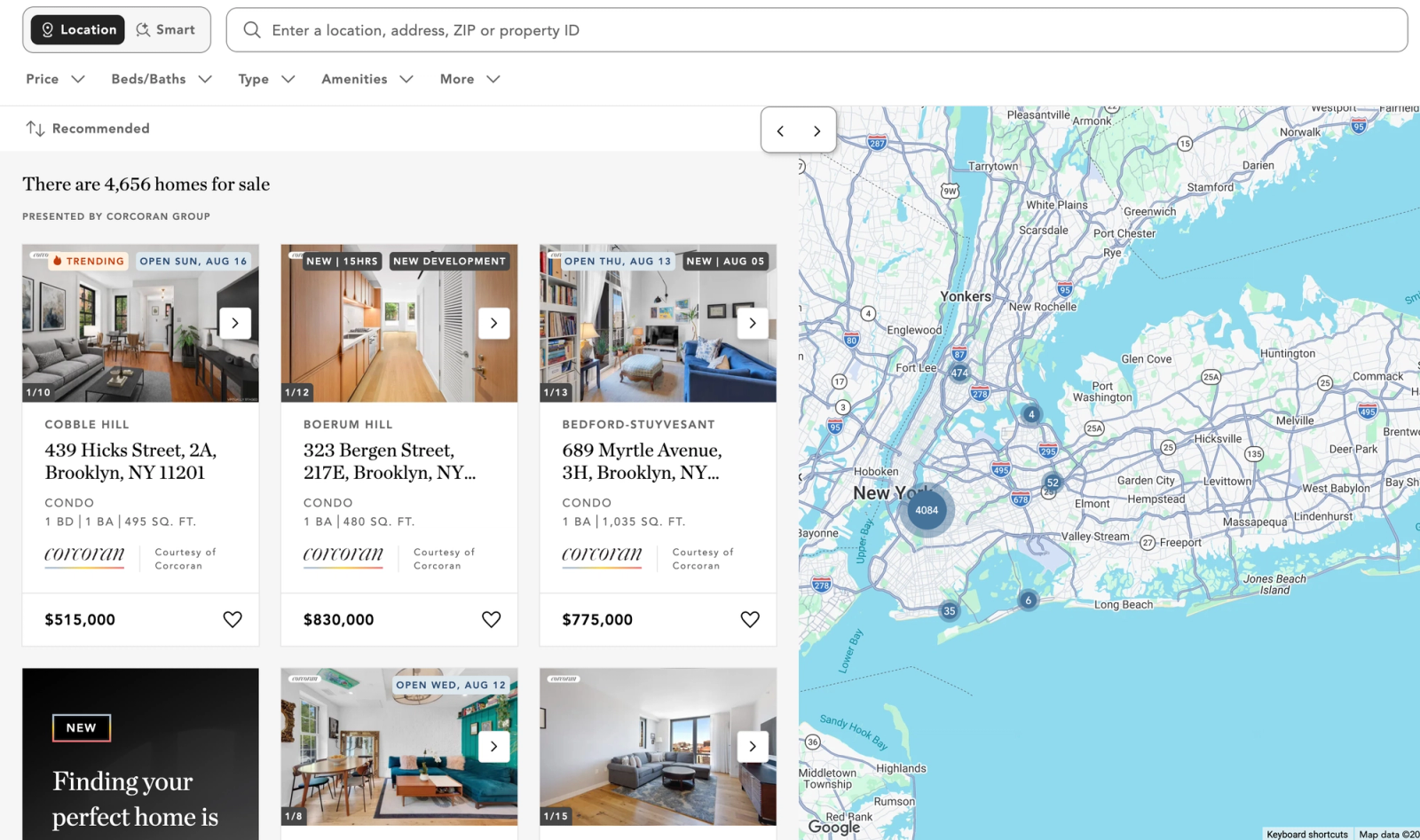
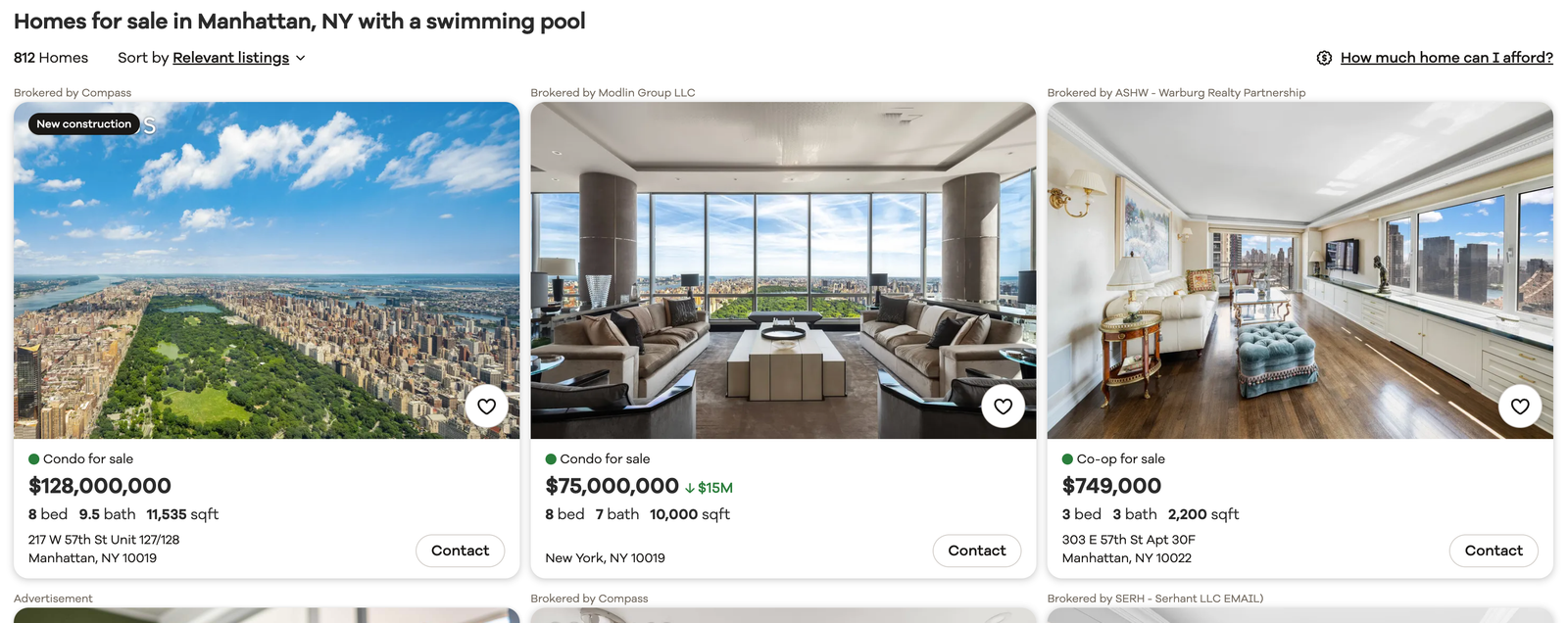
1. IDX / MLS property search
Live MLS listings on your own domain keep buyers searching on your site instead of a portal, and every listing view is a chance to capture. It's the foundation most other capture features build on.
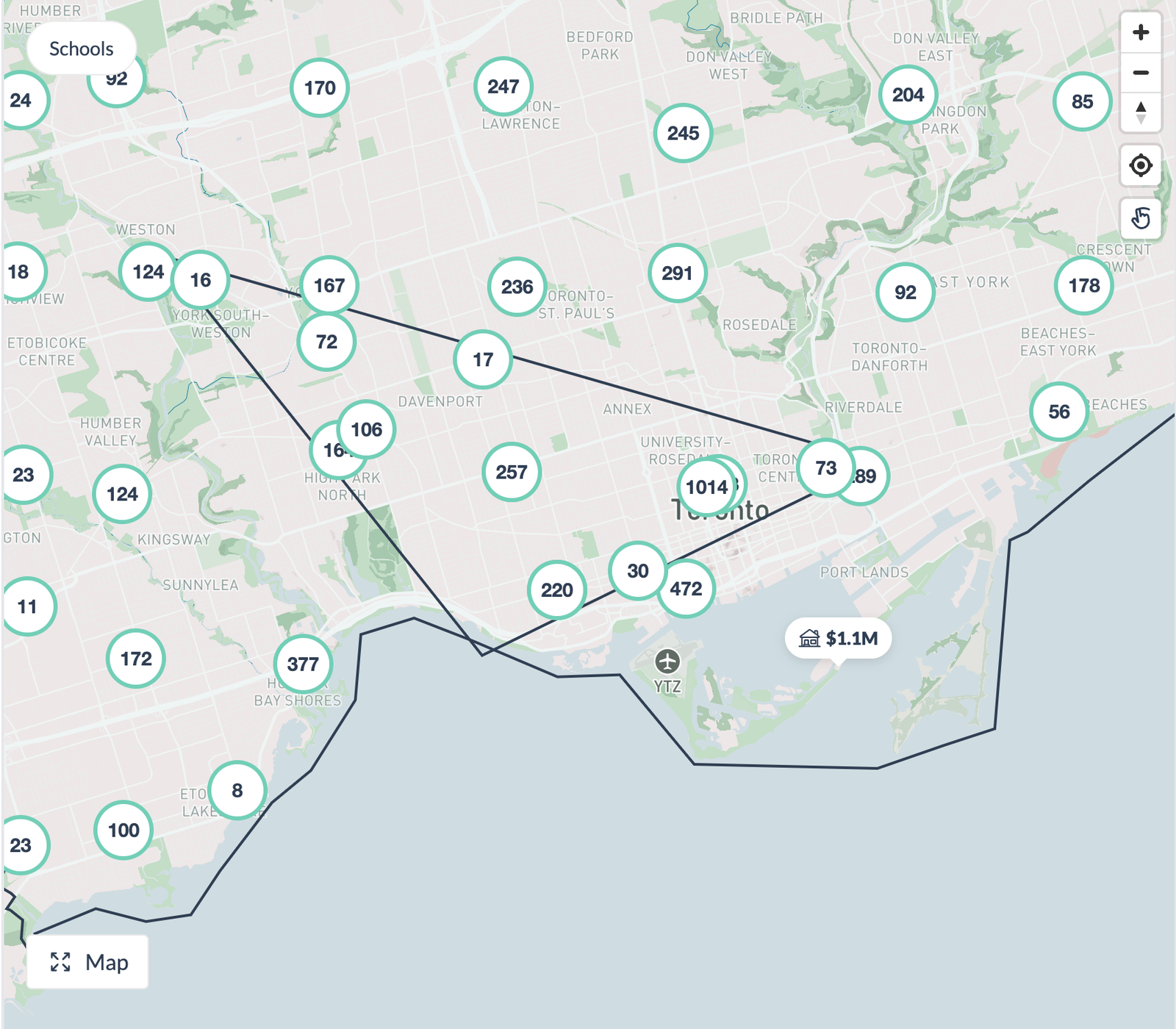
2. Map-based search
A map interface lets buyers explore by neighbourhood and draw their own search areas, which keeps them engaged longer and creates more save-and-register moments than a plain list.
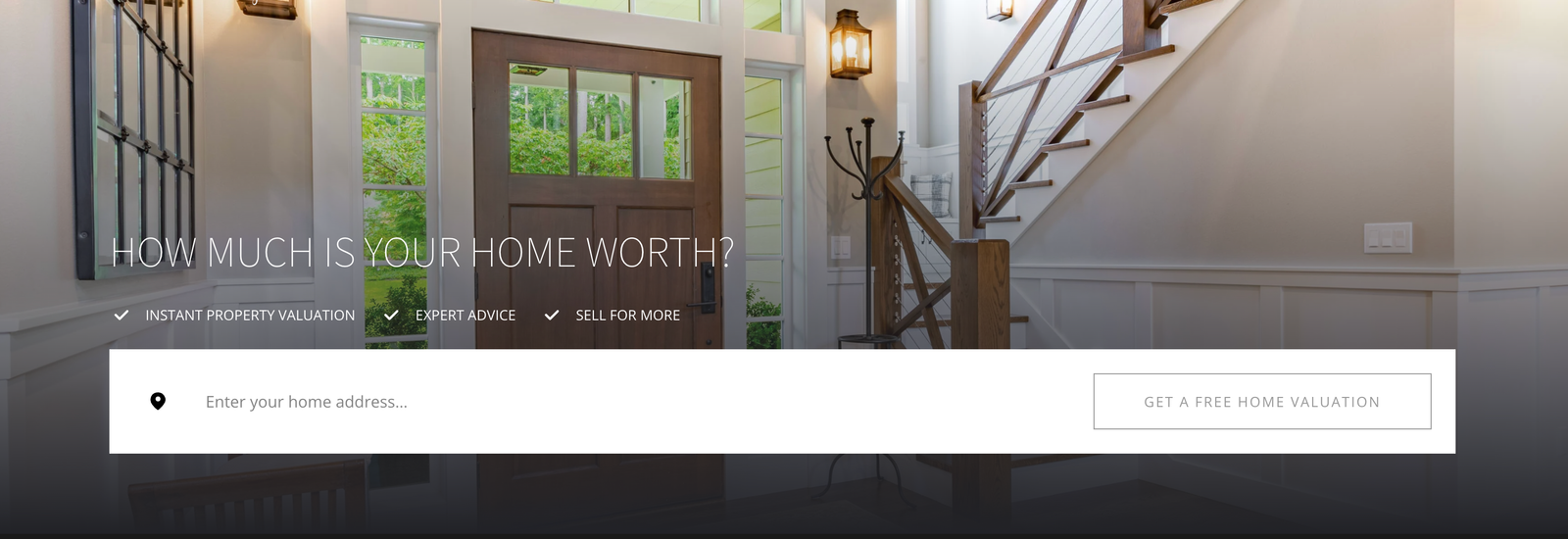
3. Home valuation tool
A "what's my home worth" feature captures high-intent sellers, some of the most valuable leads you can get. The promise of a custom estimate is worth an email to most homeowners.
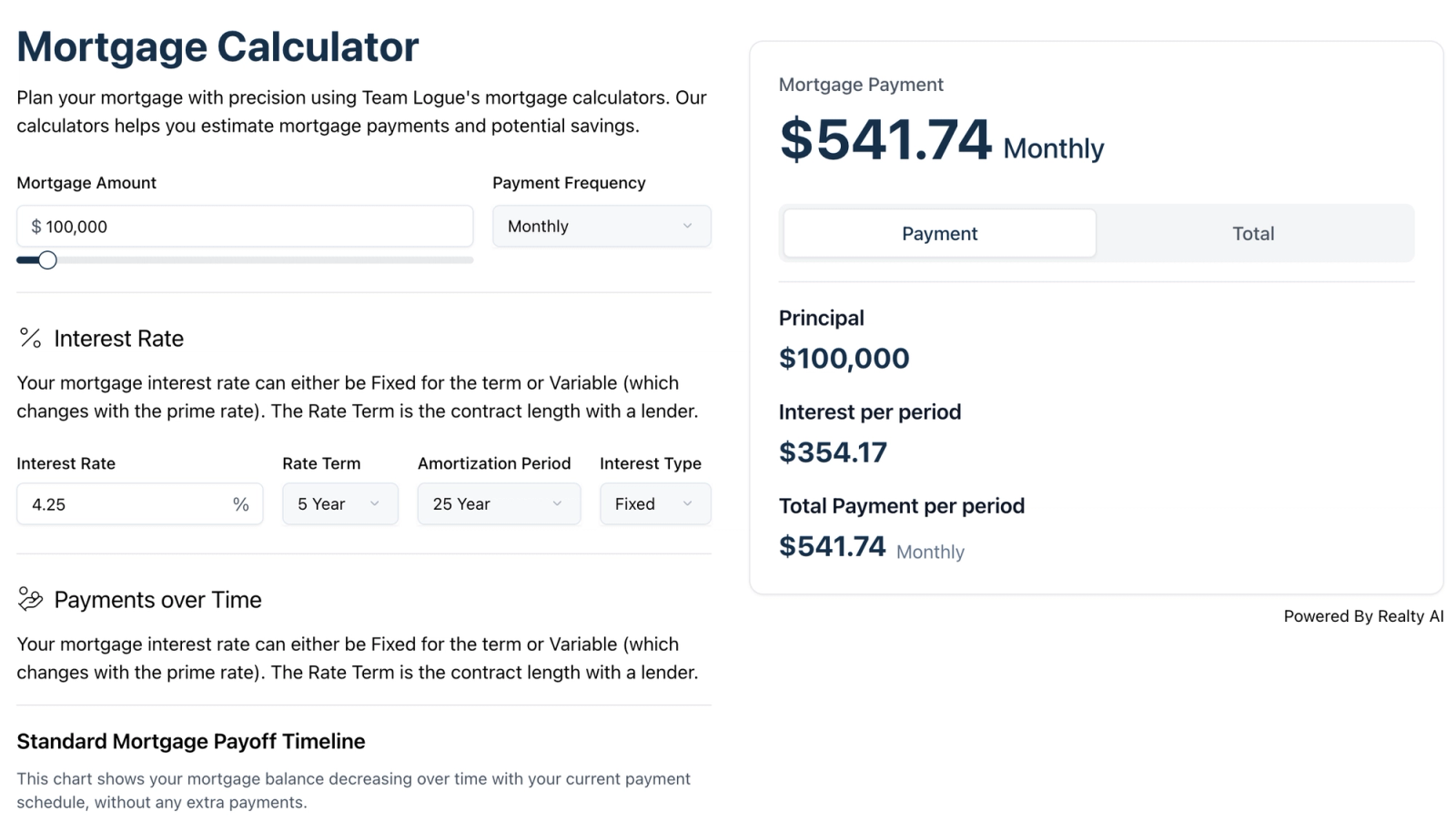
4. Mortgage and affordability calculators
Interactive calculators pull buyers deeper into the site and give you a natural reason to capture contact info in exchange for saved results or a detailed breakdown.
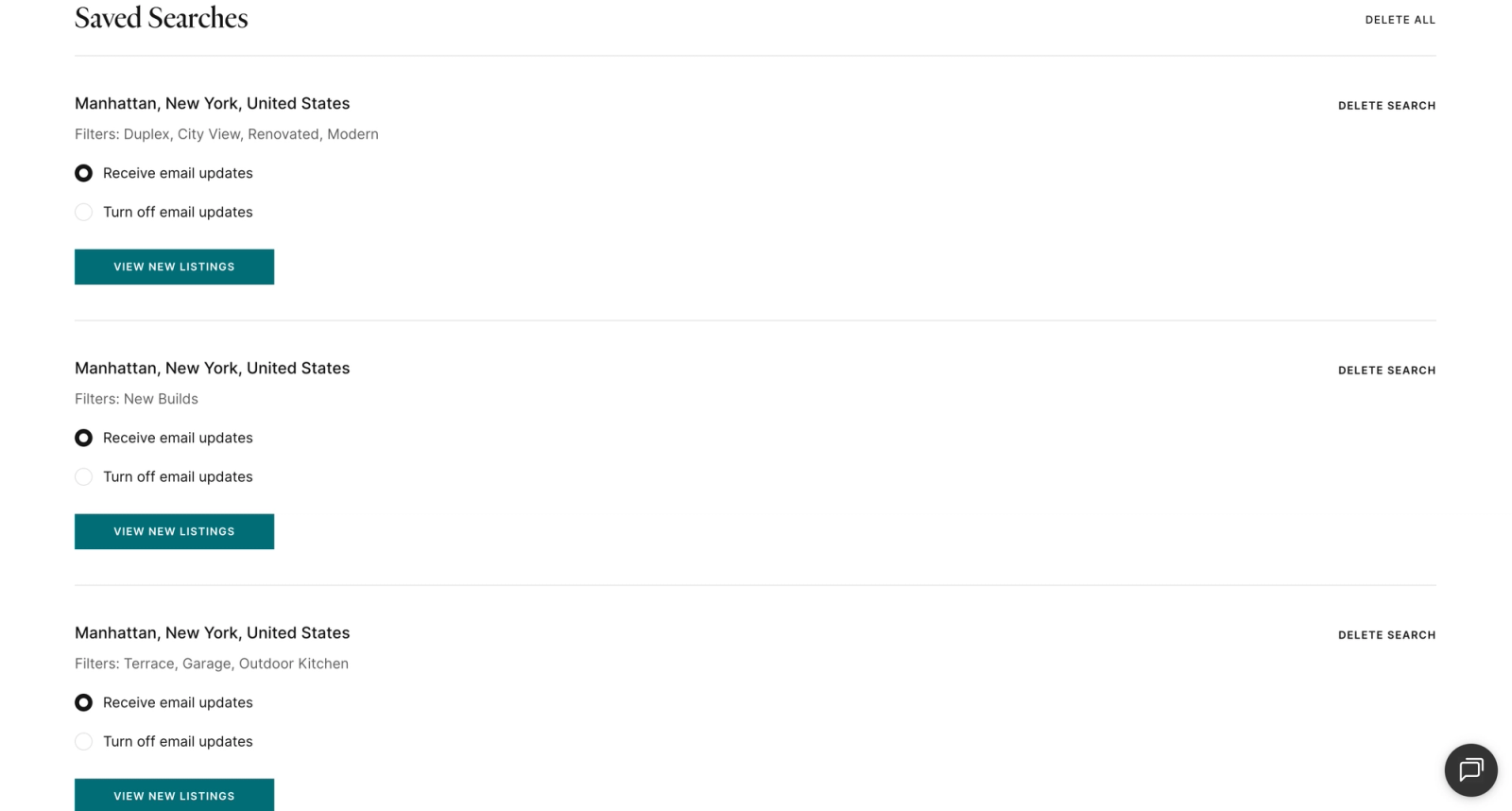
5. Saved searches and listing alerts
Visitors trade an email to save favourites or get new-listing notifications, which converts serious searchers and keeps you in their inbox for months.
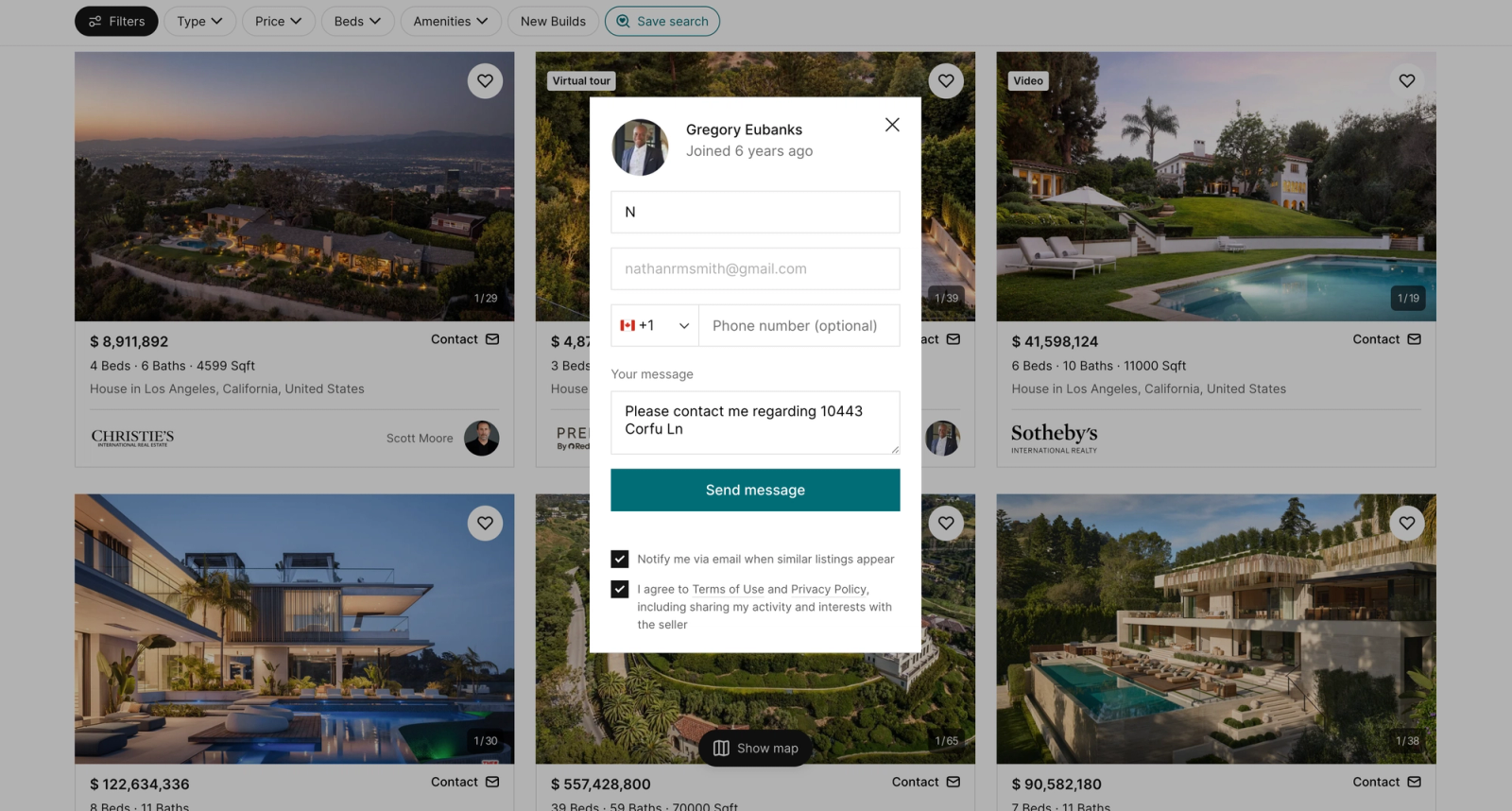
6. Short, smart lead forms
Fewer fields mean higher completion. Ask for the minimum up front, then enrich the record later once the conversation starts.
7. Strong, specific calls to action
CTAs that promise a clear, specific value ("See this month's sales in [neighbourhood]") outperform generic "Contact us" buttons. Placement and wording both move the number.
8. Exit-intent pop-ups and hello bars
Scroll-triggered and exit-intent prompts recover visitors who were about to leave, surfacing one focused offer at the right moment instead of interrupting on arrival.
9. Dedicated landing pages
One offer, one form, and no distractions. Single-purpose landing and squeeze pages consistently out-convert general site pages for a specific campaign or listing, which is why they pair so well with real estate ads that convert.
10. Lead magnets and content offers
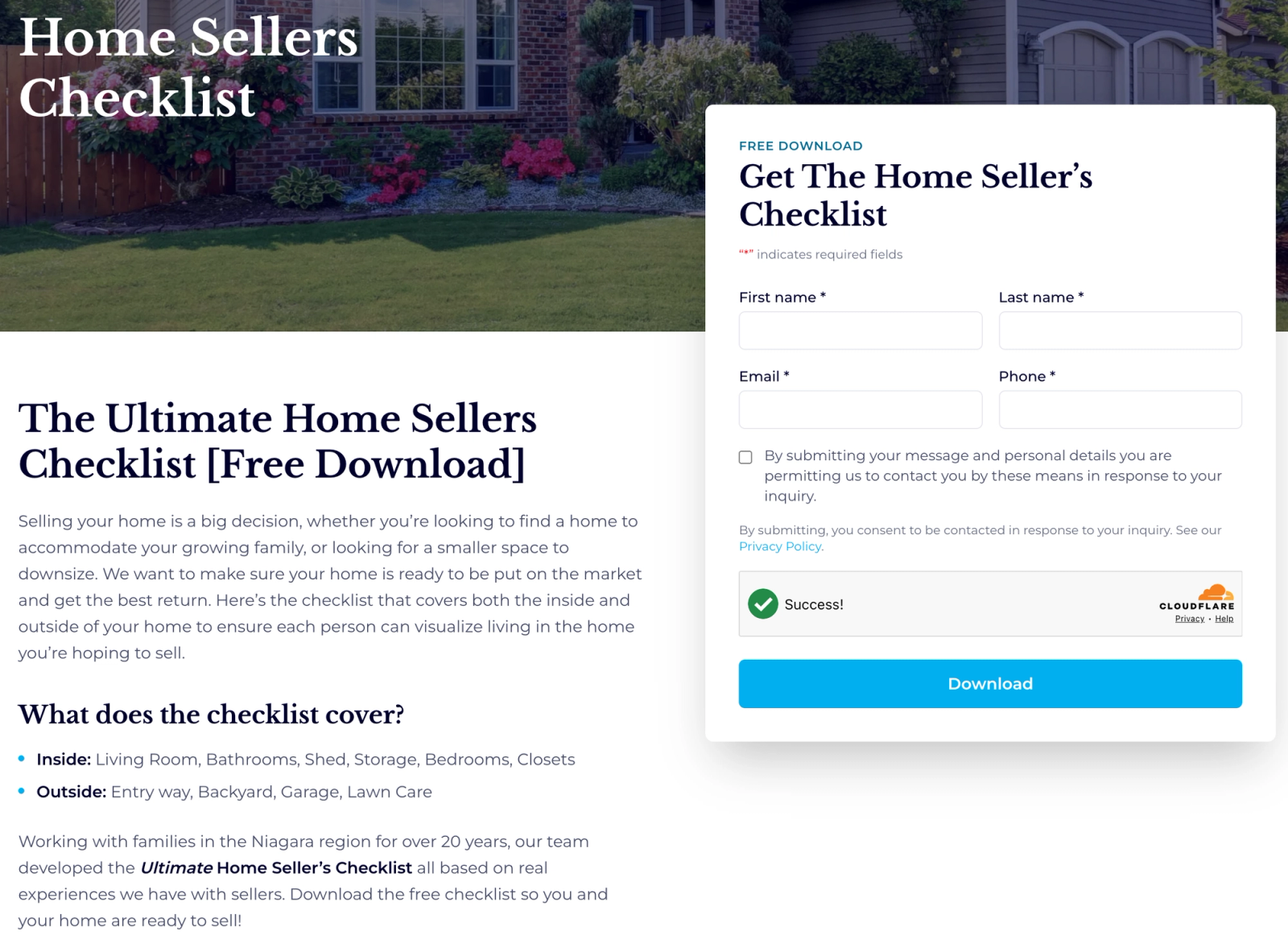
A buyer's guide, a seller checklist, or a neighbourhood report gives visitors a reason to exchange their email for something genuinely useful.
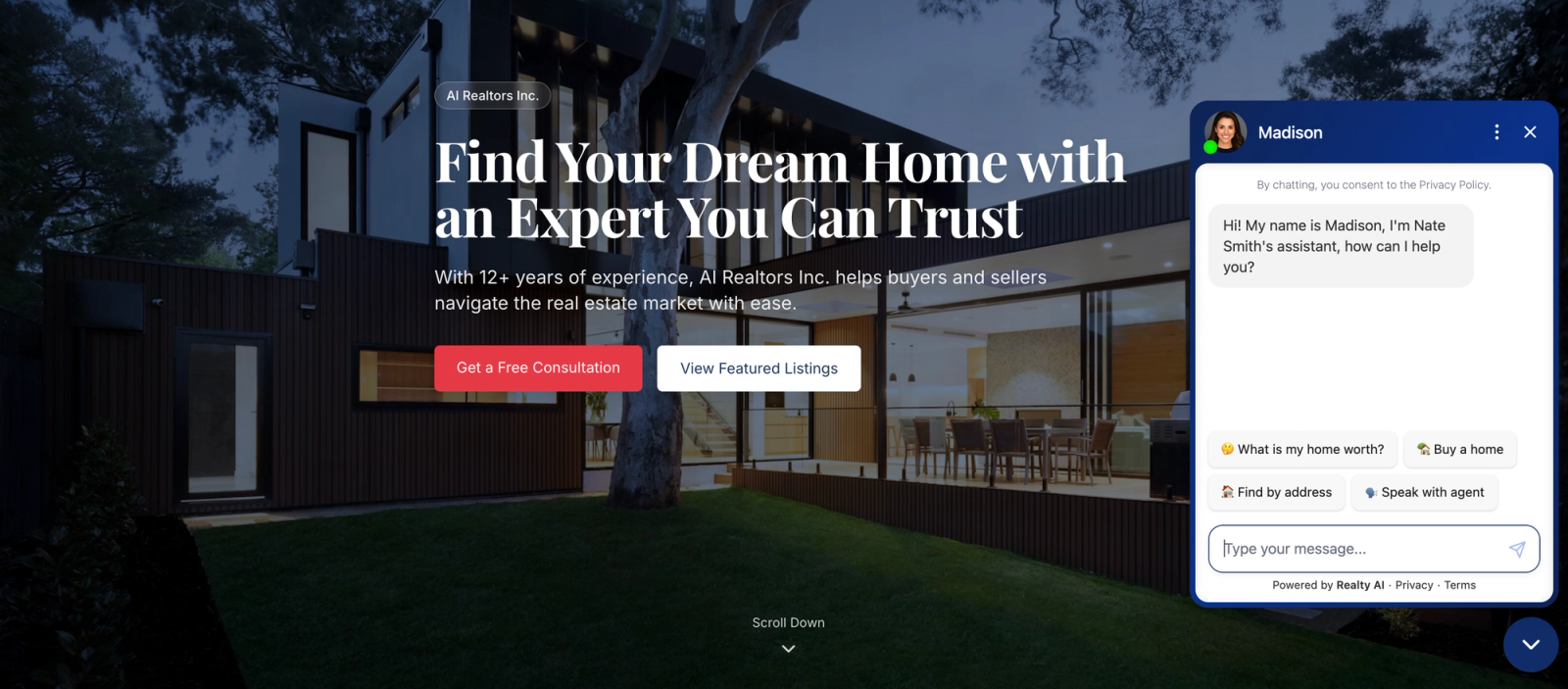
11. Live chat and AI chatbot
A chatbot engages the large majority who will never fill a form, answers their question in the moment, and captures their details inside the conversation, around the clock. If you're weighing AI options for your site, start with how to use Claude for real estate.
12. Schedule-a-showing booking
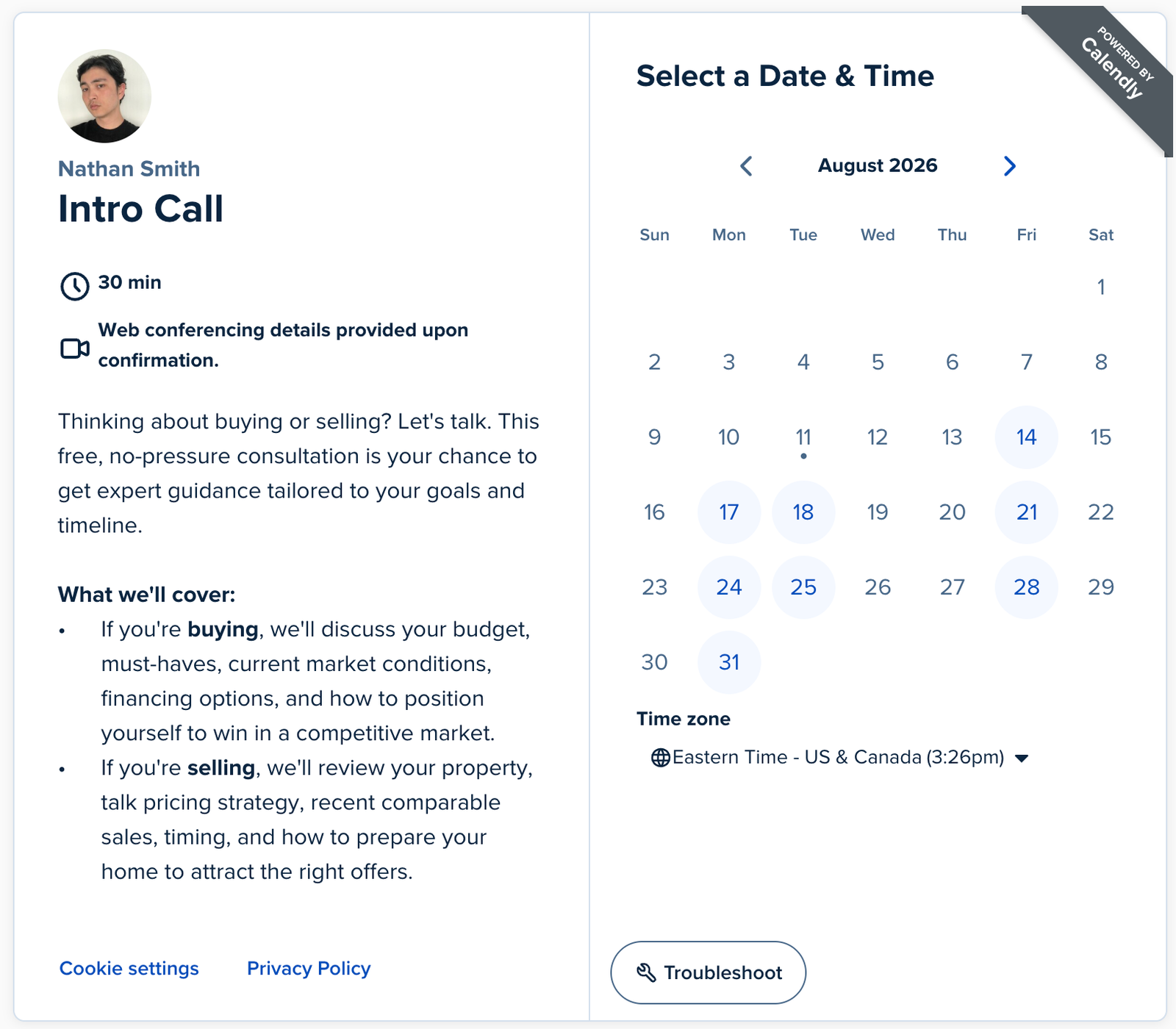
Letting buyers book a showing or a call directly from a listing turns high intent into a captured appointment before it cools off.
13. Mobile optimization and page speed
Most real estate traffic is mobile, and slow pages quietly kill conversions before any form is seen. Speed and a clean mobile layout make every other feature perform better, and they're table stakes for technical SEO on real estate sites.
14. Trust signals and social proof
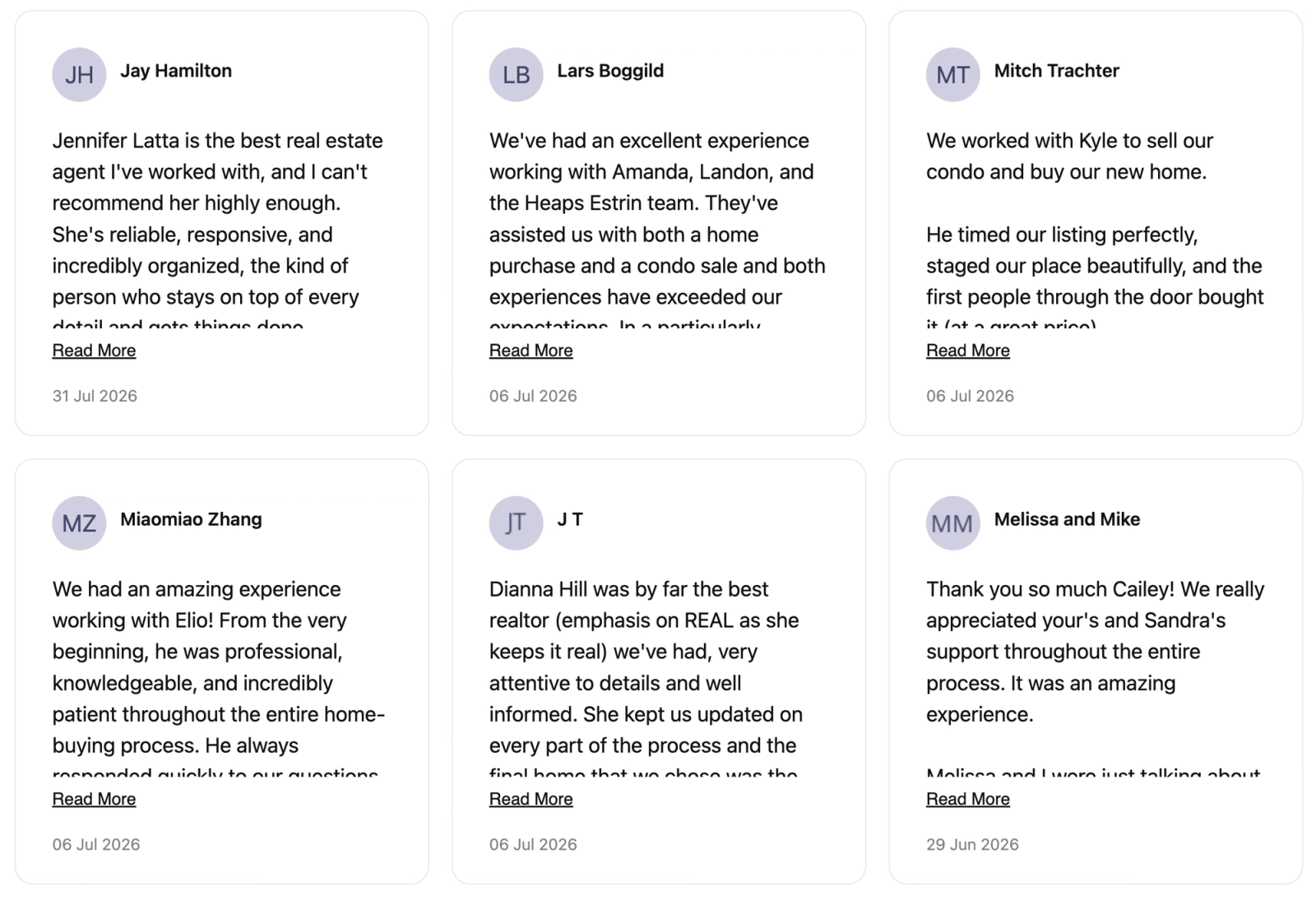
Reviews, testimonials, recent sales, real photos, and credentials reduce hesitation and raise form completion. People share contact info with agents they already trust.
15. A strong agent bio and about page
A warm, credible bio turns an anonymous site into a person worth contacting, which lifts conversion on every page that links to it.
16. Instant follow-up and CRM automation
Capture is wasted if the first response takes hours. Automated, immediate follow-up routed to your CRM is itself a capture-rate feature, because speed is what turns a form fill into a conversation.
Ranked by Impact and Effort
Not every feature moves the needle equally. A rough guide:
Feature
Impact on capture rate
Effort to add
AI chatbot / live chat
High
Low
Instant follow-up automation
High
Low to medium
Home valuation tool
High
Medium
IDX search with registration
High
Medium to high
Short forms and strong CTAs
Medium
Low
Landing / squeeze pages
Medium
Low to medium
Pop-ups and hello bars
Medium
Low
Mobile speed and trust signals
Medium (foundational)
Medium
The pattern: the highest-impact, lowest-effort wins are conversational capture and instant follow-up, yet they're the features most sites add last, if at all.
The Benefits of Getting These Features Right
Done well, these features change the economics of your site:
More leads from the same traffic. Lifting capture from 1% to 3% triples your leads without spending a dollar more on marketing.
Higher-intent, better-timed leads. Conversational capture and instant follow-up reach people while they're still interested.
You own the pipeline. Leads captured on your site are yours, unlike rented portal leads you share with competitors.
Lower cost per lead over time. Your own site keeps converting long after an ad campaign ends.
Better conversion downstream. Leads that flow straight into a CRM with fast follow-up close at higher rates.
Compounding brand and SEO equity on a domain you control.
A funnel you can measure and improve, so every change is testable.
Common Mistakes That Cost You Leads
These are the on-site, capture-focused mistakes we see most often. Off-site basics like your Google Business Profile and local backlinks matter too, but that's a separate playbook.
Relying on forms alone. With form conversion near 0.6%, a site with no conversational capture leaves most of its traffic on the table. This is the single most common miss.
A chatbot that's misconfigured or missing. Clunky, one-question-at-a-time flows cause drop-off, and a bot with no CRM or booking connection captures nothing. Some sites have real traffic and zero chat conversations.
Lead magnets that are ungated or over-gated. A guide with no email capture collects nothing, while gating everything hurts SEO and engagement. Aim for the middle.
Generic citywide search with no neighbourhood pages. No local market stats or property-type segmentation (condos, waterfront, luxury) means fewer reasons to engage and register.
Booking tools that add friction. A calendar that isn't connected to your site or chatbot makes scheduling harder instead of instant.
No social proof on the site. Reviews that live only on other platforms don't reassure the visitor deciding whether to contact you right now.
Thin blog content that doesn't convert. Short posts with no FAQ targeting, no CTAs, and no internal links to conversion pages attract little traffic and capture less of it. Build around the right real estate SEO keywords and point every post at a capture page.
A cookie-cutter brokerage-subdomain site. No personal branding, and a domain you don't own means you risk losing your SEO equity if you switch brokerages.
Slow first response. Capturing a lead and replying 15 hours later wastes the capture. Automate the first touch.
No analytics. Without GA4 and Search Console, you can't see what's converting, so you can't improve your capture rate.
How to Prioritize
If you're improving an existing site, add features in impact order:
Start with conversational capture and instant follow-up. Biggest lift, least effort.
Add a home valuation tool to capture sellers.
Tighten your forms and CTAs, and build a landing page for your main offer.
Fix mobile speed and trust signals so every other feature performs better.
Measure capture rate, not traffic. Track the share of visitors who become contacts, and improve that number month over month.
The features that improve lead capture rates all come back to one idea: meet visitors where they are and respond before they cool off. Forms and IDX catch the few who raise their hand. A conversation catches the rest.
Book a demo to see how Realty AI captures and qualifies the visitors your forms miss, around the clock.
Related articles
More in SEO & Marketing
Keep reading in the same category to go deeper on the topics that matter to your team.
Answer engine optimization explained for real estate: how AI answers pick their sources, what to publish, what to measure, and the fair housing line to stay behind.
Generative engine optimization for real estate teams: how to get cited by ChatGPT, Gemini and AI Overviews, with a checklist and the data behind it.
About Madison
The AI assistant built for real estate lead gen
Madison is Realty AI's conversational assistant for real estate websites. It engages visitors instantly, qualifies buyers, sellers, and renters through natural dialogue, routes summaries to your CRM, and keeps your team focused on closing.
5.0 average from 2,500 customer reviews
“We captured 3 new transactions worth over $3.3 million in just a few months using Realty AI.”
Sarah Logue
Broker & Owner, Top 0.1%
“Within our first week of using Realty AI, I had an engaged seller ready on the phone. This has never happened before in 4 years.”
Mark Jensen
Owner & Broker of Record
“It feels like having a personal assistant on my website 24/7, sending me instant notifications so I never miss a potential client.”